8 Large Deck Decorating Ideas That Wow
Big decks look impressive on paper, but empty square footage can feel awkward fast. Scale throws people off, and suddenly that “dream outdoor space” feels like a furniture showroom with commitment issues.
The trick isn’t adding more stuff; it’s creating purpose.
Large decks need zones, balance, and a little personality to avoid looking flat. I’ve learned that the hard way after overbuying furniture once and realizing I’d basically built an outdoor waiting room.
Let’s fix that.
1. Create Defined Outdoor Zones
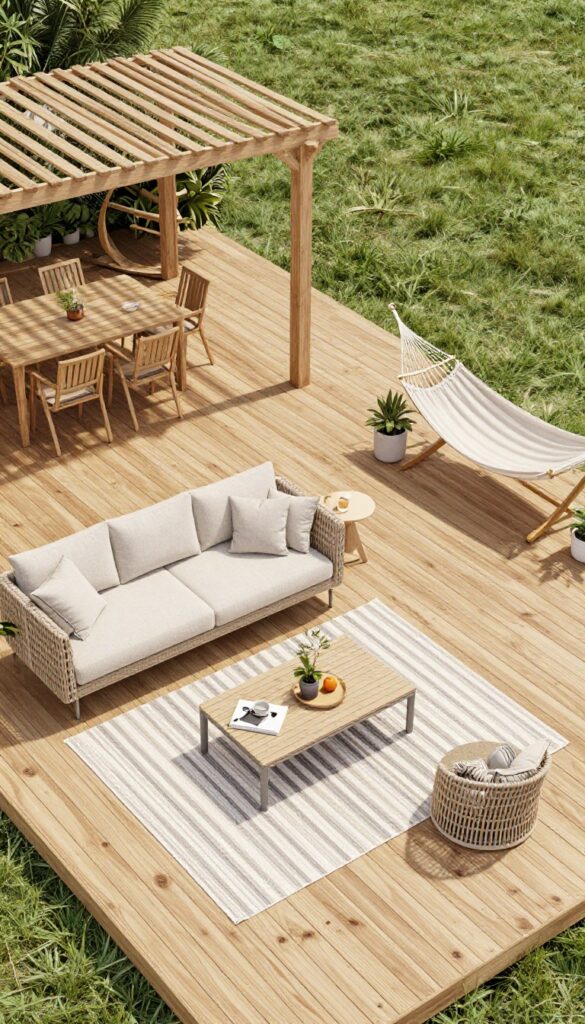
A large deck without zones feels like one giant, undefined platform. People end up clustering in one corner while the rest of the space just sits there looking confused. Defining specific areas for lounging, dining, and relaxing makes the whole deck feel intentional.
When I first divided my deck into zones, everything instantly made more sense. The space felt structured instead of random, and it actually encouraged people to spread out. Clear boundaries bring calm to big areas.
Why This Works
Large spaces need visual anchors to guide movement. Zones break up empty space and give each section a job.
When furniture groups sit in defined areas, the deck feels balanced instead of overwhelming. It creates flow without adding clutter.
How to Do It
- Use outdoor rugs to define each zone and visually “frame” the space
- Arrange seating in conversational clusters rather than lining it along railings
- Position dining tables closer to the house for easier access
- Leave clear walkways between zones so traffic flows naturally
Each step keeps the layout functional instead of decorative chaos.
Style & Design Tips
Stick to a consistent color palette across zones so the deck feels cohesive. Repeat materials like the same wood tone or black metal accents to tie everything together.
Avoid pushing all furniture against the edges. That habit makes the center look like an abandoned dance floor.
Pro Tip or Budget Hack
If buying multiple rugs feels expensive, layer a large neutral outdoor rug under smaller accent rugs. It fakes a high-end designer layout without draining your wallet.
2. Install a Statement Pergola or Shade Structure
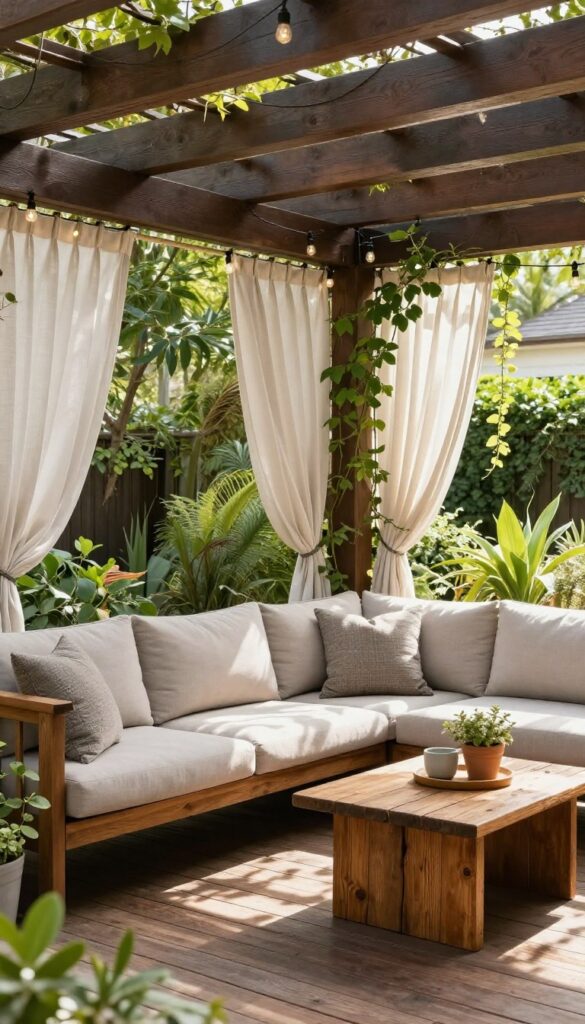
Large decks need vertical interest or they look flat. A pergola instantly adds height and architectural presence without enclosing the space. It frames one area and makes it feel like a true outdoor room.
I added a pergola over my seating zone, and suddenly the deck felt finished. Before that, it looked like furniture just happened to be outside.
Why This Works
Vertical elements balance horizontal space. They visually ground furniture and create intimacy within a large footprint.
Shade structures also make the deck usable during harsh sun. Function always beats aesthetics alone.
How to Do It
- Choose a pergola size that matches your largest seating area
- Anchor posts securely to deck framing for stability
- Add outdoor curtains or retractable shades for flexibility
- Install string lighting or pendant lights for layered lighting
Every element adds structure without closing off airflow.
Style & Design Tips
Black or dark-stained pergolas look modern and bold. Natural wood feels warm and classic.
Avoid choosing something too small. Scale matters, and undersized structures can look like an afterthought.
Pro Tip or Budget Hack
If a full pergola isn’t in the budget, use tall planters with climbing vines and a simple shade sail. It gives height and shade for way less money.
3. Add a Built-In Seating Wall
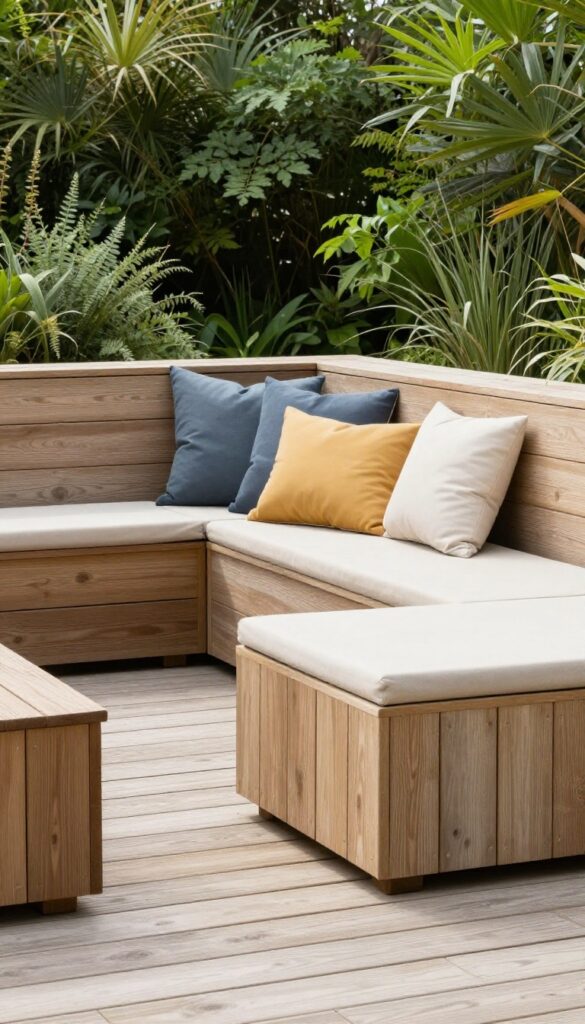
Big decks often waste perimeter space. Built-in bench seating along one side solves that problem and increases seating without cluttering the center.
I used to drag out folding chairs for gatherings, which looked messy. Once I installed a bench wall, the deck felt polished and permanent.
Why This Works
Built-ins create clean lines and eliminate bulky furniture legs everywhere. They anchor the edge of the deck and maximize usable space.
They also double as subtle boundaries between zones.
How to Do It
- Frame the bench directly into deck joists for support
- Use weather-resistant wood or composite materials
- Add hinged tops for hidden storage
- Top with outdoor cushions for comfort
Integrated storage makes the space practical, not just pretty.
Style & Design Tips
Choose cushion colors that complement your deck stain. Keep cushion thickness consistent for a streamlined look.
Avoid too many throw pillows. A few bold ones work better than twenty random patterns.
Pro Tip or Budget Hack
Build a simple rectangular bench first, then upgrade with trim later. Starting basic keeps costs manageable.
4. Design an Outdoor Dining Destination
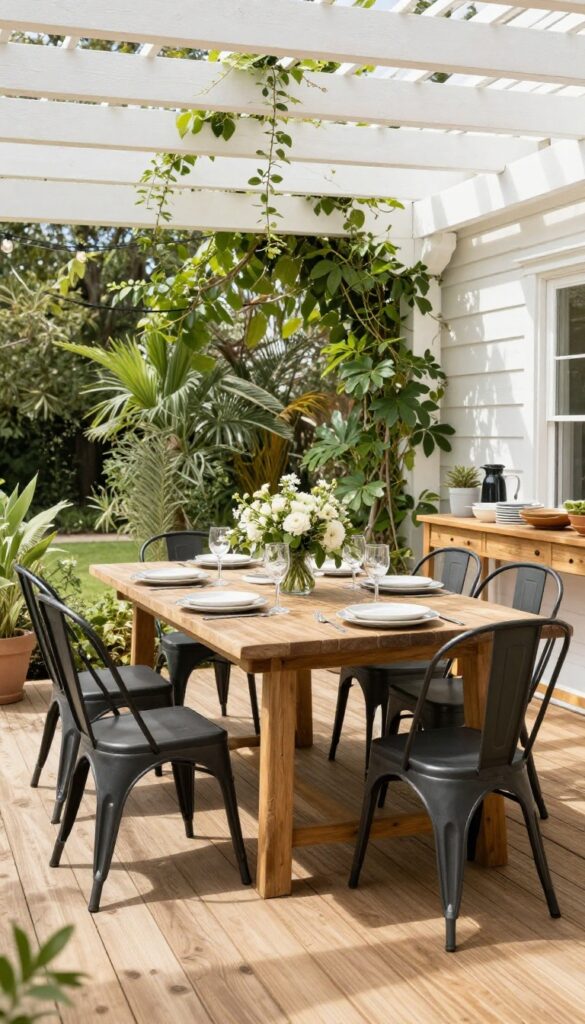
Large decks deserve more than a tiny bistro set. A full dining area makes the space feel like an extension of your kitchen.
When I upgraded to a larger table, gatherings shifted outside naturally. It changed how we used the entire deck.
Why This Works
Dining furniture creates purpose. It invites longer use and encourages social interaction.
A substantial table fills visual space and prevents that “why is this so empty?” feeling.
How to Do It
- Choose a table proportional to your deck size
- Center it under a pergola or umbrella
- Add at least six chairs for visual balance
- Include a sideboard or console for serving space
Each piece reinforces the dining zone’s importance.
Style & Design Tips
Mix materials carefully. Wood tables with black metal chairs look sharp and modern.
Avoid overcrowding the table area. Leave enough room to pull chairs out comfortably.
Pro Tip or Budget Hack
Refinish a secondhand table with exterior stain instead of buying new. It saves money and adds character.
5. Incorporate a Cozy Fire Feature
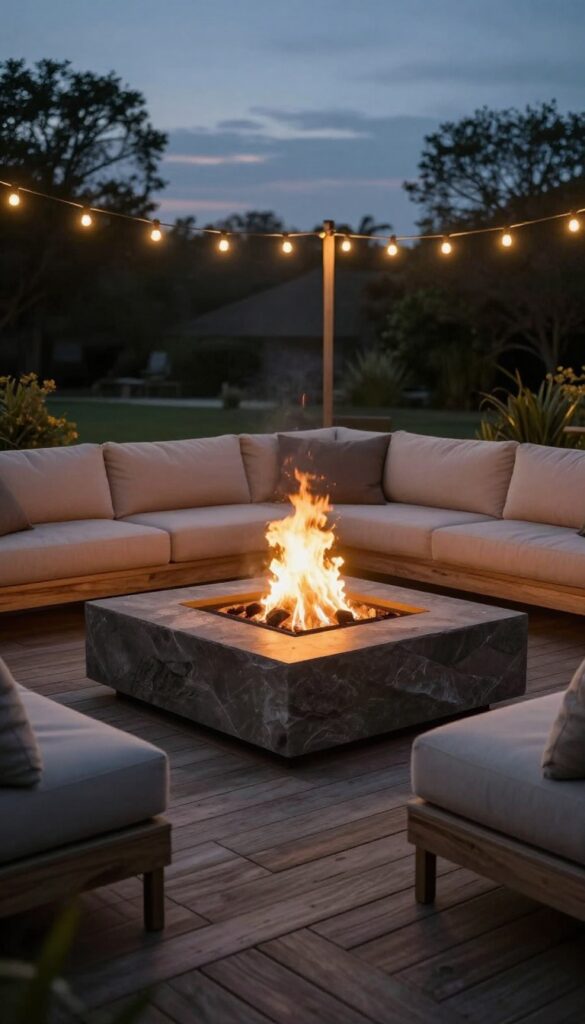
Large decks can feel cold once the sun sets. A fire pit or outdoor fireplace creates warmth and instantly draws people in.
I resisted adding one for years, thinking it wasn’t necessary. Then I realized everyone gravitates toward fire like it’s built into our DNA.
Why This Works
Fire adds movement and glow. It creates a focal point that anchors the largest section of the deck.
It also extends usability into cooler months.
How to Do It
- Choose between a portable fire pit or built-in option
- Place seating in a circular or semi-circular layout
- Keep safe clearance from railings and structures
- Add weather-resistant seating cushions
Layout matters more than size here.
Style & Design Tips
Stone or concrete fire features feel substantial. Keep surrounding furniture simple so the fire remains the focal point.
Avoid placing it too far from seating. Distance kills the cozy vibe.
Pro Tip or Budget Hack
Use a propane fire table for less installation cost. It gives the same effect without major construction.
6. Layer Lighting Like a Pro
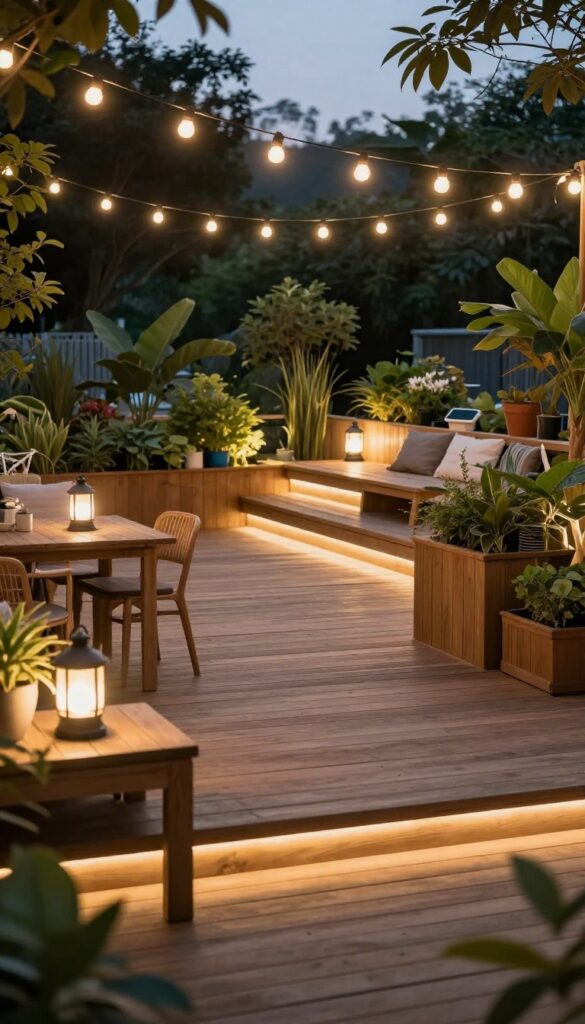
Large decks fall flat without layered lighting. One overhead string light won’t cut it.
I used to rely on a single strand across the railing, and it felt underwhelming. Adding multiple light sources completely changed the mood.
Why This Works
Layered lighting adds depth and dimension. It highlights zones and improves safety at night.
Different light levels create visual interest without overpowering the space.
How to Do It
- Install string lights overhead for ambient glow
- Add step lights for safety
- Use lanterns on tables for softness
- Incorporate solar stake lights in planters
Each layer serves a distinct purpose.
Style & Design Tips
Choose warm white bulbs instead of cool tones. Consistency in color temperature keeps everything cohesive.
Avoid overly bright floodlights unless you need security lighting.
Pro Tip or Budget Hack
Solar lanterns save electricity and eliminate wiring. They’re surprisingly effective if you buy decent quality.
7. Bring in Oversized Planters
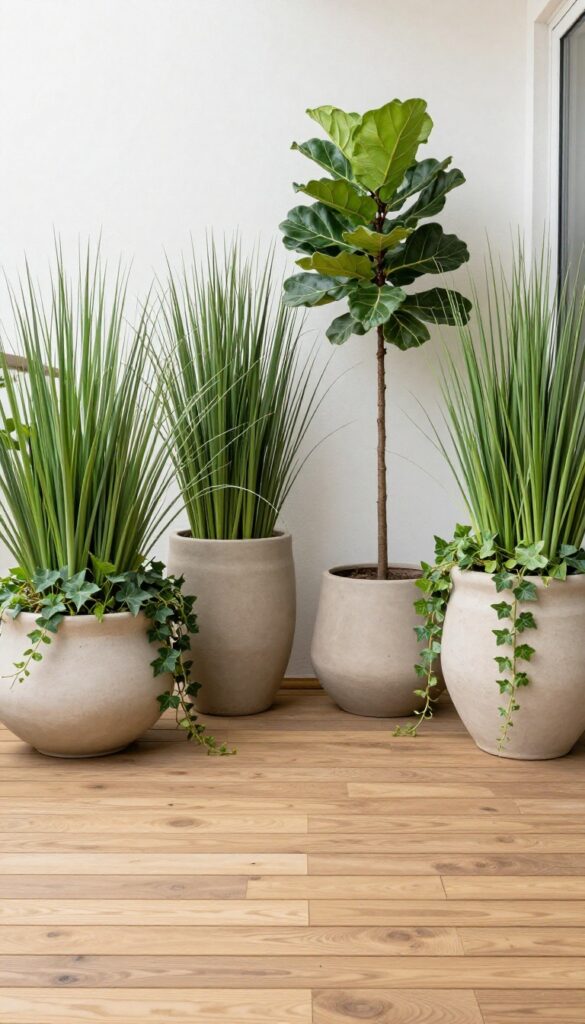
Tiny potted plants disappear on large decks. Oversized planters create visual weight and fill awkward corners.
I once tried lining the railing with small pots, and they looked lost. Switching to tall planters instantly balanced the space.
Why This Works
Large-scale greenery matches the deck’s proportions. It softens hard lines and adds life.
Plants also help define zones without walls.
How to Do It
- Choose planters at least 18–24 inches tall
- Use filler plants, spillers, and a focal plant
- Place them near corners or entry points
- Ensure proper drainage to protect the deck
Placement and scale make the difference.
Style & Design Tips
Stick to two or three planter styles. Too many shapes can look chaotic.
Neutral planters let greenery stand out more effectively.
Pro Tip or Budget Hack
Use lightweight plastic planters painted to look like concrete. They cost less and won’t strain your deck.
8. Add an Outdoor Bar or Beverage Station
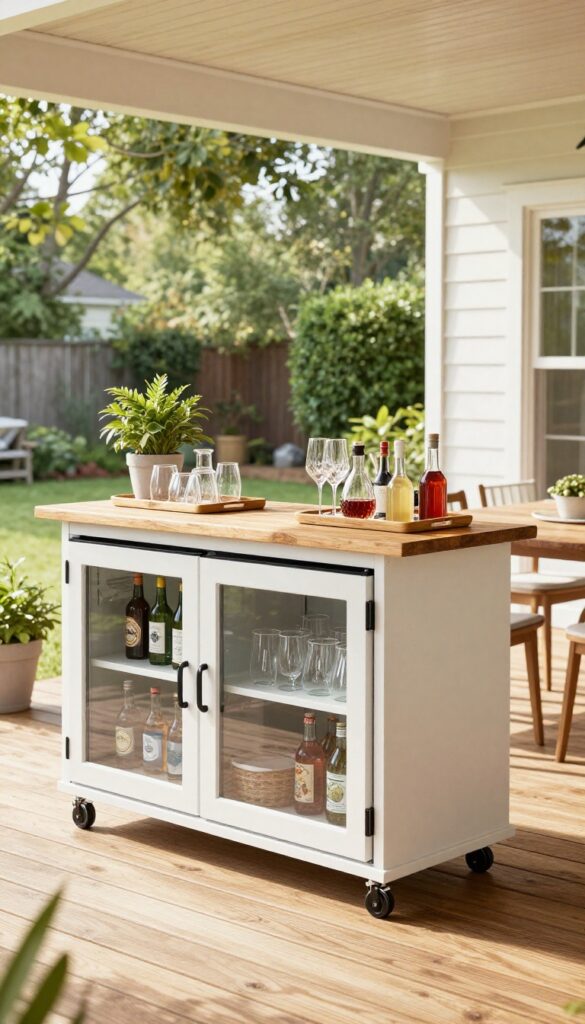
Large decks feel luxurious with a dedicated drink station. It adds functionality and elevates hosting.
After adding a small outdoor bar, people stopped trekking inside constantly. It made entertaining smoother.
Why This Works
A bar station creates convenience. It anchors one end of the deck and encourages gathering.
It also visually fills space without overcrowding seating areas.
How to Do It
- Install a weather-resistant bar cart or built-in counter
- Add shelves for glassware and essentials
- Include a mini fridge if possible
- Keep drink tools organized in trays
Organization keeps it from feeling cluttered.
Style & Design Tips
Match the bar finish to your dining area. Consistency in finishes keeps the deck cohesive.
Avoid overly decorative bar setups. Clean and simple looks more upscale.
Pro Tip or Budget Hack
Repurpose an old console table with exterior paint and sealant. It works surprisingly well as a DIY bar.
Final Thoughts
Large decks reward intention, not excess. Once each section has purpose, the entire space feels cohesive and welcoming.
I’ve tweaked my own layout more than once, and every adjustment taught me something about scale and balance. Start with zones, add structure, and let the rest evolve naturally.