10 Kitchen Shelving Ideas for Smart Storage
Kitchen storage problems usually don’t come from having too little space. They come from having space that’s awkward, wasted, or just plain annoying to use. Cabinets are great, but half the time they hide everything so well you forget what you even own.
Shelving fixes that fast, but only if you do it in a way that looks intentional instead of like you panic-installed boards the night before guests came over.
I’ve played around with a bunch of shelving setups over the years, and the right one can make your kitchen feel bigger, cleaner, and way easier to live in.
1. Floating Shelves Above the Counter
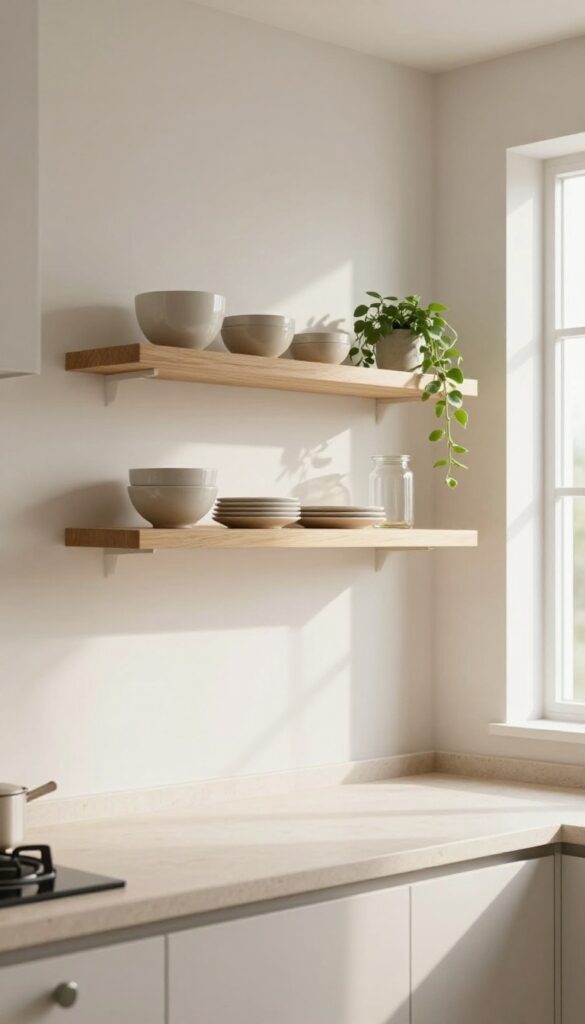
Most kitchens have that awkward blank wall space above the counter where nothing really happens. It’s too high for daily-use items if you don’t plan it right, but leaving it empty makes the whole kitchen feel unfinished.
Floating shelves are one of the easiest ways to turn that dead zone into useful storage without making things look crowded.
The key is keeping them simple and balanced, because once you start stacking random stuff up there, it can look messy fast.
I like floating shelves because they make the kitchen feel more open than upper cabinets, and they’re way less visually heavy. Plus, it’s nice not having to slam cabinet doors when you’re half asleep.
Why This Works
Floating shelves create storage without boxing in the room. They visually stretch the wall and make the kitchen feel wider, especially in smaller spaces.
They also force you to stay organized in a good way. When everything is visible, you naturally keep it cleaner because you don’t want your kitchen looking like a garage shelf.
How to Do It
- Pick a shelf material that matches your kitchen vibe (wood, metal, painted MDF).
- Measure your wall space and mark stud locations for solid support.
- Install the first shelf about 18–20 inches above the countertop.
- Add a second shelf 12–15 inches above the first if you have vertical space.
- Keep shelf depth around 8–10 inches so it doesn’t feel bulky.
Each step matters because shelf placement affects both usability and how “heavy” the wall looks. Too low feels cramped, too high makes it useless.
Style & Design Tips
Keep your shelf styling intentional by mixing practical items (plates, bowls, mugs) with a few decorative pieces like a small plant or a ceramic jar. If you overload it with only décor, it looks fake, but if it’s only cluttered kitchen stuff, it looks chaotic.
Avoid putting mismatched packaging up there, like cereal boxes or snack bags, because it instantly kills the clean look. Use matching containers or jars if you want pantry storage on open shelves. Also, don’t forget negative space, because leaving a little breathing room is what makes floating shelves look expensive.
Pro Tip or Budget Hack
If you want the floating shelf look without paying floating shelf prices, buy basic wood boards from a hardware store and stain them yourself. A simple dark walnut stain makes even cheap wood look like custom work.
I’ve done this before and it’s honestly kind of ridiculous how much money it saves compared to “designer” shelves.
2. Corner Shelves for Dead Space Storage
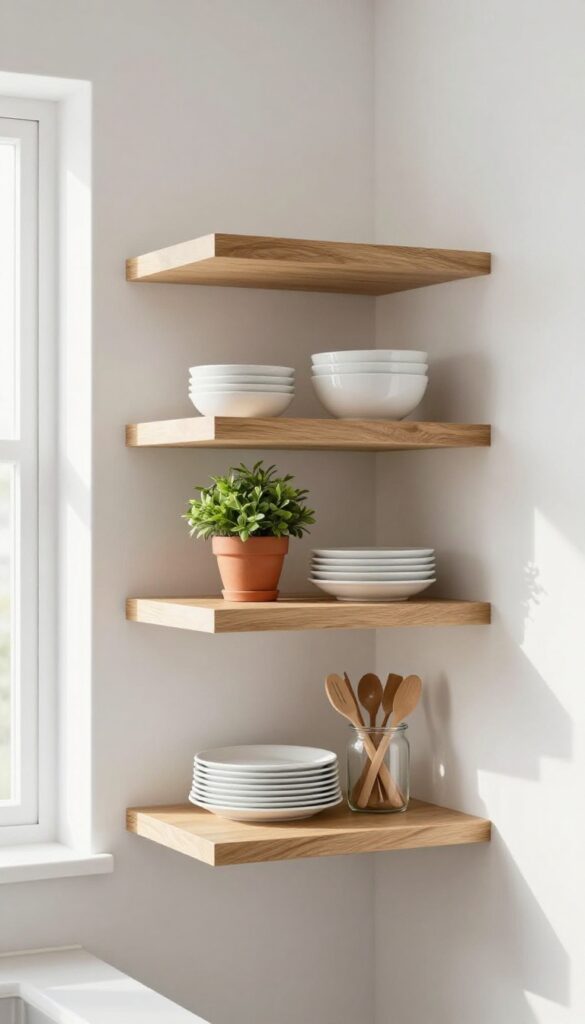
Kitchen corners are notorious for being useless. They either become clutter magnets or you just ignore them completely because you don’t know what to do with that weird triangle of space. Corner shelves are a smart way to turn that forgotten area into storage that actually feels planned.
This idea works especially well in smaller kitchens where every inch counts. I’ve always liked corner shelves because they feel like a little design detail instead of just “more storage.” They’re also perfect for stuff you want nearby but not directly on your main counter.
Why This Works
Corners usually waste wall space because standard cabinets and shelves don’t fit naturally there. Adding corner shelving makes that space functional without eating up the rest of the room.
It also helps break up the straight lines in most kitchens. That little angled shelving moment adds visual interest without trying too hard.
How to Do It
- Decide if you want triangular corner shelves or L-shaped wraparound shelves.
- Measure from the corner out on both sides so your shelf depth stays even.
- Use wall anchors or studs depending on shelf weight.
- Install the bottom shelf first, keeping it reachable.
- Add one or two more shelves above, spacing them evenly.
Spacing matters because corner shelves can look cluttered if they’re stacked too close. You want it to feel airy, not like a storage tower.
Style & Design Tips
Corner shelves look best when you keep them curated. A few stacked plates, a small plant, and maybe a jar of wooden utensils looks cute and useful at the same time. If you cram ten random appliances into that corner, it starts looking like you gave up.
Also, don’t ignore the shelf finish. If your kitchen has black hardware, consider black brackets or darker wood tones so everything feels coordinated. Using matching shelf brackets is a small detail, but it makes a huge difference.
Pro Tip or Budget Hack
Use simple shelf boards and install them with basic L-brackets, then paint the brackets the same color as the wall. It gives that “floating” look without paying for fancy hidden hardware.
I’ve done this in a rental kitchen before, and it made the corner look custom even though it was basically the cheapest setup possible.
3. Open Pantry Shelving for Quick Grab Storage
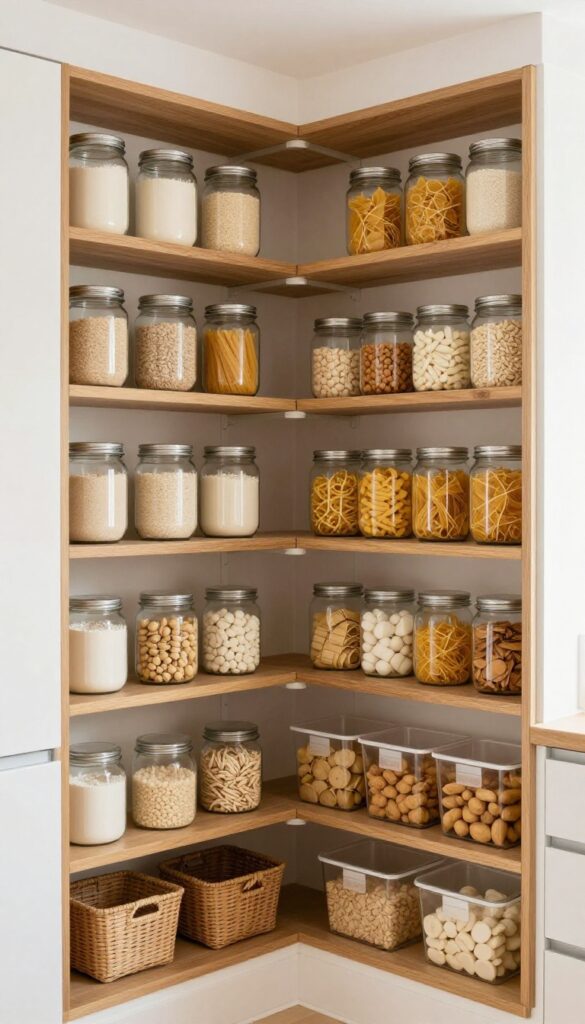
Pantries are amazing in theory, but in reality, they often turn into dark little caves where food goes to disappear. Open pantry shelving fixes that because everything is visible, easy to reach, and way easier to keep organized. Even if you don’t have a real pantry, you can create a pantry-style shelf wall in a corner or unused nook.
This works great if you’re tired of digging behind bags and boxes every time you cook. I personally love open pantry shelves because they make meal prep faster, and they also force you to stop hoarding half-used ingredients you forgot existed.
Why This Works
Open shelving keeps everything in sight, so you naturally rotate your food and waste less. It also makes it easier to group items like snacks, baking supplies, and canned goods.
The big win is efficiency. Instead of rummaging through deep cabinets, you can grab what you need instantly.
How to Do It
- Choose a wall or nook near your kitchen work zone.
- Install sturdy shelves with a depth of 12 inches for pantry items.
- Space shelves about 12–14 inches apart.
- Add storage bins for categories like snacks, breakfast, and baking.
- Use clear jars for staples like rice, flour, and pasta.
Each step matters because pantry shelving needs to handle weight. Food gets heavy fast, and cheap shelves will sag if you don’t plan properly.
Style & Design Tips
This is where containers save your life. If you leave everything in its original packaging, open pantry shelves can look messy in about two seconds. Use matching jars, woven baskets, and clear bins to make it feel tidy.
Also, label things, even if it’s just simple black labels. It makes the whole setup look intentional and helps everyone in the house find stuff without asking you fifty questions. Try to avoid mixing too many colors of packaging, because it can get visually loud.
Pro Tip or Budget Hack
Buy big bags of pantry staples from bulk stores and transfer them into inexpensive clear containers. It’s cheaper long-term, and your shelves instantly look like one of those fancy “organized kitchen” photos.
Not gonna lie, it also makes you feel like you have your life together, even if you don’t.
4. Shelf and Rail Combo for Everyday Essentials
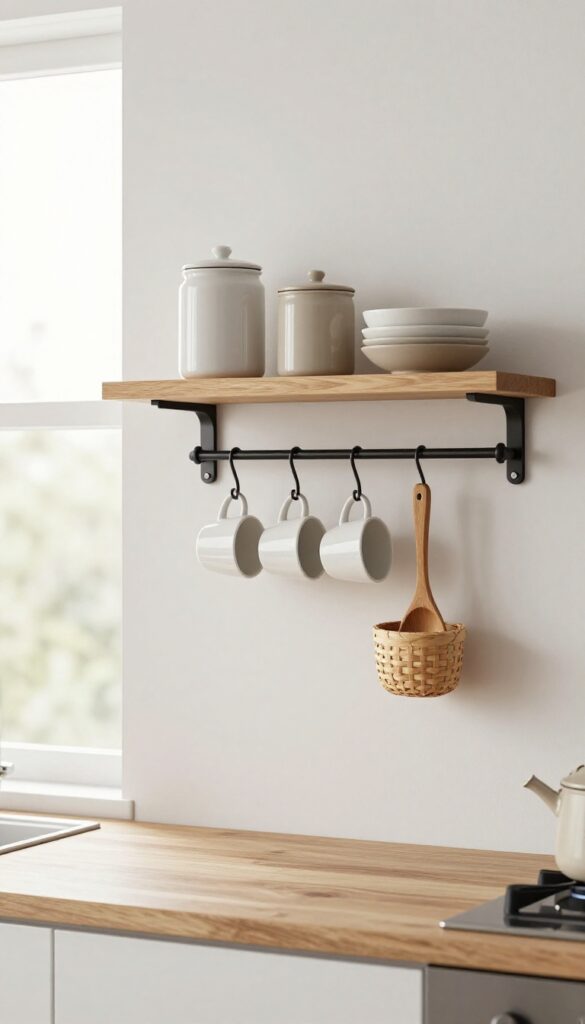
Some kitchen items don’t belong in drawers, but they also shouldn’t sit on the counter all day. That’s where a shelf and rail combo becomes a total game changer. You can store items on the shelf while hanging utensils, mugs, or small baskets from the rail underneath.
This setup works especially well near a coffee station or cooking area. I’ve tried this before and loved how it kept the counter cleaner while still keeping everything within arm’s reach. It’s one of those setups that feels like it belongs in a European kitchen.
Why This Works
This idea doubles your storage in one vertical space. The shelf holds heavier items, while the rail handles smaller items that would normally clutter drawers.
It also creates a functional zone. Instead of storing things all over the kitchen, you keep related items together in one spot.
How to Do It
- Install a sturdy wall shelf at a comfortable height.
- Mount a metal rail underneath the shelf using brackets.
- Add hooks for mugs, utensils, or hanging baskets.
- Group items by purpose (coffee, cooking, baking).
- Keep heavier items on the shelf, lighter items on the rail.
The reason grouping matters is simple: if you hang random stuff, it looks messy. But if it’s a clear “station,” it looks smart.
Style & Design Tips
Use matching hooks and keep the hanging items consistent. A row of white mugs looks clean, but random novelty mugs can make it look cluttered fast. Also, don’t hang too many utensils unless you want your kitchen to look like a restaurant supply wall.
Stick to a simple palette: wood shelf, black rail, neutral accessories. And keep a little empty space, because crowded rails start looking chaotic.
Pro Tip or Budget Hack
Instead of buying an expensive rail system, use a simple towel bar and S-hooks. It works almost the same, and it’s way cheaper.
I’ve seen people spend a fortune on fancy hanging rails when a $10 towel bar does the exact same job.
5. Built-In Shelving Around the Stove
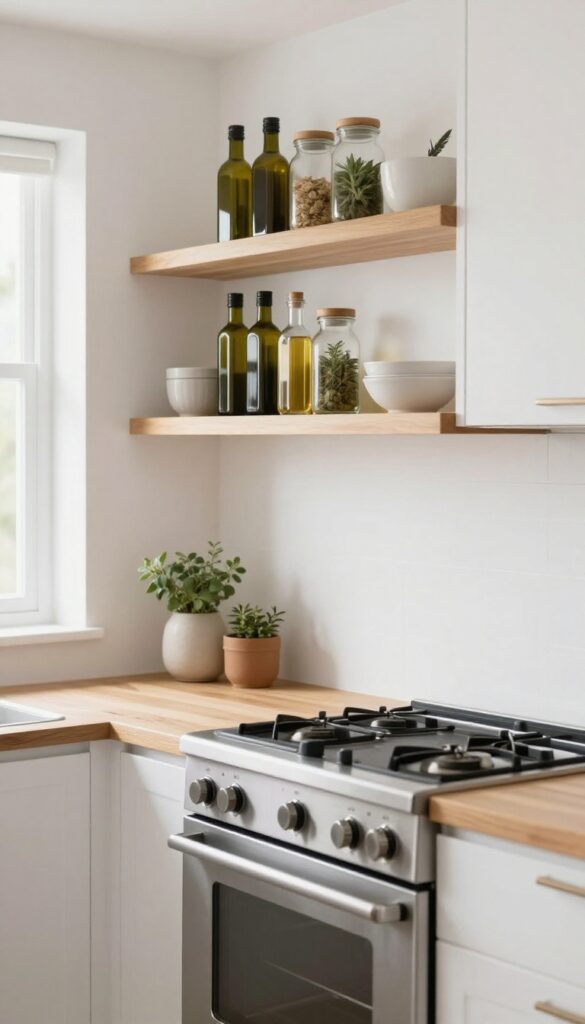
That space around the stove is usually underused, which is kind of crazy because it’s the heart of the kitchen. Built-in shelving around the stove gives you a spot for spices, oils, cooking tools, and even a few decorative items without having to walk across the kitchen mid-cooking.
This idea makes your kitchen feel custom, like it was designed by someone who actually cooks. I love this setup because it makes cooking smoother and keeps your most-used items close without turning the counter into a disaster zone.
Why This Works
Cooking is all about flow. When spices and oils are within reach, you save time and avoid the annoying back-and-forth across the kitchen.
It also makes the stove wall look intentional. Instead of a random backsplash and empty wall, you create a design feature that feels high-end.
How to Do It
- Measure the wall space on either side of your stove.
- Decide on shallow shelves (4–6 inches deep) for spices and oils.
- Install shelves with heat-resistant clearance away from burners.
- Add a small lip or rail to prevent bottles from falling.
- Keep frequently used items on the lower shelf for easy access.
That lip matters because oils and spice jars will absolutely fall eventually. Gravity always wins, especially when you’re cooking fast.
Style & Design Tips
Use uniform spice jars if possible, because mismatched bottles look cluttered fast. I’m not saying you need to go full influencer kitchen, but a little consistency goes a long way.
Also, avoid overloading shelves near heat with plastic containers or anything that can warp. Keep it simple: oils, spices, and maybe a small ceramic utensil holder. If you want décor, add one small framed print or a tiny plant, but don’t overdo it.
Pro Tip or Budget Hack
If you don’t want to install shelves permanently, use slim wall-mounted spice racks instead. They’re cheaper, easier to install, and still give you that “built-in” feel.
Honestly, a good spice rack can make your kitchen look ten times more organized overnight.
6. Under-Cabinet Shelving for Hidden Extra Space
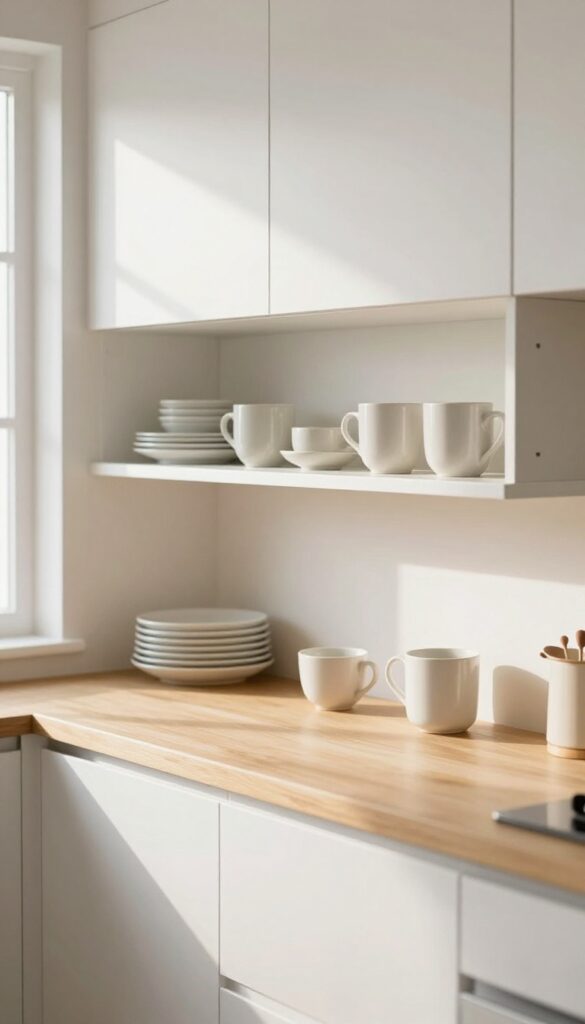
Under-cabinet shelving is one of those ideas that feels almost too simple, but it works ridiculously well. Most people ignore the space underneath upper cabinets, even though it’s perfect for small shelves, racks, or hanging storage. Adding shelving under cabinets gives you extra storage without changing the kitchen layout at all.
This is especially helpful if your counters get crowded fast. I’ve used under-cabinet shelves in the past for mugs and small plates, and it instantly made the kitchen feel less cramped. It’s like finding bonus storage you didn’t know you had.
Why This Works
This idea uses vertical space that normally goes wasted. Instead of leaving empty air under cabinets, you turn it into usable storage.
It also keeps items close to where you use them. Mugs under cabinets near the coffee maker just makes sense.
How to Do It
- Measure the clearance between your counter and cabinet bottom.
- Choose slim under-cabinet shelves or wire racks.
- Install them using screws or adhesive mounts depending on weight.
- Store lightweight items like mugs, small plates, or spice jars.
- Keep frequently used items toward the front for easy grabbing.
Clearance matters because you don’t want to bang your head or block counter workspace. Keep shelves slim and practical.
Style & Design Tips
Under-cabinet shelving works best when it blends in. Use white racks under white cabinets, or black racks under darker cabinets. If it stands out too much, it can look like an afterthought.
Also, don’t store random clutter there. Stick to a theme: mugs, glassware, or spices. If you hang ten different things, it becomes visually noisy, and your kitchen starts feeling busy instead of organized.
Pro Tip or Budget Hack
Use adhesive-mounted under-shelf baskets for instant storage without drilling. They’re great for renters and perfect for things like napkins, sandwich bags, or small snacks.
It’s not glamorous, but it’s a cheap fix that feels weirdly satisfying.
7. Plate Rack Shelving for Vertical Dish Storage
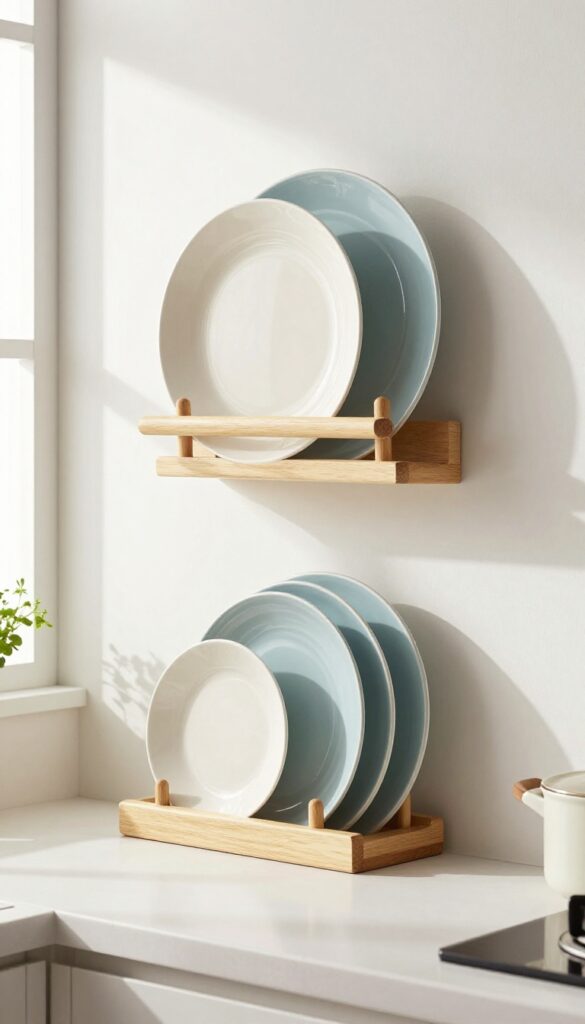
If you’ve ever stacked plates in a cabinet and had to lift ten dishes just to grab one, you already know why plate rack shelving is genius. Plate racks store dishes vertically so you can grab what you need without disturbing the whole stack. It’s also a nice way to show off pretty dishes without putting them on full display like open shelving does.
I’ve always liked plate racks because they feel a little old-school in a charming way. They also make your kitchen feel organized without trying too hard.
Why This Works
Vertical storage makes dish access easier and prevents chips from stacking friction. It also uses cabinet or wall space more efficiently than stacking everything flat.
It’s also visually cleaner. Plates lined up neatly look intentional, while messy stacks look like chaos waiting to happen.
How to Do It
- Decide if you want an in-cabinet plate rack or wall-mounted rack.
- Measure your plates to ensure proper spacing.
- Install rack supports securely so plates don’t wobble.
- Arrange plates by size, largest in back and smallest in front.
- Leave a little space so plates slide in and out easily.
That spacing matters because if plates are too tight, you’ll hate using it. If they’re too loose, they’ll wobble and feel unsafe.
Style & Design Tips
Plate racks look best when the dishes have a cohesive vibe. You don’t need matching sets, but try to keep colors coordinated so it doesn’t look like a thrift store shelf exploded.
Also, avoid putting your ugliest plates in the front. If you’re going to store plates vertically, use your nice everyday dishes. It’s also smart to add a small trim rail so plates don’t slip forward if bumped.
Pro Tip or Budget Hack
You can DIY a plate rack by using wooden dowels and a simple board. It’s surprisingly easy, and it costs way less than buying a pre-made rack.
If you already have scrap wood lying around, this is basically a weekend project with a big payoff.
8. Ladder-Style Shelving for a Stylish Storage Wall
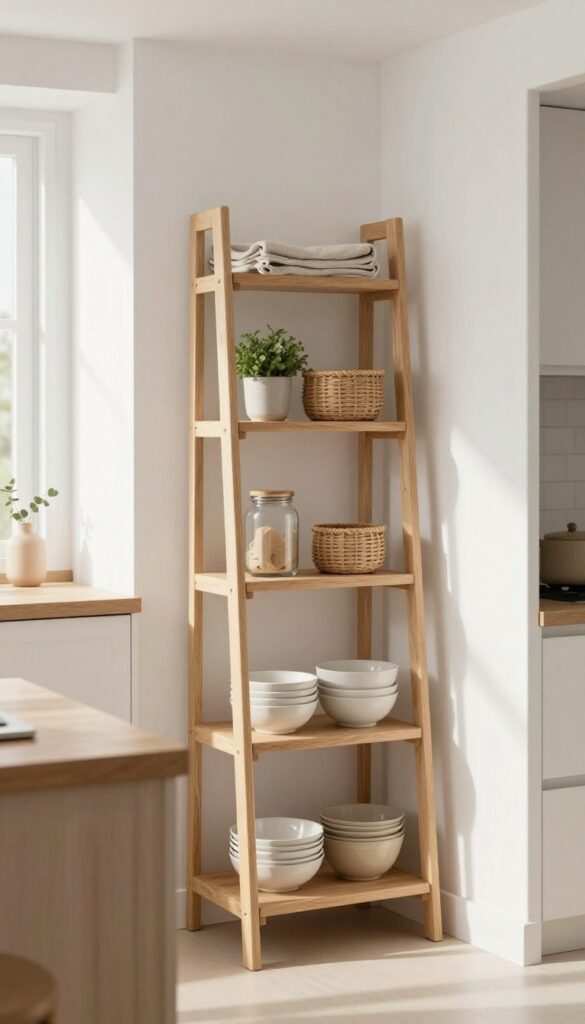
Ladder shelves aren’t just for living rooms. In a kitchen, they can create a beautiful storage wall without needing built-in cabinets. This is perfect for small kitchens, apartments, or awkward layouts where you don’t have enough cabinet space. Ladder shelving gives you multiple tiers for storage while still feeling light and open.
I like ladder shelves because they look intentional and decorative even when they’re holding practical stuff. They’re also easy to move around, which is great if you like rearranging things every few months like some people do.
Why This Works
Ladder shelving gives you vertical storage without making the kitchen feel boxed in. It works especially well in open-plan spaces because it feels like furniture rather than permanent cabinetry.
It also gives you flexibility. You can style it with baskets, cookware, plants, and pantry storage all in one spot.
How to Do It
- Choose a ladder shelf with sturdy weight capacity.
- Place it against a wall near your kitchen workspace.
- Use baskets for smaller items to prevent clutter.
- Keep heavier items on the lower shelves for stability.
- Add a mix of functional and decorative pieces for balance.
That weight distribution matters because ladder shelves can tip if you load heavy stuff up top. You want it stable and safe.
Style & Design Tips
Ladder shelves can look messy if you don’t organize them. Use matching baskets and containers to create clean zones, and avoid stacking random items with no structure. Also, don’t overload every shelf, because ladder shelves look best with a little breathing room.
If you want it to feel stylish, stick to a simple color palette. Natural wood with black accents works great, or white shelves with glass containers for a clean look. Avoid cluttering it with too many small knickknacks, because that’s how you end up with a shelf that looks like a flea market booth.
Pro Tip or Budget Hack
Buy a basic ladder shelf and paint it to match your kitchen. A quick coat of matte black or warm white makes even a cheap shelf look high-end.
I’ve done this before, and it’s honestly one of the easiest “cheap but looks expensive” tricks out there.
9. Shelf Nook for a Coffee or Tea Station
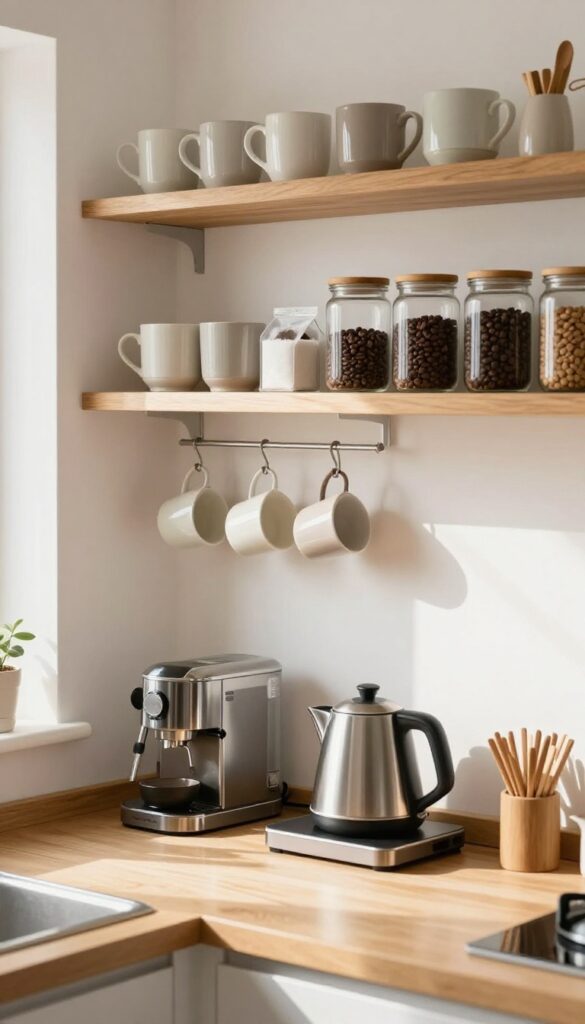
A coffee station is one of those things that sounds like a luxury, but it’s actually just smart organization. Instead of scattering coffee supplies across cabinets and counters, you create one little shelf nook that holds everything: mugs, coffee beans, tea bags, sweeteners, and maybe even your favorite little frother. It keeps your kitchen calmer, especially in the morning when nobody wants to think.
I’m a big fan of coffee station shelving because it makes the kitchen feel more functional and more personal. It also keeps you from constantly shuffling stuff around just to make counter space.
Why This Works
This creates a dedicated zone for one routine you do every single day. When everything has a “home,” you stop leaving random mugs and coffee jars all over the counter.
It also makes your kitchen feel styled without being overly decorative. Functional zones always look more intentional than random storage.
How to Do It
- Pick a corner of the kitchen near an outlet.
- Install one shelf for mugs and one shelf for supplies.
- Add hooks under the shelf for hanging mugs if space is tight.
- Store coffee pods, tea bags, and sugar in jars or bins.
- Keep your coffee machine and kettle directly below on the counter.
The reason the outlet matters is obvious: if you set it up far from power, you’ll hate it and stop using it properly.
Style & Design Tips
Keep the coffee station clean and cohesive. Use matching jars for sugar and coffee, and don’t leave fifteen different branded packages sitting out. If you want it to feel cozy, add a small tray to corral items like stir sticks and sweeteners.
Avoid cluttering it with décor signs that say “COFFEE” in giant letters unless you really love that vibe. A small plant or candle looks more natural and less like you bought the whole aisle at a home store.
Pro Tip or Budget Hack
Use a thrifted tray or small wooden crate as the base organizer. It keeps everything contained and makes cleanup easy, because you can just lift the whole tray to wipe the counter.
This is one of those setups that feels fancy but costs almost nothing if you do it right.
10. Rolling Shelf Cart for Flexible Kitchen Storage
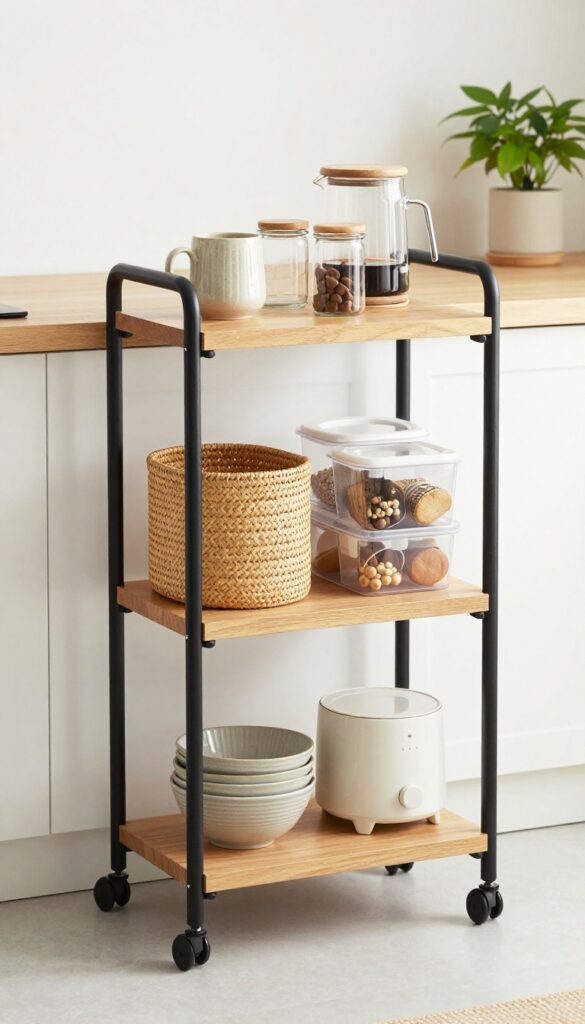
If your kitchen feels like it’s always one drawer short of being functional, a rolling shelf cart can save you. It’s basically portable shelving that you can move wherever you need it, which is great if your kitchen storage is limited or your counters get crowded. You can use it for pantry storage, baking supplies, or even as a mobile coffee station.
I love rolling carts because they’re practical and kind of underrated. People buy them thinking they’ll be “extra storage,” and then they realize it becomes one of the most useful things in the whole kitchen.
Why This Works
A rolling cart adds storage without requiring any installation or permanent changes. It’s also flexible, so you can shift it depending on what you’re doing.
It also keeps clutter contained. Instead of spreading kitchen stuff across counters, you can organize it all on one cart.
How to Do It
- Choose a cart with at least three tiers and locking wheels.
- Decide what category it will hold (snacks, baking, appliances, produce).
- Add bins or baskets for smaller items.
- Keep heavier items on the bottom shelf for stability.
- Roll it into a corner when not in use to keep the kitchen open.
The category step matters because if you throw random stuff on it, it becomes a junk cart fast. You want it organized from day one.
Style & Design Tips
Pick a cart that matches your kitchen hardware. Black carts look modern, white carts feel clean, and wood carts add warmth. Keep it styled neatly with containers, not loose packaging.
Also, don’t overload it with too many tall items. If everything is sticking up, it looks cluttered and chaotic. A cart should feel organized, not like a rolling storage closet.
Pro Tip or Budget Hack
If you already have a cheap cart, upgrade it by adding a wood cutting board on top as a “counter” surface. It makes the cart look custom and gives you extra prep space.
I’ve seen people do this with a basic metal cart, and it instantly looks like something from a fancy kitchen showroom.
Final Thoughts
Kitchen shelving is one of those upgrades that feels small, but it changes how your whole kitchen works. When storage is visible, reachable, and organized, you cook more easily and clean up faster without even thinking about it.
The trick is choosing shelves that match your space and your habits, not just what looks good online. Start with one shelving idea, dial it in, and build from there, because once your kitchen feels functional, it’s hard to go back.