7 Kitchen Backsplash Ideas That Transform Your Space
Most kitchens don’t look outdated because of the cabinets or appliances. They look outdated because the wall behind the counters is either boring, stained, or stuck in a trend that should’ve been left in 2009.
A backsplash is basically the “background character” of your kitchen, but it affects everything. It changes how clean the room feels, how bright it looks, and whether the whole space feels intentional or just… thrown together.
I’ve learned the hard way that the wrong backsplash can make even expensive countertops look cheap. And the right one can make a basic kitchen feel like it belongs in a magazine.
1. Classic Subway Tile With a Twist
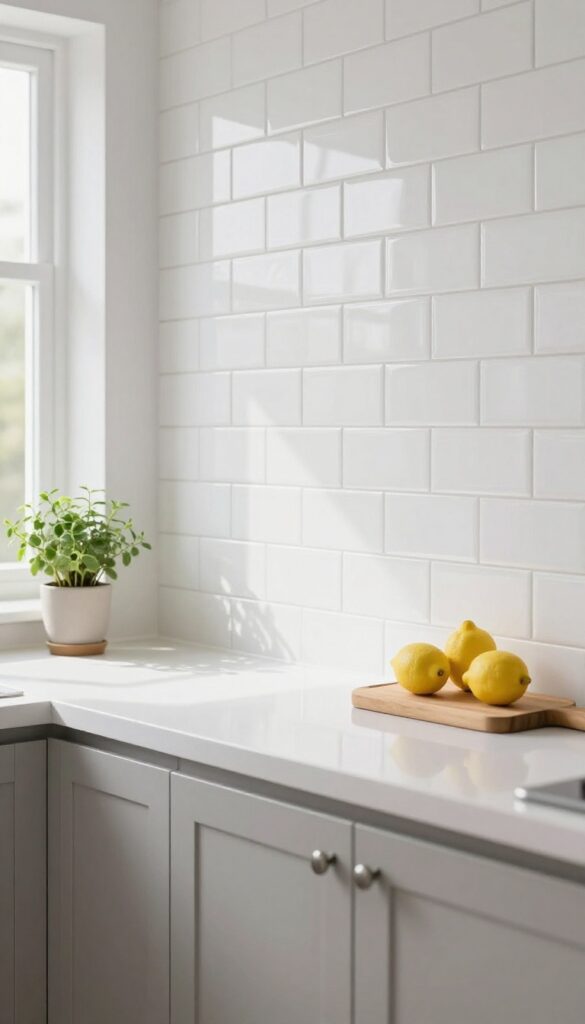
Subway tile is popular because it’s safe, but the standard white brick pattern can also feel painfully predictable. If your kitchen already has neutral cabinets and basic hardware, regular subway tile can end up looking like you copied the first photo you saw online.
That’s where the “twist” comes in. You keep the clean subway look, but you change the layout, grout color, or finish to make it feel custom.
This is honestly one of my favorite backsplash ideas because it works in almost every kitchen style. It also solves a real problem: you want something timeless, but you don’t want your kitchen to look like a builder-grade rental.
Why This Works
Subway tile works because it reflects light, adds texture, and doesn’t fight with other design choices. The rectangular shape also naturally makes your kitchen feel wider or taller depending on the pattern you choose.
The twist makes it feel personal without making it risky. You’re not committing to some wild trend that you’ll hate in two years, but you’re also not stuck with the “default kitchen” look.
How to Do It
- Pick a subway tile finish: glossy, matte, or handmade-style
- Choose a layout like herringbone, vertical stack, or diagonal brick
- Decide on grout color: white for seamless, gray for contrast, or black for drama
- Install from the center outward so the pattern stays balanced
- Seal grout properly so it doesn’t turn into a grease magnet
If you’re doing a patterned layout like herringbone, dry-lay a section first. It’s way easier to adjust before the thinset is involved and your patience is gone.
Style & Design Tips
If your kitchen is small, glossy tile helps bounce light around and makes it feel more open. Matte tile looks more modern and hides fingerprints better, but it can feel flat if the kitchen doesn’t have enough lighting.
Avoid super bright white grout unless you love cleaning. White grout looks gorgeous for about five minutes, then life happens. Also, if you want contrast grout, make sure it matches something else in the kitchen like hardware or lighting, or it can look random.
Pro Tip or Budget Hack
Want the custom look without paying for expensive specialty tile? Use standard subway tile but install it vertically and add dark grout. It looks designer-level, but the materials cost stays low.
If you’re nervous about grout color, test a small patch behind the stove first. That area hides mistakes better than anywhere else.
2. Peel-and-Stick Tile That Actually Looks Good
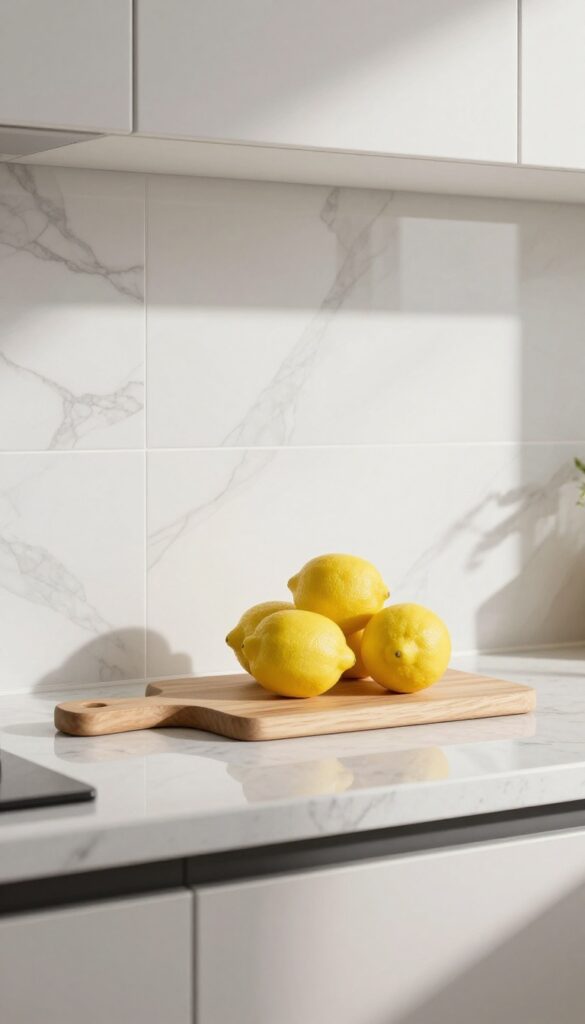
Peel-and-stick backsplash tile used to look like something you’d slap onto a dorm room wall. Now, some of it looks shockingly realistic, especially the thicker vinyl or gel-style versions. This is perfect if you want a backsplash makeover but you’re not ready to commit to real tile, thinset, and a weekend of dust and regret.
This idea is especially useful for renters or anyone who changes their mind a lot. If you’re the type of person who rearranges furniture for fun, a permanent backsplash might feel like a trap.
Why This Works
The biggest win here is speed. You can change the entire look of your kitchen in a few hours, and you don’t need special tools or tile experience.
It also solves the “ugly backsplash but not worth renovating” problem. Some kitchens have perfectly fine cabinets and counters, but the backsplash looks like it belongs in a forgotten fast-food restaurant.
How to Do It
- Clean the wall thoroughly using degreaser, not just soap
- Measure the space and mark a level guideline
- Start from the center or most visible area, not the corner
- Press firmly and smooth each tile as you go
- Use a utility knife for clean cuts around outlets and edges
- Seal the edges with caulk if you want a more finished look
The wall has to be clean and smooth. If there’s texture, the adhesive won’t bond properly and your backsplash will start peeling like a bad sunburn.
Style & Design Tips
Go for styles that mimic real materials like marble, ceramic, or stone. Avoid overly shiny fake metallic designs unless your kitchen is already modern and sleek, because those can look cheap fast.
Also, don’t pick tiny mosaic patterns unless you’re sure you can align them properly. Misaligned peel-and-stick tile is extremely noticeable, and it screams “DIY gone wrong” in the loudest possible way.
Pro Tip or Budget Hack
If you want peel-and-stick to look more expensive, add a simple trim piece at the top and bottom. Even a thin strip of painted wood molding makes it look more permanent.
And if you’re worried about heat near the stove, use peel-and-stick only on the sides and install a small stainless steel or glass panel behind the burners.
3. Bold Patterned Tile for Instant Personality
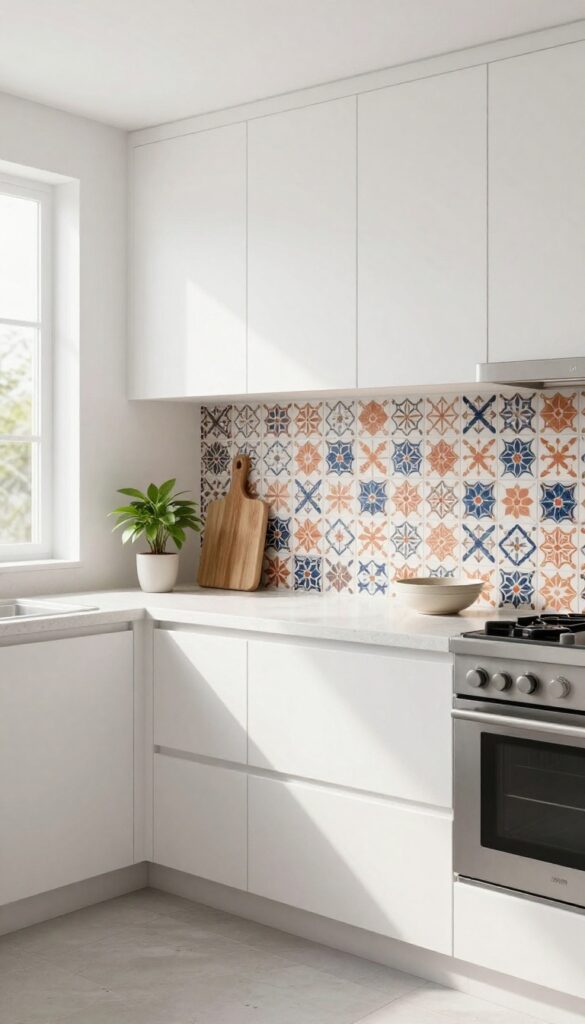
A patterned tile backsplash is basically the fastest way to make your kitchen look like it has a designer behind it. If your cabinets are plain or your counters feel boring, a bold backsplash adds the personality your kitchen is missing. It’s also a great way to make a neutral kitchen feel intentional instead of unfinished.
I’ll be honest though, this is the idea that scares people the most. Everyone loves bold tile on Pinterest, but nobody wants to spend money on something that might feel “too much” once it’s on their wall.
Why This Works
Patterned tile becomes a focal point, and focal points create structure. Without one, kitchens can look flat and forgettable, especially if everything is white, gray, or beige.
It also distracts from things you don’t love. If your countertops are basic or your cabinets aren’t your dream style, a strong backsplash pulls attention away from those flaws.
How to Do It
- Choose one main pattern style: Moroccan, geometric, vintage, or floral
- Keep the rest of the kitchen simple so the backsplash can shine
- Order extra tile because patterned batches can vary slightly
- Lay out the pattern on the floor before installing
- Use neutral grout so the design doesn’t get chaotic
- Finish edges with a clean trim piece
If the tile has a repeating pattern, check the alignment every few rows. One tiny mistake can snowball into a full backsplash disaster.
Style & Design Tips
If your kitchen is small, use patterned tile in lighter colors. Dark busy patterns can make the space feel cramped, especially if you don’t have great lighting.
Avoid mixing multiple bold elements. If you already have dramatic countertops or colorful cabinets, you need a backsplash that supports those features, not competes with them. The biggest mistake people make is trying to make every surface “the star,” and then nothing looks good.
Pro Tip or Budget Hack
You don’t have to tile the entire wall. You can install patterned tile only behind the stove or sink and use a simpler tile everywhere else.
Another smart move is using patterned tile as a strip or border inside a basic subway tile backsplash. It gives you that custom look without the full price tag.
4. Sleek Slab Backsplash for a High-End Look
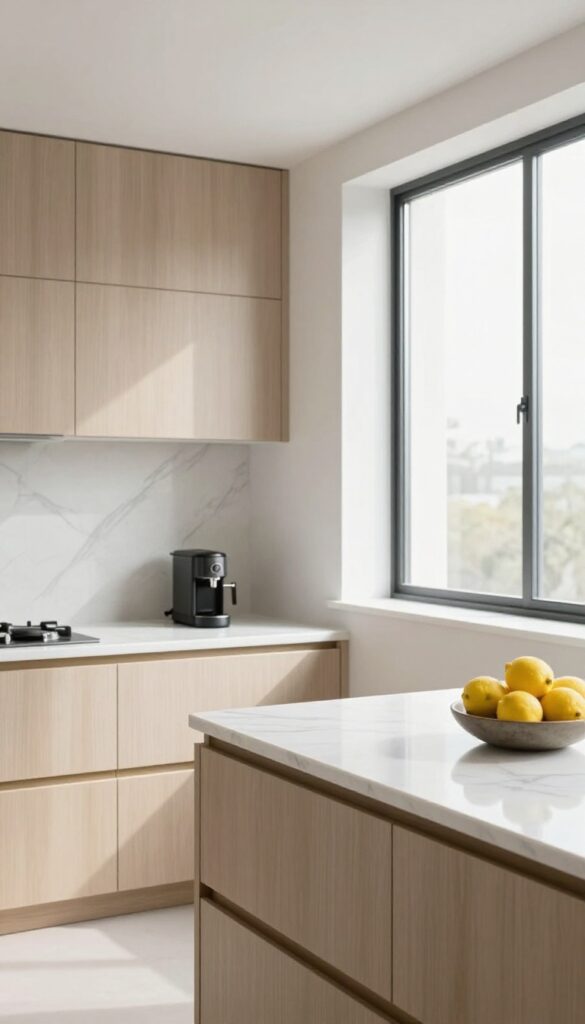
A slab backsplash is when you take your countertop material and run it straight up the wall as one smooth surface. It looks expensive because it is expensive, but it also looks ridiculously clean and modern. If you’ve ever seen a luxury kitchen and wondered why it looks so “rich,” there’s a good chance it had a slab backsplash.
This is a great solution if you hate grout lines. Grout looks cute until you realize it collects grease like it’s doing it on purpose.
Why This Works
The uninterrupted surface makes the kitchen look bigger and cleaner. It creates a smooth visual flow that makes everything feel polished.
It’s also incredibly easy to wipe down. No scrubbing grout, no stained corners, no weird buildup behind the coffee maker that you pretend not to see.
How to Do It
- Choose a countertop material that looks good vertically
- Decide whether you want full-height or standard backsplash height
- Have the slab professionally cut and installed
- Use matching caulk at seams for a clean finish
- Keep outlets minimal if possible to avoid breaking the slab look
Slab installation is not a beginner DIY project unless you enjoy stress. This is one of those “hire a pro” moments, especially with stone.
Style & Design Tips
Quartz is a great choice because it’s consistent and low maintenance. Marble looks stunning, but it stains easily, so it’s not ideal if you cook a lot or splash tomato sauce like it’s a hobby.
If you choose a dramatic veined slab, keep your cabinets and hardware simple. Let the slab do the talking. Also, avoid busy countertops with busy slab backsplashes unless you want your kitchen to look like it’s shouting at you.
Pro Tip or Budget Hack
If a full slab is too expensive, do a slab backsplash only behind the stove. That one area gives you the luxury look without needing to cover the whole kitchen.
You can also use large-format porcelain panels that mimic marble. They look shockingly close to real stone but cost much less.
5. Painted Backsplash for the Simplest Upgrade
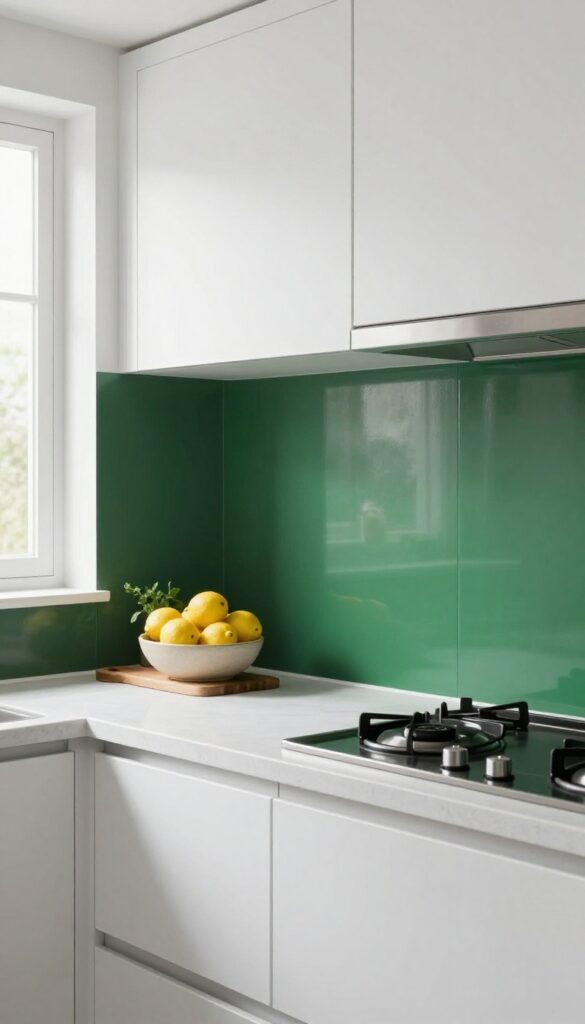
This one sounds almost too basic, but a painted backsplash can completely change a kitchen. If you’re tired of your old tile but don’t have the budget or energy for a full replacement, paint is a surprisingly strong option. You just have to do it the right way, because regular wall paint will not survive behind a stove.
This is the idea for people who want a clean look and a fast refresh without tearing anything apart.
Why This Works
Paint gives you a blank slate. It can brighten a dark kitchen, tone down busy counters, or add contrast if everything feels too beige and bland.
It also gives you flexibility. If you paint your backsplash and hate it, you repaint it. That’s way easier than ripping out tile and crying into a bucket of grout.
How to Do It
- Clean the backsplash thoroughly using degreaser
- Sand lightly so the surface grips primer
- Apply bonding primer designed for tile or glossy surfaces
- Use durable paint like semi-gloss or cabinet enamel
- Seal with a clear topcoat for extra protection
- Caulk edges for a finished look
The primer step is non-negotiable. Skip it and your backsplash paint will peel faster than a cheap sticker.
Style & Design Tips
If you want the backsplash to disappear, paint it the same color as the wall. This makes the kitchen feel larger and calmer, especially in small spaces.
If you want drama, go dark. Deep green, charcoal, or navy looks amazing behind white cabinets. Just make sure you balance it with good lighting, because dark paint can make a kitchen feel heavy if the room already lacks natural light.
Pro Tip or Budget Hack
Use stencil patterns over painted tile if you want a faux “cement tile” look. It’s cheaper than buying real patterned tile and it looks surprisingly convincing from a normal distance.
Also, if your grout lines are deep, use a skim coat filler first. Otherwise, the grout lines will still show through and ruin the clean look.
6. Warm Wood or Faux Wood Panels for Cozy Texture
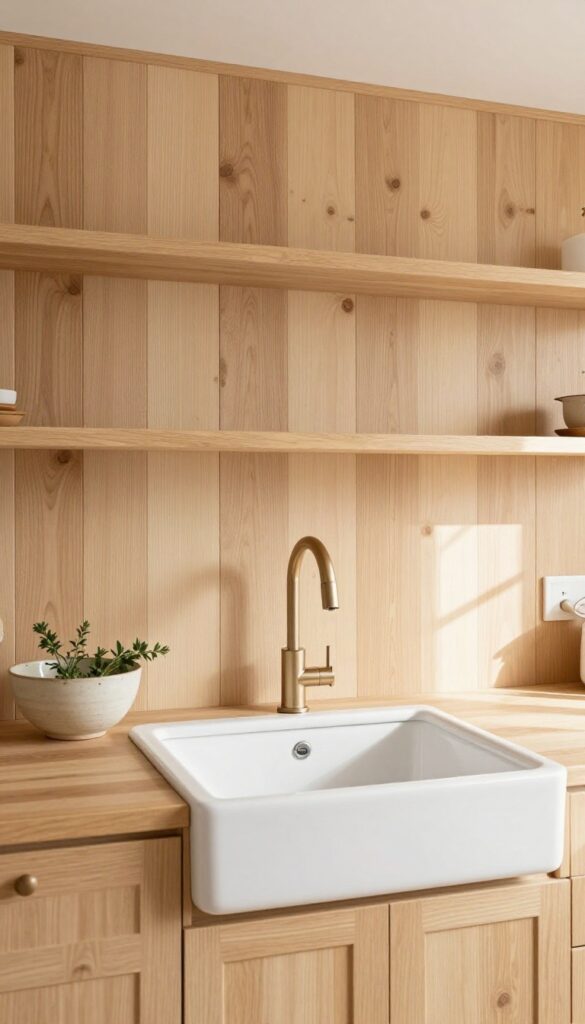
Most people don’t think of wood for a backsplash because they assume it’ll get ruined by moisture. But sealed wood, wood-look tile, or faux wood panels can bring a cozy, warm vibe that tile sometimes can’t. If your kitchen feels cold or sterile, wood texture instantly softens it.
This idea works especially well in farmhouse, rustic, cottage, or Scandinavian-style kitchens. It makes the space feel lived-in in a good way, not messy.
Why This Works
Wood adds natural warmth and texture, which is something a lot of modern kitchens lack. White kitchens can look beautiful, but they can also feel a little too “showroom” if there’s no warmth.
It also creates contrast without needing bold color. Even light wood tones add depth and character without making the kitchen feel busy.
How to Do It
- Decide between real wood, faux panels, or wood-look porcelain tile
- If using real wood, choose a hardwood or treated wood option
- Seal the wood properly with water-resistant finish
- Install panels using adhesive and nails where needed
- Caulk edges to prevent moisture getting behind it
- Keep it away from direct stove heat unless protected
If you’re doing this behind the stove, you need serious heat protection. A wood backsplash right behind a gas burner is basically asking for trouble.
Style & Design Tips
Light oak or birch tones look clean and modern. Dark walnut tones look rich but can feel heavy in small kitchens, so use them carefully.
Avoid overly orange wood finishes. That’s the fastest way to make your kitchen feel dated. If you want warmth, go for neutral warm tones, not “1990s honey oak cabinet” vibes.
Pro Tip or Budget Hack
Wood-look porcelain tile is the cheat code here. It gives you the warmth of wood but the durability of tile, and it handles moisture like a champ.
If you want a cheap option, use peel-and-stick faux wood planks and seal the seams with clear caulk. It won’t last forever, but it looks great for the price.
7. Stainless Steel Backsplash for a Clean, Modern Edge
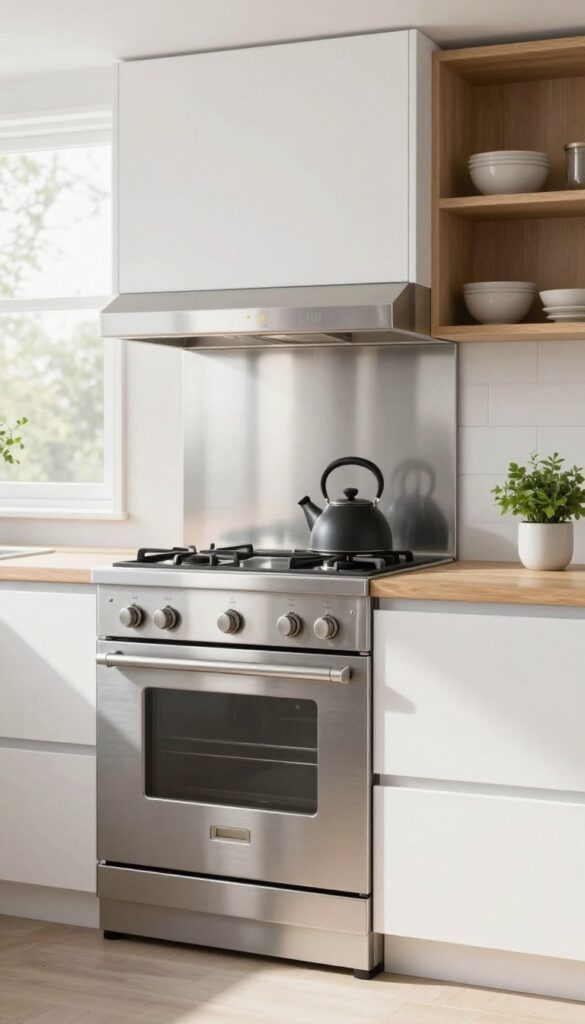
Stainless steel backsplashes are underrated, and I’m not sure why. People think stainless steel is only for restaurant kitchens, but it can look incredibly sleek and modern in a home kitchen. It also solves one big annoying problem: keeping the backsplash clean.
If you cook often, especially with oil, tomato sauce, or anything that splatters, stainless steel is a lifesaver.
Why This Works
Stainless steel reflects light and makes kitchens feel brighter. It also creates a modern, professional vibe that works beautifully with white, black, or wood cabinets.
It’s also ridiculously easy to clean. You wipe it down and it looks good again, which is honestly a rare luxury in a kitchen.
How to Do It
- Measure the backsplash area carefully
- Decide if you want full wall coverage or just behind the stove
- Choose stainless steel sheets or panels with a brushed finish
- Install using construction adhesive and screws if needed
- Seal seams with metal-safe caulk
- Use outlet covers that match the modern look
Brushed stainless steel is usually the best option. It hides fingerprints better than polished steel, which shows every smudge like it’s keeping receipts.
Style & Design Tips
This looks amazing in modern kitchens, but it also works in farmhouse spaces if you balance it with warm wood and softer elements. Stainless steel can feel cold if the rest of the kitchen is too sterile.
Avoid pairing it with too many shiny finishes. If you already have glossy cabinets, chrome hardware, and bright counters, stainless steel might push the kitchen into “overly reflective” territory.
Pro Tip or Budget Hack
If a full stainless backsplash is too expensive, install a stainless steel panel only behind the stove. That area gets the most mess anyway, and it instantly adds that high-end chef-kitchen vibe.
You can also buy stainless steel sheets from home improvement stores and have them cut to size. It’s cheaper than custom ordering a specialty backsplash.
Final Thoughts
A backsplash is one of those upgrades that feels small until you see the before-and-after difference. It changes the entire personality of the kitchen, even if you don’t touch the cabinets or countertops.
If you’re stuck choosing, I always recommend starting with what fits your lifestyle, not what looks trendy online. The best backsplash is the one you won’t hate cleaning and won’t regret in six months.