8 Living Room Archway Ideas That Add Character
Most living rooms look fine until you realize they don’t really have a “moment.” They function, they hold a couch, and they technically qualify as a room, but they don’t feel finished.
That’s usually not a furniture problem either, it’s an architecture problem.
And no, you don’t need to knock down walls or spend your savings to fix it. Archways are one of those upgrades that instantly make a space feel intentional, like it belongs in a real home and not a rental listing photo.
1. Add a Drywall Archway to Replace a Basic Square Opening
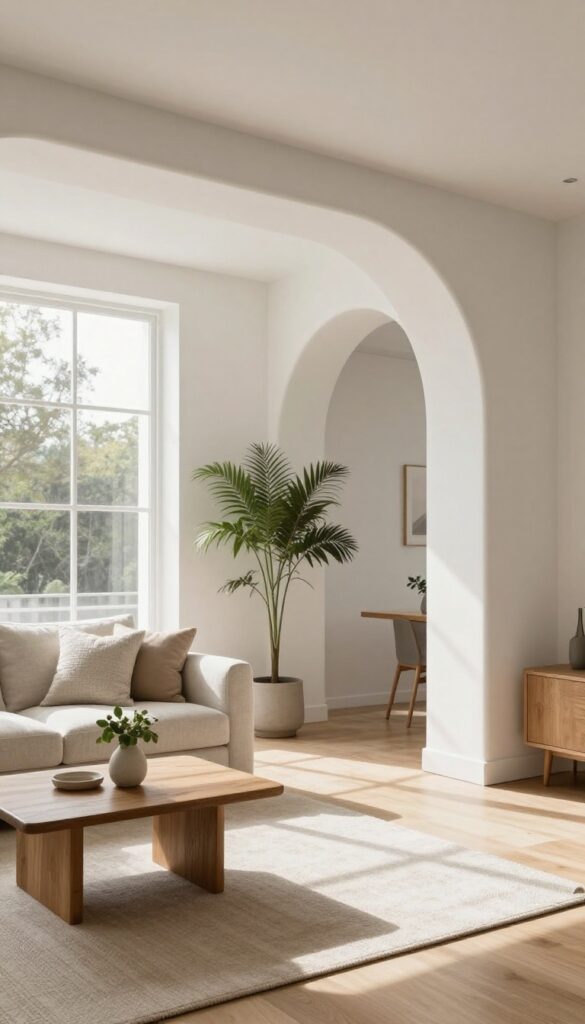
Square openings between rooms are practical, but they’re also painfully boring. They give “builder-grade shortcut” energy, especially when your living room connects to a dining room or hallway.
An arched opening softens the whole layout and makes the room feel more custom without changing the footprint.
I’ve seen this done in small spaces and huge homes, and it works every time. Even a subtle curve adds personality, and it makes the living room feel like it has actual design decisions behind it.
Plus, it’s one of those things people notice immediately without knowing why.
Why This Works
Straight lines everywhere can make a living room feel boxy and harsh. An arch breaks up all that sharp geometry and makes the transition between rooms feel smoother. It also draws your eye upward, which makes ceilings feel taller and spaces feel more open.
It gives the room a built-in focal point without needing more decor clutter. That’s honestly the best kind of design upgrade, because it improves the space even when you haven’t styled anything yet.
How to Do It
- Measure the width and height of the opening so your arch stays balanced and not awkwardly narrow.
- Create a template using cardboard or thin plywood to get a clean, symmetrical curve.
- Build the curved frame using flexible drywall or kerf-cut plywood, depending on how sharp you want the curve.
- Install drywall over the frame and tape the seams carefully, because sloppy seams will ruin the whole look.
- Sand, prime, and paint with patience, because arches show imperfections more than flat walls.
The curve needs to feel intentional, not like you guessed and hoped for the best. Taking time on the template stage saves you from fixing weird proportions later.
Style & Design Tips
A soft rounded arch works in almost every style, but a taller arch looks especially elegant in modern or transitional rooms. Keep the edges clean and smooth, because lumpy drywall corners make it look cheap fast. If your trim is very squared and modern, consider a slightly sharper arch instead of a full curve.
Avoid painting the arch in a random accent color unless you have a plan. A bold arch can look amazing, but it can also look like you’re trying too hard if the rest of the room isn’t styled to match.
Pro Tip or Budget Hack
If full drywall work feels too intense, you can fake the look with lightweight MDF arch kits or even pre-cut arch corner pieces. They won’t feel as “built-in,” but they still add that curved character without requiring serious construction. For a weekend DIY, that’s a solid win.
2. Create a Double Archway for a Dramatic Room Transition
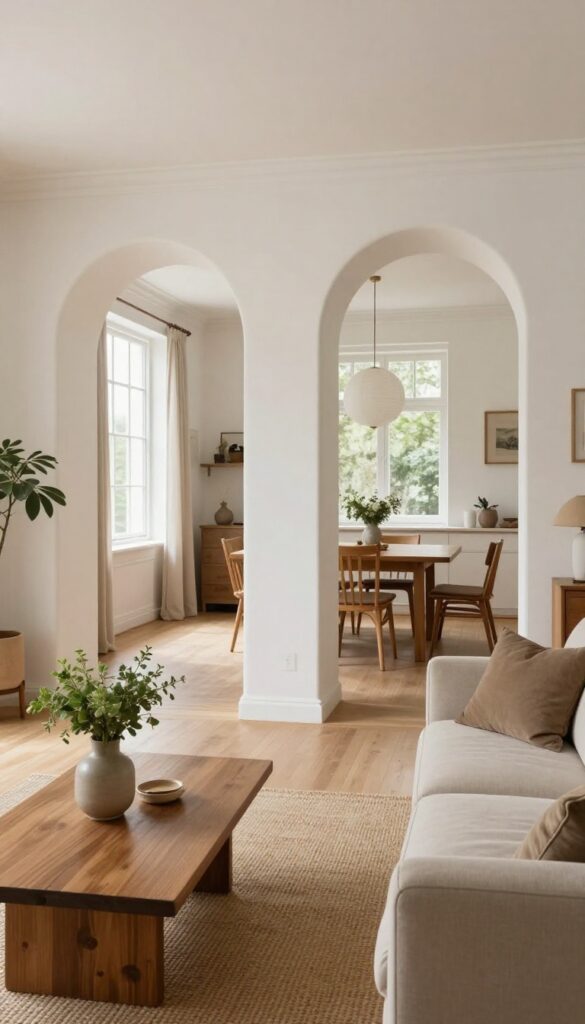
If you have a wide opening between your living room and another area, one arch can sometimes look a little lost. A double archway gives the space structure and makes the opening feel like a designed feature instead of a random gap in the wall. It’s the difference between “open concept” and “intentional layout.”
This works especially well if your living room flows into a dining room or family room. The arches create separation while still keeping everything visually open. It also adds that high-end “old house charm” without needing an old house.
Why This Works
Double arches create rhythm, which is a fancy design word for “your eyes like it.” Instead of one wide blank opening, you get two framed pathways that feel architectural. It makes the living room feel more layered, and it adds depth without adding clutter.
It also gives you symmetry, which instantly makes spaces feel more polished. Even if your furniture is basic, a symmetrical archway makes the whole room feel more designed.
How to Do It
- Measure the opening and decide how wide each arch should be, leaving enough space for a center column.
- Frame a center support column using wood studs, keeping it perfectly straight and level.
- Build matching arch curves on both sides using a template, because uneven arches look awful.
- Add drywall or MDF over the arch frames, then tape, mud, and sand until smooth.
- Paint everything the same color for a seamless built-in look.
The center column is the key to making this look intentional. If it’s too skinny, it looks flimsy, and if it’s too thick, it feels like a wall got stuck in the way.
Style & Design Tips
If your living room leans modern, go for arches with a slightly flatter top, almost like a soft rectangle. For a Mediterranean or Spanish vibe, do a full rounded arch. Keep the trim minimal, because heavy trim can make double arches feel bulky.
One mistake people make is adding arches that are too short. A taller arch always looks more elegant, and it makes the room feel taller too.
Pro Tip or Budget Hack
If you can’t build a full center column, you can fake it with a decorative column wrap. Use MDF to build out a box around an existing beam or support point, then add arch pieces on either side. It’s cheaper, easier, and still gives that double-arch drama.
3. Add an Archway with Built-In Shelving on One Side
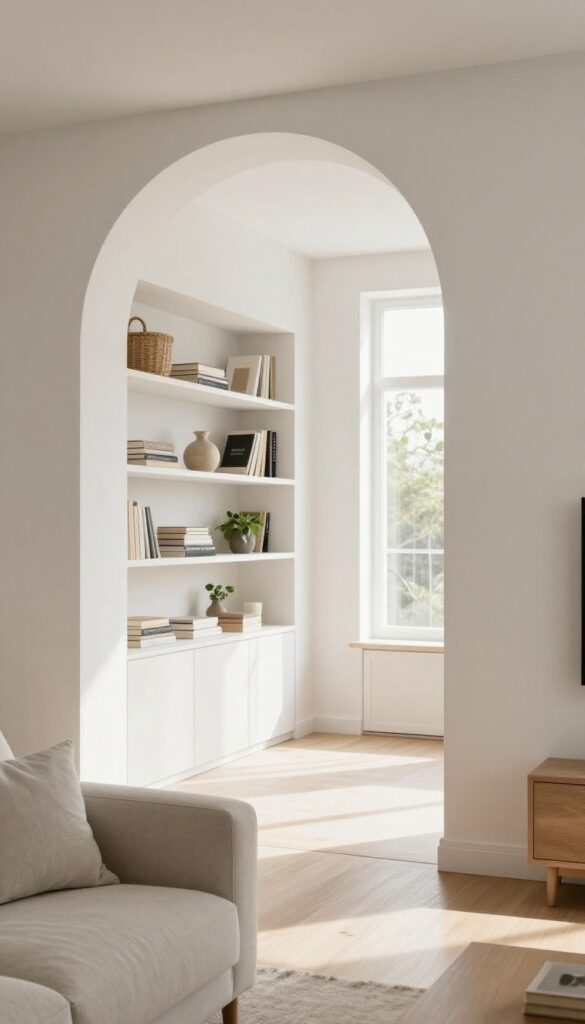
Living rooms always need more storage, but nobody wants to admit it. You can only hide so much in baskets before it starts looking like you’re hoarding throw blankets. Adding built-in shelving next to an archway gives you storage and style at the same time.
This idea works beautifully in living rooms that connect to hallways or dining areas. The arch becomes the main feature, and the shelves feel like they belong there instead of looking like furniture you shoved into an empty corner.
Why This Works
The arch gives softness, while shelving adds structure. That contrast creates visual balance, and it makes the living room feel more thoughtfully designed. You also get functional storage without sacrificing floor space, which is honestly a rare miracle.
Built-ins also make a room feel expensive. Even if you DIY it with basic materials, it still gives that custom-home vibe.
How to Do It
- Choose which side of the opening will have shelving, based on traffic flow and furniture placement.
- Frame out shelving using studs or plywood boxes, making sure everything stays square.
- Build the arch first or at least plan it, so the shelving doesn’t fight with the curve.
- Install shelves at varied heights so it doesn’t look like a boring bookcase.
- Caulk and paint everything the same color for that seamless built-in look.
If the shelves aren’t level, you’ll notice it every day forever. This is not the time to eyeball things.
Style & Design Tips
Use the shelves for a mix of books, decor, and a few practical items like baskets. Don’t over-style them, because that starts to look like a home staging photo and not a real living room. Add a couple of larger objects to anchor the look, and leave some breathing room.
A common mistake is using tiny decor everywhere. You need some bigger pieces to make it feel balanced, otherwise the shelves look cluttered fast.
Pro Tip or Budget Hack
If full built-ins feel intimidating, use IKEA shelves and build a simple frame around them. Paint everything the same color, add trim, and suddenly you look like you hired someone. It’s one of the best “fake it until it’s custom” tricks.
4. Frame the Archway with Wood Trim for Instant Warmth
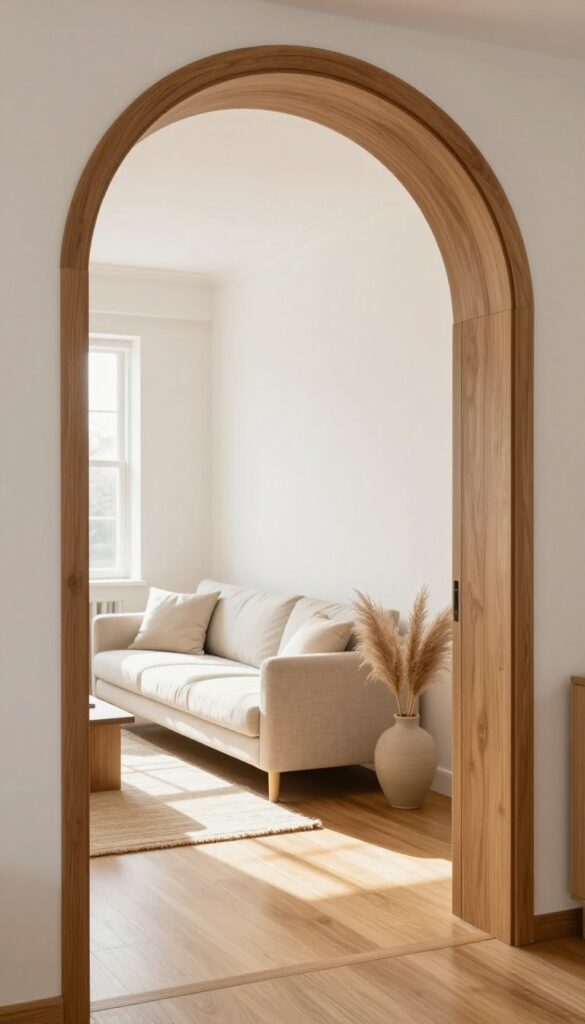
Not everyone wants to do drywall work, and honestly, I get it. Drywall dust gets everywhere and somehow ends up in places that should be physically impossible. If you want the arch look without major construction, framing an existing opening with wood trim can completely change the vibe.
This is especially good if your living room feels a little cold or plain. Wood trim adds warmth and texture instantly, and it can lean modern, rustic, farmhouse, or even slightly vintage depending on the wood tone.
Why This Works
Wood creates contrast against flat painted walls. It adds texture and depth, which makes the archway feel like a real architectural detail instead of a random shape. Even a simple wood frame makes the opening look more finished.
It also pulls the room together if you already have wood accents like floors, beams, or furniture. The archway becomes a connecting design element instead of just an opening.
How to Do It
- Measure the opening and decide how thick you want the trim to be.
- Use a pre-cut arch trim kit or cut flexible plywood strips to follow the curve.
- Attach the trim using finish nails and construction adhesive for a clean hold.
- Fill nail holes and sand the wood lightly before staining or painting.
- Seal the finish properly so it doesn’t look patchy or unfinished.
The key is clean cuts and smooth corners. Sloppy trim work can make the whole living room feel like a rushed DIY.
Style & Design Tips
For a modern look, use a flat wood profile with clean edges and stain it in a medium tone. For farmhouse style, use thicker trim and slightly distressed wood. If you want something trendy, go with a natural oak tone because it plays well with almost every color palette.
Avoid orange-toned stain unless your floors already match it. Orange wood can make a living room look dated fast, and it’s hard to undo once it’s on.
Pro Tip or Budget Hack
If you want the wood look without the cost, use MDF trim and paint it in a warm “wood-like” shade. It won’t fool a carpenter, but it will still give you contrast and character. Also, if you already have leftover trim from another project, this is a great way to use it up.
5. Paint an Accent Archway to Create a Built-In Focal Point
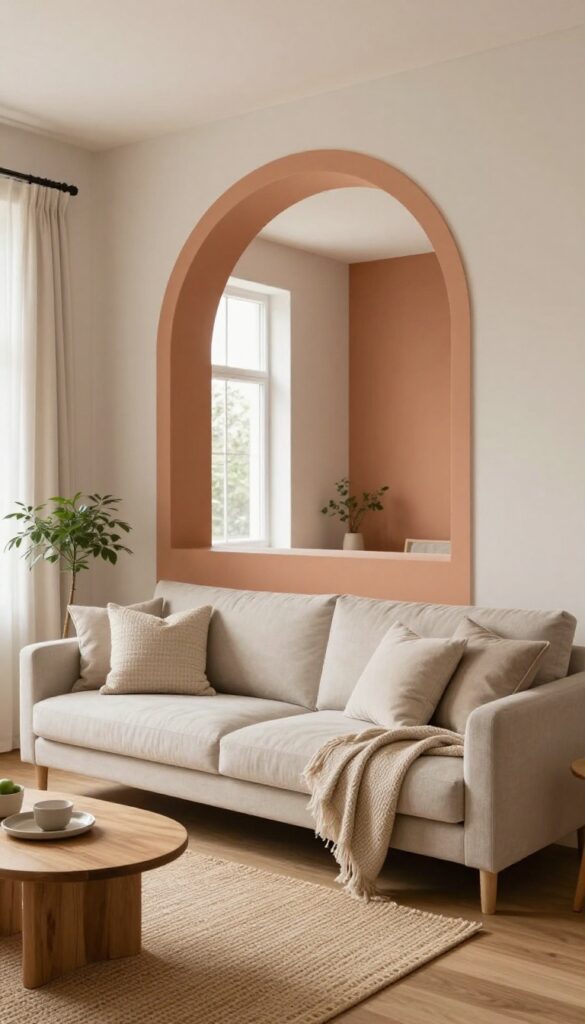
If you want maximum impact with minimum effort, paint is your best friend. A painted archway can completely change the feel of your living room, even if the opening itself is still square. You’re basically creating the illusion of architecture without doing any construction.
I’ve tried this in a few spaces, and it’s weirdly satisfying. It makes the room feel styled instantly, like you suddenly got your life together and started making “design choices.”
Why This Works
A painted arch draws attention to the transition between spaces. It frames the opening and creates contrast, which gives the living room more depth. It also makes the room feel layered without needing more furniture or decor.
It’s also reversible, which makes it great if you get bored easily. And let’s be honest, people who love home décor usually get bored easily.
How to Do It
- Clean the wall area around the opening so paint sticks smoothly.
- Use painter’s tape to mark the arch shape, using a string and pencil for symmetry.
- Paint the arch in thin coats, because thick paint looks streaky and messy.
- Remove tape carefully while the paint is slightly wet for crisp edges.
- Touch up the edges with a small brush for a clean, finished look.
Symmetry matters a lot here. If your arch looks lopsided, it will haunt you every time you sit on the couch.
Style & Design Tips
Choose a color that connects to something in the living room, like your rug, pillows, or artwork. Earthy tones like terracotta, sage, and warm taupe look especially good because they feel intentional and cozy. If you want bold, deep navy or charcoal can look stunning, but only if the room has enough light.
Avoid super bright colors unless you’re going for playful. A neon arch can quickly turn into “I regret this” energy.
Pro Tip or Budget Hack
If you’re scared of commitment, paint the arch using peel-and-stick paint samples first. Some brands sell large sample sheets, and you can test the look for a week before going all in. It’s a cheap way to avoid repainting your whole wall after a panic spiral.
6. Add an Arched Room Divider Wall for a Semi-Open Layout
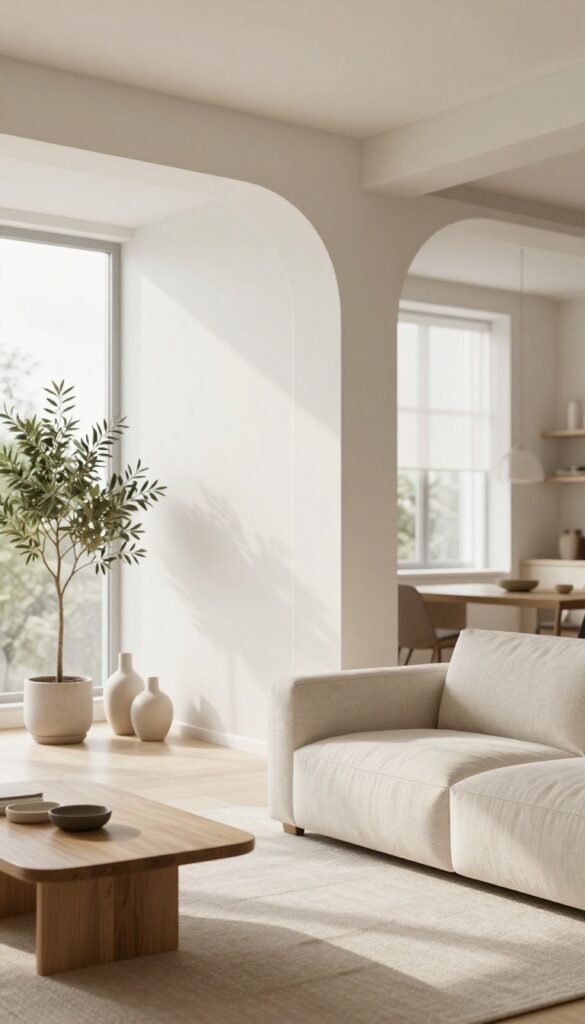
Sometimes you want your living room to feel open, but not so open that you can see every mess from every angle. An arched divider wall is the perfect compromise. It separates spaces while keeping the flow, and it adds serious architectural character.
This works really well if your living room connects to a dining area, office nook, or entryway. Instead of a full wall, you get a partial barrier with an arch cut-out that feels stylish and intentional.
Why This Works
It gives the room structure without closing it off. The arch opening keeps things airy, but the divider creates a sense of separation that makes your living room feel more “designed.” It also gives you more wall space for furniture placement, which is a huge bonus.
I love this idea because it makes open layouts feel less like a warehouse. Open concept is great until you realize you can see your laundry pile from the couch.
How to Do It
- Decide how tall and wide the divider wall should be based on sightlines and furniture layout.
- Frame the wall with studs, anchoring it properly to floor and ceiling for stability.
- Cut out the arch opening using a template so the curve looks clean and even.
- Install drywall, then tape, mud, sand, and paint like a normal wall.
- Add trim or a ledge on top if you want extra detail and function.
You need to plan the placement carefully. If the divider blocks traffic flow, you’ll hate it within two days.
Style & Design Tips
Keep the divider wall simple if your living room already has a lot going on. If your space is minimal, you can add trim molding around the arch for extra character. Painting the divider the same color as the wall makes it subtle, while painting it a contrasting shade makes it a statement feature.
Don’t make the divider too short. A tiny divider wall looks like an afterthought, while a taller one feels intentional.
Pro Tip or Budget Hack
If you can’t build a real divider wall, you can create a similar effect with a tall bookshelf and an arched cut-out panel attached to it. It’s not the same as a built-in wall, but it still gives separation and style without major construction. Plus, you get storage, which is never a bad thing.
7. Install an Arched Nook for Seating or Display
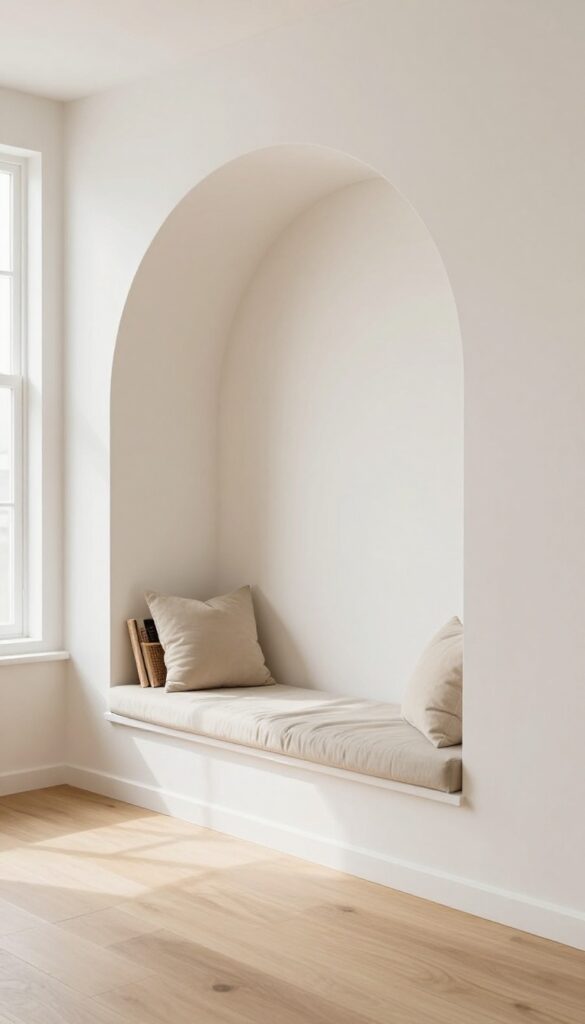
If you have an awkward corner or blank wall space in your living room, an arched nook can turn it into something special. Instead of filling it with random furniture, you create a built-in moment that feels custom. It can be a reading nook, a display niche, or even a mini bar area.
This idea makes your living room feel like it has personality. It’s also one of those upgrades that makes people assume you spent way more money than you actually did.
Why This Works
Nooks create depth and dimension. They break up flat walls and give your living room a focal point that feels architectural. The arch shape softens the look and makes the nook feel cozy without needing extra decor.
It also helps with functionality. A nook can give you a dedicated space for reading, storage, or display instead of spreading everything around the room.
How to Do It
- Choose a spot that won’t interfere with furniture placement or walking paths.
- Frame out the nook using studs, creating depth based on your wall space.
- Build the arch opening using a template for symmetry.
- Add shelves or a bench inside depending on how you want to use the nook.
- Finish with drywall, sanding, and paint for a seamless look.
The depth matters. If the nook is too shallow, it looks pointless, and if it’s too deep, it can feel heavy and bulky.
Style & Design Tips
For a cozy nook, add a bench cushion and a couple of pillows, but keep it simple. For a display niche, use a mix of decor and practical items like baskets. Painting the inside of the nook a slightly darker shade can make it pop and look more dramatic.
Avoid overfilling it. A nook should feel curated, not like you shoved all your extra candles in one place.
Pro Tip or Budget Hack
You can fake an arched nook using a tall cabinet or bookshelf with an arched panel attached to the front. Paint it the same color as your wall, and it will look built-in from a distance. It’s not perfect, but it’s a great shortcut if you’re renting or working with a small budget.
8. Add an Archway with Decorative Plaster Texture for Old-World Charm
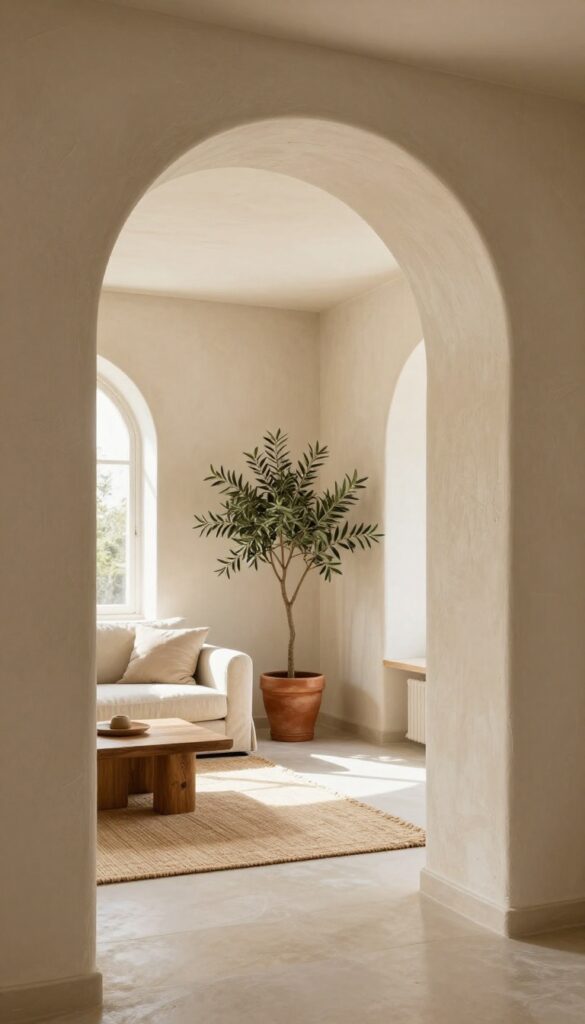
If you want your living room to feel rich and layered, texture is the secret weapon. A plaster-textured archway gives serious old-world character, even if your home is brand new. It looks expensive, handmade, and slightly European, which is basically the dream.
I’ve seen this trend everywhere lately, and for once, I actually agree with the internet. It’s not just pretty, it adds depth that paint alone can’t replicate.
Why This Works
Plaster texture creates shadow and dimension. It makes the archway feel more sculptural, which instantly gives your living room character. It also hides small imperfections better than flat paint, which is great because most walls aren’t as smooth as people pretend.
It gives you that “aged, timeless” look without needing vintage architecture. And it makes the whole room feel warmer and more lived-in.
How to Do It
- Prep the archway surface by cleaning and lightly sanding so plaster sticks properly.
- Apply a skim coat of joint compound or plaster using a trowel or putty knife.
- Use uneven strokes intentionally to create natural texture, not random messy blobs.
- Let it dry completely, then lightly sand down sharp peaks for a smoother look.
- Paint with a matte finish so the texture looks soft and natural.
The trick is keeping it organic. If you overthink the strokes, it starts to look fake and forced.
Style & Design Tips
Warm whites, creamy beige, and soft greige look best with plaster texture. Matte paint is non-negotiable here, because glossy paint makes texture look weird and cheap. If you want extra drama, you can do a limewash-style paint finish over the plaster for that cloudy, dimensional look.
Avoid pairing plaster arches with super shiny modern decor. You can mix styles, but you need balance, or the room starts feeling confused.
Pro Tip or Budget Hack
You don’t need real Venetian plaster to get the look. Joint compound works surprisingly well, and it’s way cheaper. If you want an even easier option, use a textured paint additive and apply it just around the archway for a softer version of the effect.
Final Thoughts
Archways are one of those upgrades that make a living room feel like it has actual personality instead of just furniture placed inside a box.
Whether you go full drywall renovation or just fake it with paint and trim, the impact is bigger than people expect. The best part is that you’re improving the structure of the room, not just decorating it.
If I had to pick one to start with, I’d go with either the painted arch or the wood-trim frame because they give the fastest payoff. Once you add one good arch detail, you’ll start looking at every boring square doorway like it personally offended you.