9 Mud Kitchen Ideas for Creative Outdoor Play
Outdoor play gets way more interesting when kids have a “reason” to stay outside longer, and mud kitchens do that better than almost anything else.
They’re messy, yes, but they’re also oddly organized when you build them the right way. The trick is giving kids a setup that feels like a real workspace, not just a random pile of dirt.
The best mud kitchens aren’t expensive or fancy, they’re just smart. They use simple materials, easy storage, and a layout that makes kids feel like little outdoor chefs.
And honestly, once you set one up properly, you’ll wonder why you didn’t do it sooner.
1. The Pallet Mud Kitchen Counter
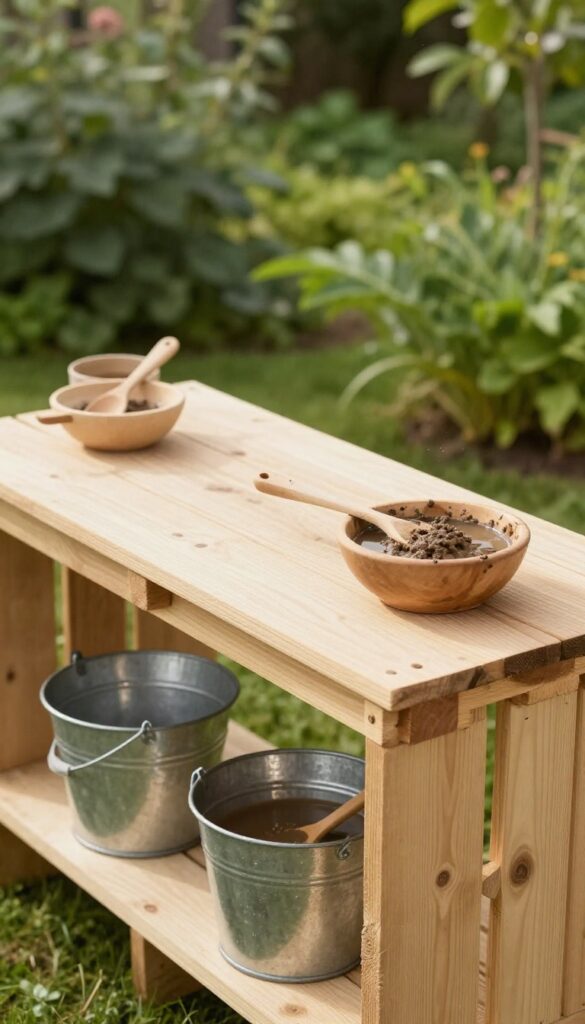
Kids get bored fast when they don’t have a “base” to work from, and that’s exactly what a pallet counter solves.
Instead of mixing mud soup on the ground like little raccoons, they suddenly have a real station where everything happens. A simple pallet setup instantly makes the whole activity feel like a real kitchen.
I love this idea because pallets are usually free, and the design is naturally kid-sized. You don’t need perfect carpentry skills to make it look good either. I’ve seen some people build gorgeous ones, but even a basic pallet counter works like magic.
This setup also helps keep the mess in one zone. Mud stays on the counter, water stays near the bucket, and you’re not stepping on surprise slime puddles across your yard. That alone is worth it.
Why This Works
Kids love pretend play, but pretend play works best when it feels believable. A pallet counter gives them structure, like a real kitchen island, so their brains automatically go into “I’m cooking” mode. It also gives them height, which makes mixing and pouring easier.
From a practical standpoint, pallets are sturdy and naturally built to hold weight. Mud pies, rocks, buckets, and old pots won’t destroy it. It’s basically built for chaos.
How to Do It
- Find a clean wooden pallet that isn’t splintered or treated with harsh chemicals
- Sand the rough edges, especially the top surface where hands will go
- Flip it flat or stand it upright depending on how tall you want the counter
- Add a simple wood plank across the top for a smoother work surface
- Secure it with screws so it doesn’t wobble when kids lean on it
Style & Design Tips
If you want it to look cute, stain it in a natural wood tone or paint it a soft neutral color. I’ve learned that bright colors look fun at first, but they fade fast outside and start looking rough. Natural wood always ages better.
Don’t make the counter too tall, because kids will climb it like it’s Mount Everest. A good height is around knee to waist level depending on their age. Also, avoid leaving open gaps where little fingers can get pinched.
Pro Tip or Budget Hack
Attach two old hooks on the side for hanging spoons and ladles. It costs almost nothing and instantly makes the setup feel more “real.” If you want extra storage, slide a plastic crate underneath for bowls and cups.
2. The DIY Sink Station with a Water Jug
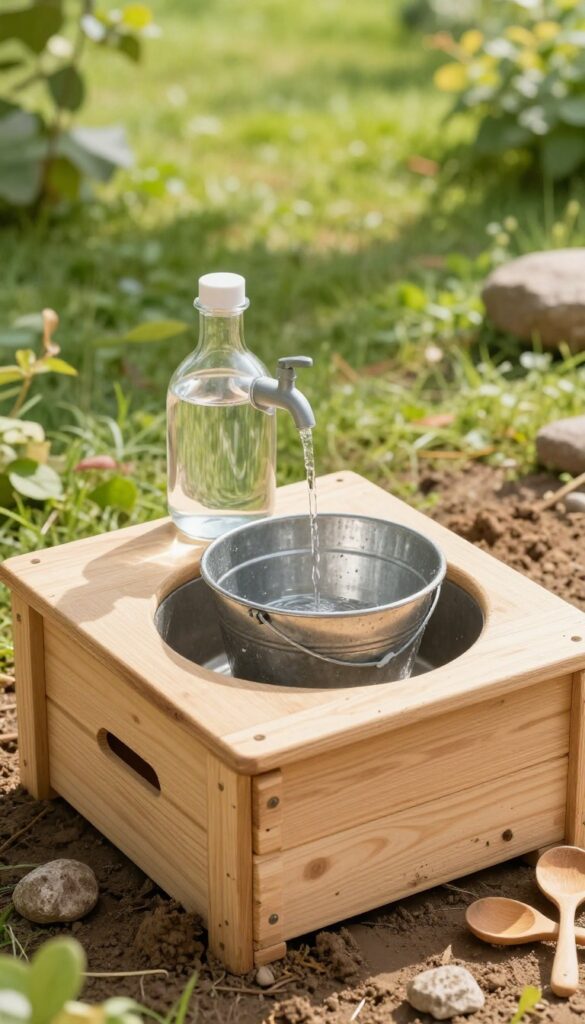
Kids will happily make mud soup with no water source nearby, but they’ll also dump your entire watering can in three minutes flat. A sink station fixes that problem by controlling the water flow. It also adds that satisfying “washing dishes” moment that kids weirdly love.
This is one of those mud kitchen upgrades that feels small but makes a huge difference. Suddenly they can rinse leaves, wash rocks, and scrub their “plates” like tiny adults. And yes, they will take it extremely seriously.
I’ve done a setup like this before, and the biggest win was how much cleaner the play area stayed. Mud still happened, obviously, but it wasn’t a swamp.
Why This Works
Kids love running water because it feels interactive and powerful. Giving them a controlled water source keeps them engaged longer while preventing them from wasting gallons of water. It also adds realism, which keeps pretend play going.
A sink station encourages cleaning habits too. It’s not that kids become tidy overnight, but they start copying what they see in real kitchens.
How to Do It
- Use a plastic tub or metal bowl as the sink basin
- Cut a hole into a wooden counter or crate to drop the basin into
- Place a large water jug above the sink area
- Add a simple spigot attachment for easy pouring
- Put a bucket underneath to catch dirty water
Style & Design Tips
Try using a metal mixing bowl instead of plastic if you want it to look nicer. Plastic gets scratched and cloudy fast, while metal looks good forever. A shiny bowl makes the whole kitchen feel more legit.
Don’t skip the catch bucket underneath. If you let the water drain directly onto the ground, you’ll create a muddy crater that grows every day.
Pro Tip or Budget Hack
Use an old drink dispenser with a spout. People donate those all the time, and they’re perfect for this. If you want to get fancy without spending money, add a small “soap” bottle filled with water for pretend washing.
3. The Hanging Utensil Wall
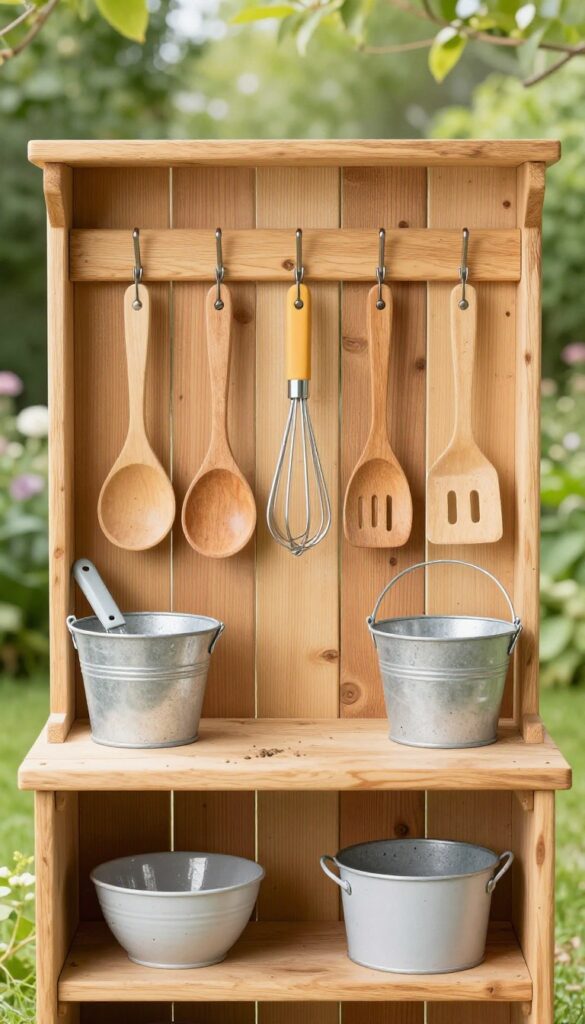
The fastest way for a mud kitchen to turn into a disaster is when tools disappear into the dirt. One second they’re stirring, the next second the spoon is buried like a lost treasure. A hanging utensil wall keeps everything visible and easy to grab.
This is also one of the easiest upgrades you can do. It makes the mud kitchen feel organized, even if the kids are making absolute chaos on the counter.
I personally love this because it adds that “real kitchen” look. Hooks instantly make any space feel functional.
Why This Works
Kids like having choices, and when they can see all their tools, they feel like they’re in charge. Hanging utensils also reduces clutter, which means less stepping on random ladles and cracking them.
It also teaches a simple habit: tools go back where they belong. It won’t be perfect, but they’ll get the idea faster than you think.
How to Do It
- Attach a wooden board or pallet piece vertically behind the counter
- Screw in hooks or nails spaced a few inches apart
- Hang old spoons, whisks, measuring cups, and spatulas
- Add a small bucket or basket for tiny tools like bottle caps
- Make sure hooks are secure so they don’t pull out
Style & Design Tips
Use matching hooks if you want it to look intentional. I’ve used random nails before, and it works fine, but hooks look cleaner and feel safer. Keep sharp edges out of the play zone.
Don’t hang heavy pots up high where they can fall. Stick to lightweight tools, and place heavy items on a shelf below.
Pro Tip or Budget Hack
Old kitchen utensils from thrift stores are cheap, but honestly, ask family members first. People have drawers full of junk utensils they’d love to get rid of. The more variety you add, the longer kids stay interested.
4. The Mud Pie Baking Shelf
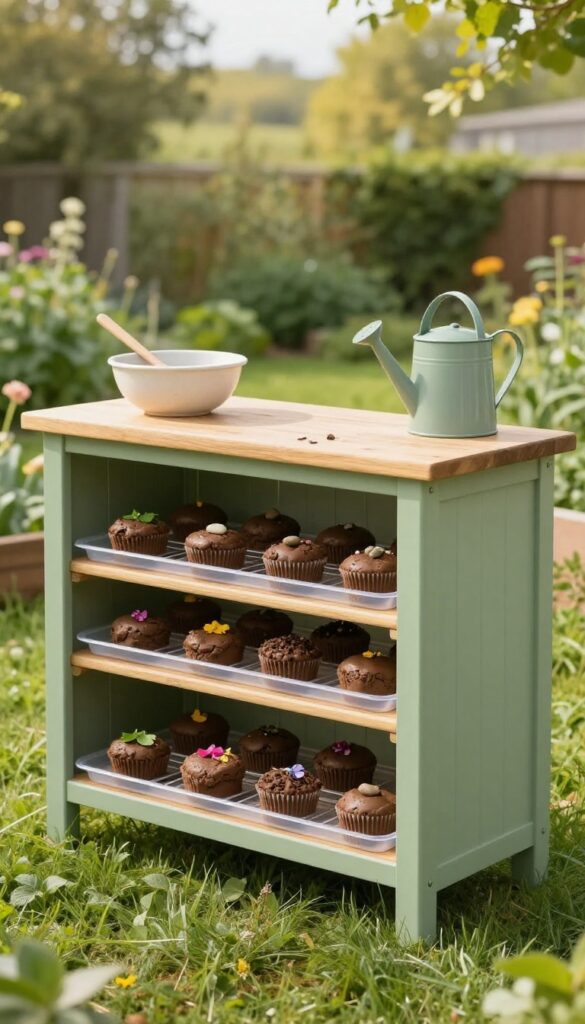
Kids always make mud pies, but they never know where to put them. They’ll line them up on the ground, step on them, cry about it, and then start over. A baking shelf gives them a “cooling rack” zone where their creations can dry and stay safe.
This is one of those ideas that makes kids feel like actual bakers. Suddenly they’re producing batches of mud cupcakes like they’re running a tiny outdoor bakery.
I’ve seen kids play twice as long when they have a designated display area. They get proud of their work.
Why This Works
A shelf creates a natural system. One area is for cooking, another is for finished food. Kids understand that kind of workflow without you even explaining it.
It also keeps the kitchen cleaner. Finished mud pies don’t clutter the counter, which gives them space to keep playing.
How to Do It
- Use a small wooden bookshelf or crate stack
- Place it next to the main counter area
- Add flat boards or trays on each level
- Label shelves with chalk paint if you want
- Make sure the shelf is stable and won’t tip
Style & Design Tips
If you want it to look cute, paint the shelf in one solid color. Multiple colors can start looking messy fast. Soft green, beige, or light gray looks surprisingly nice outdoors.
Don’t use anything too tall. Kids will climb shelves like ladders if you give them the chance. Keep it low and wide.
Pro Tip or Budget Hack
Use an old shoe rack. It’s already built for holding items and it has the perfect spacing for mud pies. Add cheap plastic trays from the dollar store to keep shelves easy to rinse.
5. The “Ingredient Bin” Storage Setup
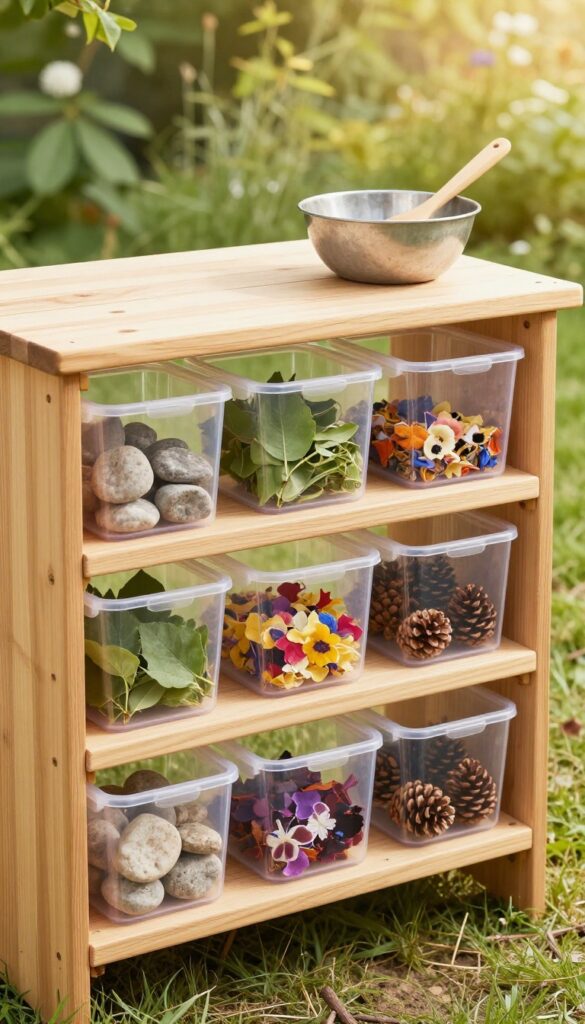
Mud kitchens get way more fun when kids can collect “ingredients” like rocks, leaves, sticks, pinecones, and flower petals. The problem is those ingredients end up scattered everywhere, including inside your house if you’re unlucky. Ingredient bins solve that mess while making the play more exciting.
This is honestly one of my favorite ideas because it encourages kids to explore the yard. They start foraging like little woodland chefs.
It also gives them more creative options. Mud plus random leaves gets boring, but mud plus “spices” makes the game endless.
Why This Works
Kids love sorting and collecting. Bins turn random nature items into something that feels valuable and purposeful. It makes play more structured without ruining the fun.
Storage bins also help you control the chaos. Instead of piles of wet leaves rotting in the corner, everything has a place.
How to Do It
- Get 4–6 plastic bins or baskets
- Label them as “rocks,” “leaves,” “flowers,” “sticks,” etc.
- Place them on a low shelf near the kitchen
- Encourage kids to refill them during play
- Empty and refresh bins every week to avoid gross surprises
Style & Design Tips
Clear bins work best because kids can see what’s inside. If they can’t see it, they forget it exists, and then they dump everything out like tiny tornadoes. Visibility saves your sanity.
Avoid fabric baskets unless you want permanent mud stains. Plastic is your friend here.
Pro Tip or Budget Hack
Use old food containers like yogurt tubs or ice cream buckets. They’re free and durable. You can even poke drainage holes in the bottom so wet leaves don’t turn into swamp mush.
6. The Chalkboard Menu and Recipe Wall
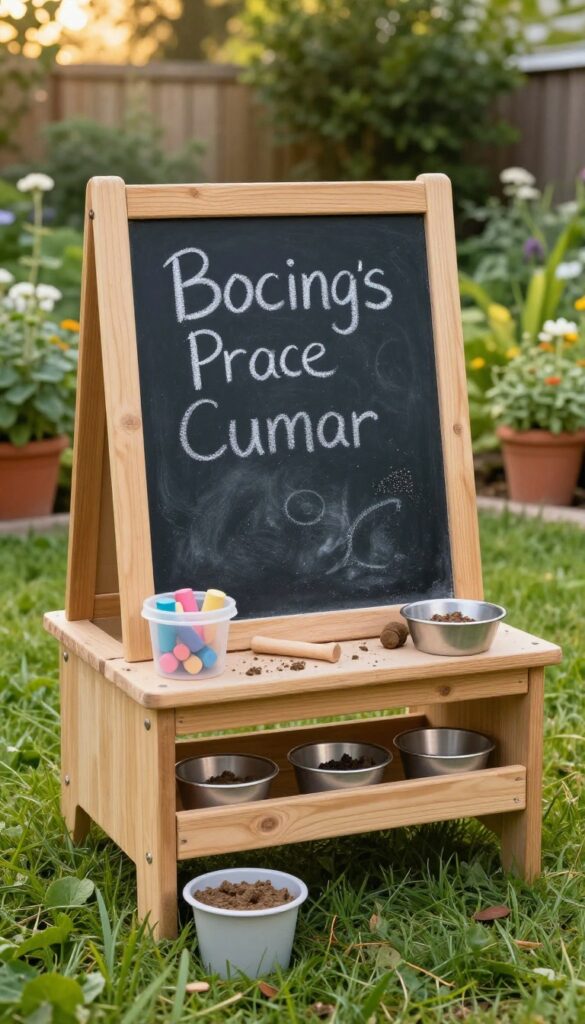
Kids love writing down “recipes,” and honestly, it’s adorable when they start making menus like they’re running a café. A chalkboard wall gives them a creative spot to plan what they’re cooking. It also keeps them busy when they take breaks from mixing mud.
This idea adds a whole new layer of pretend play. They’ll write menus, take orders, and probably charge you invisible money for their mud spaghetti.
I’ve tried this setup before and it instantly became the favorite part for kids who like drawing more than getting messy.
Why This Works
A chalkboard gives kids a storytelling tool. Instead of just mixing dirt, they start creating scenarios, like running a restaurant or hosting a party. That keeps play going longer and makes it more imaginative.
It also adds structure. When kids write “cake” or “soup” on the board, they commit to the idea and actually follow through.
How to Do It
- Attach a small chalkboard to the back wall of the kitchen
- Or paint a wooden board with chalkboard paint
- Keep chalk in a small waterproof container
- Encourage kids to write recipes, menus, or ingredient lists
- Wipe it down weekly so it stays usable
Style & Design Tips
Keep the chalkboard low enough for kids to reach easily. If it’s too high, they’ll stop using it. Kid height always wins over aesthetics.
Don’t use whiteboard markers outside unless you want permanent stains. Chalk is easier and fits the vibe better anyway.
Pro Tip or Budget Hack
Use a cheap picture frame and paint the glass with chalkboard paint. It looks surprisingly cute and it’s easy to clean. You can even swap out frames later if you want a different style.
7. The Recycled Pot and Pan Collection Zone
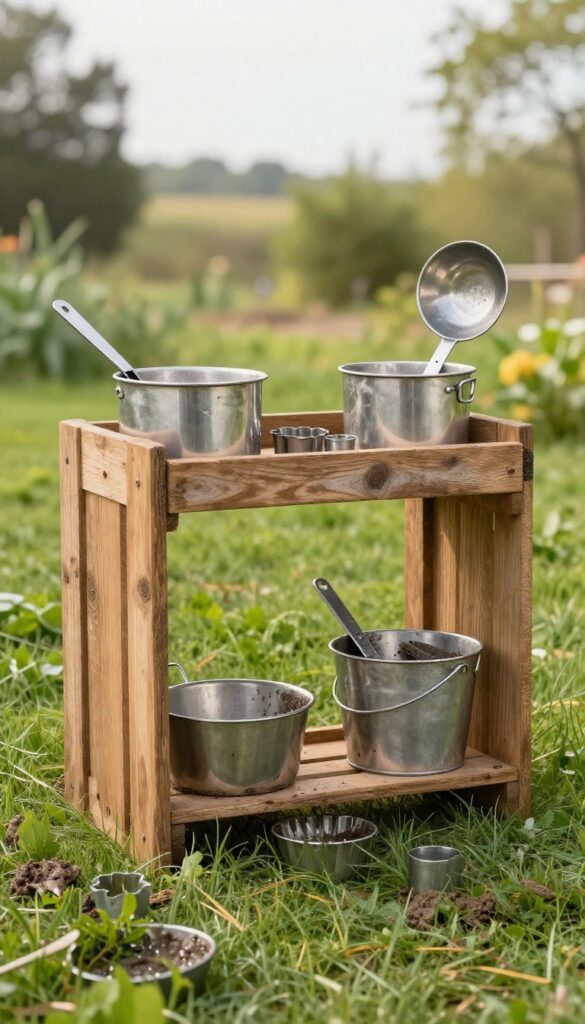
If kids don’t have “real” kitchen tools, mud kitchens feel boring fast. They want pots, pans, measuring cups, muffin tins, and weird little containers. The key is giving them their own collection so they stop stealing your actual kitchen items.
This is where the magic happens. Once kids have a proper set of tools, they start experimenting like little scientists. Muffin tins become cupcake trays, colanders become strainers for muddy water, and old ladles become soup stirrers.
I’ve learned the hard way that you should never give them your favorite mixing bowl. That bowl will never come back the same.
Why This Works
Kids love tools because tools make them feel capable. Having their own dedicated cookware also creates a sense of ownership, which keeps them engaged longer.
It also prevents you from constantly running inside to rescue your missing spatula. That’s a win for everyone.
How to Do It
- Collect old pots, pans, and utensils from thrift stores
- Choose items that won’t rust too quickly
- Store them in a crate or on a low shelf
- Add a bucket for smaller items like cookie cutters
- Rinse everything occasionally to prevent nasty buildup
Style & Design Tips
Metal tools are better than plastic because they feel more real and last longer. Plastic cracks, fades, and starts looking sad after a month outside. Old stainless steel kitchen items are basically indestructible.
Avoid glass at all costs. Even if it looks cute, it’s not worth the risk.
Pro Tip or Budget Hack
Ask neighbors or family members for old kitchen items before buying anything. People love getting rid of dented pots and random baking trays. You’ll build a full mud kitchen collection for free if you ask around.
8. The Mini Garden + Mud Kitchen Combo
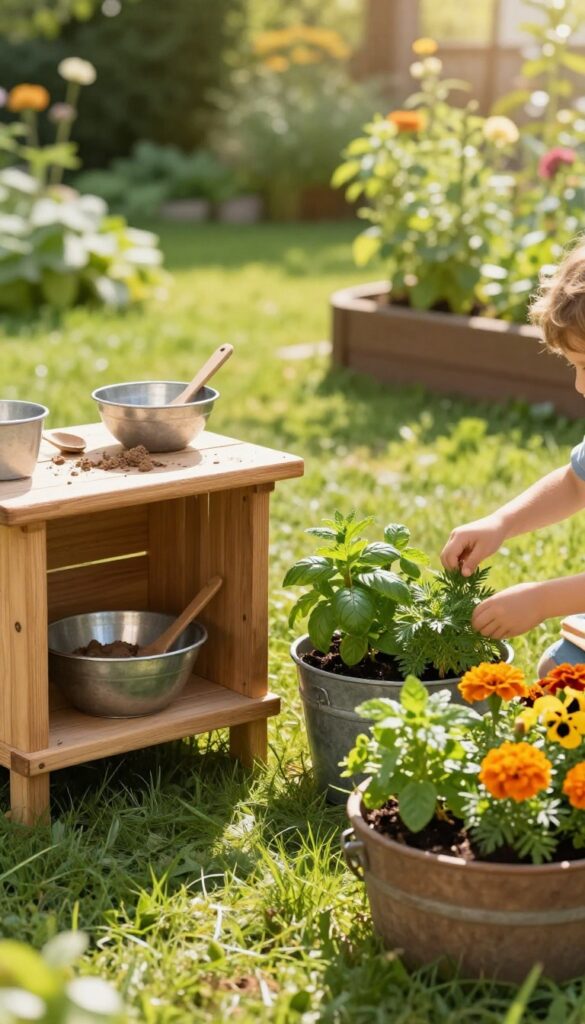
A mud kitchen becomes ten times more exciting when kids can pick their own “ingredients.” Adding a small garden nearby makes the whole setup feel like a real farm-to-table cooking experience. They can grab herbs, flowers, or leafy greens and throw them into their mud stew like little gourmet chefs.
This idea also sneaks in some real learning. Kids start noticing plants, growth, and seasons without you giving a boring lecture.
I’m a big fan of this because it turns outdoor play into something that feels meaningful. Plus, it looks really cute in the yard.
Why This Works
Kids love picking things. It gives them a sense of control and discovery, and it makes their pretend cooking feel more realistic. It also encourages them to spend more time exploring outdoors instead of rushing back inside.
Gardens also create variety. Mud play can get repetitive, but mud plus fresh herbs and petals feels new every day.
How to Do It
- Choose a small spot near the mud kitchen
- Plant hardy herbs like mint, basil, or rosemary
- Add flowers like marigolds or pansies for color
- Use raised beds or simple pots if you prefer
- Teach kids which plants are “kitchen ingredients”
Style & Design Tips
Keep the garden low-maintenance. Don’t plant anything fussy that needs constant care, because kids will forget to water it. Mint is basically unstoppable, so it’s a great beginner plant.
Avoid thorny plants or anything that attracts lots of bees right next to the play area. You want fun, not chaos.
Pro Tip or Budget Hack
Use recycled containers like old buckets or storage bins as planters. Drill drainage holes and you’re done. You can also plant green onions from grocery store leftovers, which feels like a fun little trick.
9. The Weather-Proof Mud Kitchen Cover and Storage Bench
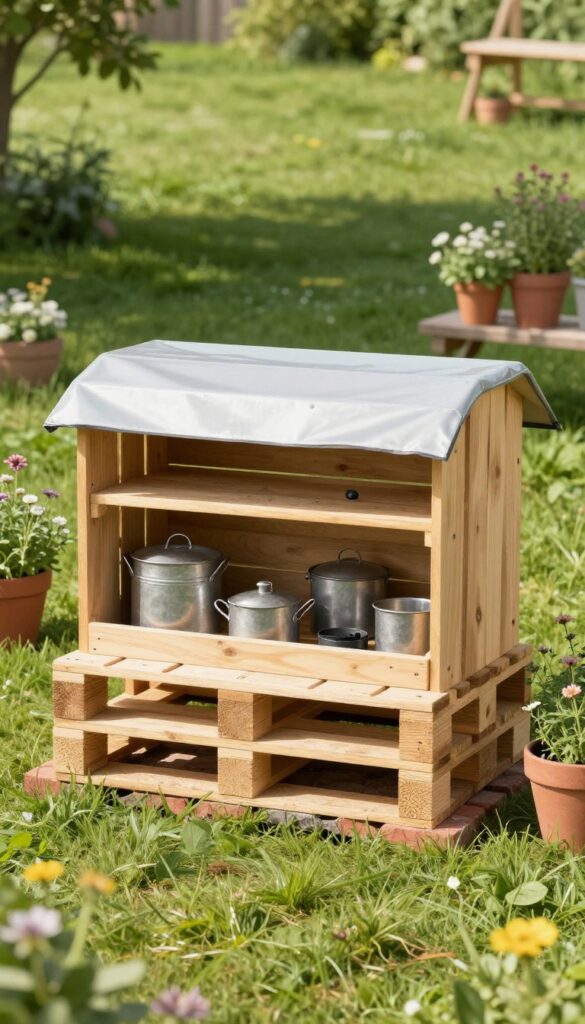
Mud kitchens fall apart when everything gets soaked, moldy, and gross. If you want your setup to last more than one season, you need a simple weather-proof solution. A cover and storage bench keeps tools dry and makes cleanup way easier.
This is the “adult brain” upgrade that kids don’t notice but you will appreciate daily. Instead of rusty pans and slimy buckets, everything stays contained and usable.
I’ve seen people build beautiful mud kitchens and then abandon them because they got disgusting after a few rainy weeks. This prevents that problem.
Why This Works
Outdoor play setups need durability. A cover protects wood from rotting and keeps tools from becoming a muddy mess when nobody is using them. Storage benches also help kids learn to pack things away.
It’s also safer. Wet, slippery tools left outside can become tripping hazards fast.
How to Do It
- Use a waterproof tarp or fitted outdoor cover
- Build or place a small storage bench next to the kitchen
- Store pots, pans, and chalk inside when play is done
- Add simple labels so kids know where things go
- Check weekly for wet items and dry them out
Style & Design Tips
Choose a storage bench with a lid that opens easily. If it’s heavy or annoying, kids won’t use it. Easy access is everything when you want them to clean up.
Don’t buy a bench that sits directly on soil. Put it on bricks or pavers so moisture doesn’t ruin the bottom.
Pro Tip or Budget Hack
Use a large plastic storage bin with a lid instead of a fancy bench. It’s cheap, waterproof, and easy to move. If you want it to look nicer, tuck it behind the kitchen or paint it to match.
Final Thoughts
Mud kitchens are one of those rare outdoor projects that actually pay off, because kids will use them again and again without needing constant entertainment. If you keep the setup simple but functional, you’ll get longer playtime, less mess spreading across the yard, and fewer “Mom, I’m bored” complaints.
Start with one solid base idea, then add upgrades slowly as you find what your kids love most. And if nothing else, just remember this: a mud kitchen is basically the only kitchen where making a mess is the whole point.