8 Little Living Room Ideas That Feel Bigger
Most small living rooms don’t actually need more space, they need fewer mistakes. The wrong furniture size, bad layout, and messy visual clutter can make even a decent room feel like a storage unit with a sofa stuck in it.
The good news is you can make a little living room feel way bigger without renovating anything or buying expensive “space-saving” furniture that looks like it belongs in a college dorm.
A few smart swaps, better placement, and some intentional styling can completely change how the room feels when you walk into it.
1. Float the Furniture Instead of Shoving Everything Against the Wall
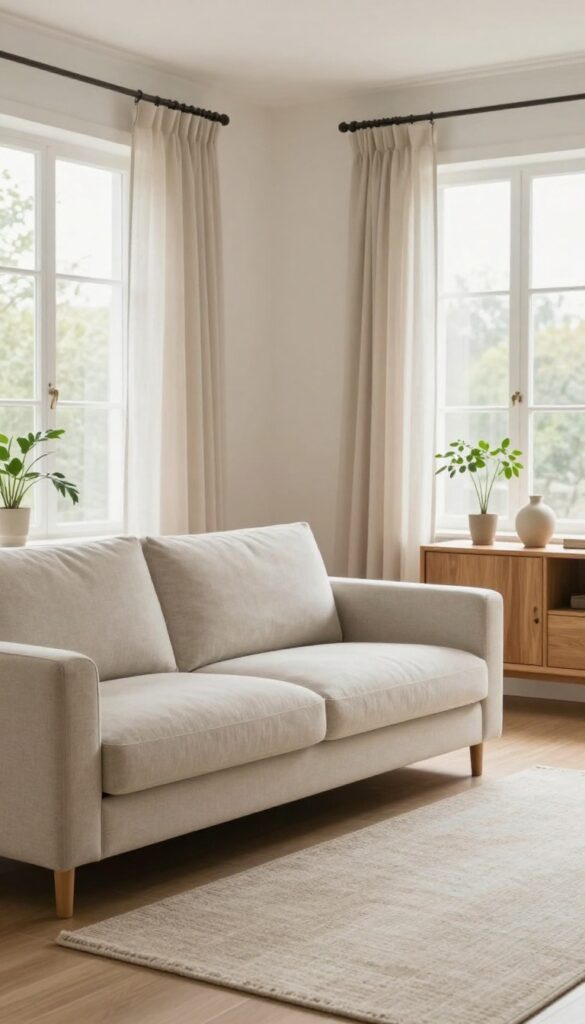
When a living room is small, most people panic and push everything against the walls like they’re trying to create a dance floor in the middle.
The problem is it often makes the room feel flatter and more cramped, because all the furniture blends into one heavy perimeter.
Floating furniture sounds like something only rich people do in giant living rooms, but it works even better in small spaces. I’ve done this in tiny apartments and it instantly made the room feel more “designed” instead of accidental.
The trick is creating breathing space around key pieces, even if it’s just a few inches. When furniture has a little separation from the walls, the room looks more intentional and visually balanced.
Why This Works
Your brain reads space based on flow, not square footage. When furniture hugs the walls, the room feels like everything is stuck, and your eye doesn’t have a clear path to move around.
Floating the sofa slightly creates depth, which makes the room feel layered instead of boxed in. It also creates a natural layout that feels like a real living room, not just furniture placed wherever it fits.
Even a small gap behind a couch can make the room look bigger because it creates a sense of “air” around the furniture.
How to Do It
- Pull the sofa 3–8 inches away from the wall to create visual breathing space
- Place a narrow console table behind the sofa if you need it to feel anchored
- Angle one chair slightly instead of placing it perfectly straight
- Use a rug to “define” the seating zone and keep everything connected
- Keep walking paths clear so the layout feels open, not blocked
Style & Design Tips
Use furniture with legs instead of skirted bases, because seeing floor underneath pieces makes the room feel lighter. A big bulky couch that sits flat on the floor will instantly shrink the room visually.
Avoid pushing everything into the corners, because corner-loading makes the room look like it’s closing in. If you can, leave one corner open and add a tall plant or floor lamp instead.
Also, don’t float furniture and then leave empty awkward gaps with nothing to ground it. Add a slim table, basket, or lamp so it feels styled, not unfinished.
Pro Tip or Budget Hack
If floating your sofa feels weird because you’re worried it will “look wrong,” put a long runner-style rug behind it. That small design move makes it feel intentional and hides the awkward “why is there space back there?” vibe.
You can also use an inexpensive IKEA-style console shelf behind the couch for storage and styling without taking up much space.
2. Use One Oversized Rug Instead of Multiple Small Rugs
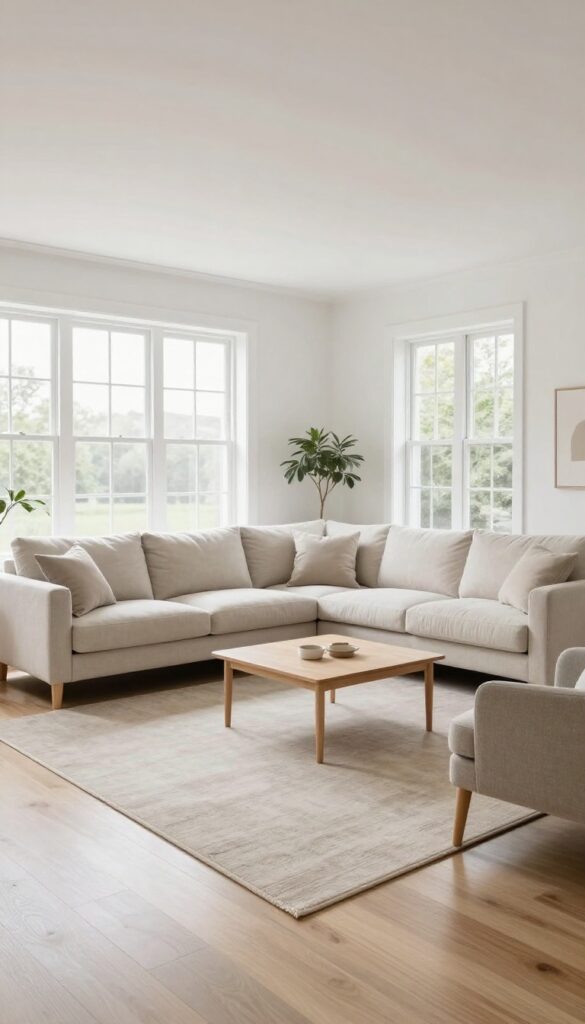
Small rugs are one of the fastest ways to make a small living room feel even smaller. People buy rugs that only fit under the coffee table, and it makes the furniture look like it’s awkwardly floating on separate islands.
A bigger rug makes the whole room feel unified, even if the room is tiny. It’s honestly one of those design tricks that feels almost unfair because it works so quickly.
I used to think oversized rugs were “wasted money” in small rooms, but the opposite is true. A properly sized rug is like visual magic for space.
Why This Works
Your eye reads the rug as the “floor plan” of the seating area. If the rug is too small, your brain assumes the seating area is small, and the whole room feels cramped.
A large rug stretches the visual boundary outward, which tricks the eye into seeing the room as larger. It also makes furniture placement look intentional instead of random.
It’s basically like giving your living room a bigger stage to stand on.
How to Do It
- Choose a rug large enough for the front legs of all seating to sit on it
- Aim for at least 8×10 in most living rooms, even small ones
- Center the rug under the coffee table and sofa area
- Leave a border of visible floor around the rug for balance
- Keep the rug shape simple, usually rectangular
Style & Design Tips
Go for lighter colors or soft patterns if your room already feels heavy. A dark rug can work, but it needs contrast and lighter furniture around it.
Avoid tiny busy prints if your living room already has lots of décor. Too much pattern can create visual noise, which makes a small space feel chaotic fast.
Also, don’t buy a rug that matches your sofa exactly. That’s how you get the “everything is blending into one blob” effect.
Pro Tip or Budget Hack
If you can’t afford a big rug, layer a large jute or flatwoven rug underneath and put a smaller patterned rug on top. It gives the same oversized effect without paying for a huge expensive statement rug.
And if you’re shopping online, always size up. Rug regret is real, and it usually happens because people go too small.
3. Swap Bulky Furniture for Pieces with Exposed Legs
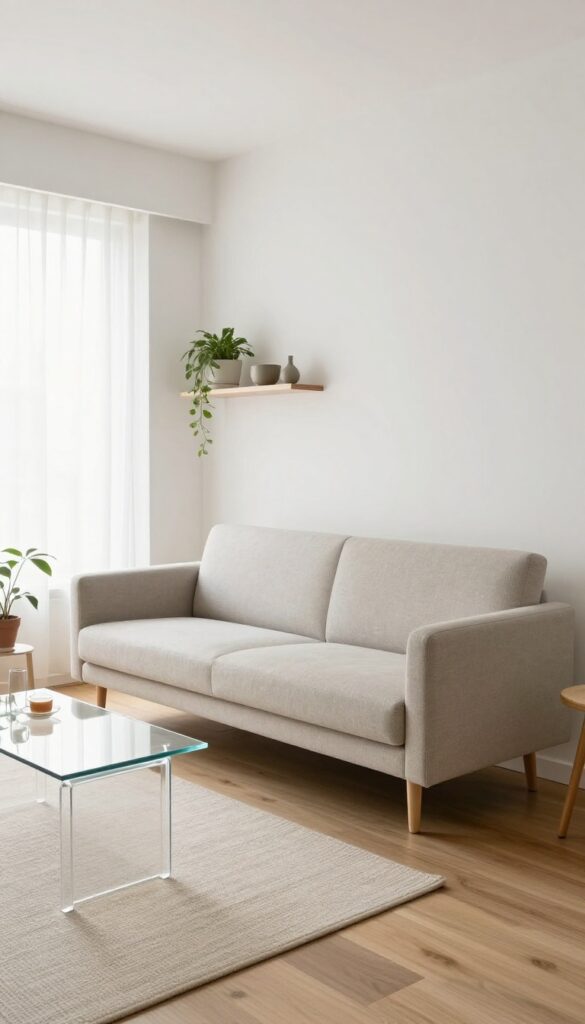
A chunky sofa with a thick base might be comfy, but in a small living room it can look like a giant brick. Same goes for heavy armchairs, solid coffee tables, and storage ottomans that look like they belong in a basement.
When furniture has exposed legs, the room feels lighter because you can see more floor. It’s a simple change, but it changes the entire vibe.
I learned this the hard way after buying a big “cozy” chair that completely dominated my living room. It was comfy, sure, but it made the space feel 30% smaller.
Why This Works
Visible floor creates the illusion of openness. When furniture sits directly on the ground with no space underneath, it visually blocks the floor, which makes the room feel tighter.
Furniture with legs allows light and air to pass through visually, even if nothing physically changes. Your eye sees more continuous space, so the room feels bigger.
This is especially powerful when paired with light-colored flooring or rugs.
How to Do It
- Choose sofas and chairs with at least 4–6 inches of clearance underneath
- Swap heavy coffee tables for glass, acrylic, or slim wood options
- Use open shelving instead of bulky cabinets when possible
- Avoid oversized recliners or wide armchairs in tight layouts
- Keep furniture proportional to the room, not your comfort fantasy
Style & Design Tips
Look for furniture with thin arms and clean lines, because thick rolled arms add bulk fast. Mid-century modern styles are great for small rooms because they naturally have legs and slimmer shapes.
Don’t go too delicate though, or the room will look like you furnished it with dollhouse furniture. You want balance, not tiny.
Also, avoid matching furniture sets. A small room filled with matching bulky pieces looks like a furniture showroom, not a home.
Pro Tip or Budget Hack
If you can’t replace furniture, cheat it. Use furniture risers or swap out legs on your sofa or chairs if the design allows it.
Even changing the legs to lighter wood or metal can make a piece feel less visually heavy. It’s one of those cheap upgrades that makes you feel weirdly proud of yourself.
4. Use Mirrors Strategically (Not Randomly)
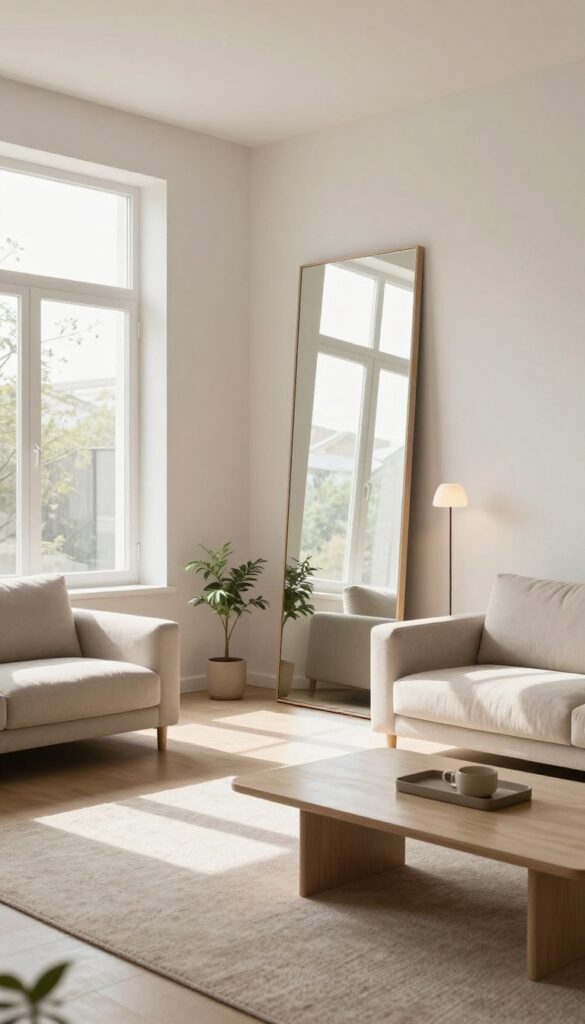
Mirrors can absolutely make a small living room feel bigger, but only if you place them correctly. A mirror randomly hung on a side wall doesn’t do much except reflect your messy bookshelf.
The best mirror placement reflects light and creates depth. When done right, it makes the room feel like it extends beyond the wall.
I’ve seen people buy expensive mirrors and still end up with a cramped room because the mirror isn’t reflecting anything useful.
Why This Works
Mirrors create the illusion of more space by reflecting the room back at you. They visually “double” the depth of whatever they reflect.
If the mirror reflects a window, it bounces light around and makes the room feel brighter and more open. If it reflects clutter, it doubles the clutter, and that’s not exactly the vibe.
A good mirror placement adds depth, light, and a sense of expansion.
How to Do It
- Hang a large mirror across from or near a window
- Place a mirror behind a lamp or light source for brightness
- Use one oversized mirror instead of several small ones
- Lean a tall mirror against the wall for casual depth
- Avoid mirrors facing messy storage zones
Style & Design Tips
Pick a mirror with a thin frame if your room already feels tight. Thick ornate frames can look beautiful, but they take up visual space.
Round mirrors soften small rooms, while rectangular mirrors can make the space feel taller or wider depending on placement. If your ceiling feels low, go vertical.
Also, avoid mirror walls unless you want your living room to feel like a dance studio from 2006.
Pro Tip or Budget Hack
Buy a simple full-length mirror and mount it horizontally. It instantly looks like a designer piece and creates a wide, open feeling.
You can also thrift old mirrors and spray paint the frame matte black or warm gold for a custom look without spending much.
5. Go Vertical with Storage and Decor
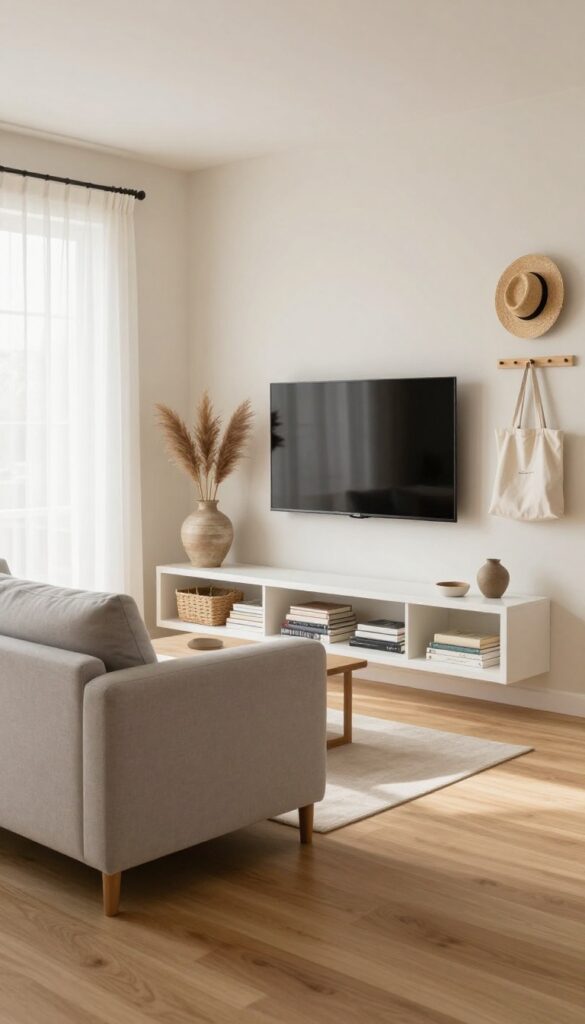
Small living rooms usually suffer because everything happens at floor level. Short shelves, low tables, cluttered corners, and random bins all compete for space where you actually need room to walk.
Vertical space is basically free real estate. When you start using your walls for storage and decor, the room feels taller and less crowded.
I’m a huge fan of wall-mounted shelving because it feels clean and gives you storage without stealing floor space.
Why This Works
Your eye follows vertical lines upward, which makes the room feel taller. When everything is low and spread out, the room feels squat and cramped.
Wall storage reduces floor clutter, which automatically makes a small space feel larger. It also creates better balance because you’re not visually weighing down the bottom half of the room.
Plus, it helps you stop piling everything on the coffee table like it’s the only surface in the house.
How to Do It
- Install floating shelves above the sofa or TV area
- Use tall bookcases instead of wide low ones
- Hang baskets or wall organizers for small items
- Mount your TV on the wall to free up console space
- Use hooks or pegs for functional decor storage
Style & Design Tips
Don’t overload shelves with tiny decor pieces. Too many small objects create visual clutter, which defeats the whole purpose.
Use a mix of books, baskets, and a few larger decorative pieces. Bigger items look cleaner than a bunch of little knick-knacks fighting for attention.
Also, don’t hang shelves too low. If they sit right above the couch back, the room can feel cramped and slightly threatening.
Pro Tip or Budget Hack
Use inexpensive picture ledges as floating shelves. They’re slim, cheap, and perfect for framed prints, candles, or small plants.
And if you rent, use removable wall anchors or leaning ladder shelves so you can get vertical storage without drilling holes everywhere.
6. Keep the Color Palette Tight and Intentional
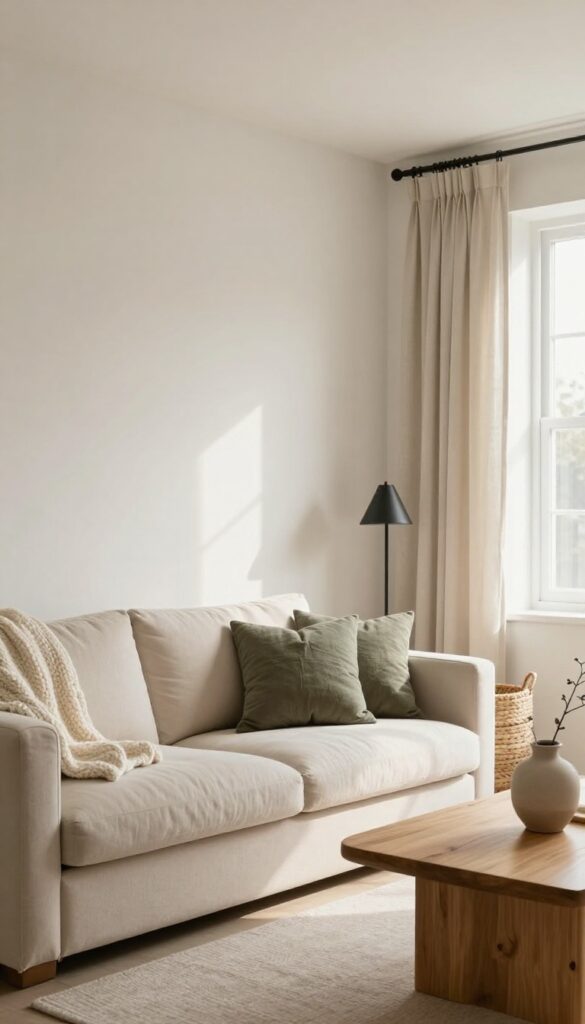
Small living rooms can handle color, but they can’t handle chaos. When you have five different wood tones, three random accent colors, and a patterned rug fighting with patterned pillows, the room starts to feel busy and smaller.
A tight color palette doesn’t mean boring. It just means the room feels cohesive, and cohesion makes a space feel bigger.
I’ve walked into tiny living rooms that felt huge simply because everything matched in a calm, intentional way.
Why This Works
When your color palette is messy, your eye jumps around constantly. That makes the room feel crowded because nothing feels unified.
A consistent palette allows your eye to flow smoothly across the room. That creates visual calm, and calm reads as spacious.
It’s like the difference between a clean desk and a desk covered in random papers. Same desk, totally different feeling.
How to Do It
- Pick 2 main neutral colors (like white and beige, or gray and cream)
- Choose 1 accent color and repeat it in small ways
- Match metal finishes where possible (black, brass, chrome)
- Keep wood tones within the same warm or cool family
- Use textiles to bring in texture instead of extra colors
Style & Design Tips
Texture matters more than color in small rooms. If everything is beige but you add linen curtains, a chunky knit throw, and a woven basket, it looks rich and layered instead of flat.
Avoid using too many bold colors at once. One strong accent color looks intentional, but three looks like you couldn’t decide.
Also, don’t forget the ceiling. A bright white ceiling makes the room feel taller and cleaner, especially if your walls are darker.
Pro Tip or Budget Hack
Instead of buying new decor, swap pillow covers and throws to match a tighter palette. It’s cheap, easy, and makes the room feel instantly more expensive.
If you want a designer look, repeat your accent color at least three times in the room. That’s the easiest “professional decorator” trick.
7. Choose the Right Curtains (Because Bad Curtains Shrink a Room Fast)
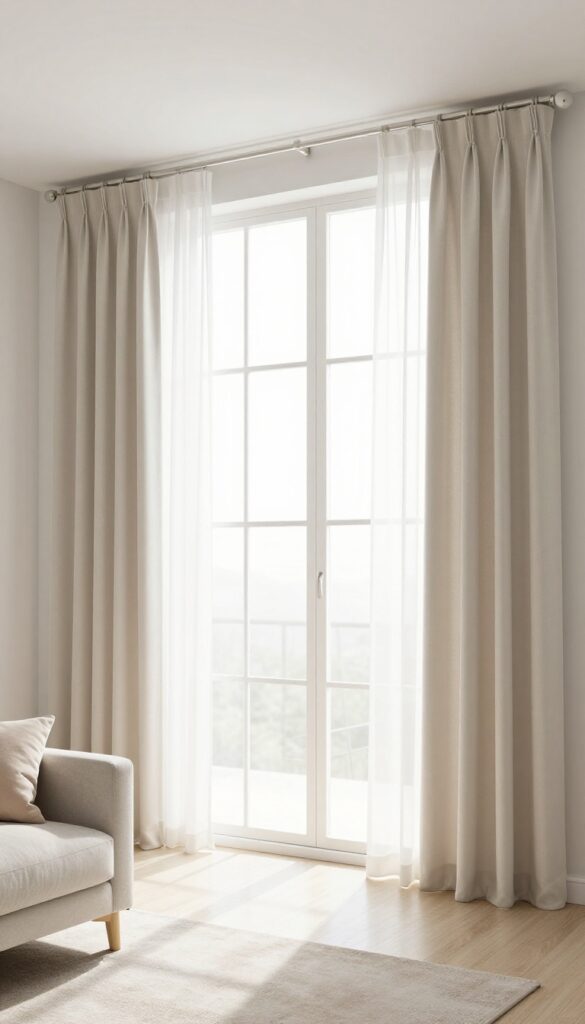
Curtains are one of those things people treat like an afterthought. They buy short curtains, hang them too low, or pick heavy fabric that blocks light, and then wonder why the room feels smaller.
Curtains should frame your windows, not cut them in half. If you hang them high and let them flow down, you can make the entire room feel taller.
I’m telling you, nothing ruins a living room faster than curtains that stop awkwardly above the floor like they gave up halfway.
Why This Works
High curtain placement draws the eye upward, which makes the ceiling feel higher. Longer curtains also create vertical lines, which visually stretches the room.
If curtains are too short or hung too low, they visually shrink the wall and window. That makes the room feel compressed.
Light also matters. Letting in more natural light automatically makes a small space feel larger.
How to Do It
- Hang the curtain rod 6–10 inches above the window frame
- Extend the rod wider than the window so curtains can sit outside the glass
- Choose curtains that reach the floor or slightly puddle
- Use light-filtering fabric to keep the room bright
- Avoid heavy blackout curtains unless you truly need them
Style & Design Tips
If you want the room to feel bigger, stick with curtains close to the wall color. Matching tones create a seamless look that feels more open.
Avoid overly busy curtain patterns in small rooms unless everything else is very neutral. Pattern overload is a real thing, and it makes a room feel chaotic fast.
Also, don’t skip curtain rings or hooks. Smooth, even folds make curtains look expensive even if they’re not.
Pro Tip or Budget Hack
Buy long curtains and hem them yourself with iron-on hemming tape. It’s cheap and makes your curtains look custom.
And if you’re renting, tension rods are fine for tiny windows, but a proper wall-mounted rod looks way better and makes the room feel more “finished.”
8. Use Multi-Functional Furniture That Doesn’t Look Like Multi-Functional Furniture
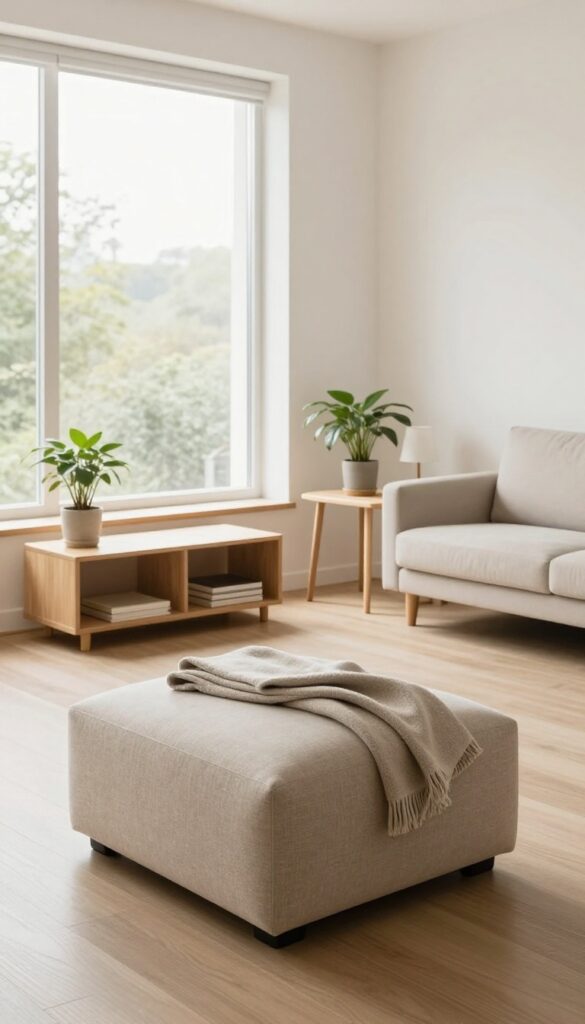
A small living room needs furniture that works harder, but it doesn’t need furniture that looks like it belongs in a transformer movie. Some “space-saving” furniture looks weird, bulky, or awkwardly shaped.
The best multi-functional pieces blend in. They look normal, but they secretly solve storage and layout problems.
I’m a big fan of storage ottomans, nesting tables, and slim console tables because they do the job without screaming “I’m here to fix your small living room problem.”
Why This Works
Small spaces get cluttered faster because there’s less room to hide everyday stuff. Multi-functional furniture gives you storage and flexibility without needing extra pieces.
When furniture serves multiple purposes, you reduce the total number of items in the room. Fewer items means less visual clutter, and less clutter means the room feels bigger.
It also helps your room stay tidy without constant effort, which is honestly the real goal.
How to Do It
- Use a storage ottoman instead of a coffee table if you need hidden storage
- Choose nesting tables so you can expand surfaces when needed
- Add a slim console table behind the sofa for extra function
- Use a bench with storage near the entry side of the living room
- Pick a coffee table with shelves or drawers for remotes and clutter
Style & Design Tips
Make sure multi-functional pieces still match your style. A storage ottoman can look chic, but only if it has a nice fabric and clean shape.
Avoid oversized furniture with “built-in everything” features. Too much function often means the piece looks bulky and dominates the room.
Also, don’t overfill storage furniture just because it exists. Hidden clutter is still clutter, and eventually it will explode out like a closet you refuse to organize.
Pro Tip or Budget Hack
Use a vintage trunk as a coffee table. It gives you storage, looks stylish, and adds character without buying expensive “designer” pieces.
If you want something cheaper, grab a simple cube ottoman and add a wood tray on top. It instantly becomes a coffee table, and you still get storage underneath.
Final Thoughts
A small living room doesn’t need big furniture or complicated upgrades, it needs smarter decisions. Once you fix layout, unify your colors, and reduce visual clutter, the space starts to feel calmer and way more open.
If you try just two things first, make it a bigger rug and better curtain placement. Those two changes alone can make a room feel like it got an instant upgrade without draining your wallet.