9 Cozy Small Living Room Ideas That Feel Inviting
Small living rooms don’t feel cramped because they’re small, they feel cramped because the layout and furniture choices usually fight each other.
People cram in bulky pieces, leave awkward gaps, and somehow still don’t have enough seating. It’s honestly impressive in the worst way.
The good news is cozy isn’t about size. Cozy is about comfort, flow, and smart styling that makes the room feel lived-in in a good way, not messy in a stressful way.
Let’s fix it.
1. Float Your Furniture Instead of Hugging the Walls
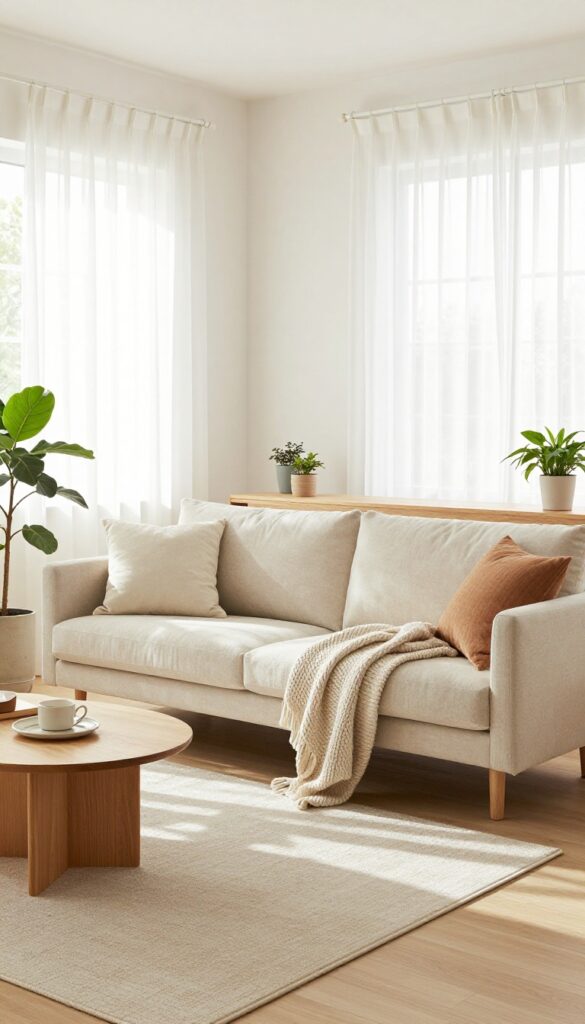
Most small living rooms feel awkward because the furniture gets shoved against every wall like it’s scared of the center of the room.
It sounds logical, but it usually creates a weird empty space in the middle and makes everything feel disconnected. You end up with a room that looks bigger technically, but feels colder and less inviting.
Floating your furniture slightly inward instantly makes the space feel intentional. Even if you only pull your sofa forward by 6–10 inches, it changes the entire vibe. I’ve done this in tiny spaces before, and it always feels like the room suddenly “clicks” into place.
A small living room needs a layout that feels like a conversation area, not a waiting room.
Why This Works
When furniture sits away from the wall, it creates depth and visual balance. It also makes your seating area feel like a defined zone, which automatically makes the room feel cozy. Your brain sees the furniture grouping and thinks, “Okay, this is where we relax.”
It also helps with traffic flow. People can move around the room more naturally instead of cutting through the center like they’re walking through an obstacle course.
How to Do It
- Start by pulling your sofa forward at least 6 inches from the wall to create breathing space.
- Place your rug so at least the front legs of the sofa and chairs sit on it for cohesion.
- Add a narrow console table behind the sofa if you need extra storage or styling space.
- Angle a chair slightly toward the sofa instead of lining everything up straight.
- Leave one clear walkway so the room doesn’t feel blocked.
Each step matters because the goal is to make the space feel “gathered” instead of spread out.
Style & Design Tips
Use a rug that’s large enough to anchor the seating area, because a tiny rug floating in the middle looks sad and unfinished. A common mistake is choosing a rug that only fits under the coffee table, which makes the room feel smaller. Go bigger than you think you need.
Also, keep the furniture legs visible when possible. Furniture with exposed legs feels lighter, and that’s a huge deal in a small room.
Avoid pushing everything into perfect symmetry too. Cozy spaces look better when they feel a little relaxed and slightly imperfect.
Pro Tip or Budget Hack
If your sofa floating feels strange, add a slim sofa table behind it. You can DIY one using a cheap countertop slab and two narrow legs, and suddenly it looks like you planned the whole thing from the beginning.
You can also hide a power strip behind the sofa table so lamps and chargers don’t create cord chaos.
2. Choose a Sofa That Actually Fits the Room
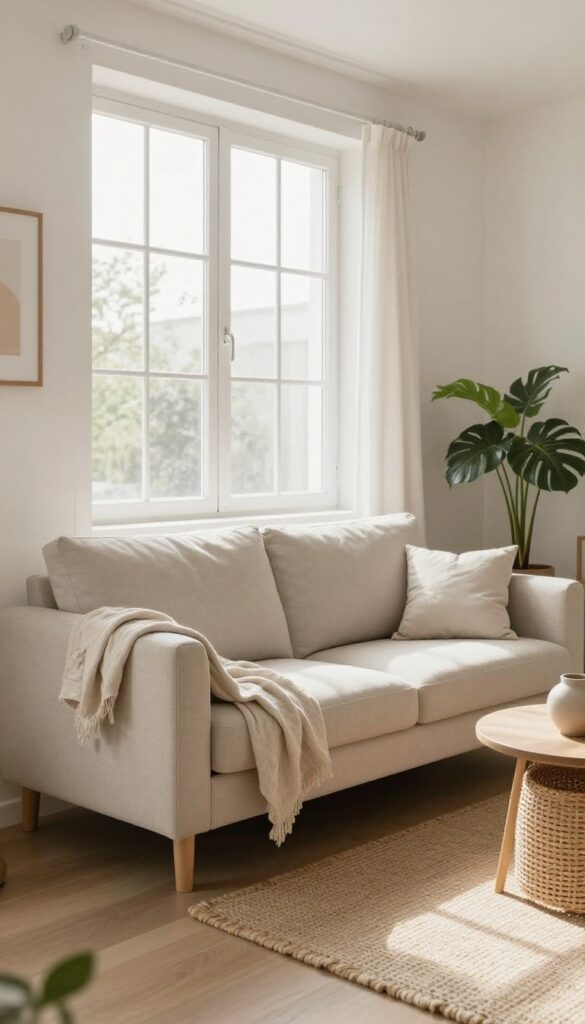
A huge sofa in a small living room is basically the décor version of wearing shoes two sizes too big. It might technically work, but it looks clunky and feels uncomfortable. A lot of people buy the biggest couch they can afford because they want comfort, then they wonder why the room feels tight and stressful.
The trick is to pick a sofa that fits your room’s scale, not your dream house scale. That doesn’t mean you have to settle for something stiff and tiny either. It just means being smarter about shape and size.
I’ve seen small rooms look expensive and cozy just because the sofa proportions were right.
Why This Works
Your sofa is usually the largest object in the room, so it controls the visual weight. If it’s oversized, everything else feels squeezed. If it’s the right size, the room suddenly feels balanced, even if nothing else changes.
A properly sized sofa also makes it easier to add other cozy elements like side tables, lamps, and throws without everything feeling cramped.
How to Do It
- Measure your wall and leave at least 18 inches of breathing room on one side if possible.
- Choose a sofa with narrow arms or track arms to save space without losing seating.
- Consider a loveseat or apartment-size sofa instead of a full bulky couch.
- Avoid deep oversized cushions if your room is narrow.
- Use a sectional only if it truly fits the layout and doesn’t block walkways.
This matters because comfort comes from movement and function, not from stuffing the biggest couch possible into the room.
Style & Design Tips
Look for sofas with clean lines and raised legs, because they visually lift the room. A skirted sofa can work, but it often makes the space feel heavier unless the rest of the room is very light.
Color matters too. A dark sofa can look cozy, but in a small room it can also look like a giant block. If you want darker tones, balance it with lighter walls and plenty of texture.
Avoid the mistake of buying a sofa with massive rolled arms. They eat up space like it’s their full-time job.
Pro Tip or Budget Hack
If you already own a bulky sofa and can’t replace it, use two tricks. First, remove oversized pillows and replace them with slimmer inserts. Second, keep the styling around the sofa minimal, like smaller side tables and lighter lamps.
It’s not magic, but it does reduce the “giant couch takeover” effect.
3. Layer Lighting Like You Mean It
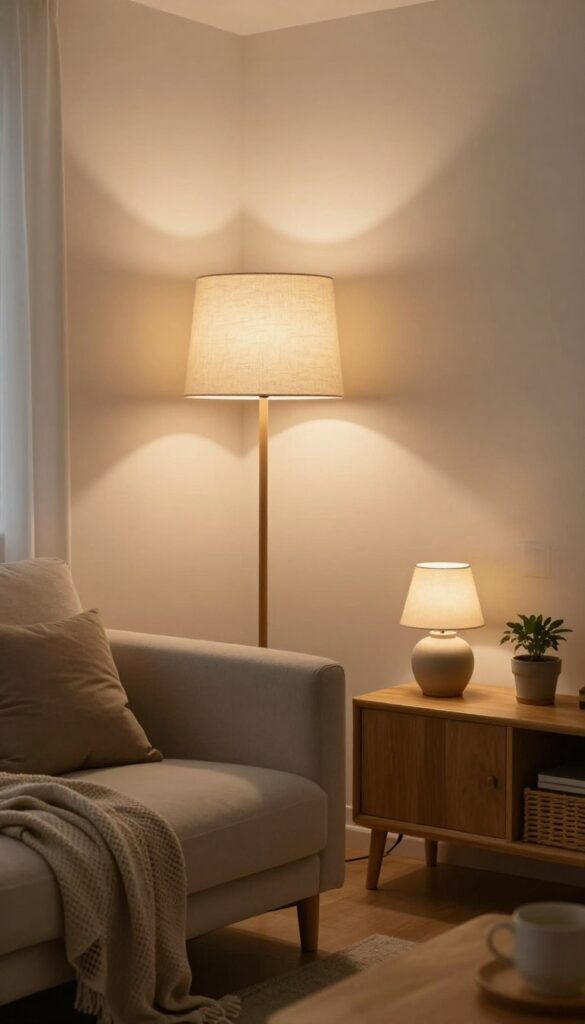
Overhead lighting alone is basically the fastest way to make a living room feel cold and uninviting. It doesn’t matter how cute your furniture is, if you rely on one ceiling light, your room will always feel like a rental apartment that hasn’t emotionally recovered from move-in day.
Small living rooms need layered lighting even more than big ones. It makes the space feel warm, dimensional, and relaxing. And yes, it’s one of those things that feels “extra” until you do it, then you’ll never go back.
I’m telling you, lighting is the cheat code.
Why This Works
Layered lighting adds depth and soft shadows, which creates a cozy atmosphere without needing extra clutter. It also helps break up the room visually so it feels less flat.
When you have multiple light sources, the room feels intentional and lived-in. It signals comfort, not just function.
How to Do It
- Start with one floor lamp near the sofa or reading chair.
- Add a table lamp on a side table or console for softer glow.
- Use warm white bulbs (around 2700K) for a cozy look.
- Consider plug-in wall sconces if you don’t have space for lamps.
- Add a small accent light like a mini lamp on a shelf or cabinet.
These steps matter because each light source plays a different role. You want the room to feel evenly warm, not spotlighted.
Style & Design Tips
Choose lampshades that diffuse light instead of directing it downward harshly. Linen shades are perfect because they soften everything. A common mistake is using bright white LED bulbs that feel like hospital lighting.
Also, match your lamp finishes loosely. They don’t need to be identical, but they should feel like they belong in the same universe.
If your room is small, avoid huge arc lamps that dominate the space. Go for slim, vertical shapes instead.
Pro Tip or Budget Hack
Plug all your lamps into one power strip and connect it to a remote outlet switch. Then you can turn your entire cozy lighting setup on with one click, which feels ridiculously satisfying.
Also, thrift stores are lamp goldmines. Spray paint the base, replace the shade, and suddenly it looks like a $120 designer lamp.
4. Use One Large Rug Instead of Several Small Ones
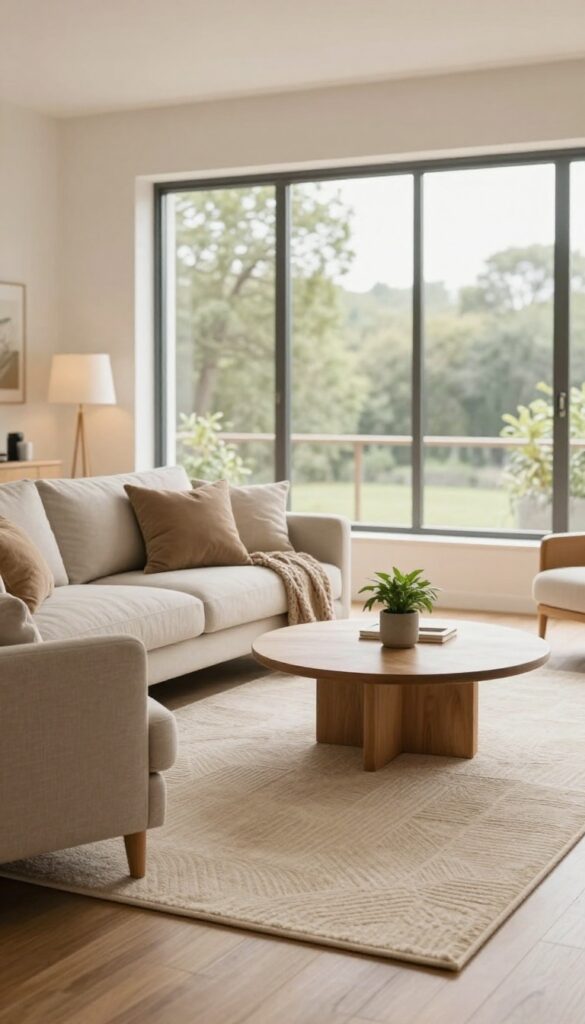
This is one of those mistakes almost everyone makes in a small living room. They buy a rug that’s too small because they think smaller room = smaller rug. But a tiny rug makes the furniture feel like it’s floating awkwardly, and it breaks up the room in a way that makes it look smaller.
A large rug anchors everything. It visually expands the space and makes the seating area feel like one cozy zone instead of random pieces scattered around.
Once you upgrade the rug size, the whole room looks more expensive immediately.
Why This Works
A big rug creates visual unity. Your eyes stop bouncing around between furniture legs and floor gaps. It makes the room feel grounded, stable, and complete.
It also makes the room feel warmer physically. More rug means less cold floor showing, which instantly boosts cozy vibes.
How to Do It
- Measure your seating area and choose a rug that extends under the front legs of all furniture.
- Aim for at least 8×10 in most small living rooms if it fits.
- Center the rug under the coffee table and sofa area.
- Keep rug edges about 6–12 inches from the walls if possible.
- Use a rug pad so it doesn’t slide and feels plush.
These steps matter because rug placement is what makes it look intentional instead of randomly thrown down.
Style & Design Tips
Go for rugs with subtle pattern or texture if your room feels bland. A common mistake is choosing a rug that’s too busy, especially if you already have patterned pillows or curtains.
If your furniture is neutral, you can choose a rug with color. If your furniture already has color, choose a rug that balances it.
Also, avoid shag rugs if you hate vacuuming. They look cozy, but they collect crumbs like it’s their hobby.
Pro Tip or Budget Hack
If a large rug feels too expensive, buy a cheap large jute rug as a base layer and put a smaller patterned rug on top. That layered look feels designer, and it saves money.
You can also find big rugs online on clearance if you’re willing to be flexible about colors.
5. Add Curtains High and Wide (Even If Your Windows Are Small)
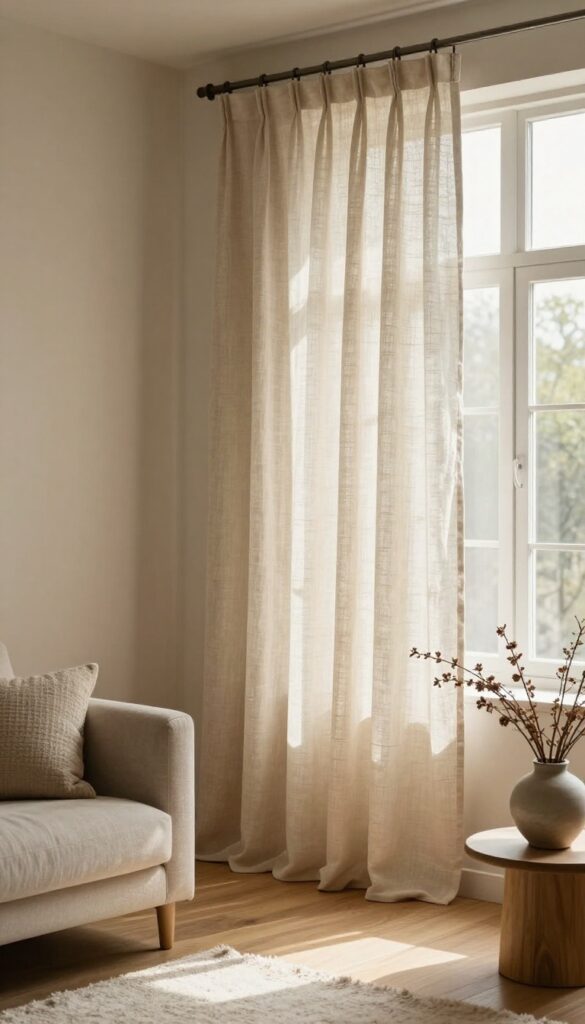
Small windows can make a small living room feel like a box. And the worst thing you can do is hang curtains right on top of the window frame like you’re afraid of the wall space. That makes the window look even smaller, and the room feels shorter.
If you hang curtains higher and wider than the window, you basically trick the room into looking taller and more open. It’s one of those sneaky design tricks that feels like cheating.
I’ve done this in tiny rooms, and the difference is insane.
Why This Works
High curtains draw the eye upward, which visually increases ceiling height. Wide curtain placement makes windows appear larger, which makes the whole room feel more open.
Curtains also soften the room. Fabric adds warmth, texture, and that cozy “finished” look.
How to Do It
- Mount the curtain rod 6–10 inches above the window frame.
- Extend the rod 8–12 inches wider on each side of the window.
- Use panels long enough to nearly touch the floor.
- Choose light-filtering fabric for a soft cozy glow.
- Steam or iron the curtains so they don’t look wrinkled.
Each step matters because sloppy curtains ruin the whole effect. Clean lines make it look expensive.
Style & Design Tips
Neutral curtains always work, but textured fabric makes them feel richer. Linen blends are great for cozy rooms. Avoid super shiny fabric unless you want a glam look.
A common mistake is using short curtains that stop halfway down the wall. That instantly makes the room feel smaller.
Also, don’t use curtains that are too thin unless you plan to layer them with shades.
Pro Tip or Budget Hack
If you can’t afford custom long curtains, buy extra-long panels and hem them yourself with iron-on hem tape. It’s cheap, fast, and honestly easier than people think.
And if your rod is ugly, spray paint it matte black. That simple move makes it look modern instantly.
6. Create a Cozy Corner With a Chair and Small Table
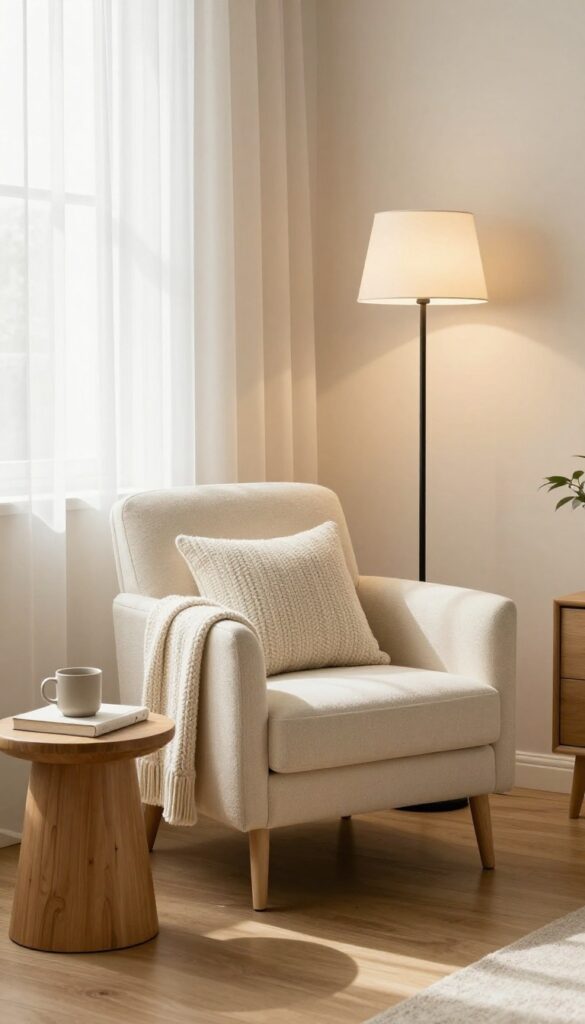
Small living rooms often lack personality because everything is forced to serve one purpose. Sofa, TV, coffee table, done. It works, but it doesn’t feel inviting, it just feels functional.
Adding a cozy corner makes the room feel layered and lived-in. Even if it’s just one chair with a small table and a lamp, it creates a little “moment” in the room. And those moments are what make a space feel like home instead of a showroom.
I love a cozy corner because it makes you feel like the room has options.
Why This Works
A corner setup breaks up the layout so the room feels more dynamic. It also adds extra seating without making the room feel crowded.
Psychologically, it makes the room feel warmer because it looks like a place meant for relaxing, reading, or having coffee.
How to Do It
- Pick one unused corner near a window or beside the sofa.
- Add a small accent chair with a slim profile.
- Place a small side table next to it for a drink or book.
- Add a floor lamp or wall sconce for lighting.
- Finish it with a throw blanket and one pillow.
These steps matter because the chair alone can look random. The accessories make it feel intentional.
Style & Design Tips
Pick a chair that adds texture. Bouclé, velvet, or woven fabric instantly adds warmth. A common mistake is choosing a chair that’s too bulky and ends up blocking the room.
Also, don’t over-decorate the corner. Keep it simple so it feels calm.
Use a throw blanket in a cozy material like chunky knit or soft fleece, but avoid cheap shiny fabric. Texture is everything when you want cozy.
Pro Tip or Budget Hack
If you can’t fit a full chair, use a small upholstered stool or pouf. It still gives that cozy corner vibe, and you can tuck it away when you need space.
You can also DIY a side table using stacked wooden crates and stain them for a rustic look.
7. Style Your Coffee Table Like a Human Lives There
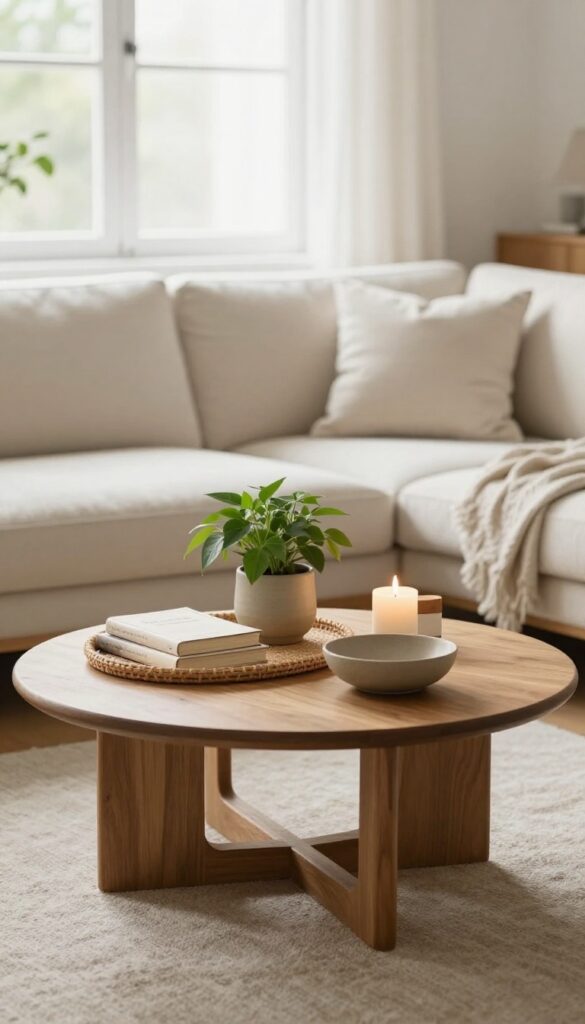
A coffee table is basically the center stage of a small living room. If it’s cluttered, the whole room feels messy. If it’s empty, the room feels unfinished. And if it’s covered in random stuff like TV remotes, receipts, and mystery items, it feels chaotic.
The goal is to style it in a way that feels cozy but realistic. Not like a magazine photo, but like someone stylish actually lives there.
I’ve learned the hard way that coffee table styling can either save a room or ruin it.
Why This Works
Your eye naturally goes to the coffee table because it sits in the middle of the room. If it looks clean and balanced, the whole room feels calmer.
A styled coffee table also adds warmth through layers like books, candles, and natural elements.
How to Do It
- Start with a tray to contain smaller items and create structure.
- Add one stack of books or a decorative box for height.
- Include something organic like a small plant or vase.
- Add one candle or decorative object for personality.
- Leave open space so it doesn’t feel crowded.
Each step matters because balance is the whole point. You want the table to look curated, not stuffed.
Style & Design Tips
Mix shapes. If you have a round table, use rectangular books and a round vase. If you have a rectangular table, add something curved like a bowl.
A common mistake is adding too many tiny items. It makes the table look busy and cheap. Go for fewer pieces with more impact.
Also, don’t ignore function. You should still have room for a drink or snacks without rearranging everything.
Pro Tip or Budget Hack
Use a decorative box on the coffee table to hide remotes. It looks intentional, and it keeps the table tidy without effort.
If you want a designer look, pick books with neutral covers. You can even flip the dust jackets inside out for a clean aesthetic.
8. Use Mirrors to Expand the Room Without Adding Clutter
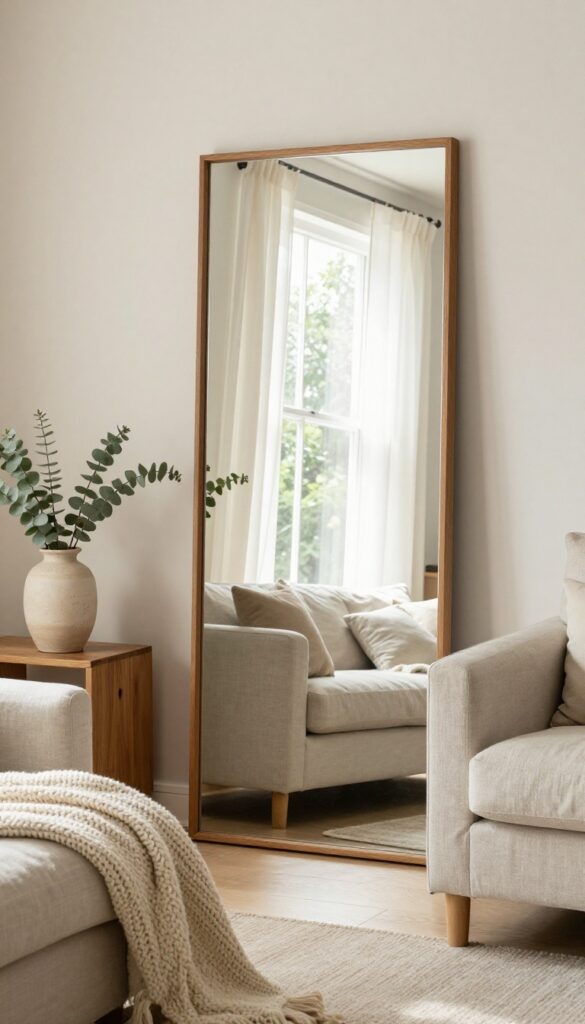
Small living rooms often feel tight because there’s not enough visual space. You can declutter all you want, but if the room still feels boxed in, it won’t feel inviting. That’s where mirrors come in.
A well-placed mirror reflects light, opens up the room, and makes everything feel bigger. It’s not a new trick, but it works because it’s basically optical illusion décor.
And honestly, I’ll take a good illusion any day if it makes my room feel less cramped.
Why This Works
Mirrors reflect both natural and artificial light, making the room brighter and more open. They also create depth, which helps the room feel larger.
In a small living room, mirrors add impact without taking up floor space, which is exactly what you want.
How to Do It
- Place a large mirror across from a window if possible.
- Lean a tall mirror against the wall if you don’t want to mount it.
- Use a mirror above a console table or behind the sofa.
- Avoid using multiple tiny mirrors that feel busy.
- Choose a frame that matches your room style.
Each step matters because mirror placement can either look elegant or completely random.
Style & Design Tips
Go big. A small mirror doesn’t create the same effect, it just looks like wall décor. A large mirror becomes a feature and instantly makes the room feel more open.
A common mistake is hanging mirrors too high. Keep it at eye level, or slightly lower if it’s above furniture.
Also, choose a frame finish that fits your vibe. Black frames feel modern, gold feels glam, wood feels cozy and natural.
Pro Tip or Budget Hack
Check thrift stores for oversized mirrors. People donate them all the time because they’re awkward to move. You can repaint the frame and it will look brand new.
If you can’t find a large mirror, even a mirrored closet door panel leaned against the wall can look surprisingly chic.
9. Add Cozy Texture With Throws, Pillows, and Natural Materials
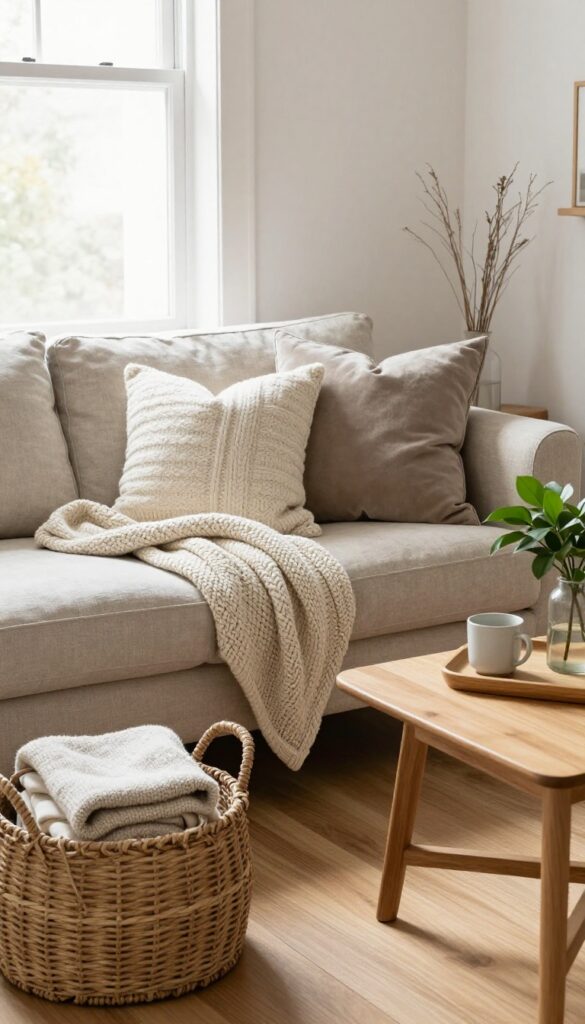
A small living room can have the perfect layout and still feel cold if it lacks texture. Cozy doesn’t come from buying more stuff, it comes from adding the right materials. Soft fabrics, warm wood tones, woven baskets, chunky knits, and layered textiles make a room feel inviting instantly.
The trick is not overdoing it. Too many pillows and throws can look messy fast, and then you’re back to chaos again.
But when you get it right, it feels like the room is giving you a hug.
Why This Works
Texture adds depth and warmth without needing more furniture. It also makes the room feel comfortable and lived-in.
Natural materials like wood, rattan, linen, and wool help balance out modern spaces that might otherwise feel too sharp or sterile.
How to Do It
- Add one chunky throw blanket on the sofa or chair.
- Mix pillow textures, like linen, velvet, and knit.
- Use a woven basket for blankets or magazines.
- Add a wood tray or wood accents to warm up the room.
- Include one plant or dried stems for natural softness.
Each step matters because you’re building layers, not clutter.
Style & Design Tips
Stick to a simple color palette, then add texture within that palette. A common mistake is mixing too many colors and patterns, which can make a small room feel busy.
Also, don’t buy pillows that are too small. Bigger pillows look more luxurious and cozy. Size matters more than people think when it comes to styling.
Avoid cheap shiny fabrics. They make the room look less cozy and more like a discount store display.
Pro Tip or Budget Hack
Buy pillow covers instead of full pillows. You can swap them seasonally without spending a fortune or storing bulky inserts.
And if you want cozy texture for cheap, grab a soft blanket from a budget store and fold it neatly on the sofa. Even a simple throw can make the whole room feel warmer.
Final Thoughts
A cozy small living room isn’t about cramming in cute décor until it looks like a Pinterest board exploded. It’s about making smart choices that improve comfort, flow, and warmth without sacrificing space. Once you get the layout right, everything else becomes so much easier.
If you try even two or three of these ideas, your living room will start feeling like a place you actually want to spend time in. And honestly, that’s the whole point, right?