8 Living Room Bookcase Decor Ideas That Look Styled
A bookcase does more than hold books, even though that’s what most people treat it as. It quietly shapes how a living room feels, how organized it looks, and whether the space comes across as intentional or thrown together.
When it’s styled well, it adds personality without trying too hard. When it’s not, it turns into a clutter magnet fast.
The good news is you don’t need designer shelves or a huge budget to make a bookcase look pulled together.
Most of it comes down to balance, restraint, and a few smart styling choices that actually make sense for real life. Let’s get into ideas that feel doable, lived-in, and genuinely stylish.
1. Mix Books With Decor Instead of Stacking Everything
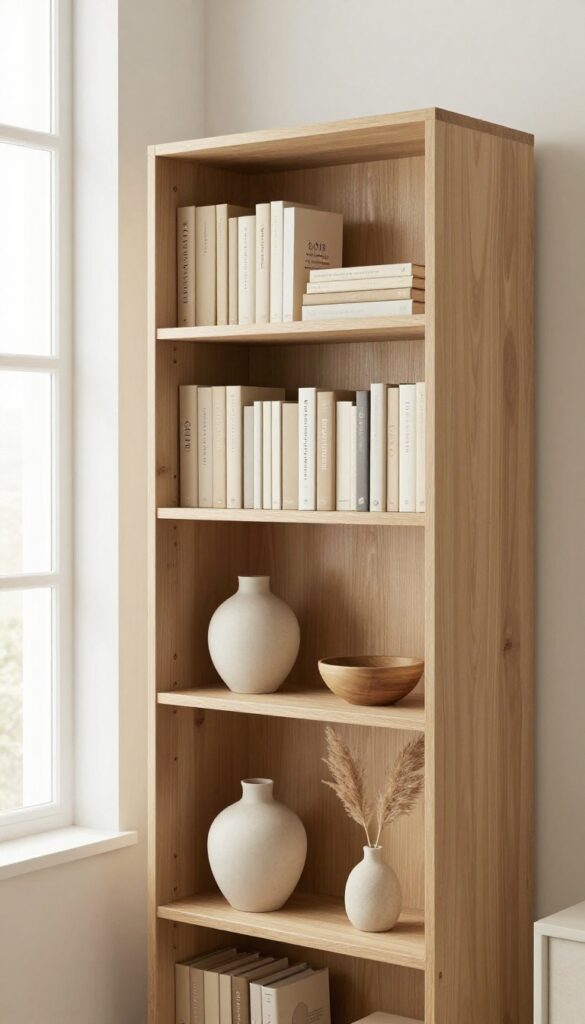
Most bookcases look awkward because people treat them like storage instead of design space. When every shelf is packed edge to edge with books, the eye has nowhere to rest.
The fix is simple: stop thinking of the shelf as a library and start treating it like a display.
I learned this the hard way after cramming every novel I owned onto one tall shelf and wondering why the room felt heavy.
Once I pulled out a third of the books and added a few objects, the whole thing looked intentional instead of chaotic. The contrast between books and decor creates breathing room.
Why This Works
Mixing items creates visual rhythm, which keeps the shelf from feeling flat or overwhelming. The eye naturally moves from tall to short, solid to open, which makes the setup feel balanced without being boring.
How to Do It
- Group books in small stacks instead of long rows
- Add one decorative object per shelf section
- Leave some open space on purpose
- Turn some books horizontally for variety
Style & Design Tips
Stick to a loose color palette so nothing feels random. Neutral book spines mixed with wood or ceramic accents usually look more polished than bright colors everywhere. Avoid cramming every inch, because negative space is what makes styling look intentional.
Pro Tip or Budget Hack
Use books you already own but remove the dust jackets for a cleaner look. Bare hardcovers in neutral tones instantly feel more high-end without spending a dollar.
2. Use Odd Numbers for a More Natural Look
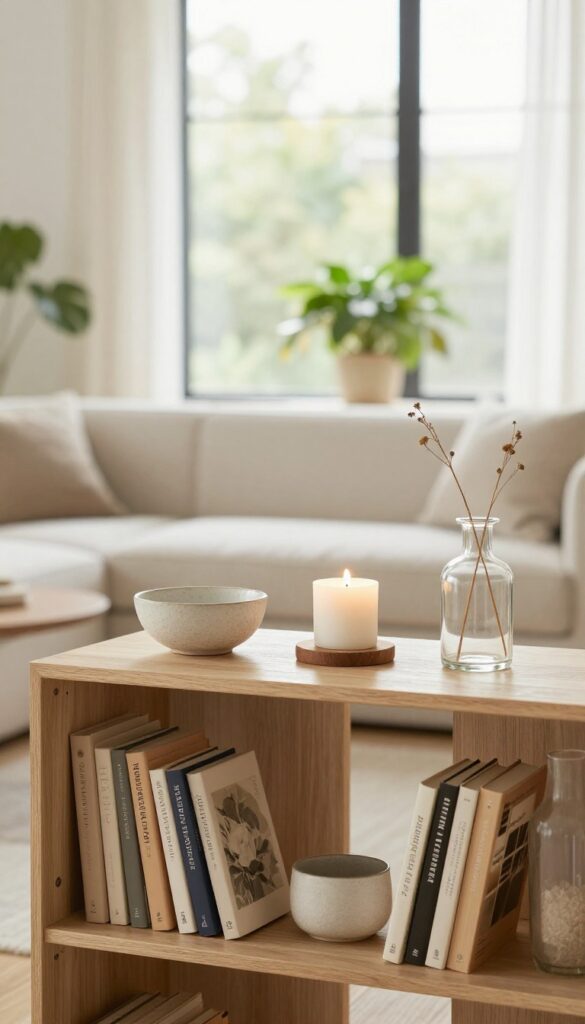
Perfect symmetry sounds nice in theory, but it often looks stiff in real homes. Odd-number groupings feel more relaxed and visually interesting, especially on open shelving. Three items almost always look better than two or four.
This was one of those design rules I ignored for years until I tried it by accident. Once I started grouping things in threes, the shelves suddenly felt styled instead of staged. It’s subtle, but it works.
Why This Works
Odd numbers create movement and prevent the eye from stopping too quickly. They make displays feel collected over time rather than carefully measured.
How to Do It
- Group items in sets of three or five
- Vary the height within each group
- Keep one item simple to ground the look
Style & Design Tips
Mix textures like ceramic, wood, and glass to keep things from looking flat. Avoid matching items too closely, or it starts to feel like a store display instead of a home.
Pro Tip or Budget Hack
Use everyday items you already have, like a small bowl, candle, and framed photo. You don’t need “decor” items for this to work.
3. Add Greenery for Instant Life
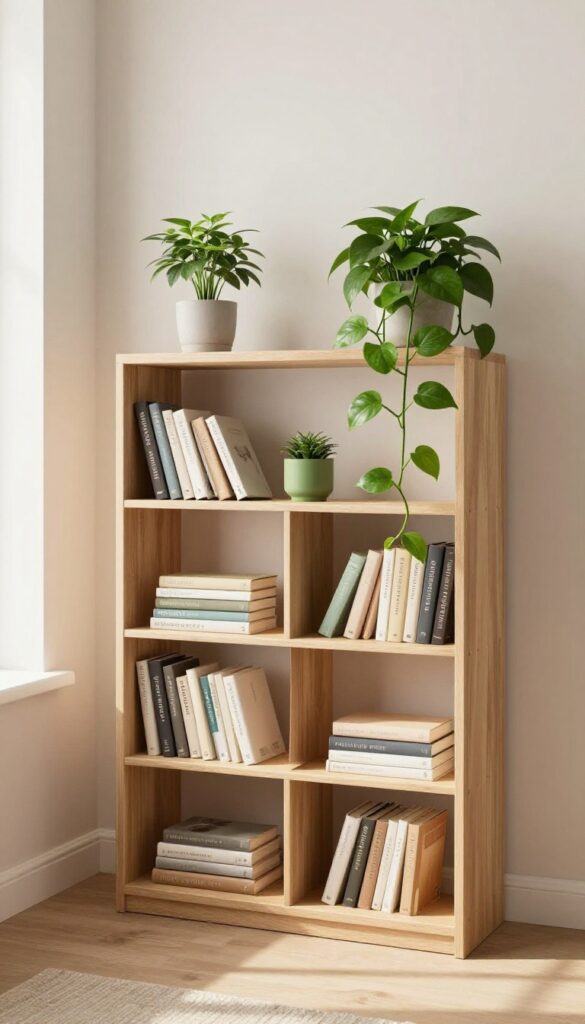
A bookcase without plants often feels a little stiff. Even one small plant can soften the entire setup and make the space feel more lived-in. Real or faux both work, as long as they’re believable.
I used to avoid plants because I assumed they’d die in a week. Turns out, a low-maintenance pothos doesn’t care how busy you are. Now I add greenery to almost every shelf setup I do.
Why This Works
Plants break up hard lines and add organic movement. They also bring in color without overwhelming the space.
How to Do It
- Place small plants on middle or upper shelves
- Let vines trail slightly for softness
- Mix upright and cascading styles
Style & Design Tips
Stick to one or two types of greenery for a cleaner look. Too many different plants can feel messy, especially on smaller shelves.
Pro Tip or Budget Hack
High-quality faux plants work great on high shelves where you’d never notice the difference. Just dust them occasionally so they don’t give themselves away.
4. Use Books Horizontally as Design Anchors
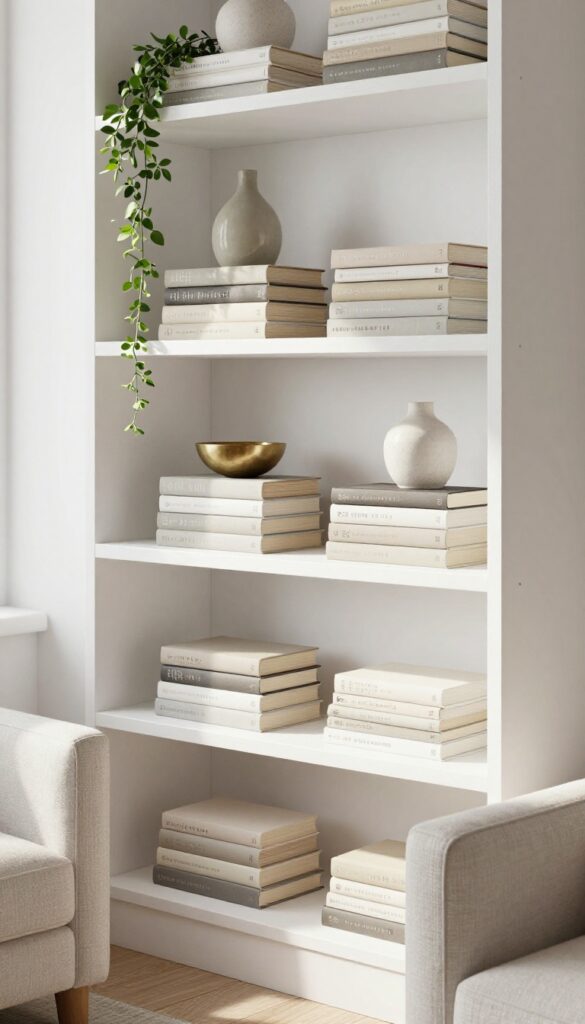
Standing books look great, but stacking them horizontally adds structure and visual weight. It’s one of the easiest ways to make a shelf feel styled instead of stuffed.
I started doing this after noticing how designers always use book stacks as bases for decor. Once you try it, you’ll see why it works so well.
Why This Works
Horizontal stacks act like platforms, giving smaller decor items something to sit on. They also break up vertical lines, which keeps shelves from feeling rigid.
How to Do It
- Stack 2–4 books horizontally
- Place a small object on top
- Keep stacks to one or two per shelf
Style & Design Tips
Use books with neutral spines or similar colors. Avoid mixing glossy and worn covers, as it can look unintentional.
Pro Tip or Budget Hack
Turn books backward so the pages face out for a clean, neutral look without buying new decor.
5. Incorporate Personal Items Without Clutter
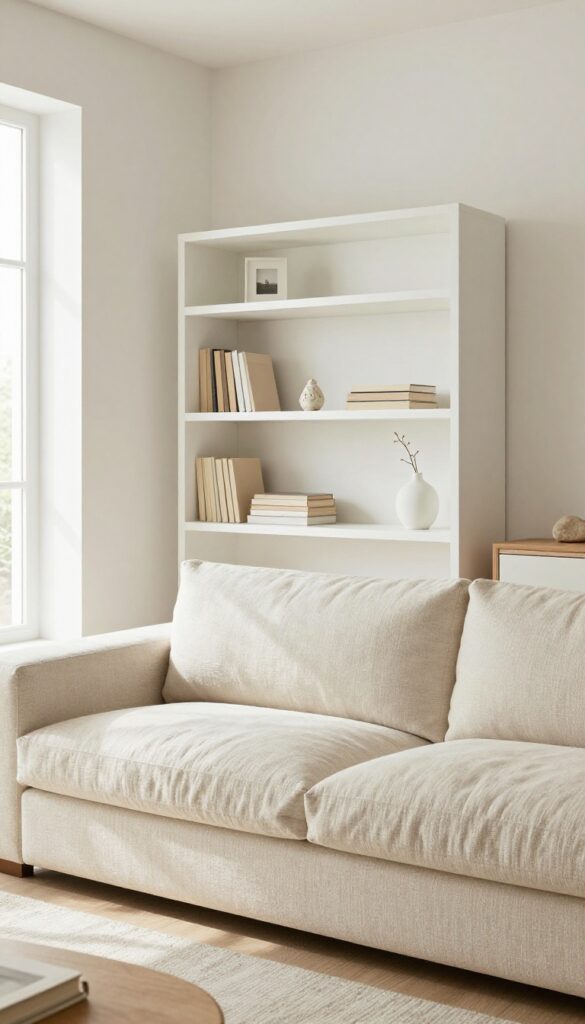
A styled bookcase shouldn’t look like a showroom. Personal items make it feel lived in, but they need to be edited carefully. The goal is personality, not chaos.
I like adding one or two meaningful pieces per shelf, whether it’s a framed photo or a small souvenir. Too many personal items, though, and the shelf starts to feel busy.
Why This Works
Personal items add warmth and tell a story, which keeps the space from feeling generic. They also make your home feel more intentional and less staged.
How to Do It
- Choose a few meaningful pieces
- Spread them across different shelves
- Mix them with neutral decor
Style & Design Tips
Keep frames simple and colors muted so they blend in. Avoid clustering all personal items in one spot, which can feel cluttered.
Pro Tip or Budget Hack
Rotate items seasonally instead of displaying everything at once. It keeps your shelves feeling fresh without buying anything new.
6. Vary Shelf Heights and Spacing Visually
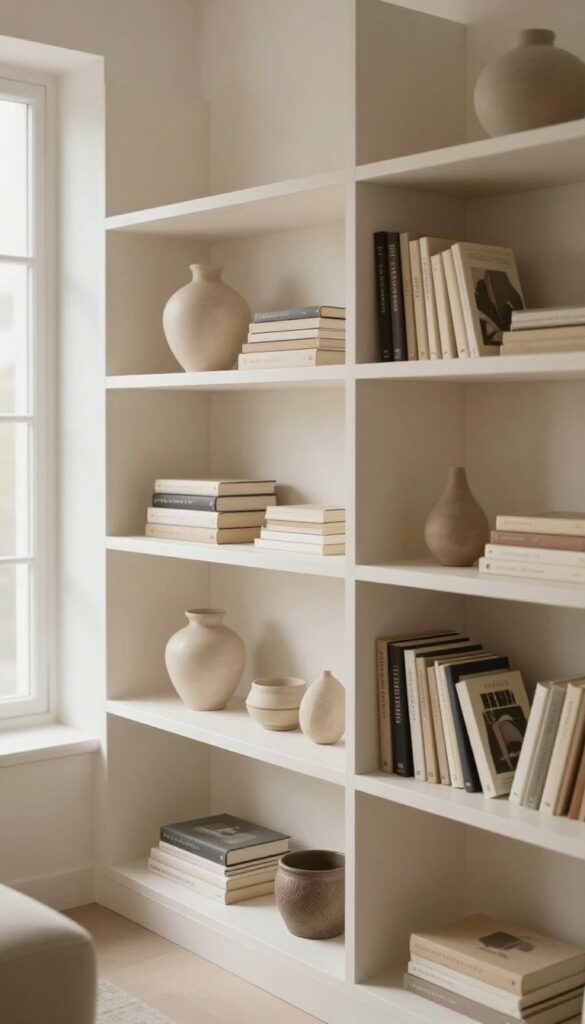
Even if your shelves are fixed, you can create the illusion of variation by changing how you style them. Different heights and visual weights keep things interesting.
I used to line everything up evenly, and it always felt flat. Once I started mixing tall and short items, the shelves instantly felt more dynamic.
Why This Works
Visual variation mimics how we naturally arrange things in real life. It prevents the eye from getting bored or overwhelmed.
How to Do It
- Place tall items next to shorter ones
- Avoid lining up objects at the same height
- Use vertical pieces sparingly
Style & Design Tips
Leave some shelves lighter than others. Not every shelf needs to be full, and empty space can actually enhance the overall look.
Pro Tip or Budget Hack
Use decorative boxes to add height while hiding clutter like remotes or cords.
7. Stick to a Loose Color Palette
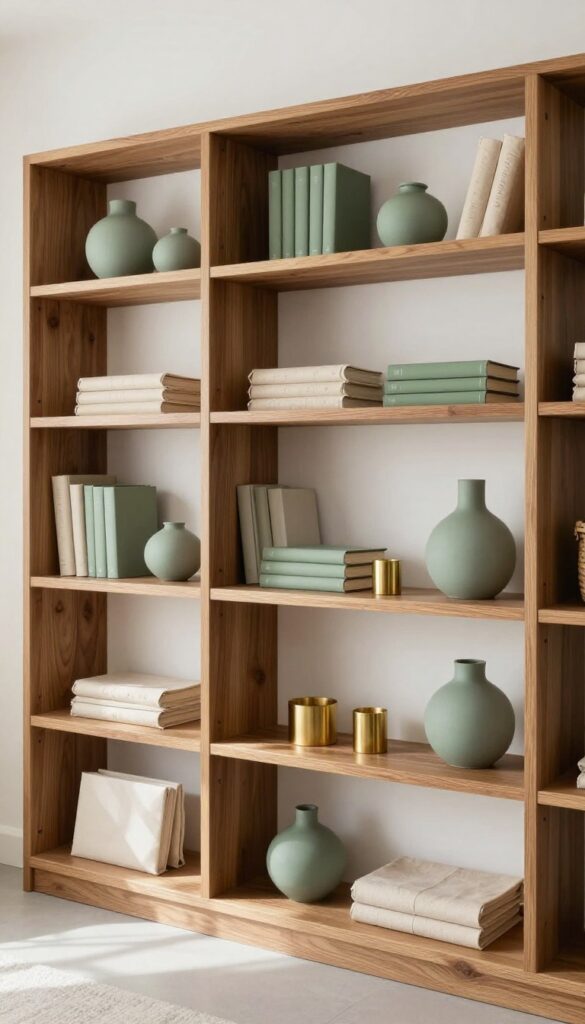
Color chaos is one of the fastest ways to make a bookcase feel messy. You don’t need everything to match, but having a general color direction helps everything feel cohesive.
I usually pick two main colors and one accent, then loosely follow that across the shelves. It keeps things calm without feeling boring.
Why This Works
A consistent palette ties everything together visually. It makes even mismatched items feel intentional.
How to Do It
- Choose 2–3 main colors
- Repeat them throughout the shelves
- Use neutrals to balance bold tones
Style & Design Tips
Black, white, wood, and brass are easy bases. Too many bright colors compete for attention, so use them sparingly.
Pro Tip or Budget Hack
Wrap books in neutral paper or fabric to instantly tone down busy shelves.
8. Leave Some Space Empty on Purpose
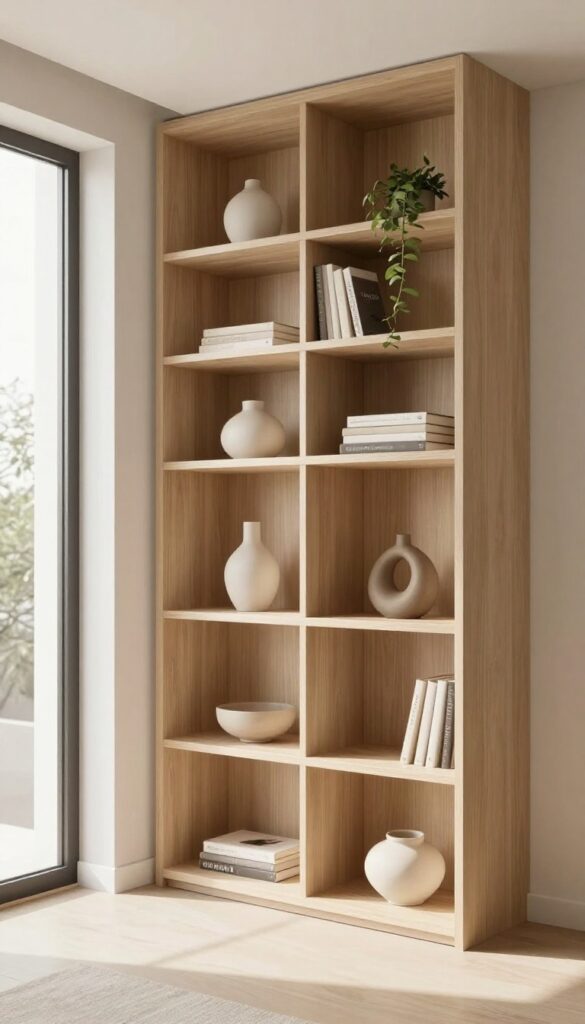
This one feels counterintuitive, but it’s the secret to a high-end look. Empty space gives everything else room to breathe and makes the shelf feel curated instead of crowded.
I used to think empty space meant wasted space. Now I see it as part of the design, not a mistake.
Why This Works
Negative space creates balance and makes each item stand out more. It also keeps the shelf from feeling heavy or cluttered.
How to Do It
- Leave one section per shelf empty
- Avoid filling gaps just to fill them
- Step back and assess visually
Style & Design Tips
If a shelf feels off, remove one item before adding another. Less really is more when it comes to styling.
Pro Tip or Budget Hack
Take a photo of your shelf and look at it on your phone. Empty spaces become easier to spot when you’re not staring at it in person.
Final Thoughts
A well-styled bookcase isn’t about following strict rules or copying a photo online. It’s about creating balance, showing a little personality, and knowing when to stop adding things. The best-looking shelves always feel intentional but relaxed, like they evolved naturally over time.
If you’re unsure where to start, change one shelf at a time and trust your eye. You’ll be surprised how much better your living room feels once your bookcase finally looks styled instead of stuffed.