8 Small Single Bedroom Ideas That Feel Complete
A small bedroom tends to show its flaws faster than a big one. Every awkward corner, wasted inch, or mismatched piece suddenly feels louder.
That’s why getting a single bedroom right isn’t about cramming in furniture or copying Pinterest setups that only work in huge spaces.
What actually matters is how each choice earns its place. When the layout makes sense and the room feels intentional, even a compact bedroom can feel finished instead of “still in progress.”
1. Use the Bed as the Visual Anchor
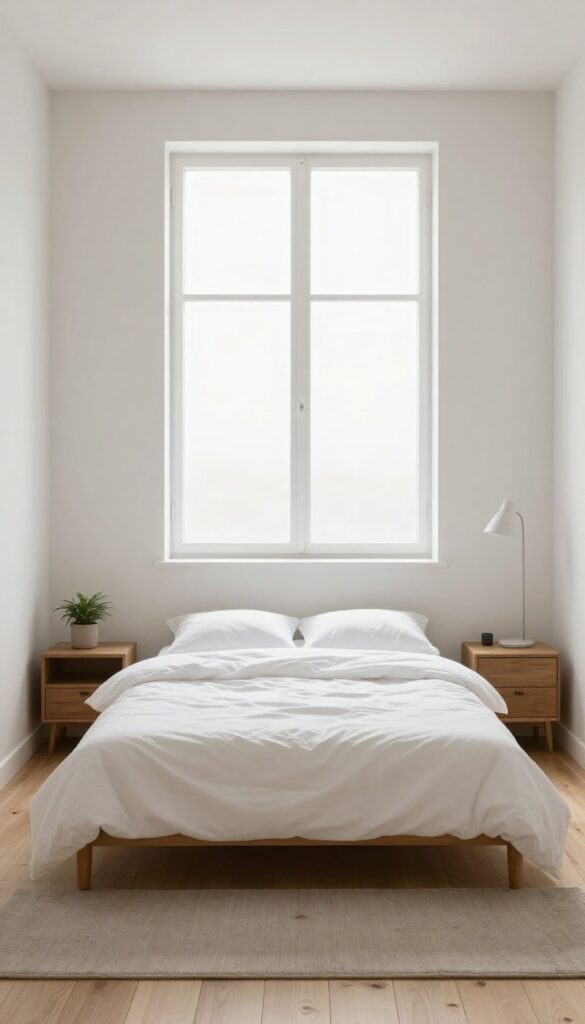
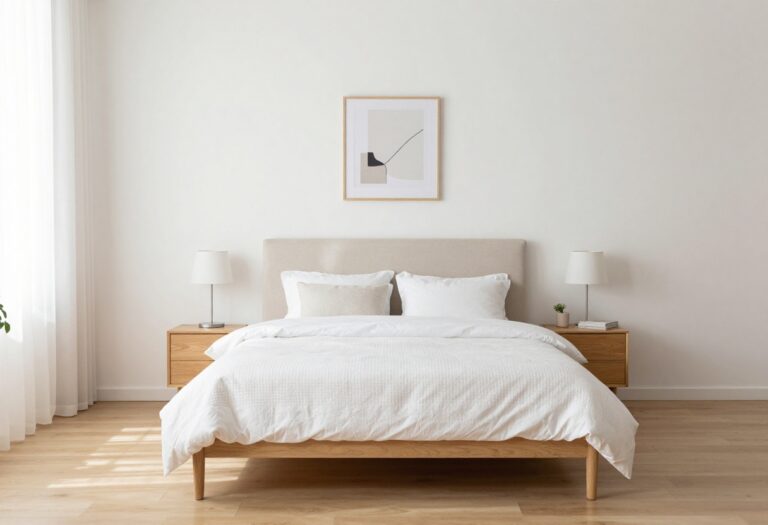
Most small bedrooms feel off because nothing clearly leads the space. The bed should always be that anchor, not something squeezed in as an afterthought. Once the bed placement makes sense, everything else falls into place more naturally.
I’ve noticed that when the bed is centered or aligned with a wall properly, the whole room instantly feels calmer. Even in tiny bedrooms, this one decision can change how functional the space feels day to day.
Why This Works
The bed is the largest object in the room, so it automatically controls balance and flow. When it’s positioned intentionally, it gives the rest of the room a reference point. That makes furniture placement easier and avoids that awkward, floating look.
How to Do It
- Place the bed against the longest uninterrupted wall
- Center it whenever possible, even if space is tight
- Leave walking room on at least one side
- Keep headboard height proportional to ceiling height
Style & Design Tips
Stick with a simple headboard design if the room is small. Heavy tufted or oversized frames can overwhelm the space fast. Neutral colors or soft wood tones help the bed blend instead of dominate.
Pro Tip or Budget Hack
If your bed frame feels bulky, swap it for a low-profile platform or even a minimalist metal frame. You’ll instantly gain visual space without changing the room size.
2. Use Vertical Space Without Overcrowding
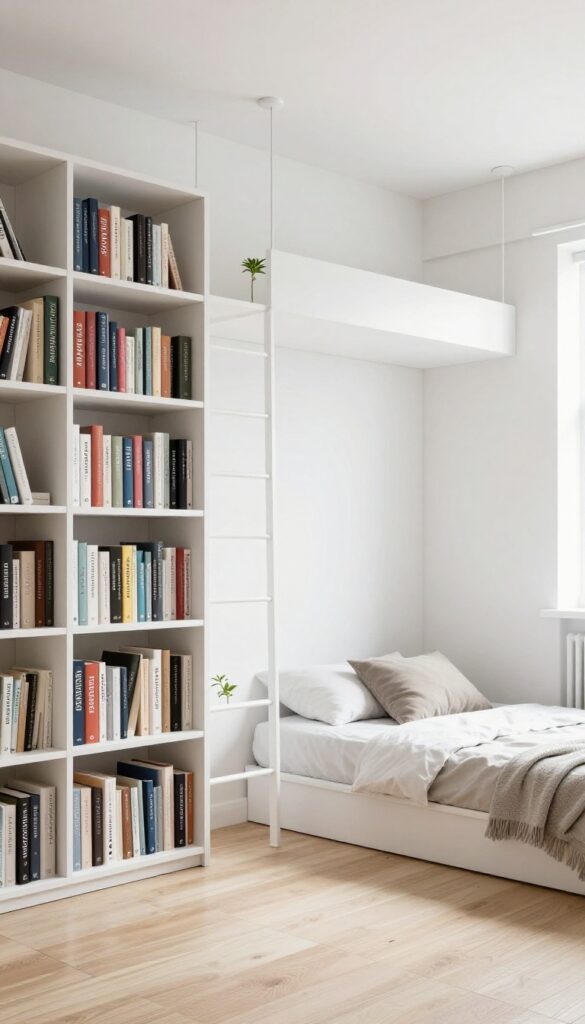
Small bedrooms often waste vertical space out of fear of making things look cluttered. The trick is using height strategically instead of randomly stacking things upward.
I learned this after trying to keep everything at eye level and realizing the room felt flat. Once I added vertical storage, the room suddenly felt taller and more finished.
Why This Works
Vertical elements draw the eye upward, which visually increases ceiling height. They also free up floor space, which is critical in a single bedroom.
How to Do It
- Install floating shelves above the bed or desk
- Use tall, slim wardrobes instead of wide ones
- Add wall-mounted lighting instead of floor lamps
- Stack storage vertically rather than spreading it out
Style & Design Tips
Keep shelf decor minimal and intentional. Too many small items turn into visual noise fast. Stick to a mix of books, one plant, and one personal item per shelf.
Pro Tip or Budget Hack
IKEA-style floating shelves are cheap and incredibly effective. Paint them the same color as the wall so they visually disappear.
3. Choose Multi-Functional Furniture
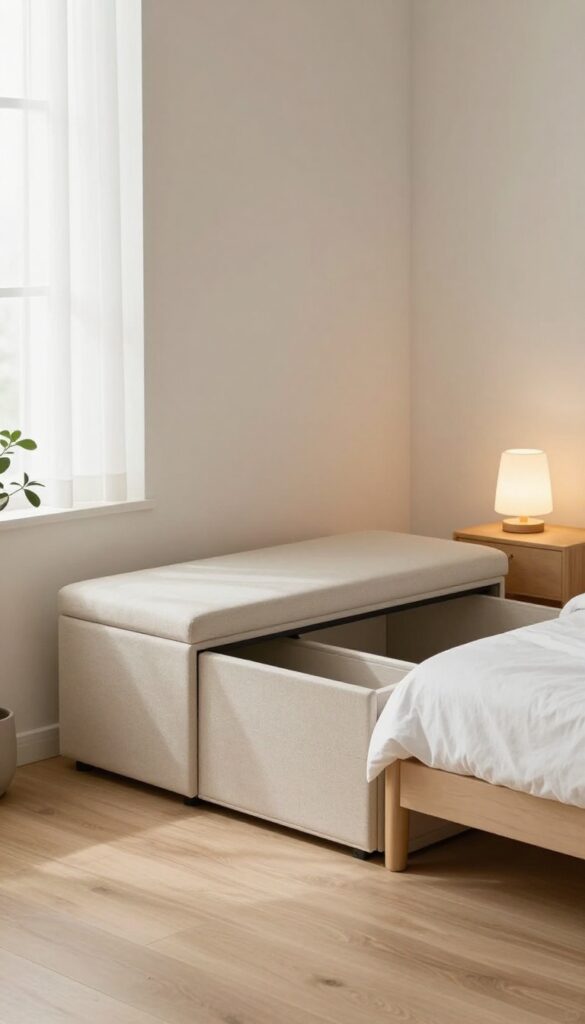
In a small single bedroom, every piece needs to earn its keep. If something only does one job, it better be really good at it.
I’ve learned this the hard way after living with a chair that just collected clothes for months. Once I swapped it for a storage bench, the room instantly felt more useful.
Why This Works
Multi-use furniture reduces clutter and cuts down on visual noise. It also helps you avoid overcrowding the room with unnecessary pieces.
How to Do It
- Choose a bed with built-in drawers
- Use a desk that doubles as a vanity
- Pick ottomans with hidden storage
- Add a nightstand with shelving instead of drawers
Style & Design Tips
Look for clean lines and neutral colors. The more functions a piece has, the simpler it should look to avoid visual overload.
Pro Tip or Budget Hack
Storage ottomans are underrated. You can find affordable ones online that hold bedding, clothes, or random items you don’t want visible.
4. Keep the Color Palette Tight
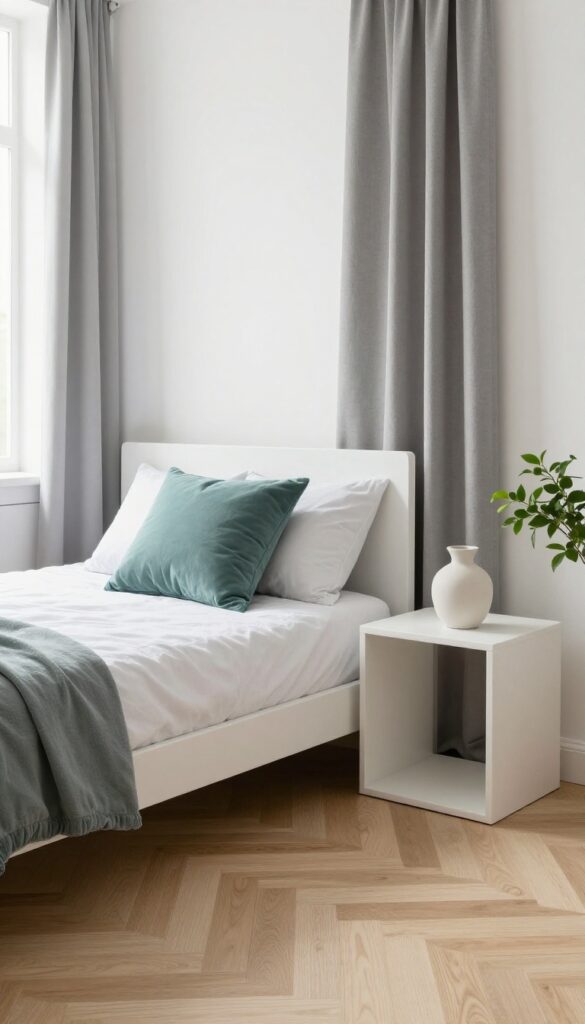
Too many colors in a small bedroom make it feel chaotic fast. A tight color palette makes even a tiny room feel intentional and calm.
I usually stick to two main colors and one accent. Every time I’ve tried adding more, it’s looked busy instead of stylish.
Why This Works
Limited colors create visual continuity, which tricks the eye into seeing more space. It also makes mixing furniture easier without clashing.
How to Do It
- Choose one main neutral tone
- Add one complementary color
- Use one subtle accent shade
- Repeat colors across bedding, decor, and rugs
Style & Design Tips
Soft neutrals like beige, warm gray, or off-white work best for small rooms. Avoid harsh contrasts unless you’re keeping everything else very simple.
Pro Tip or Budget Hack
If your room feels dull, add texture instead of color. Think linen, knit throws, or wood accents.
5. Use Lighting to Define the Space
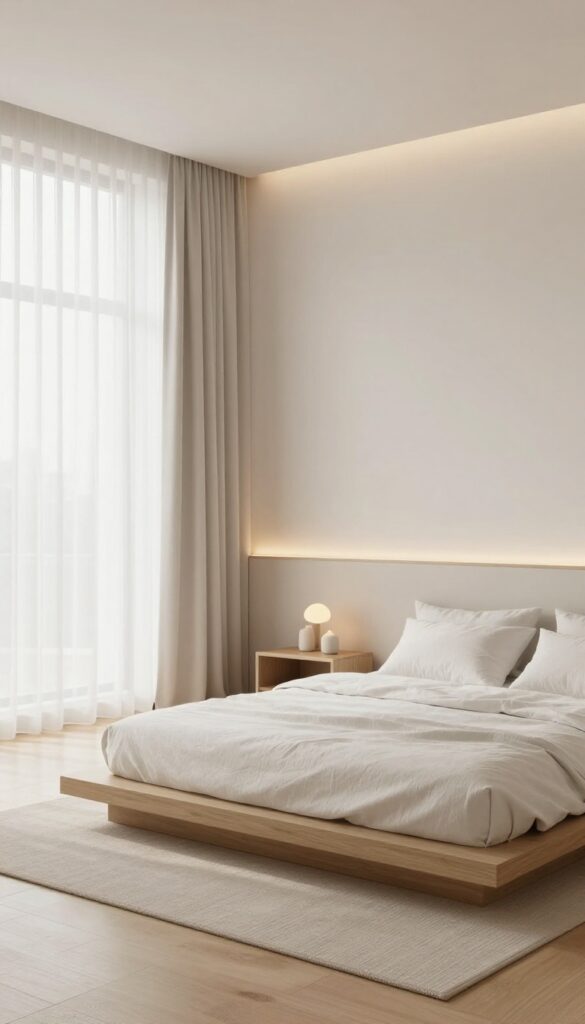
Lighting does more than just brighten a room. In a small bedroom, it helps create zones and adds depth without taking up space.
I stopped relying on a single overhead light years ago, and it completely changed how my bedroom felt at night.
Why This Works
Layered lighting makes a small room feel intentional and cozy. It also allows you to adjust the mood depending on what you’re doing.
How to Do It
- Use a bedside lamp or wall sconce
- Add a soft overhead light for general use
- Include one warm accent light for ambiance
- Avoid harsh white bulbs
Style & Design Tips
Warm light always works better in bedrooms. Go for soft yellow tones instead of bright white to keep things relaxing.
Pro Tip or Budget Hack
Plug-in wall sconces are renter-friendly and way cheaper than hardwired lighting.
6. Create One Clear Focal Point
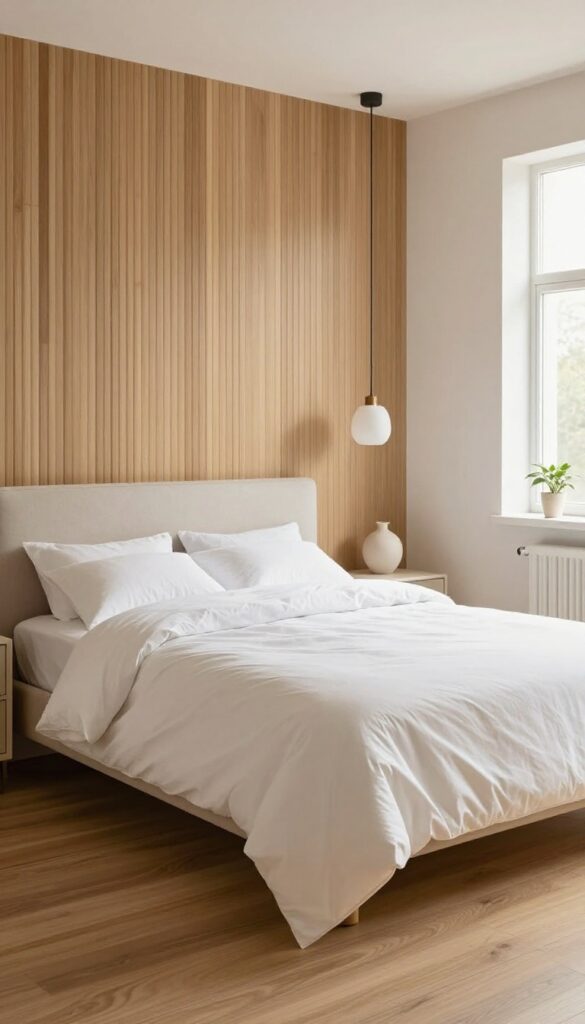
A small bedroom doesn’t need multiple statement pieces. One strong focal point is enough to make the space feel styled.
I usually go with either the bed, a wall feature, or a standout light fixture. Anything more feels like visual competition.
Why This Works
A focal point gives the eye something to land on. Without it, the room feels scattered and unfinished.
How to Do It
- Use a bold headboard or wall color
- Hang one large piece of art
- Add textured wallpaper to one wall
- Use statement bedding
Style & Design Tips
Keep everything else quieter when you add a focal point. Let one element do the talking instead of several competing for attention.
Pro Tip or Budget Hack
Removable wallpaper is perfect for rentals and gives instant impact without commitment.
7. Keep Surfaces Mostly Clear
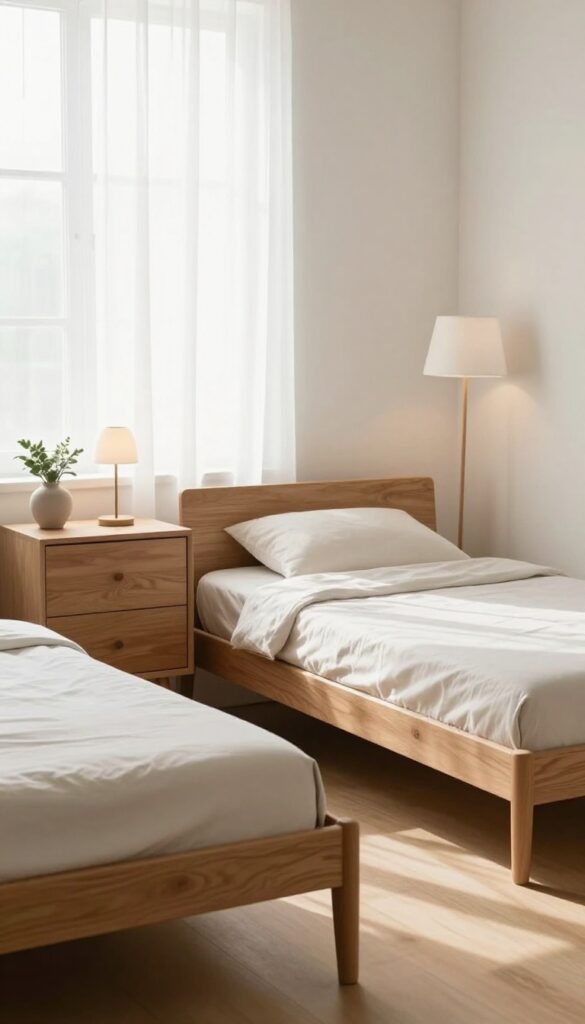
Clutter shows up fast in a small room. Even a few extra items on a dresser can make the space feel messy.
I’ve found that keeping surfaces mostly clear instantly makes the room feel bigger and calmer, even if the storage isn’t perfect.
Why This Works
Visual clutter makes small rooms feel chaotic. Clear surfaces give the eye room to rest and create a sense of order.
How to Do It
- Limit nightstand items to essentials
- Store daily clutter in drawers or bins
- Use trays to group small items
- Avoid stacking random decor
Style & Design Tips
Stick to one or two decor pieces per surface. A lamp and a book look intentional, five random items do not.
Pro Tip or Budget Hack
Use drawer dividers to keep small items organized so they don’t end up on top of furniture.
8. Add Personality Without Overcrowding
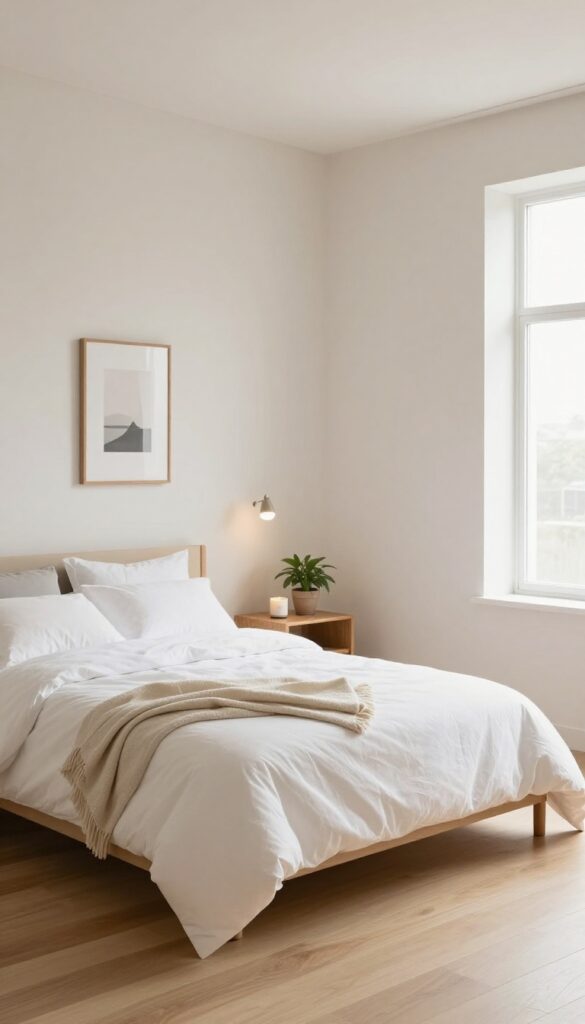
A small bedroom still needs personality, otherwise it feels like a hotel room. The trick is choosing meaningful pieces instead of lots of decor.
I like using personal items that double as decor, like framed photos or a favorite throw.
Why This Works
Personal touches make the space feel lived-in without adding clutter. They also make the room feel complete rather than staged.
How to Do It
- Display one or two meaningful photos
- Use textiles to show personality
- Add a plant or two for life
- Keep decor intentional
Style & Design Tips
Avoid tiny knick-knacks that collect dust. Larger, fewer items always look more put together.
Pro Tip or Budget Hack
Print photos in black and white for a cleaner look that works with any color scheme.
Final Thoughts
A small single bedroom doesn’t need big changes to feel complete. It just needs smarter choices and a little restraint. When every piece has a purpose and the layout makes sense, the room naturally feels more comfortable and pulled together.
The best part is you don’t need a big budget or a total overhaul to get there. A few thoughtful updates can make your space feel like it finally works for you, not against you.