8 Bedroom Loft Ideas That Maximize Vertical Space
A ladder rests against a wall that used to feel pointless, its rungs catching soft dust in the afternoon glow.
The bed floats above eye level, leaving the floor open and oddly peaceful. Space appears where it never existed, simply by looking up instead of out.
Bedrooms change mood when vertical space takes over the heavy lifting. Storage climbs the walls, sleep areas feel deliberate, and the room finally stops shrinking around daily life.
1. Elevated Bed Loft With Open Floor Below
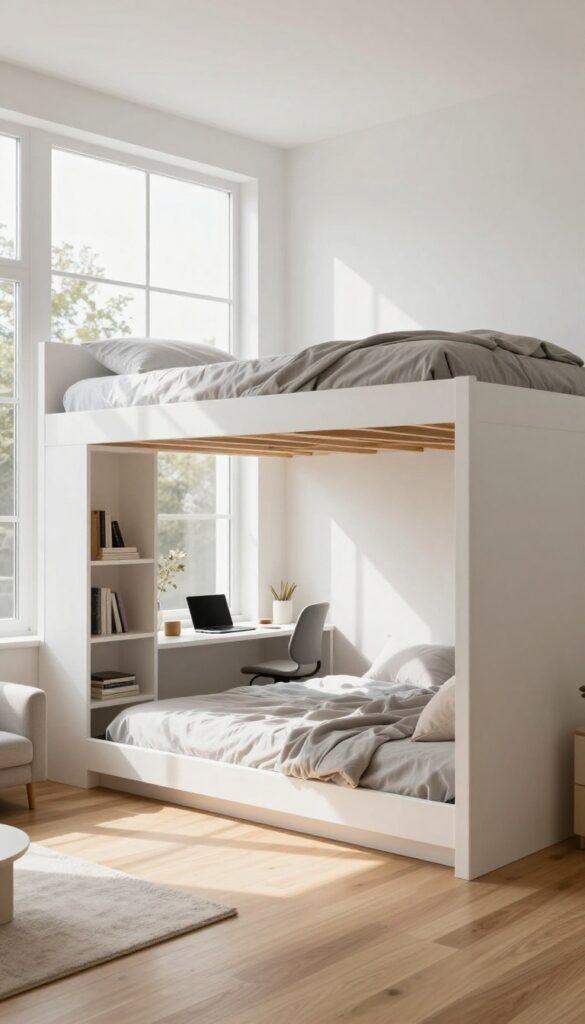
Beds tend to dominate bedrooms whether they deserve to or not. Lifting the bed creates breathing room underneath for work, lounging, or storage without sacrificing comfort. This idea works especially well in smaller rooms where the floor needs to multitask.
I’ve tried this setup in a boxy bedroom that felt claustrophobic, and the difference shocked me. The room instantly felt calmer because the bed stopped acting like a giant obstacle.
Why This Works
The bed occupies unused vertical space instead of hogging the floor. Visual flow improves because furniture spreads out naturally instead of bunching together.
How to Do It
- Install a sturdy loft bed or custom platform anchored into studs
- Leave the underside open for a desk, seating, or low storage
- Choose a ladder or alternating stair design to save space
Style & Design Tips
Stick to light wood or matte black frames for a clean look. Avoid bulky rails or heavy headboards because visual weight matters more up high.
Pro Tip or Budget Hack
Repurpose a solid bunk bed frame and remove the lower bunk to save serious money.
2. Built-In Loft Platform With Storage Drawers
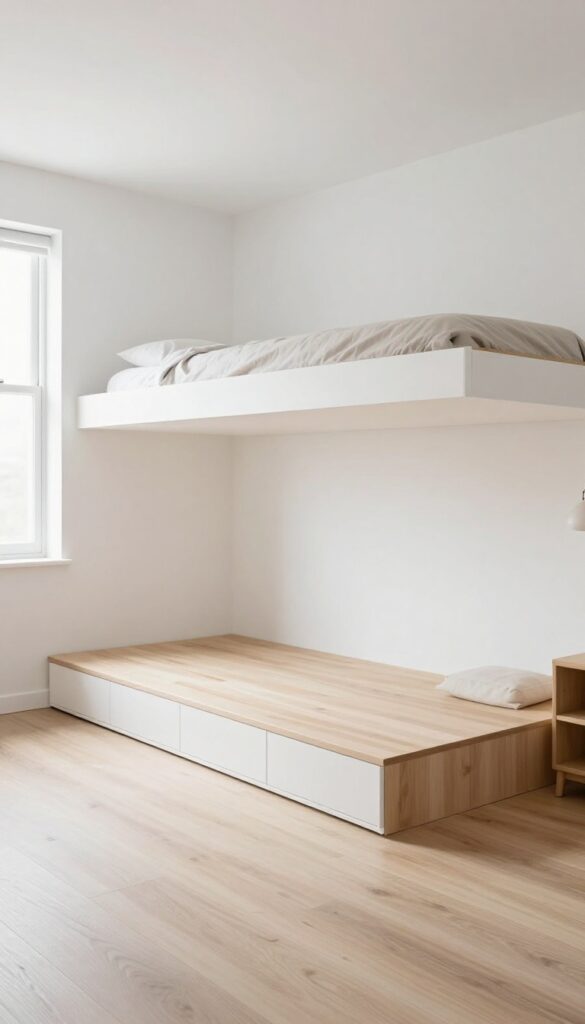
Some bedrooms don’t need flexibility as much as they need order. A built-in loft platform locks the layout in place while sneaking in storage where dressers would normally clutter the room. Everything feels intentional and tailored.
This setup works beautifully in long-term spaces where you want permanence. Once installed, it feels like the room was always meant to work this way.
Why This Works
The platform combines sleep and storage into one footprint. Vertical height handles volume without increasing furniture count.
How to Do It
- Build a raised platform using plywood and framing lumber
- Add deep drawers or cabinets underneath
- Finish with trim so it blends into the room
Style & Design Tips
Match drawer fronts to wall color for a seamless look. Avoid contrast-heavy finishes unless the room is very bright.
Pro Tip or Budget Hack
IKEA drawer units fit neatly under custom platforms with minimal modification.
3. Loft Bed Over a Work-From-Home Zone
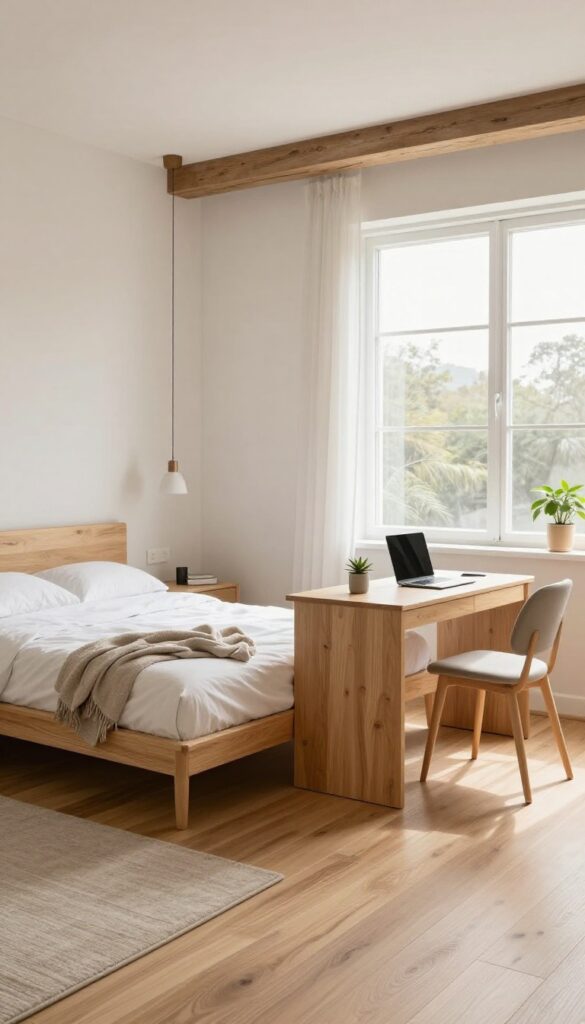
Bedrooms doubling as offices feel chaotic fast. Placing the bed above a dedicated work zone creates mental separation without walls. Sleep stays upstairs, productivity stays grounded.
I resisted this idea until remote work became permanent. The boundary helped my brain shut off at night without rearranging the whole room.
Why This Works
Vertical zoning separates functions visually and psychologically. The brain reads each level as a different purpose.
How to Do It
- Install a loft bed with enough clearance for sitting
- Place a compact desk and task chair underneath
- Add focused lighting for work hours
Style & Design Tips
Keep the work area minimal and neutral. Too many colors below make the loft feel heavier above.
Pro Tip or Budget Hack
Wall-mounted desks free even more floor space under the bed.
4. Partial Loft With Lounge or Reading Nook
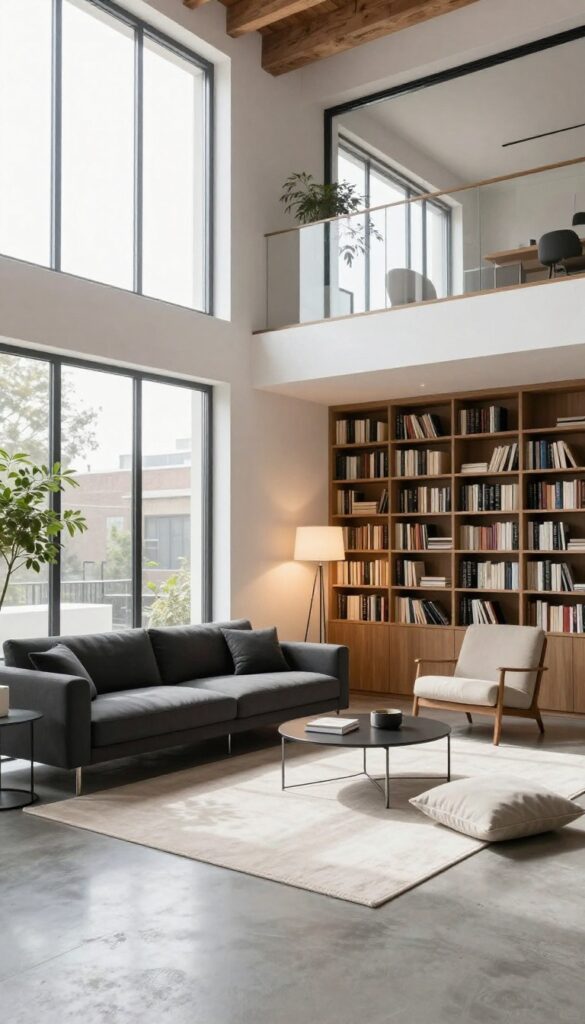
Not every loft needs to hold a bed. A partial loft creates a cozy elevated nook for reading, relaxing, or escaping the rest of the house. Bedrooms instantly feel layered and intentional.
I built one of these for evening reading, and it quickly became the most-used spot in the room. It feels like a secret without being hidden.
Why This Works
Raising a small area adds depth without overwhelming the room. It keeps the ceiling involved instead of ignored.
How to Do It
- Frame a shallow platform along one wall
- Add a low railing or wall for safety
- Use floor cushions or a mattress topper
Style & Design Tips
Soft textures matter here. Avoid stiff furniture and lean into comfort-driven materials.
Pro Tip or Budget Hack
Use a twin mattress instead of custom cushions to save money.
5. Closet-Integrated Loft Bed
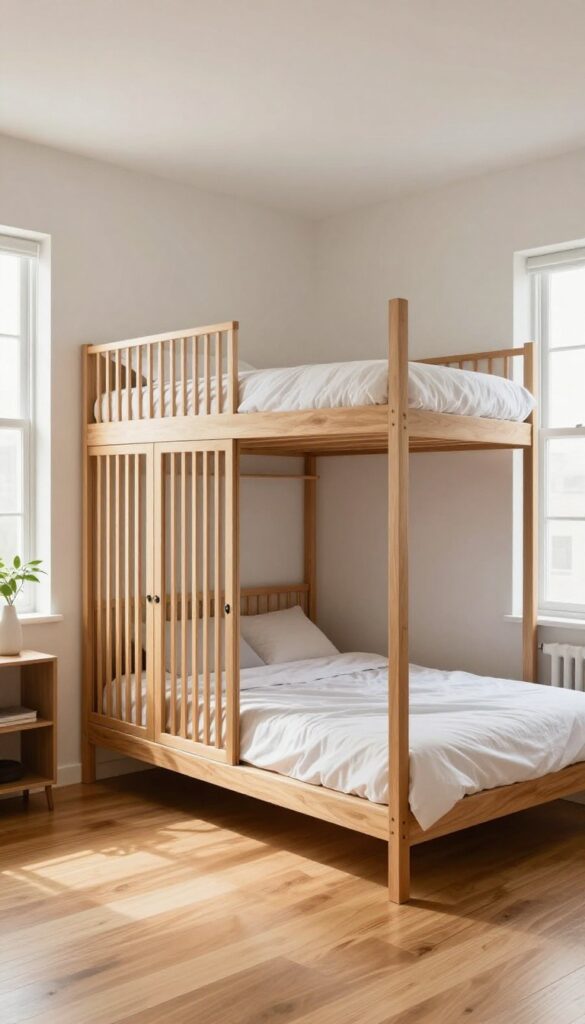
Closets often waste vertical space without realizing it. Placing a loft bed partially over a closet turns storage into structural support. It’s efficient without feeling cramped.
This idea shines in older homes where closets are deep but narrow. Suddenly, the room layout starts making sense.
Why This Works
The closet absorbs visual bulk that would exist anyway. The bed feels anchored instead of floating awkwardly.
How to Do It
- Reinforce closet framing if needed
- Extend the loft platform over the closet footprint
- Keep access doors fully functional
Style & Design Tips
Stick to neutral finishes so the structure blends in. Bold colors make the loft feel heavier.
Pro Tip or Budget Hack
Sliding closet doors work better than swing doors under lofts.
6. Minimalist Metal Frame Loft for Small Rooms
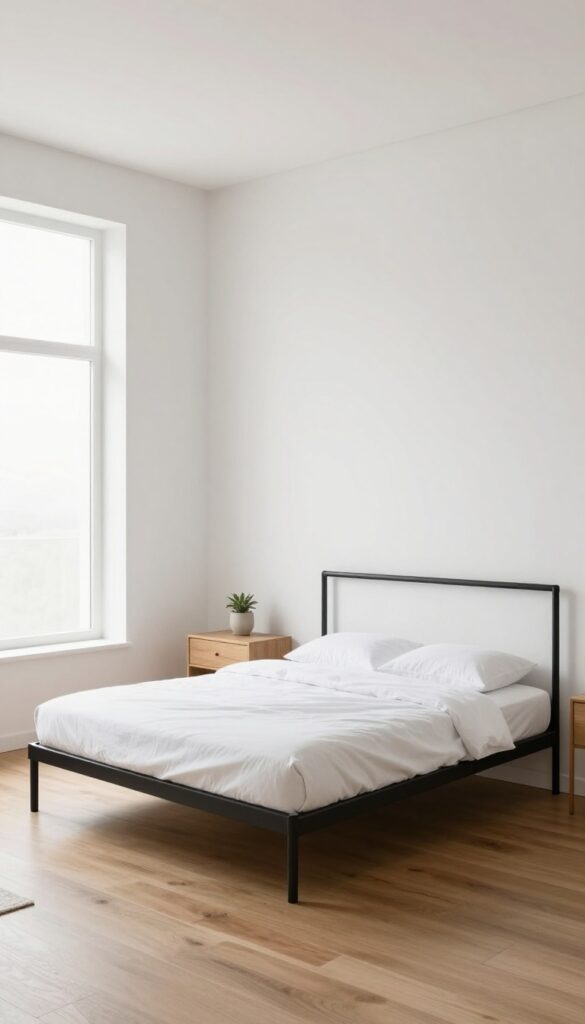
Some rooms can’t handle chunky builds. A slim metal loft frame keeps things airy while still lifting the bed off the floor. It’s practical without dominating the space.
I’ve used this in rentals where permanent changes weren’t allowed. The payoff comes with zero construction mess.
Why This Works
Thin lines reduce visual clutter. The eye travels upward without stopping at heavy edges.
How to Do It
- Choose a high-quality metal loft frame
- Secure it properly for stability
- Keep furnishings below lightweight
Style & Design Tips
Pair with white walls and simple bedding. Avoid patterns that compete with the frame.
Pro Tip or Budget Hack
Look for used commercial-grade frames built for dorms or studios.
7. Loft With Integrated Stair Storage
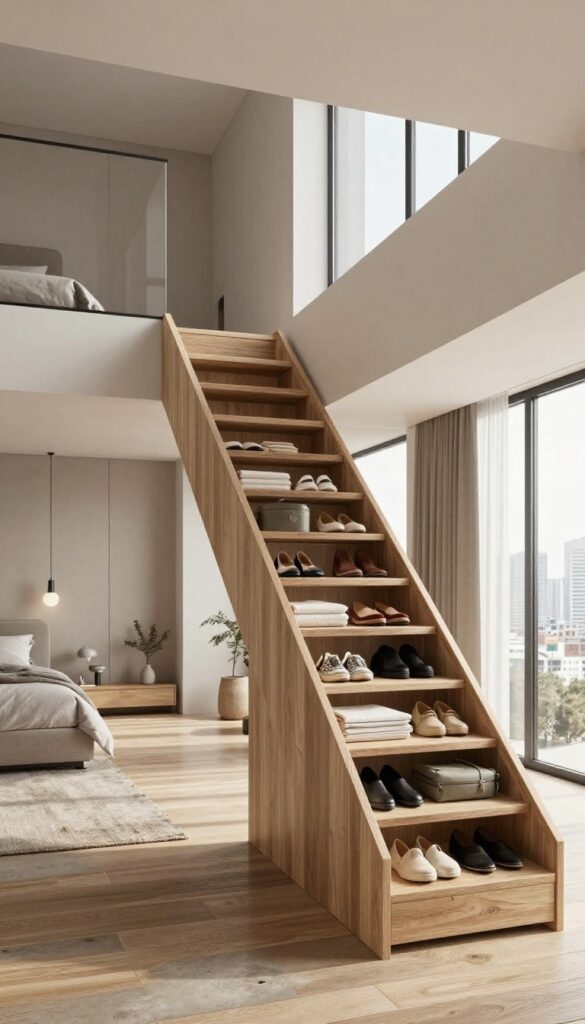
Ladders aren’t for everyone. Stairs with built-in drawers offer safer access and extra storage at the same time. It feels luxurious while staying practical.
I originally thought this was overkill until I realized how much storage those stairs swallowed. Shoes, linens, and bags disappeared instantly.
Why This Works
Stairs already take space, so making them functional maximizes every inch. Weight distribution also improves stability.
How to Do It
- Design wide steps with drawer cavities
- Use soft-close hardware for quiet use
- Anchor everything securely
Style & Design Tips
Keep stair faces clean and uncluttered. Busy stair designs draw too much attention.
Pro Tip or Budget Hack
Use open cubbies instead of drawers to cut costs.
8. Low Loft for Kids or Teen Bedrooms
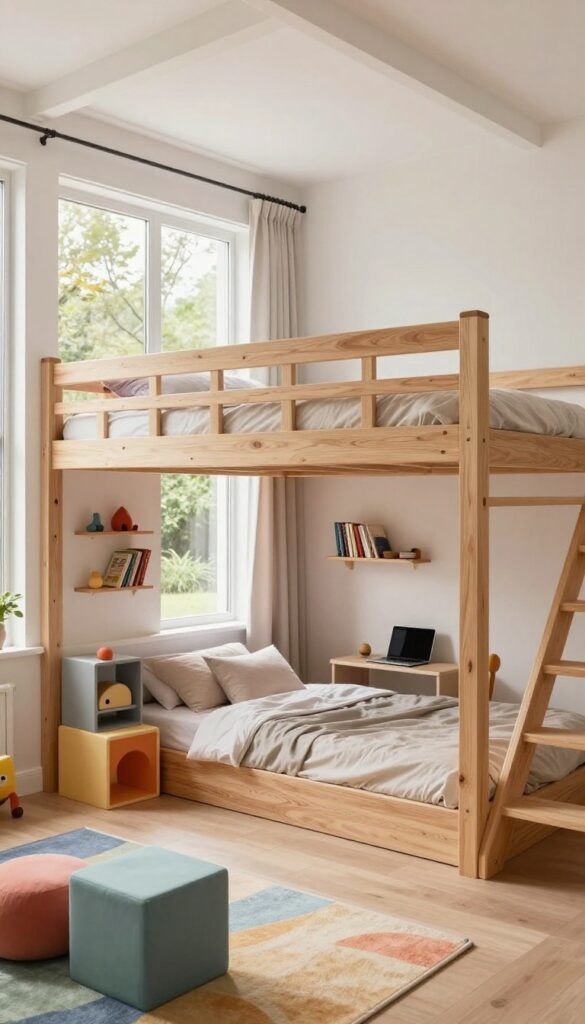
Kids outgrow floor space faster than furniture. A low loft bed leaves room for play, study, and storage while keeping everything accessible. Parents appreciate the safety factor too.
This setup grows surprisingly well with age when styled right. It avoids the childish look most people fear.
Why This Works
Lower height maintains openness while still freeing floor area. It balances safety and functionality.
How to Do It
- Install a loft with modest clearance
- Use the underside for desks or toy storage
- Add guardrails for peace of mind
Style & Design Tips
Choose neutral colors that age well. Skip themed décor and let accessories do the talking.
Pro Tip or Budget Hack
Secondhand loft beds often work perfectly with a fresh coat of paint.
Final Thoughts
Vertical space changes how a bedroom behaves without demanding more square footage. Loft ideas don’t need to be extreme to feel impactful, just intentional and well thought out.
Trying one small shift often sparks bigger improvements naturally. Pick the idea that fits daily life best and let the room evolve from there.