8 Green Comforter Bedroom Ideas That Look Calm
Morning light hits fabric first, and color decides whether the room exhales or tenses up. Green tends to land softly, especially when it shows up in layers instead of shouting from one wall.
Bedrooms feel calmer when the color choice works with the light rather than fighting it.
Soft textures, muted shades, and a little restraint can turn a green comforter into the quiet anchor of the whole space.
Some shades lean cozy, others feel airy, and a few surprise you by working better than expected. These ideas focus on comfort first, style second, and zero pressure to redo the entire room.
1. Soft Sage Comforter with Warm Neutrals
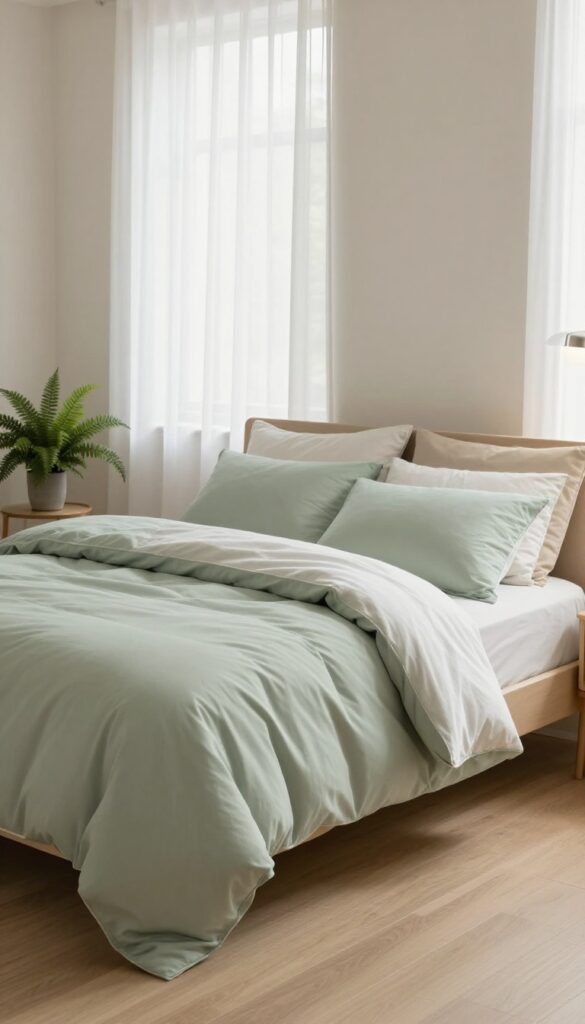
Bedrooms often feel restless when too many colors compete for attention, especially around the bed. A soft sage green comforter fixes that by calming the center of the room without draining it of personality.
It feels gentle, familiar, and easy to live with every single day.
Sage works because it sits comfortably between green and gray, which makes it incredibly flexible.
I’ve found it plays well with beige walls, off-white sheets, and even slightly warm wood tones. The result feels settled instead of styled to death.
Why This Works
Sage green reduces visual noise because it doesn’t demand contrast. It softens harsh lines and makes mismatched furniture feel intentional.
The color also adapts well to both natural and artificial light, which keeps the room from shifting moods throughout the day.
Warm neutrals support sage without dulling it. Creams, soft taupes, and light woods add warmth that keeps the bedroom from feeling cold or flat.
How to Do It
- Choose a sage comforter with a matte or lightly textured finish.
- Pair it with off-white or ivory sheets instead of bright white.
- Add one or two pillows in warm beige or muted tan.
- Keep the wall color neutral and avoid sharp contrast.
Style & Design Tips
Stick to low-contrast layering so the bed feels cohesive instead of busy. Avoid stark black accents near the bed because they break the calm effect. If your furniture leans cool-toned, balance it with warmer textiles like linen or cotton.
Pro Tip or Budget Hack
If a full sage comforter feels expensive, use a sage duvet cover instead. Swapping covers gives the same visual impact without buying an entirely new bedding set.
2. Olive Green Comforter with Layered Textures
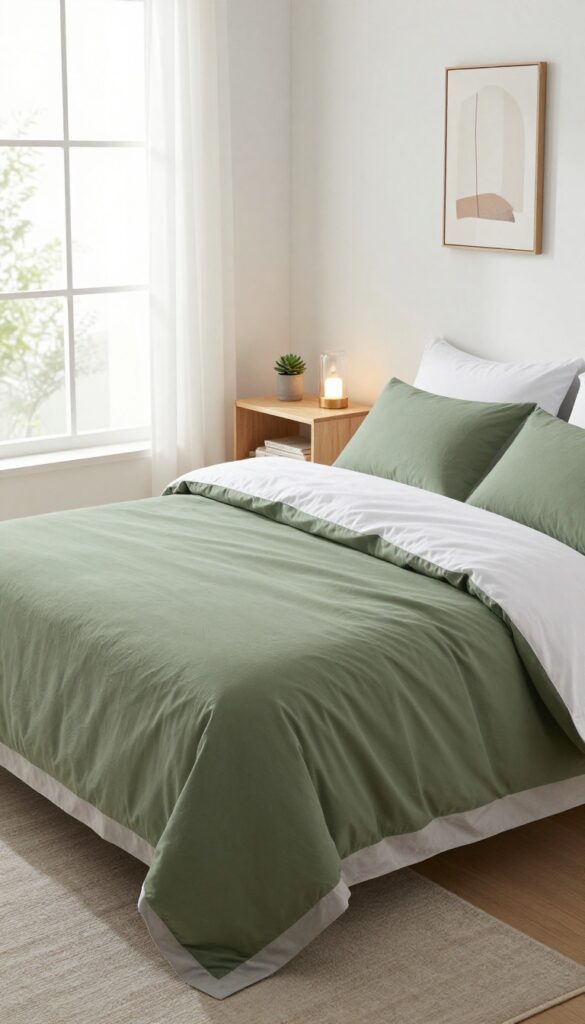
Sometimes a bedroom feels bland not because of color, but because everything feels flat. An olive green comforter adds depth while still keeping the space calm and grounded. It’s richer than sage but still relaxed.
Olive feels cozy without tipping into dark or heavy territory. I like it most in bedrooms that already have neutral walls but need something to anchor the bed visually.
Why This Works
Olive green connects naturally with texture. When paired with knits, linen, or soft quilts, the bed feels layered instead of bulky. The color absorbs light gently, which helps create a grounded, restful mood.
This shade also works beautifully with natural materials. Wood, leather, and woven accents feel more intentional when olive is nearby.
How to Do It
- Choose an olive comforter with visible stitching or quilting.
- Layer with a chunky knit throw or textured blanket.
- Use pillows in soft cream, tan, or muted rust.
- Keep the rest of the room simple to avoid heaviness.
Style & Design Tips
Texture matters more than pattern here. Avoid loud prints that compete with olive’s depth. Stick with tactile interest instead of visual noise, especially around the bed.
Pro Tip or Budget Hack
Look for olive comforters in end-of-season sales. Olive tends to be less trendy than brighter greens, which means better discounts without sacrificing style.
3. Eucalyptus Green Comforter for an Airy Feel
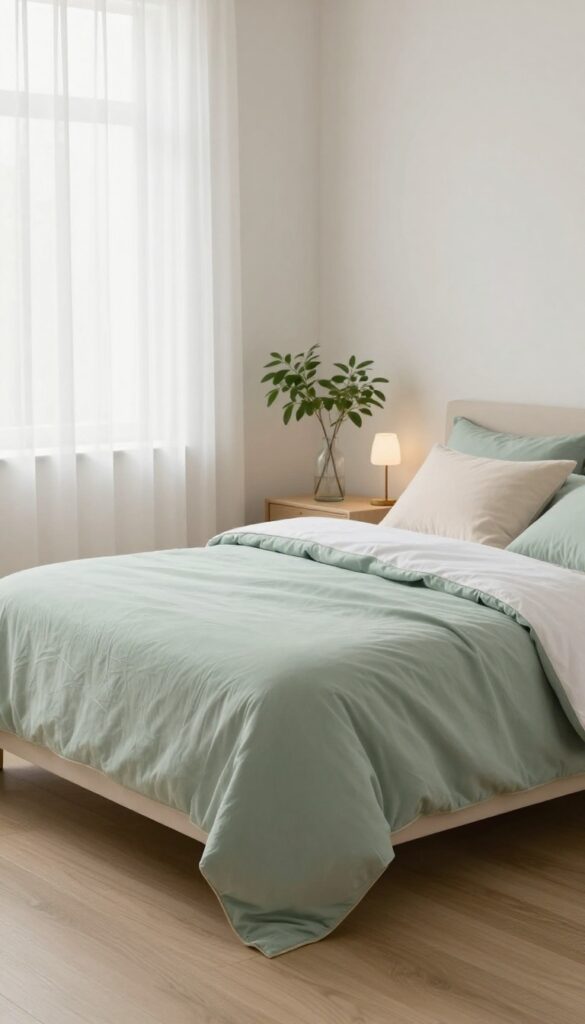
Some bedrooms feel dark even when they technically get enough light. A eucalyptus green comforter can lift the entire space without turning it sterile. It sits lighter than sage but still feels grounded.
This shade feels fresh and clean without feeling cold. I’ve noticed it works especially well in smaller bedrooms where darker colors feel overwhelming.
Why This Works
Eucalyptus reflects light softly, which helps the room feel more open. It blends easily with whites and pale woods, creating a relaxed flow from bed to floor. The color feels intentional without stealing focus.
It also pairs beautifully with simple styling. You don’t need many layers for this one to shine.
How to Do It
- Choose a smooth or lightly textured eucalyptus comforter.
- Pair with white or light gray sheets.
- Keep pillows minimal and cohesive.
- Use light wood or white furniture nearby.
Style & Design Tips
Lean into negative space around the bed. Avoid overcrowding the room with decor because eucalyptus works best when it can breathe. Simple lines and uncluttered surfaces help amplify the calm effect.
Pro Tip or Budget Hack
If your room already feels heavy, skip buying new furniture. Swapping darker throw pillows or rugs for lighter ones can instantly support the eucalyptus tone.
4. Forest Green Comforter with Soft Contrast
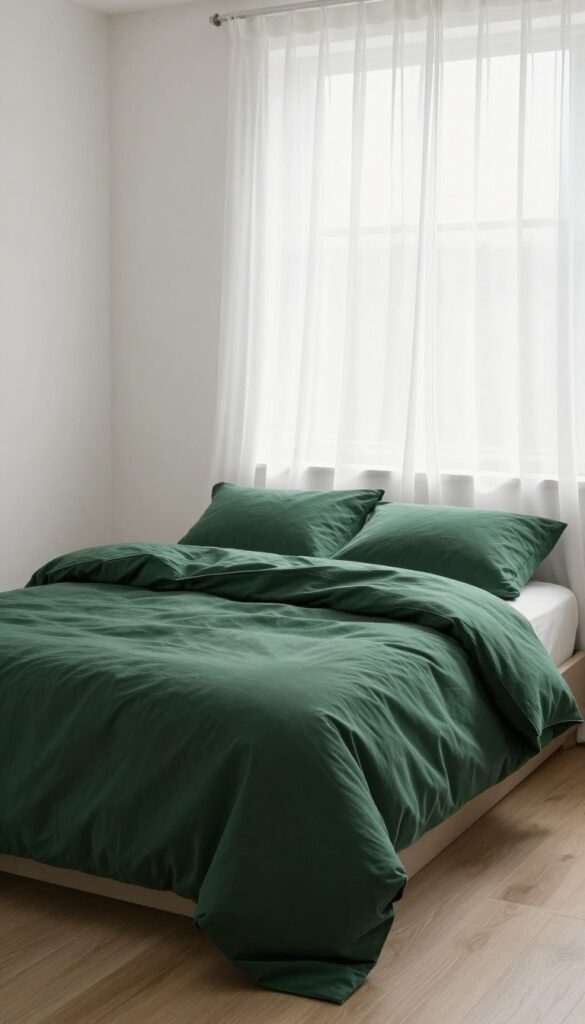
Deep green sounds bold, but forest green can actually feel incredibly calm when styled correctly. It adds drama without chaos and works well in bedrooms that feel too plain or washed out.
This shade brings a sense of depth that lighter greens can’t. I’ve used it in neutral rooms that needed grounding, and it instantly made the space feel intentional.
Why This Works
Forest green anchors the bed visually, making it feel like a focal point instead of an afterthought. When paired with lighter elements, the contrast feels soothing instead of sharp. The richness also hides wear better over time.
This color works especially well in rooms with good natural light. It absorbs light without killing it.
How to Do It
- Choose a forest green comforter with a soft finish.
- Balance it with light sheets or pillowcases.
- Add subtle metallic or wood accents nearby.
- Keep walls neutral and uncluttered.
Style & Design Tips
Avoid pairing forest green with overly cool grays. Warm neutrals keep the look grounded and calm. Stick to simple shapes to prevent the bed from feeling heavy.
Pro Tip or Budget Hack
If a full forest green comforter feels risky, start with a duvet cover. That way you can test the mood without committing long-term.
5. Muted Green Comforter with White Bedding Layers
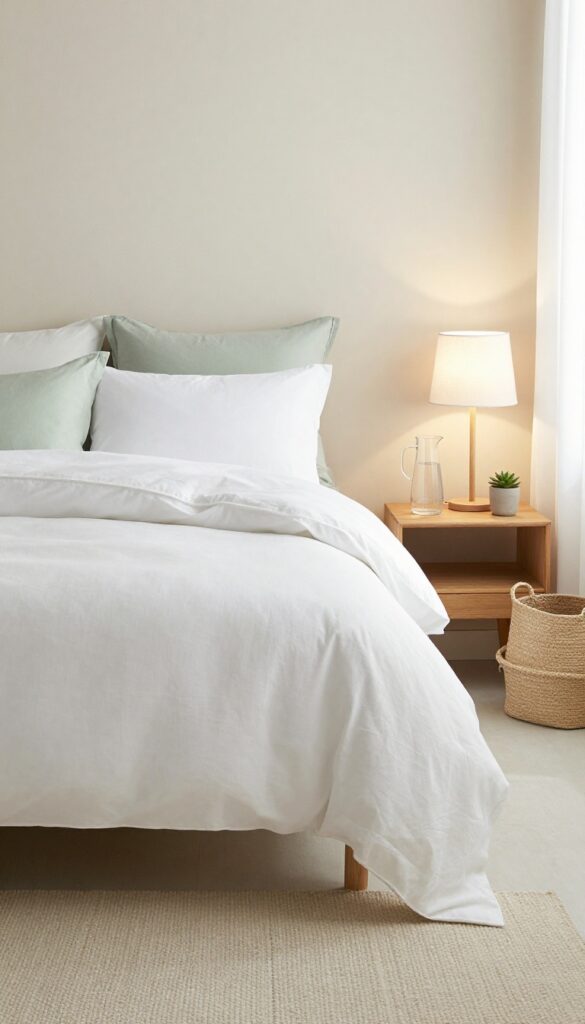
Sometimes calm comes from restraint rather than bold choices. A muted green comforter paired with white bedding creates a soft, hotel-like feel without feeling impersonal. It’s clean, relaxed, and easy to maintain visually.
This combo works especially well if your room already has a lot going on. The simplicity helps everything settle.
Why This Works
White layers reflect light and soften the green. The contrast stays gentle, which prevents the bed from looking stark. The result feels intentional but effortless.
Muted green also hides wrinkles better than pure white. That alone makes it feel more livable.
How to Do It
- Use a muted green comforter as the top layer.
- Layer crisp white sheets underneath.
- Add white or cream pillows for continuity.
- Keep patterns minimal or skip them entirely.
Style & Design Tips
Focus on clean lines instead of decorative extras. Too many pillows or throws can ruin the simplicity. Let the color contrast do the work.
Pro Tip or Budget Hack
If you already own white bedding, adding just one muted green comforter creates a whole new look without replacing everything.
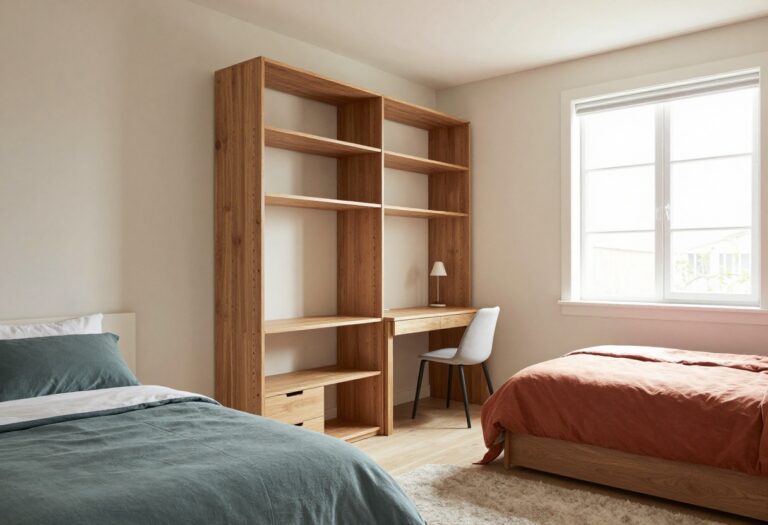
6. Green Comforter with Natural Wood Accents
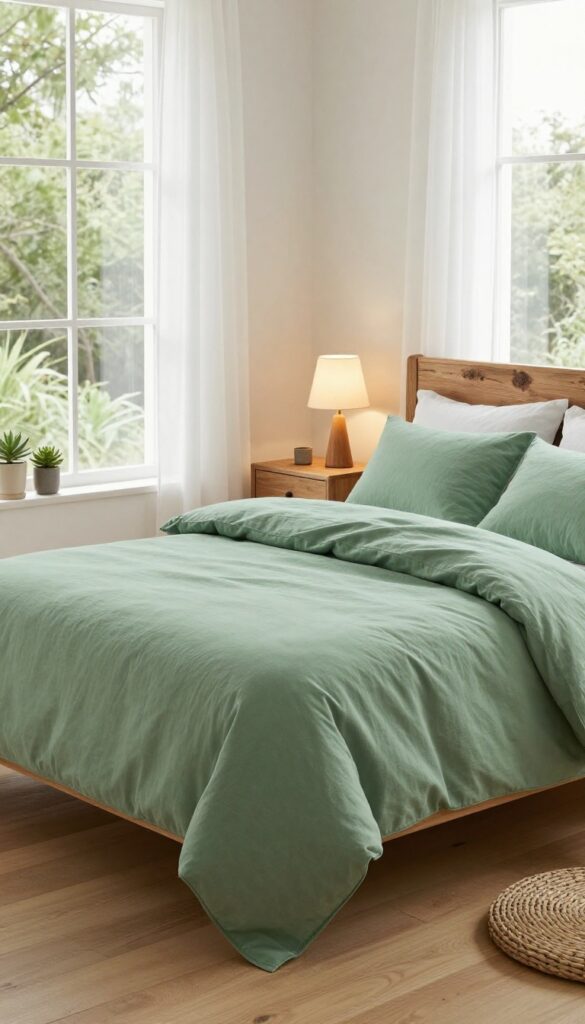
Bedrooms often feel disconnected when furniture and textiles don’t speak the same language. A green comforter paired with natural wood brings everything together quietly. It feels grounded, warm, and balanced.
This approach works across many green shades, from sage to olive. The key is letting wood act as the neutral anchor.
Why This Works
Green and wood mirror nature, which automatically calms the brain. The combination feels familiar and safe, especially in spaces meant for rest. It also softens modern or minimal furniture.
Natural wood tones prevent green from feeling too cool or sterile. That balance keeps the bedroom inviting.
How to Do It
- Choose a green comforter in a natural, muted tone.
- Highlight wood through nightstands or bed frames.
- Keep metals minimal and warm-toned.
- Avoid overly glossy finishes.
Style & Design Tips
Stick to consistent wood tones throughout the room. Mixing too many finishes can break the calm effect. Let the green comforter remain the soft focal point.
Pro Tip or Budget Hack
If replacing furniture isn’t an option, add a simple wooden tray or bench. Small touches still reinforce the wood-and-green connection.
7. Green Comforter with Minimal Pattern Play
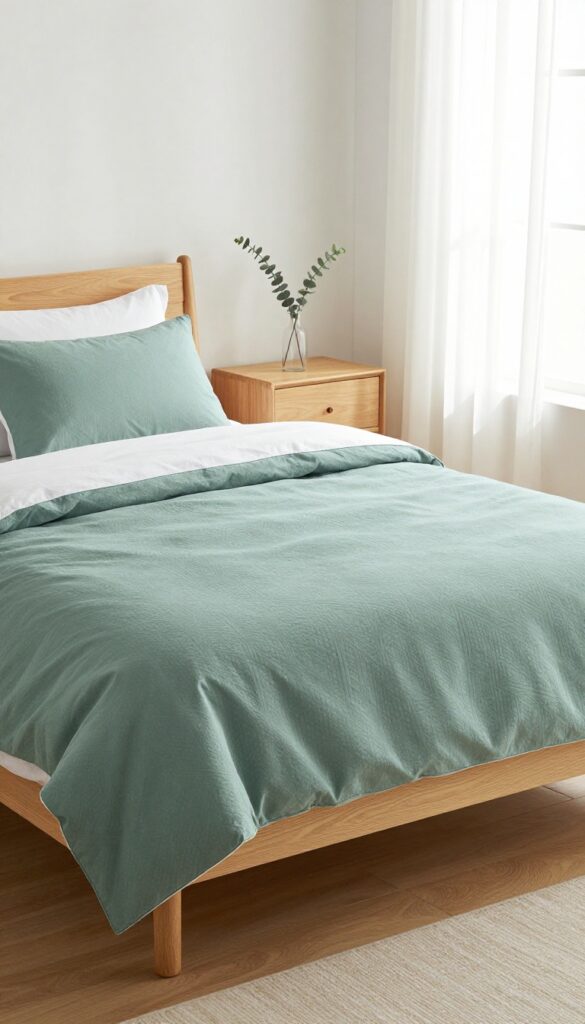
Patterns scare people off, but subtle ones can actually enhance calm when done right. A green comforter with a very minimal pattern adds interest without chaos. It’s perfect for bedrooms that feel a little too plain.
The key is keeping the pattern soft and low contrast. Loud designs ruin the effect fast.
Why This Works
Small-scale patterns break up solid color without overwhelming the eye. They add texture visually, which keeps the bed from feeling flat. When the pattern stays close in tone, the calm remains intact.
This approach works especially well in neutral rooms. It adds just enough personality.
How to Do It
- Choose a green comforter with a subtle stitched or woven pattern.
- Keep surrounding bedding solid.
- Limit patterns elsewhere in the room.
- Stick to one pattern type only.
Style & Design Tips
Avoid mixing multiple patterns near the bed. One quiet pattern is enough. Let the rest of the room stay simple so the comforter feels intentional.
Pro Tip or Budget Hack
Look for patterned comforters in neutral collections. They often cost the same as solids but add more visual interest for free.
8. Dark Green Comforter with Soft Lighting
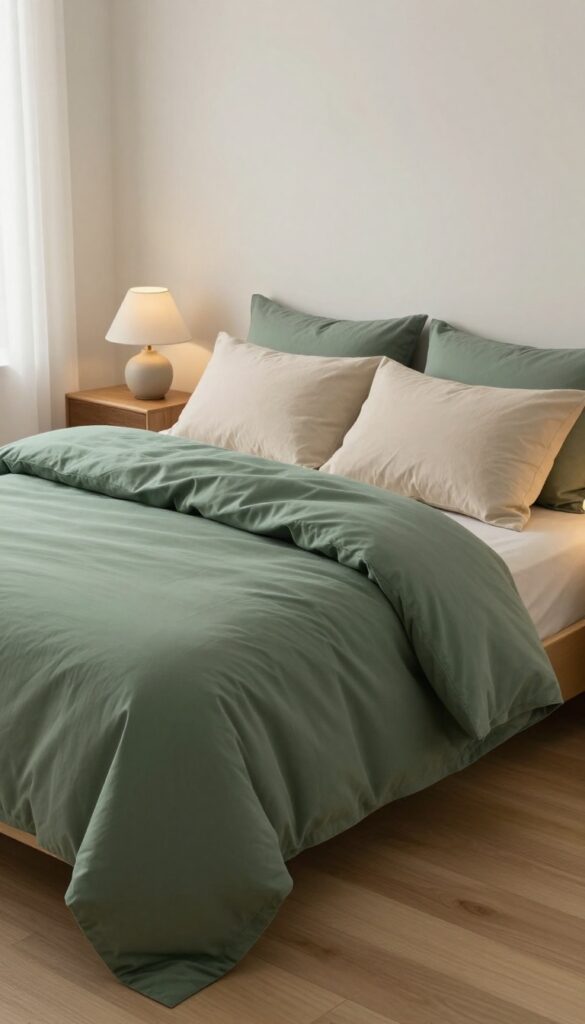
Lighting can make or break even the best bedding choice. A dark green comforter paired with soft lighting turns the bedroom into a cocoon. It feels cozy without feeling closed in.
This idea works best for people who want a restful, end-of-day vibe. It’s calm in a deeper, more enveloping way.
Why This Works
Dark green absorbs harsh light and softens the room instantly. When paired with warm lamps or diffused lighting, the space feels intimate and relaxed. The comforter becomes a visual anchor instead of a dark void.
Soft lighting keeps the green from feeling heavy. Balance matters here.
How to Do It
- Choose a dark green comforter with a soft finish.
- Use warm bedside lamps instead of overhead lighting.
- Add light bedding layers for contrast.
- Keep decor minimal and intentional.
Style & Design Tips
Skip cool white bulbs completely. Warm light only keeps the green looking rich instead of muddy. Avoid clutter that competes with the calm mood.
Pro Tip or Budget Hack
If lighting upgrades feel expensive, start with bulbs. Swapping to warmer tones can transform the room instantly without buying new fixtures.
Final Thoughts
Green comforters work best when they support the room instead of dominating it. The calm comes from balance, texture, and letting the color breathe. No single shade fits every space, and that’s a good thing.
Trying one small change often teaches more than redoing everything at once. Start with the comforter, see how the room responds, and adjust from there. Calm bedrooms grow over time, not overnight.