15 Cute Kids Bedroom Ideas for Fun and Comfort
I swear kids’ bedrooms sit at the center of childhood magic, chaos, and comfort all at once. I see them as tiny worlds where sleep, play, and imagination collide every single day.
You probably want a room that looks adorable but also feels calm enough to help your kid actually rest, right?
I get that struggle because I see parents swing too hard toward cute or too far toward practical. I believe the sweet spot lives right in the middle, where fun design meets real comfort.
Let me walk you through ideas that actually work, not just ones that look good on Pinterest.
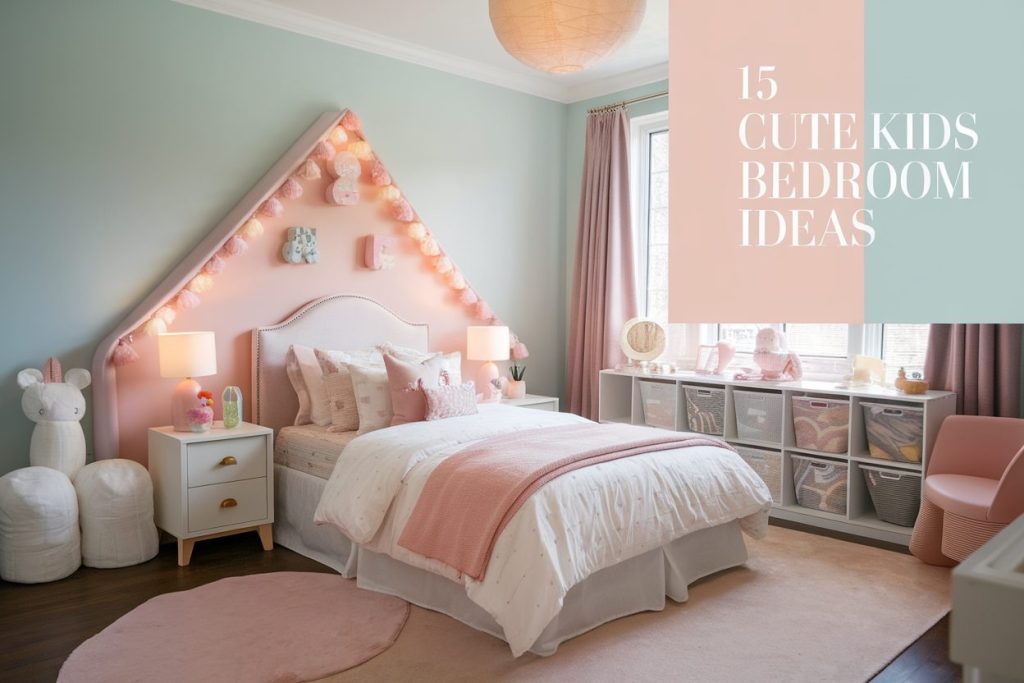
1. Whimsical Theme-Based Bedrooms
Theme-based bedrooms give kids a sense of identity and excitement the moment they walk in. I love how a clear theme instantly guides color choices, furniture style, and décor decisions.
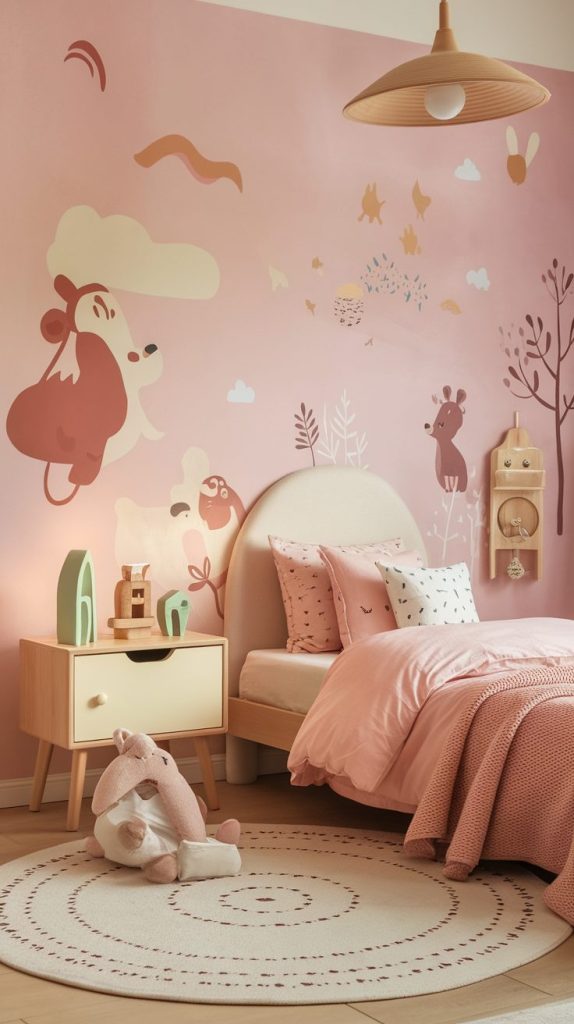
You avoid random clutter when everything points toward one playful idea.
I usually suggest starting with what your kid already loves, like animals, space, or fairy tales. That interest changes fast, so I keep the theme flexible rather than locked into a single character. You can swap pillows, wall decals, or bedding without redoing the whole room.
Wall decals work better than paint for themes because they let you update the look without stress. I stick decals at eye level so kids feel connected to the space instead of overwhelmed by it.
Soft rugs and cozy bedding balance the visual energy and keep the room comfortable.
Themes feel magical, but comfort still rules the room. I always pair bold visuals with neutral furniture so the space feels calm at bedtime. IMO, the best themed rooms excite kids during the day and relax them at night.
2. Soft Pastel Color Palettes
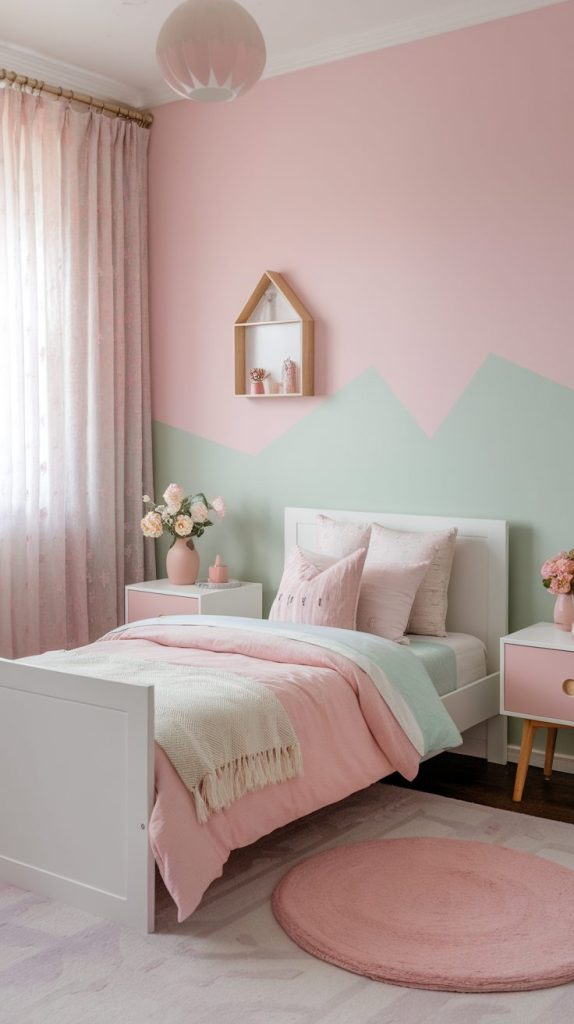
Pastel colors create calm energy without feeling boring or dull. I notice kids respond really well to gentle tones like mint, blush, lavender, and sky blue. These colors soothe the space while still feeling playful and cheerful.
I prefer pastel walls paired with white or light wood furniture. This combo keeps the room bright and airy, even in smaller spaces. You avoid that boxed-in feeling that darker colors sometimes create.
Textiles bring pastels to life without locking you into one look forever. I use pastel bedding, curtains, and cushions so you can switch styles easily later. Kids spill things, so washable fabrics save your sanity.
Pastels also grow with your child more gracefully than loud primary colors. A soft pink or sage green still works as kids age and tastes evolve. You end up with a room that feels timeless instead of temporary.
3. Cozy Reading Nooks
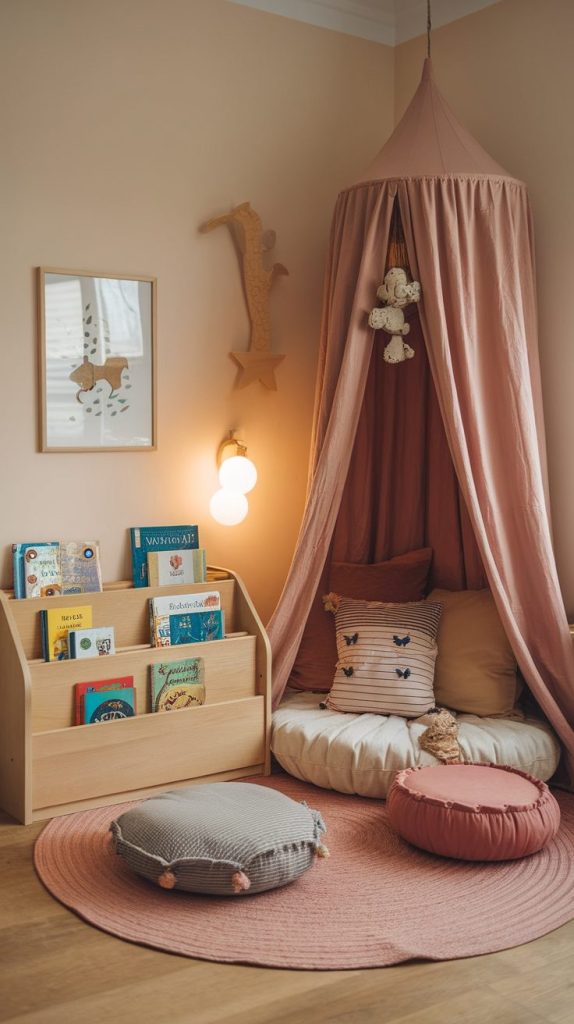
A reading nook adds instant charm and real value to a kids’ bedroom. I love how it creates a quiet zone away from toys and screens. Kids naturally slow down when they curl up with a book.
I usually build reading nooks with floor cushions, a small bookshelf, and soft lighting. A teepee, canopy, or corner bench helps define the space visually. Kids feel special when they have a spot just for them.
Lighting matters more than people realize in reading areas. I use warm, focused lamps that reduce eye strain and feel cozy. Natural light works great during the day, but lamps make nighttime reading inviting.
Reading nooks also encourage independence and focus. Kids start choosing books instead of waiting for prompts. FYI, this small corner often becomes the most loved spot in the room.
4. Multi-Functional Furniture
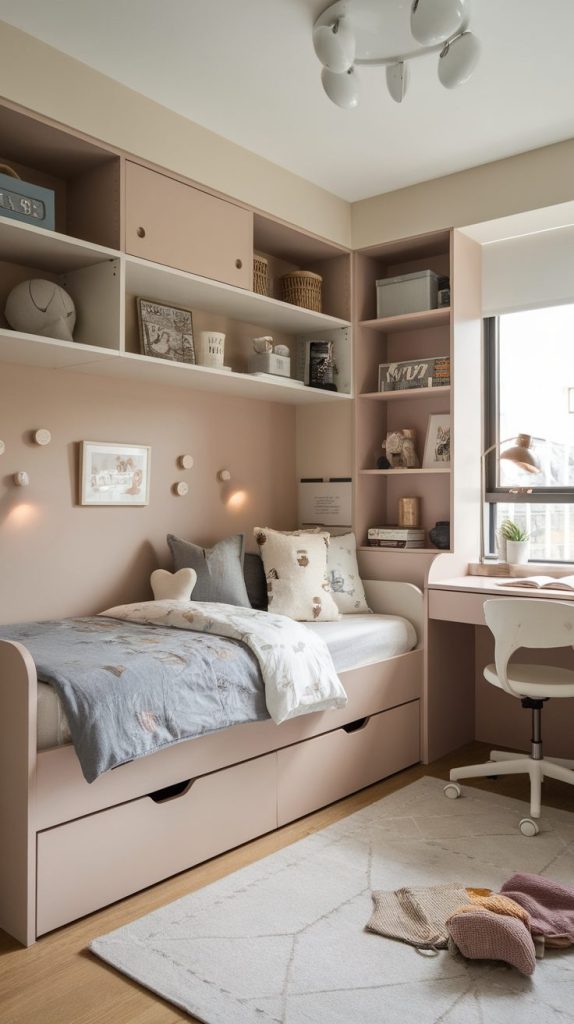
Kids rooms need furniture that works harder than adult furniture. I always recommend pieces that serve more than one purpose. This approach saves space and keeps the room flexible.
Beds with built-in drawers handle toys, clothes, or bedding without extra cabinets. Desks that double as craft tables adapt as kids grow. Storage benches give seating and hidden space at the same time.
I avoid flimsy multi-use furniture that sacrifices comfort. A bed still needs solid support, and a desk still needs enough surface space. Quality matters more when furniture handles daily wear.
Multi-functional furniture also teaches kids organization naturally. They learn where things belong instead of piling stuff everywhere. That habit makes bedtime routines smoother for everyone.
5. Playful Wall Art and Murals
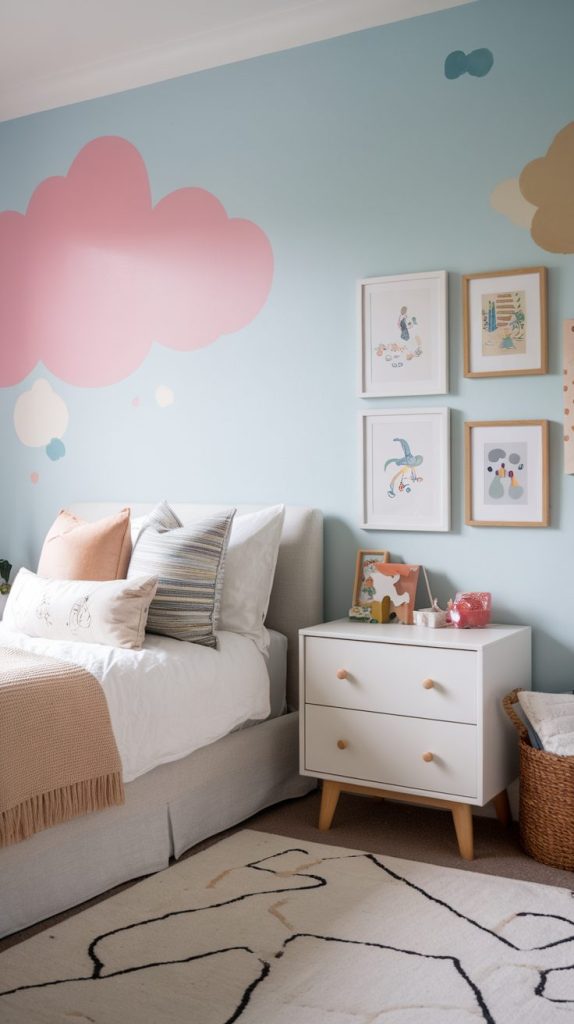
Walls shape the personality of a kids bedroom more than any other element. I love using murals, framed prints, or hand-painted accents to spark imagination. Kids engage with art when it feels fun and accessible.
Murals work especially well on one feature wall. I keep other walls simple so the room doesn’t feel chaotic. Balance matters when kids need both stimulation and calm.
Gallery walls let you rotate art as interests change. I mix illustrations, kids drawings, and typography prints. This approach keeps the room personal and ever-evolving.
Art also helps kids feel ownership over their space. When they choose pieces, they feel proud and connected. That emotional comfort matters just as much as physical comfort.
6. Creative Storage Solutions
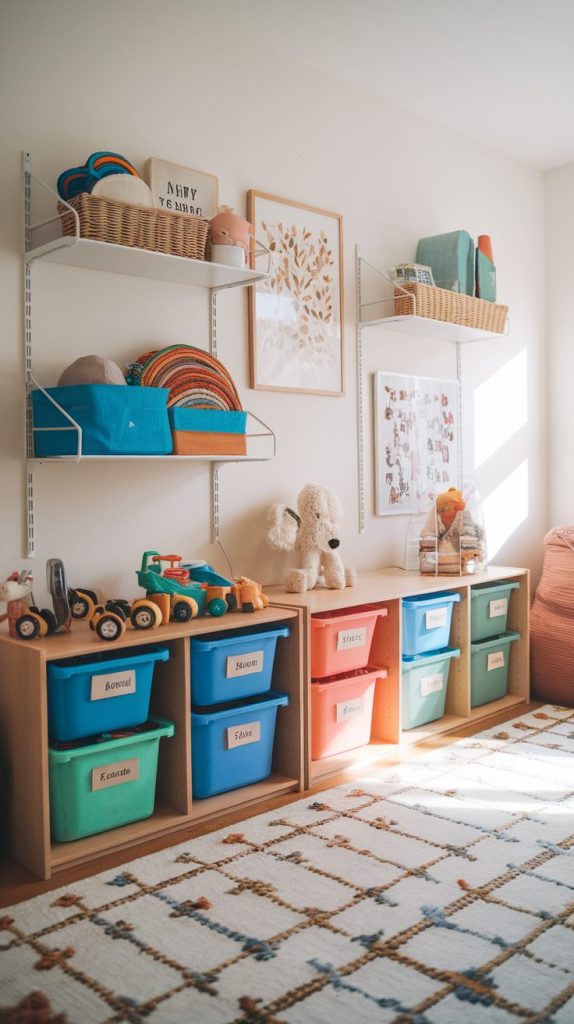
Storage can make or break a kids bedroom. I believe smart storage keeps the room peaceful without killing the fun. Kids play more freely when they know where things go.
Open bins work better than closed cabinets for younger kids. They see everything and clean up faster. Labels with pictures help kids remember what belongs where.
Vertical storage saves floor space and keeps rooms open. I use wall shelves, hanging organizers, and tall bookcases. This strategy works especially well in shared bedrooms.
Good storage also reduces daily stress for parents. You spend less time searching for toys or clothes. That calm energy flows straight into bedtime routines.
7. Fun and Functional Lighting
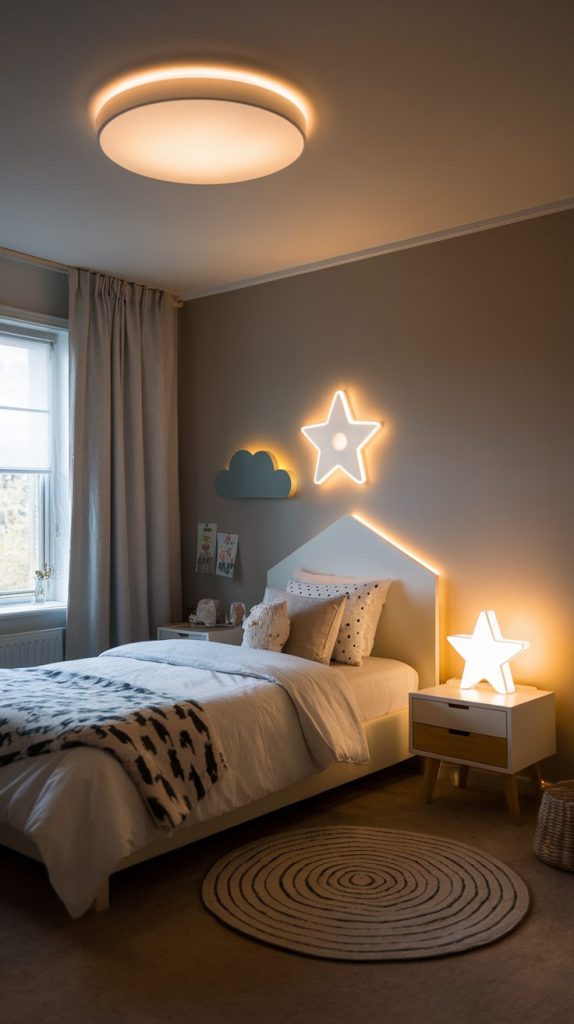
Lighting sets the mood more than people expect. I always layer lighting in kids rooms for flexibility. One overhead light never feels enough.
Soft ceiling lights handle general brightness without harsh glare. Bedside lamps support reading and winding down. Night lights offer comfort without disrupting sleep.
I avoid overly bright or cool-toned bulbs. Warm light helps kids relax naturally at night. Dimmable options give you even more control.
Fun fixtures like star lights or cloud lamps add charm without sacrificing function. Kids love playful shapes, and parents appreciate good visibility. Lighting can feel magical and practical at the same time.
8. Nature-Inspired Bedrooms
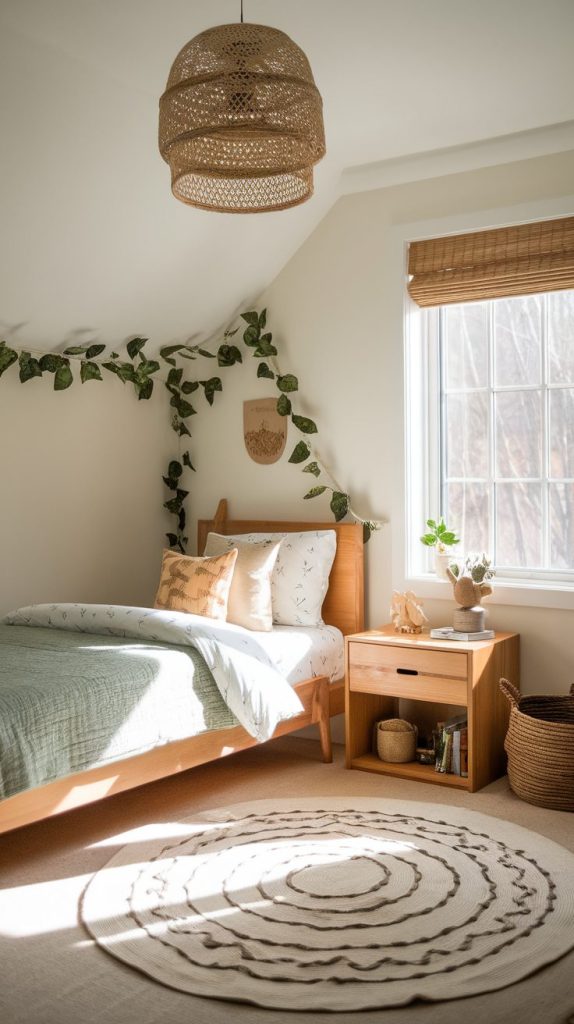
Nature themes bring calm energy into kids bedrooms effortlessly. I see kids respond positively to plants, earthy tones, and natural textures. These rooms feel grounding instead of overstimulating.
I use wood furniture, woven baskets, and cotton fabrics to set the tone. Green accents through plants or wall art connect kids to nature. Even faux plants work if sunlight stays limited.
Nature themes pair beautifully with neutral color palettes. Beige, green, and soft browns create warmth without darkness. The room feels cozy but still fresh.
These spaces also encourage mindfulness and calm play. Kids slow down naturally in grounded environments. That balance supports better sleep and happier mornings.
9. Personalized Name Decor
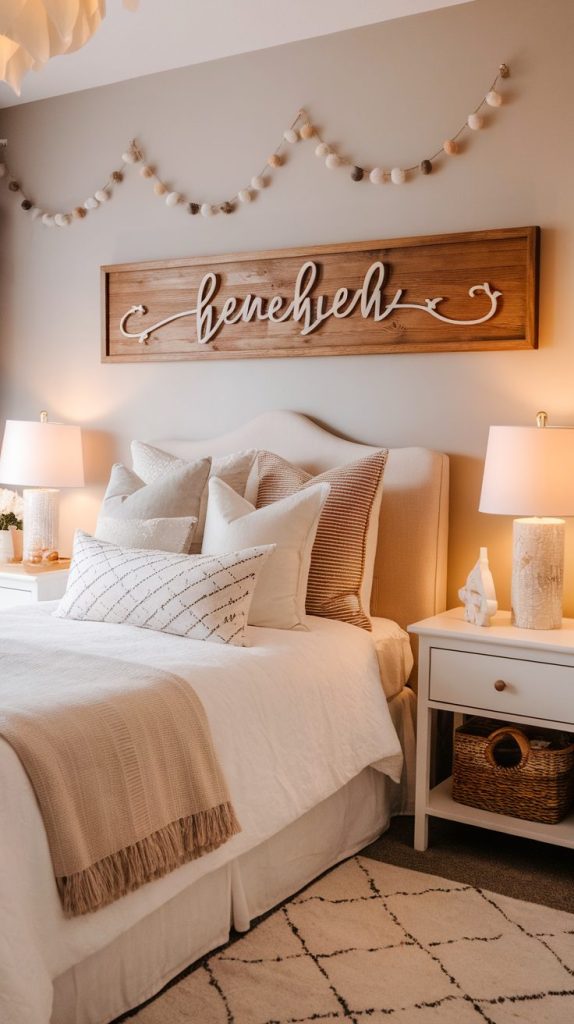
Personalization makes a kids bedroom feel truly theirs. I love adding name signs, initials, or custom art pieces. Kids light up when they see their name on the wall.
Wooden name signs work beautifully above beds or desks. Fabric banners add softness and texture. Wall decals offer easy updates as styles change.
Personalized décor builds confidence and belonging. Kids feel respected and valued in their space. That emotional comfort carries into daily routines.
I keep personalization tasteful and limited. One or two custom pieces feel special without overwhelming the room. Less clutter always helps kids focus and relax.
10. Comfortable Bedding Layers
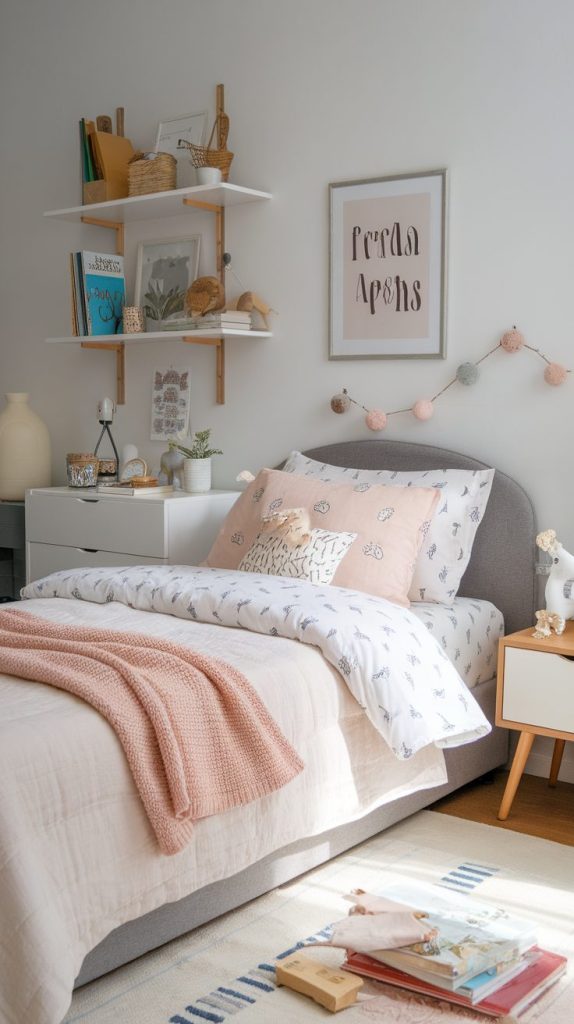
Bedding defines comfort more than any other element. I always invest in quality mattresses and breathable fabrics. Kids sleep better when their beds feel inviting.
I layer sheets, blankets, and comforters for flexibility. Kids kick off covers during warm nights and bundle up during cooler ones. Layering adapts easily to seasons.
Patterns add personality without overpowering the room. I balance bold prints with solid colors. This approach keeps the bed fun but visually calm.
Comfortable bedding also supports healthy sleep habits. Kids associate their bed with rest instead of resistance. That association makes bedtime smoother every night.
11. Interactive Play Zones
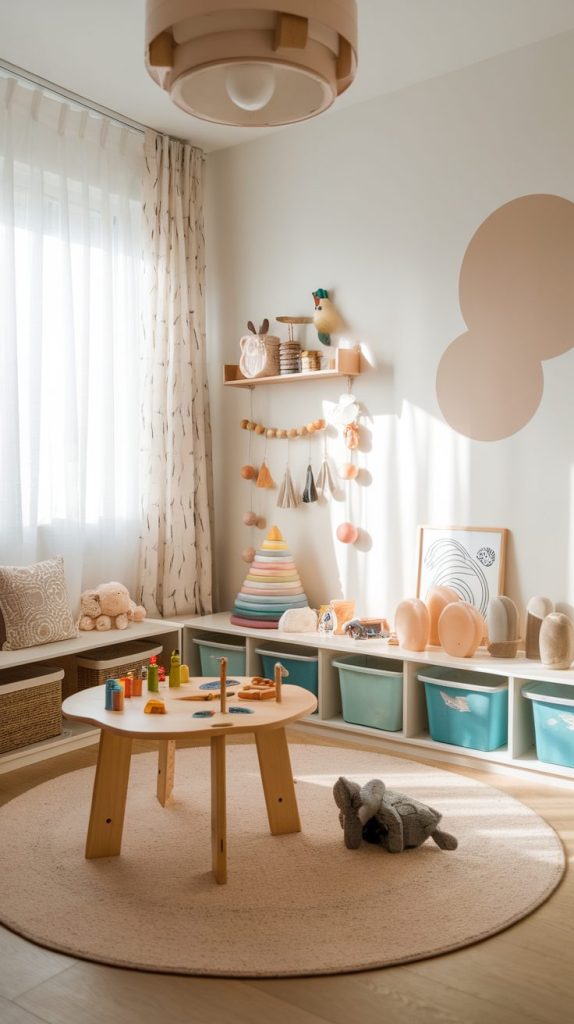
Play zones encourage creativity without taking over the whole room. I love defining play areas with rugs, shelves, or low tables. Clear zones help kids switch between play and rest.
I keep toys accessible but organized. Open shelves display favorite items while bins hide clutter. Kids play longer when spaces feel intentional.
Play zones also protect sleep areas from chaos. Beds stay for resting, not toy explosions. That separation helps kids unwind faster.
Interactive zones grow with your child easily. You can swap toys for art supplies or games as interests change. Flexibility keeps the room useful longer.
12. Soft Rugs and Textures
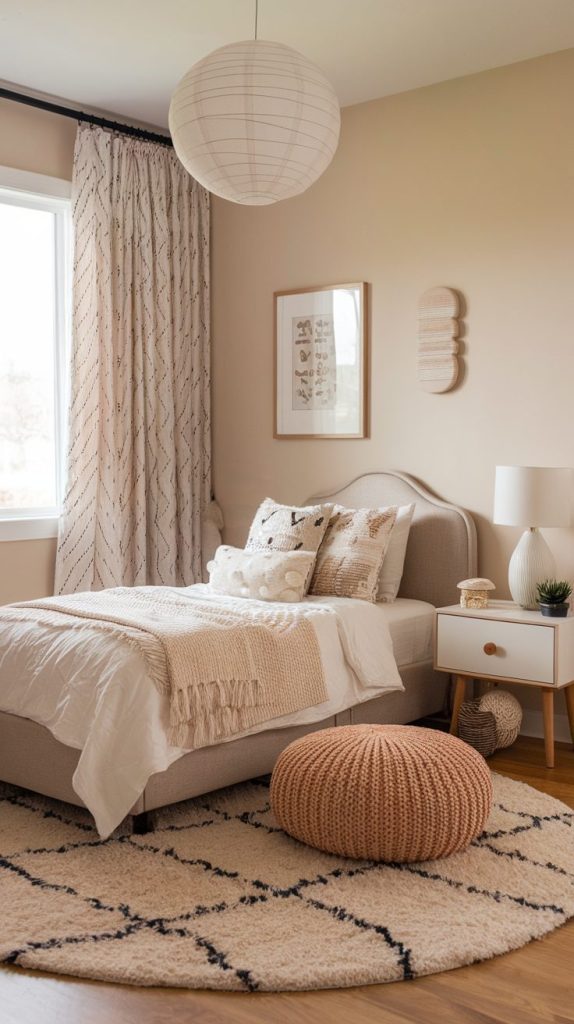
Rugs transform kids bedrooms instantly. I always add at least one soft rug for comfort and warmth. Kids spend tons of time on the floor.
Textured rugs cushion falls and reduce noise. They also define zones visually. This detail helps rooms feel layered and cozy.
I choose washable rugs whenever possible. Spills and messes happen constantly. Easy cleaning saves time and stress.
Textures extend beyond rugs too. I mix pillows, throws, and curtains for depth. These details make rooms feel lived-in and loved.
13. Smart Desk and Study Areas
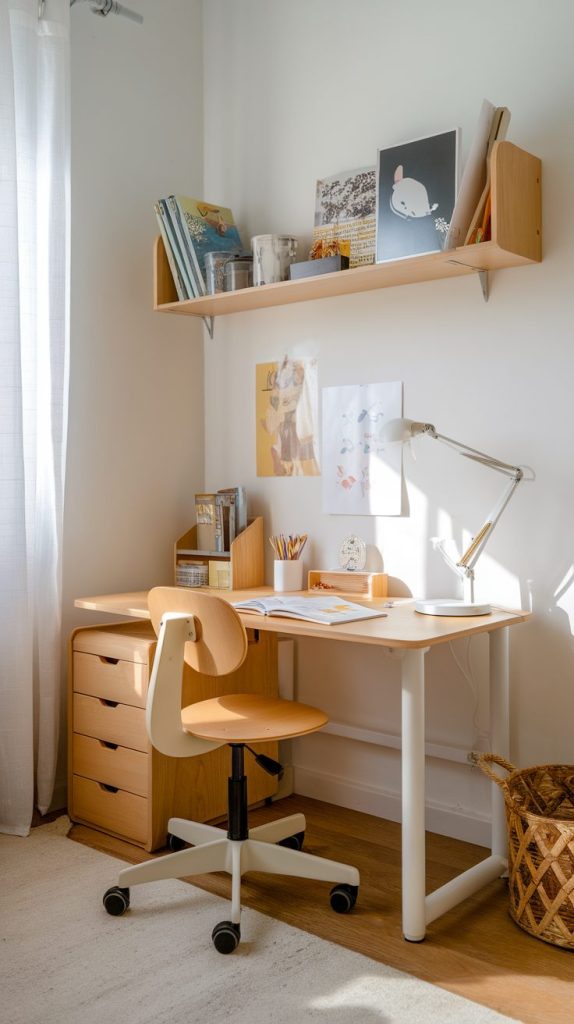
Study areas help kids focus and feel responsible. I prefer simple desks with good lighting and storage. Clean surfaces support better concentration.
I place desks near natural light when possible. Sunlight boosts mood and productivity. Lamps handle evening homework without strain.
Organization tools like trays and drawers reduce distractions. Kids work better when supplies stay within reach. This setup encourages independence.
Study areas also grow with your child. What starts as drawing space becomes homework central. Smart planning saves future redesigns.
14. Shared Bedroom Harmony
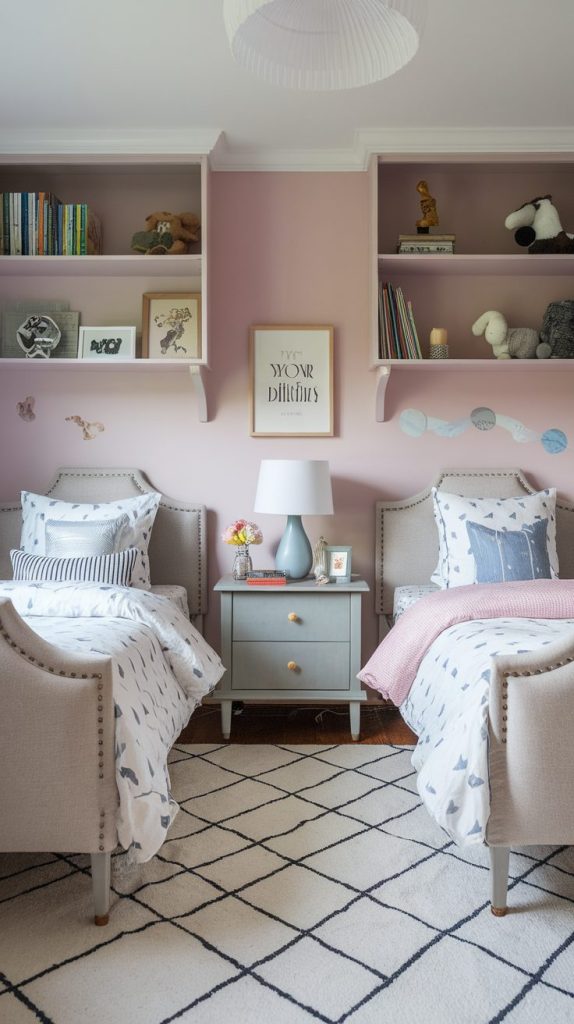
Shared bedrooms need balance and fairness. I always define individual zones within the same room. Kids need personal space even when sharing.
Matching furniture creates harmony without erasing individuality. Different bedding or wall art adds personality. This combo keeps peace intact.
Storage solutions become critical in shared spaces. Separate bins and shelves prevent arguments. Clear boundaries help kids coexist calmly.
Shared rooms also teach cooperation naturally. Kids learn compromise and respect. Thoughtful design supports that growth.
15. Calm Bedtime Atmosphere
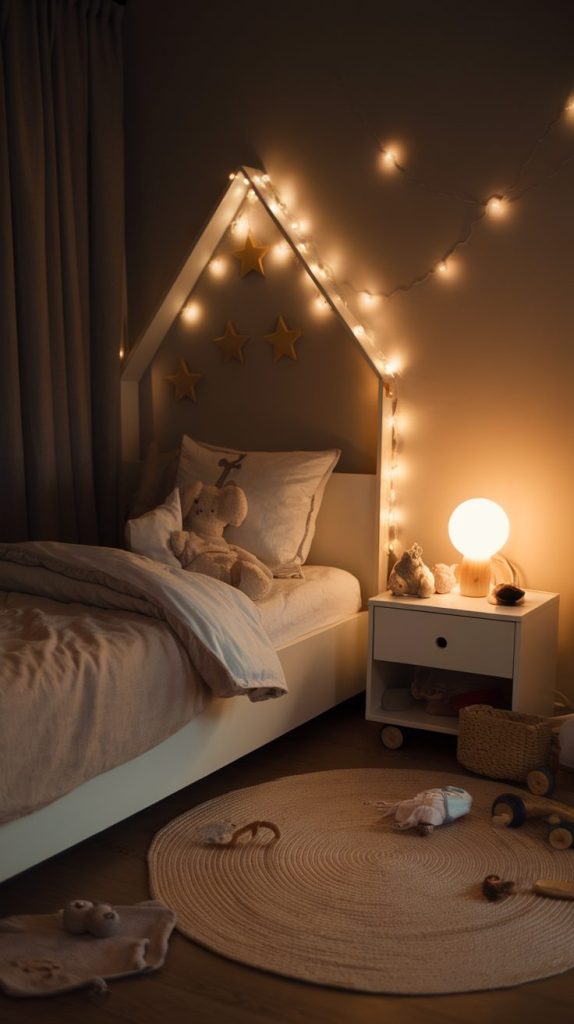
A calm bedtime atmosphere supports healthy sleep habits. I focus on soft colors, gentle lighting, and minimal clutter. These choices signal rest to the brain.
I remove stimulating toys from sleep zones. Play stays elsewhere in the room. This separation reinforces bedtime routines.
Scent also plays a subtle role. Clean fabrics and fresh air keep the space soothing. I avoid strong fragrances entirely.
A peaceful room helps kids fall asleep faster and stay asleep longer. That benefit supports the whole household. Everyone wakes up happier.
Conclusion
Kids bedrooms work best when they balance fun and comfort without extremes. I believe thoughtful design shapes better sleep, play, and emotional well-being. Small choices add up faster than you expect.
You don’t need perfection or expensive furniture to get it right. Start with comfort, add personality, and stay flexible as kids grow. Trust me, the right room makes everyday life feel easier.