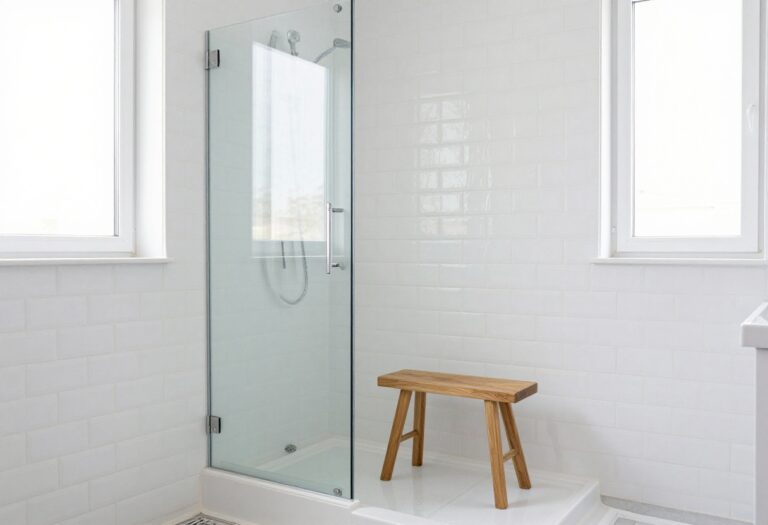
12 Practical Kitchen Sliding Door Ideas That Help the Room Feel More Intentional
Kitchen sliding doors do more than save space—they set the tone for how the room flows and feels. A well-chosen door can turn a chaotic cooking zone into a calm, intentional hub where everything has its place.
Whether you're hiding pantry clutter or opening up to a dining nook, the right sliding door brings warmth and purpose. These 12 ideas focus on real-life kitchens, with materials and finishes that feel lived-in, not staged.
From reclaimed wood to soft linen, each option helps your kitchen feel more connected and cozy.
1. Reclaimed Barn Door for a Rustic Pantry
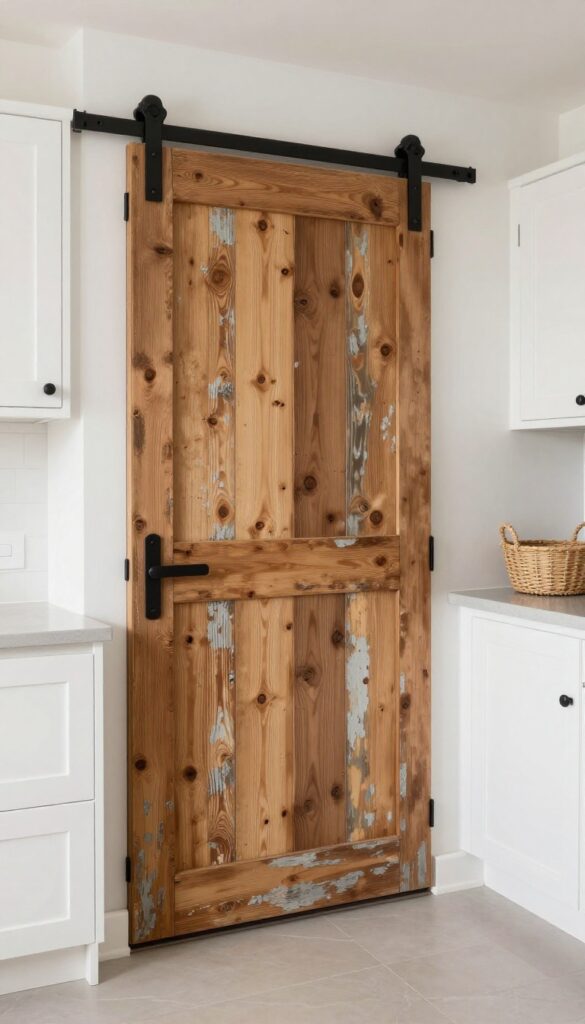
Sliding a reclaimed barn door across your pantry opening does more than just hide the mess inside. That worn wood, with its knots and faded paint layers, brings a sense of history and warmth that feels instantly inviting. It softens the hard edges of kitchen cabinets and countertops, making the whole room feel more grounded and lived-in.
Plus, the sliding mechanism frees up floor space that a swinging door would eat up, which is a huge win in tight kitchens.
Why It Works
Reclaimed wood has natural variations in color and texture that add depth to a kitchen. The sliding door acts as a focal point without overwhelming the space, and its rustic charm contrasts beautifully with sleek modern appliances or simple shaker cabinets. It also solves the problem of a cluttered pantry by keeping it out of sight but easily accessible.
Best For
This idea shines in farmhouse-style kitchens, but it works just as well in any home that wants a touch of rustic warmth. It's especially great for narrow kitchens where every inch of floor space counts, or for pantries located near a dining area where you want a cozy, inviting look.
Styling Tip
Balance the rustic door with smooth, matte black hardware and a simple handle. Keep the surrounding wall light—like a soft white or pale gray—so the wood really pops. Add a small woven basket or a ceramic jug on a nearby counter to echo the natural textures.
2. Frosted Glass Pocket Door for a Light-Filled Kitchen
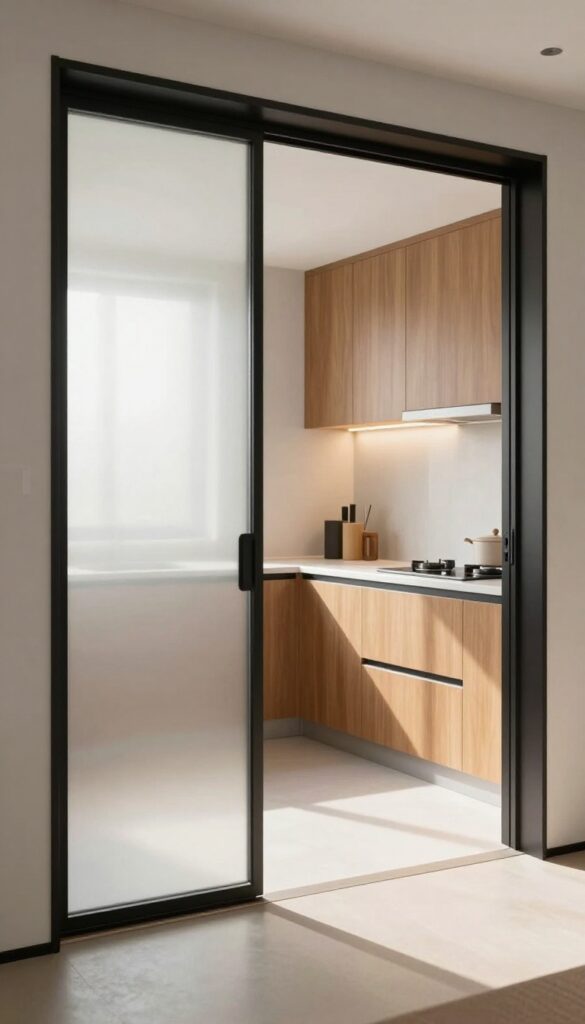
Natural light is a kitchen's best friend, but sometimes you need to close off the mess without shutting out the sun. A frosted glass pocket door slides smoothly into the wall, letting daylight filter through while softening the view of countertop clutter. The result is a kitchen that feels open and connected, even when you want a little separation from the living area.
It’s the kind of solution that makes a small space breathe easier.
Why It Works
Pocket doors save valuable floor space since they don’t swing open, and frosted glass adds privacy without sacrificing brightness. The soft diffusion of light keeps the kitchen feeling larger and more inviting, while the glass surface is easy to wipe clean—perfect for a busy cooking zone.
Best For
This idea shines in galley kitchens, open-plan layouts, or any home where the kitchen flows into a dining or living area. It’s especially useful for small apartments or homes where you want to hide post-dinner chaos without closing off the room entirely.
Styling Tip
Pair the frosted glass with warm wood or matte black frames to keep the look cozy and grounded. Add a pendant light with a soft glow on the kitchen side to enhance the warm ambiance when the door is closed.
3. Black Steel-Framed Sliding Door for Industrial Warmth
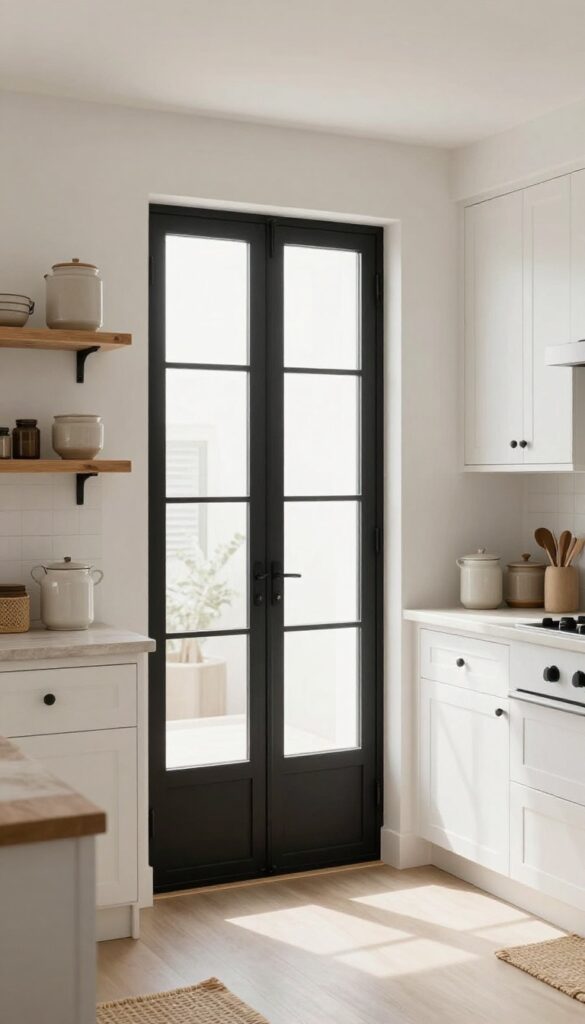
Thin black steel frames with clear glass bring a modern industrial edge that somehow still feels inviting. The dark metal pops against warm wood tones or soft white cabinets, adding structure without making the space feel heavy. It’s that perfect balance between raw and cozy—like a café you never want to leave.
Why It Works
The slim black frame creates a strong visual line that anchors the room, while the glass keeps the openness intact. This contrast adds depth and character, making the kitchen feel intentional and curated rather than just functional.
Best For
Open-plan kitchens that need a subtle division without blocking light, or galley kitchens where you want to hide clutter but maintain an airy feel. It also works beautifully in homes with exposed brick or warm wood accents.
Styling Tip
Pair the black steel with brass or matte black hardware on cabinets for a cohesive look. Add a woven runner or a few ceramic canisters on the counter to soften the industrial vibe and bring in that lived-in warmth.
4. Linen Curtain Sliding Door for Soft Separation
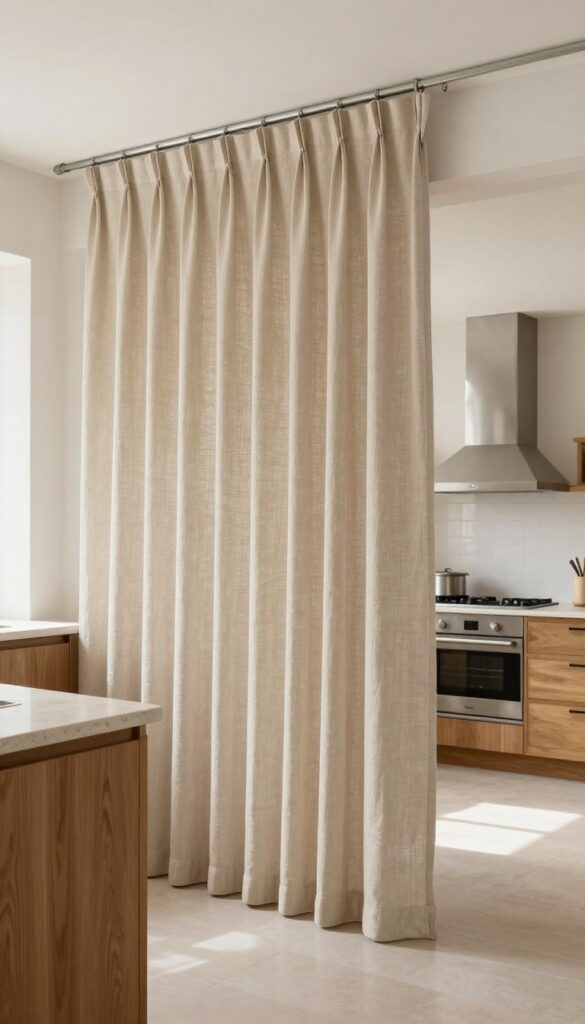
A floor-to-ceiling linen curtain gliding on a simple track can transform how a kitchen connects to the rest of the home. It’s not a door in the traditional sense—no swinging, no slamming, just a gentle sweep of fabric that softens the boundary between cooking and living spaces. The linen brings warmth and texture, making the kitchen feel less like a separate work zone and more like part of the overall lived-in atmosphere.
When you want to open up the room, you just pull the curtain aside; when you need a bit of privacy or want to hide post-dinner mess, it slides closed with hardly any effort.
Why It Works
Linen curtains add softness to what’s often a hard-surfaced room—tile, stone, stainless steel. The fabric absorbs sound and diffuses light, making the kitchen feel quieter and cozier. Because the curtain hangs from a ceiling track, it doesn’t eat up floor space or require a swing radius, which is a huge plus in tight layouts.
Best For
Open-plan kitchens where you want a visual break without a full wall or door. It’s also great for kitchens that double as a pass-through to a dining or living area—the curtain can be drawn to hide clutter during meals or parties, then opened again to keep the space feeling connected.
Styling Tip
Choose a linen in a warm neutral like oatmeal, sand, or a soft terracotta to complement the kitchen’s existing palette. Hang the curtain from a ceiling-mounted track that extends a few inches past the opening on both sides so it stacks neatly out of the way when open. Add a subtle weight at the bottom hem to help it hang straight and move smoothly.
5. Sliding Chalkboard Door for a Functional Accent
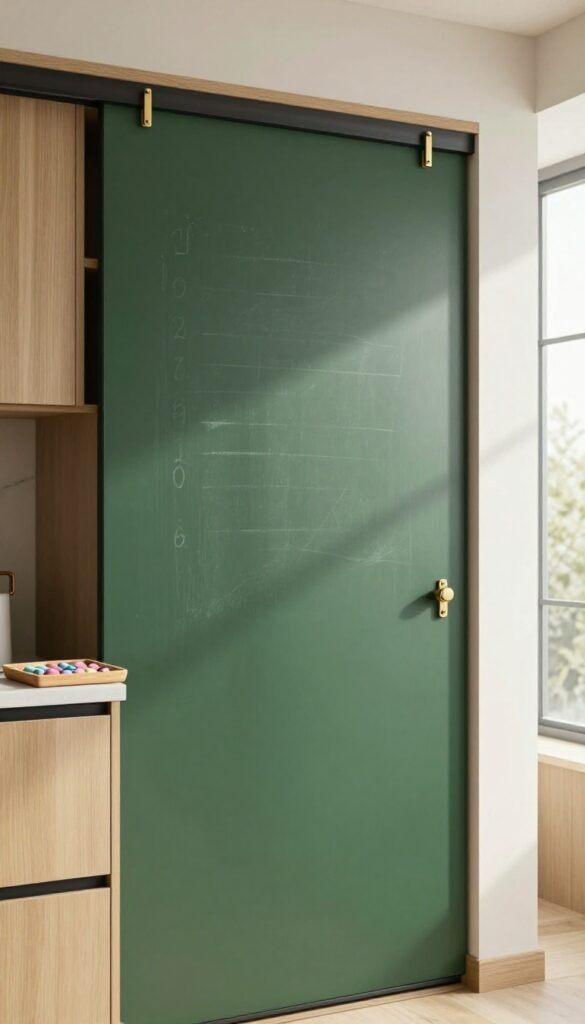
A sliding door painted with chalkboard paint turns an ordinary kitchen entry into a living message center. The matte black or dark green surface adds a cozy, tactile layer that feels right at home in a warm kitchen. It’s the kind of detail that makes a space feel intentional without trying too hard—just a door that also holds your grocery list and a doodle or two.
Why It Works
Chalkboard paint transforms a purely functional element into something interactive and personal. The sliding mechanism saves space, and the dark hue grounds the room, adding contrast against lighter cabinets or backsplashes. Plus, it’s endlessly changeable—wipe it clean and start fresh whenever the mood strikes.
Best For
This idea shines in busy family kitchens where notes, reminders, and meal plans are part of daily life. It also works well in open-plan layouts where the sliding door separates the kitchen from a dining or living area, giving that transition a playful purpose.
Styling Tip
Pair the chalkboard door with warm wood tones and soft brass or black hardware to keep the look inviting. Add a small tray of colored chalk on a nearby shelf, and let the surface stay a little imperfect—smudges and half-erased lists add to the lived-in charm.
6. Open Shelving Sliding Door for Display and Storage
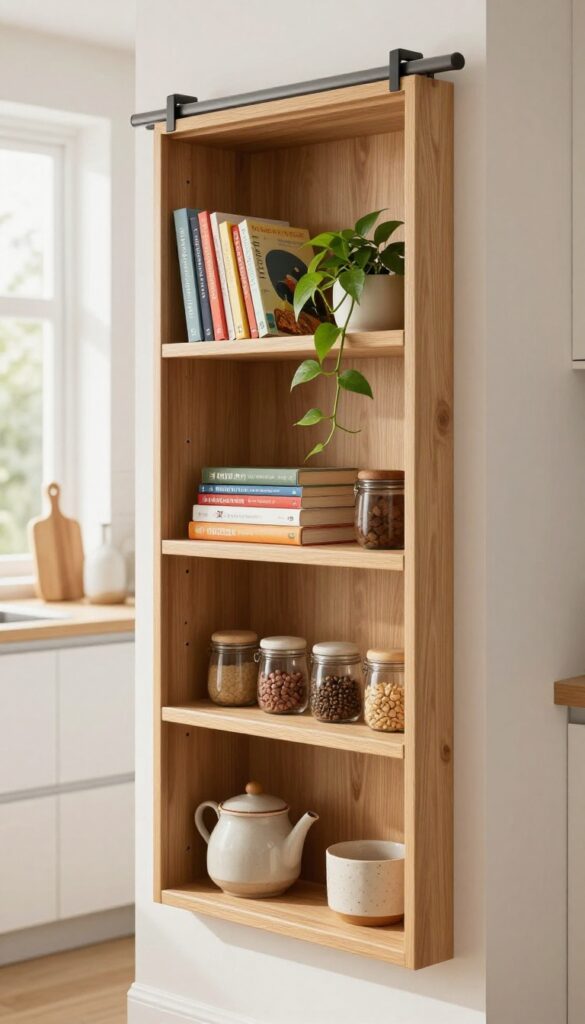
Sliding doors already save space, but why stop there? Adding open shelves to the door itself turns a purely functional element into a mini display case. Picture a warm wood door with three slim shelves holding your favorite cookbooks, a few spice jars, and a trailing pothos.
It brings a lived-in, curated feel to the kitchen without needing extra square footage. The shelves sit flush with the door, so nothing protrudes into the room—just a cozy, intentional layer of personality every time you walk by.
Why It Works
It doubles your storage without eating into floor space. Open shelves keep everyday items within arm’s reach while making the door feel like a deliberate design choice rather than an afterthought. The warmth of displayed objects softens the kitchen’s hard surfaces, creating that inviting, gathered-over-time look.
Best For
Small to medium kitchens where every inch counts, especially if you have a pantry or broom closet door that can be swapped out. It’s also great for renters who can install a tension-mounted or lightweight door without major renovations.
Styling Tip
Stick to a cohesive color palette—think warm neutrals, wood tones, and a few green accents. Arrange items in odd numbers and vary heights: a stack of books, a small ceramic jar, and a trailing plant. Keep the shelves from looking cluttered by leaving a little breathing room between objects.
7. Sliding Door with a Built-In Spice Rack
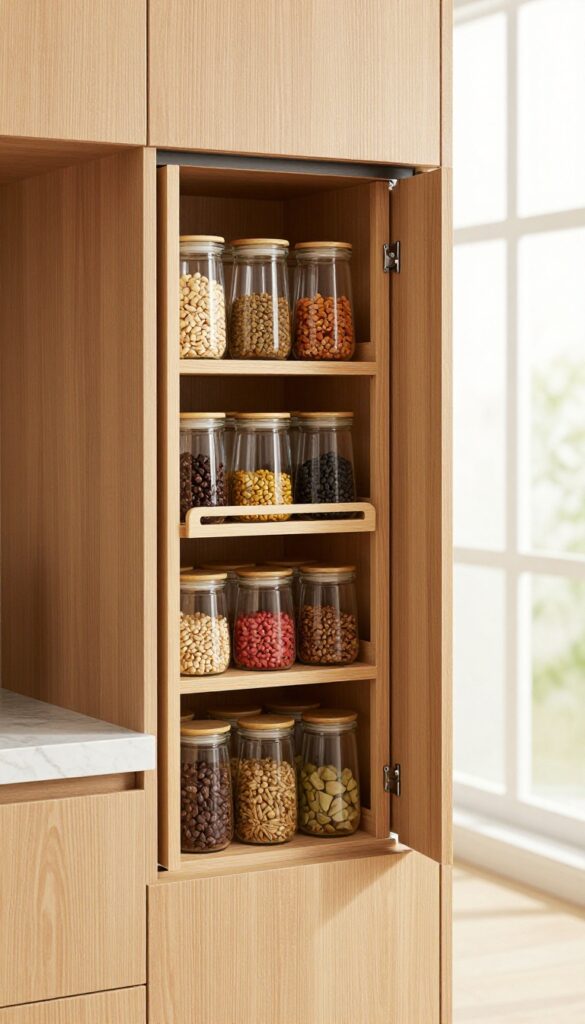
A narrow sliding door fitted with shallow shelves becomes a pull-out spice rack. It keeps seasonings visible and accessible, reducing counter clutter and adding a custom, organized touch. In a warm kitchen, this idea feels both practical and personal—like a little secret that makes cooking easier.
Why It Works
Sliding doors save space and can turn an awkward gap into a functional storage spot. By adding shelves inside the door, you create a dedicated spice station that’s easy to reach and keeps bottles tidy. No more digging through cabinets or losing small jars behind taller ones.
Best For
This works well in galley kitchens or any layout where counter space is limited. It’s also great for renters because you can often install it without major renovations—just mount the sliding track and attach the door with shelves.
Styling Tip
Use matching small jars or clear containers for a uniform look. Label them with chalkboard stickers or a simple marker for easy identification. Choose a warm wood tone or matte black for the door to blend with your existing cabinetry and keep the space feeling cohesive.
8. Beadboard Sliding Door for Cottage Charm
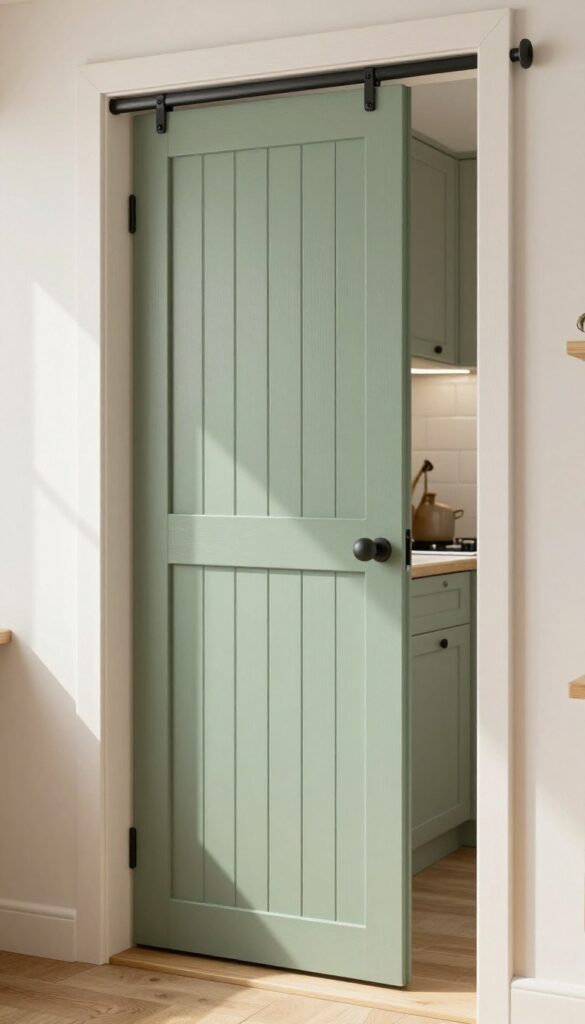
Sliding doors are a natural fit for kitchens where every square inch counts, but they don’t have to look purely functional. Beadboard panels bring a sense of cottage warmth that makes the kitchen feel more like the heart of the home. The vertical grooves add subtle texture and depth, while a soft cream or sage green paint keeps the look fresh and inviting.
It’s a simple swap that instantly softens the space and makes the doorway feel intentional rather than just necessary.
Why It Works
Beadboard adds visual interest without overwhelming the room. The vertical lines draw the eye upward, making ceilings feel higher and the kitchen more open. Plus, the sliding mechanism saves space compared to a swinging door, which is a huge win in tight layouts.
Best For
This look shines in cottage-style, farmhouse, or traditional kitchens that already lean into natural materials and soft colors. It also works beautifully in small kitchens where you want to avoid a bulky door swinging into counter space.
Styling Tip
Pair the beadboard door with a simple black or brass sliding track to keep the hardware from competing with the paneling. Add a small ceramic knob in a matching finish for a polished, cohesive touch.
9. Sliding Door with a Large Mirror for Depth
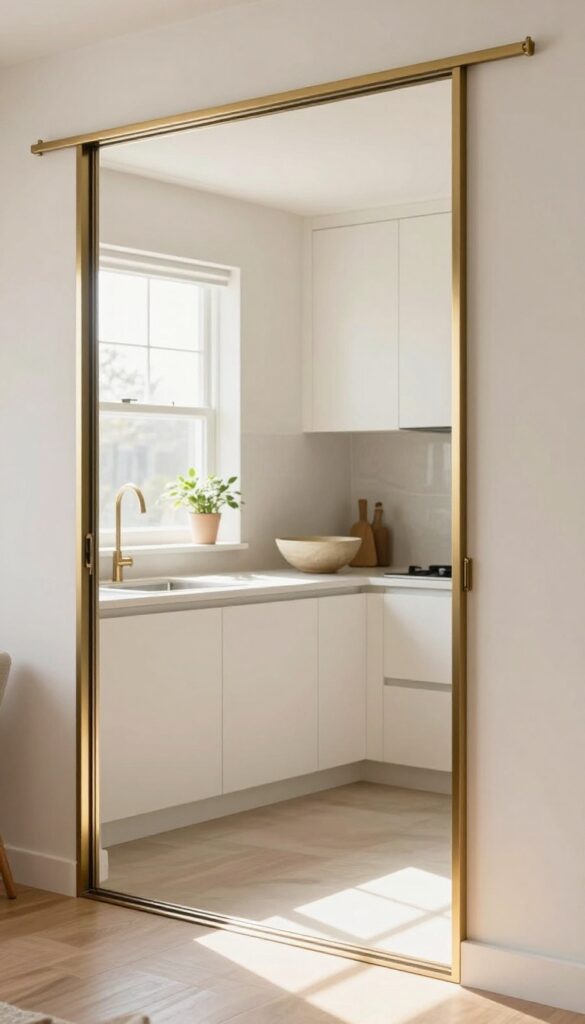
A sliding door fitted with a full-length mirror does double duty in a small kitchen. It bounces light around the room, making the space feel airier and more open, while also giving you a spot to check your reflection before heading out. The mirror adds a soft, reflective quality that blends right into a warm, lived-in kitchen without feeling cold or overly modern.
Why It Works
Mirrors are one of the easiest tricks to visually expand a compact kitchen. By reflecting both natural and artificial light, they brighten dim corners and create the illusion of depth. The sliding mechanism saves space since it doesn't swing out, and the mirror surface is easy to wipe clean from cooking splatters.
Best For
This works especially well in galley kitchens or narrow layouts where every inch counts. It's also a smart choice if your kitchen lacks a dedicated entryway mirror—you get the function without sacrificing floor space.
Styling Tip
Choose a mirror with a warm-toned frame, like brushed brass or light oak, to keep the look cozy. Place a small potted plant or a ceramic bowl on the counter nearby to soften the reflection and tie the mirror into the rest of the room's decor.
10. Sliding Door with a Peg Rail for Hanging Utensils
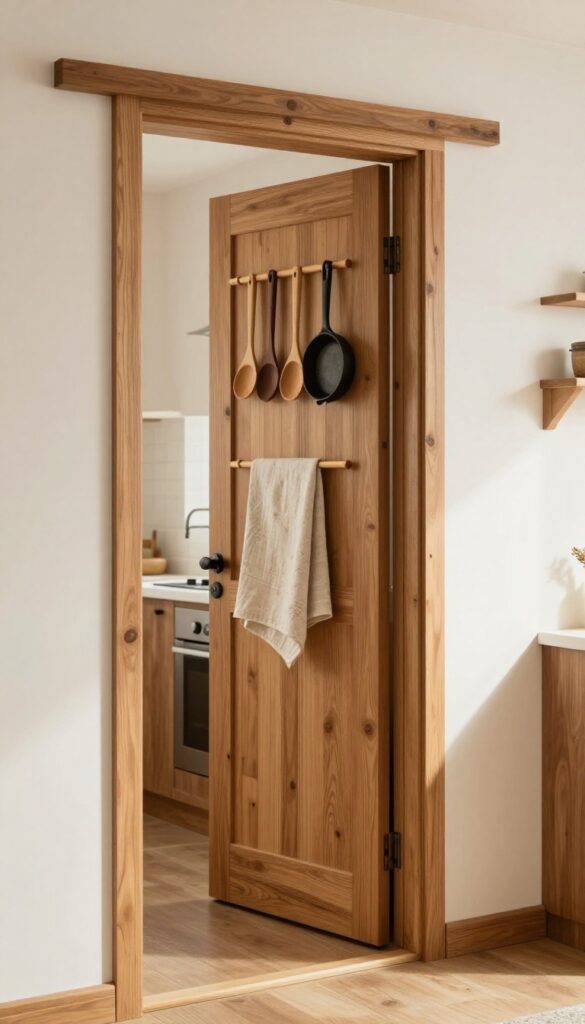
Picture a warm wooden door that slides open to reveal your most-used pots and ladles hanging neatly on a peg rail. It’s like having a tiny, curated kitchen shop built into your wall. The peg rail keeps everything visible and within arm’s reach, so you’re not digging through drawers mid-recipe.
The wood adds a soft, rustic feel that makes the kitchen feel more like a gathering spot than a workspace.
Why It Works
- This setup turns wasted wall space into functional storage. Instead of cramming utensils into a drawer, they become part of the room’s decor. The peg rail is easy to install on any sliding door, and you can rearrange hooks as your collection grows.
- It also frees up counter space, which is always a win in a busy kitchen.
Best For
Small to medium kitchens where every inch counts, especially if you cook often and want your tools handy. It’s also great for open-plan layouts where the door can double as a visual feature when closed.
Styling Tip
Choose a warm wood tone like oak or walnut for the door to match the cozy vibe. Paint the peg rail the same color as the wall so it blends in, or go for a brass finish for a subtle contrast. Hang a mix of wooden spoons, a cast-iron skillet, and a few linen towels for a lived-in look.
11. Sliding Door with a Magnetic Panel for Knife Storage
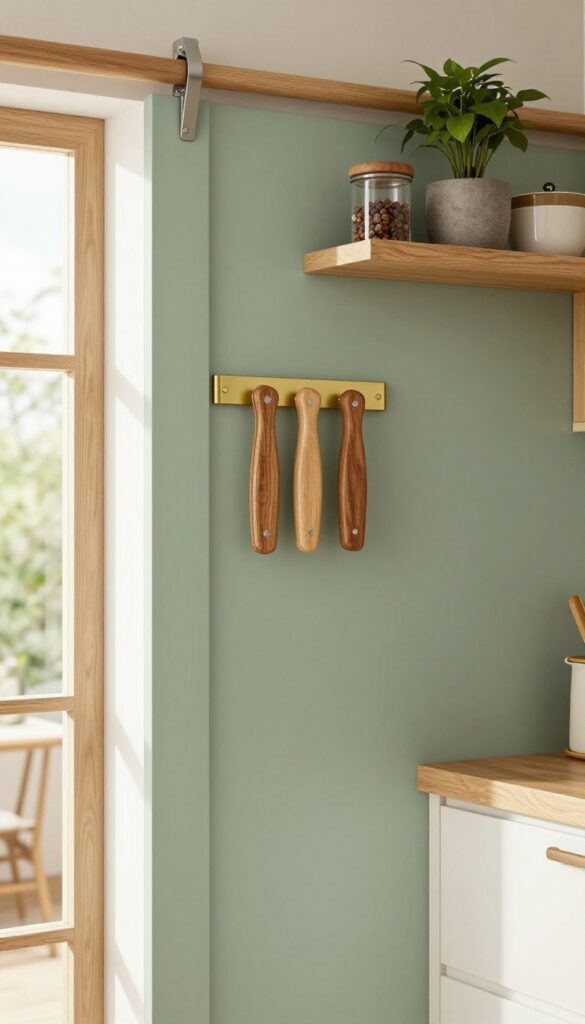
A sliding door that doubles as a knife rack might sound like a small detail, but it can completely change how your kitchen feels. By mounting a magnetic strip right onto the door, you get your most-used tools out of drawers and into plain sight. It’s one of those ideas that feels both clever and cozy—everything you need is right there, but it doesn’t clutter your countertops.
The best part? It keeps the space looking clean and intentional, not sterile or showroom-like.
Why It Works
This setup frees up valuable drawer space while keeping knives and metal tools organized and easily accessible. The magnetic panel holds them securely, so you don’t have to worry about them shifting when the door slides. It also adds a sleek, modern touch that still feels warm because the knives themselves become part of the decor—especially if you have a nice set with wooden handles.
Best For
This idea is perfect for smaller kitchens where every inch of storage counts, or for anyone who cooks often and wants their go-to tools within arm’s reach. It works especially well on a pantry door or a cabinet door near the prep area. If you’re someone who likes a minimalist look but doesn’t want to hide everything away, this strikes a nice balance.
Styling Tip
To keep the look warm and lived-in, choose a magnetic strip with a brass or bronze finish instead of shiny chrome. Pair it with a sliding door made of natural wood or a soft matte paint color like sage green or warm white. Arrange the knives by size, and add a small wooden shelf above the strip for a few spices or a tiny plant to soften the metal.
12. Sliding Door with a Fabric Insert for Softness
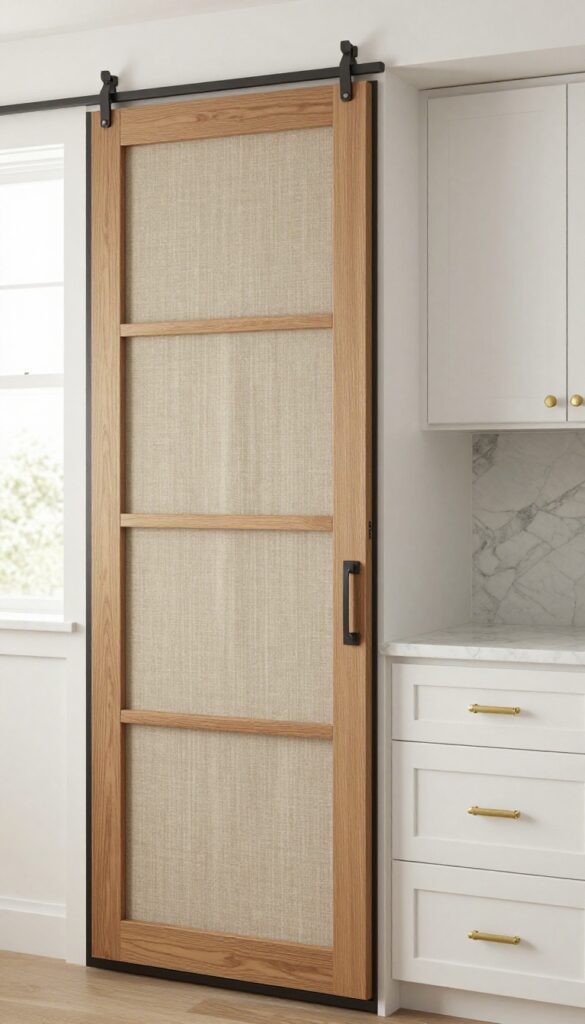
A sliding door doesn’t have to be all hard surfaces. Swapping a solid panel for one with a fabric insert—think linen, cotton, or even a soft weave—instantly dials down the industrial feel and brings warmth into the kitchen. The fabric softens the look, adds a subtle pattern or texture, and makes the whole space feel more layered and inviting.
It’s a simple twist that turns a functional door into a cozy design feature.
Why It Works
Fabric naturally absorbs sound, so this door helps muffle the clatter of pots and dishes. It also introduces a tactile element that balances all the hard surfaces like tile, countertops, and cabinets. The softness makes the kitchen feel less like a workspace and more like a lived-in room.
Best For
Kitchens that lean rustic, farmhouse, or Scandinavian, where natural textures and soft tones are key. It’s also great for open-plan layouts where you want to visually separate the kitchen without closing it off completely.
Styling Tip
Choose a fabric in a warm neutral or a subtle stripe that picks up a color from your backsplash or cabinetry. Mount the door on a track that matches your hardware finish—black or brass works beautifully against soft linen. Keep the fabric taut and framed to avoid sagging.
FAQ
Are sliding doors practical for small kitchens?
Yes, sliding doors save floor space since they don't swing open, making them ideal for tight layouts. They can also help define zones without closing off the room completely.
What material is best for a kitchen sliding door?
Wood and metal are durable and easy to clean, while glass keeps the space light. For a warm look, reclaimed wood or painted wood works well; for modern, try steel-framed glass.
Can I install a sliding door myself?
Many sliding door kits are DIY-friendly, especially for barn doors or curtain tracks. Pocket doors require more skill, so consider hiring a professional for those.
How do I maintain a sliding door in the kitchen?
Wipe down tracks regularly to prevent grease buildup, and lubricate the rollers every few months. For glass or painted surfaces, a simple cleaner keeps them looking fresh.
Do sliding doors help with noise control?
Solid core doors or those with fabric inserts can reduce noise better than hollow ones. Adding weatherstripping along the edges also helps block sound and drafts.
Conclusion
Sliding doors offer a simple way to make your kitchen feel more intentional without a major renovation. Whether you choose reclaimed wood for rustic warmth or a linen curtain for soft separation, each idea brings function and personality.
The key is picking a style that fits your daily rhythm—something that makes the space work better and feel more like home. Start with one door that sparks joy, and let the rest of the room follow.