11 Clever Kitchen Painting Ideas That Make the Room Feel Pulled Together
A fresh coat of paint can work wonders in a kitchen, but the right approach matters more than just picking a color. Whether you're dealing with a small galley or an open-plan layout, clever painting choices can make the space feel larger, brighter, and more cohesive. The best part?
Most of these ideas are totally doable over a weekend, with minimal disruption to your daily routine. From two-tone cabinets to painted floors, these 11 ideas focus on smart, space-aware solutions that add personality without overwhelming the room.
Each one is designed to be practical and stylish, helping you create a kitchen that feels pulled together without a full renovation. Ready to grab a brush and get started?
1. Two-Tone Cabinets for Depth and Dimension
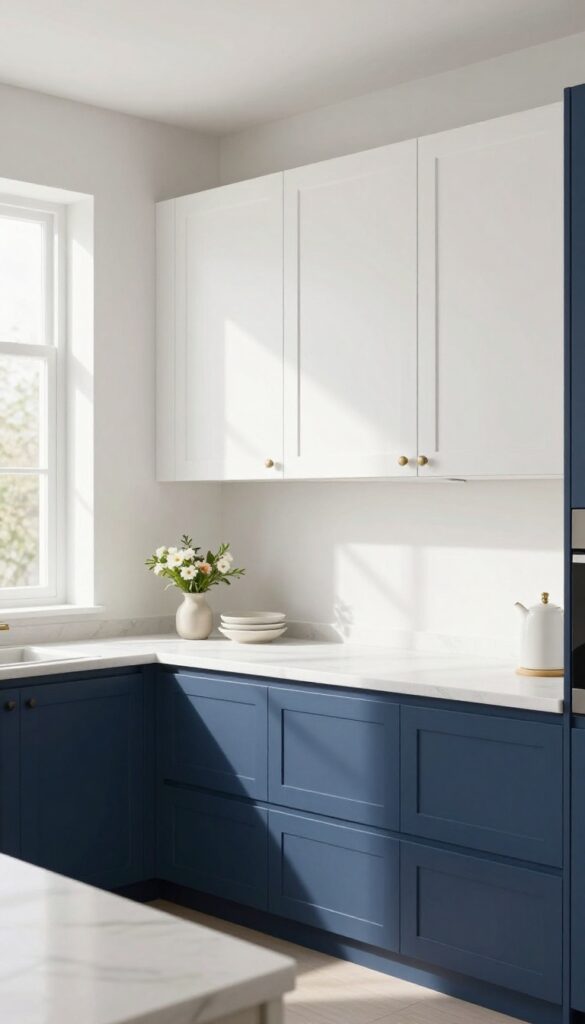
Painting your cabinets in two tones is one of those tricks that instantly upgrades a kitchen without a full renovation. By keeping the uppers light and the lowers dark, you create a natural sense of balance and height. It’s a smart move for kitchens that feel a bit boxy or lack natural light, because the lighter top half bounces brightness around while the darker base adds weight and coziness.
Why It Works
This technique plays with visual weight and light reflection. Lighter upper cabinets draw the eye upward, making ceilings feel taller, while darker lowers anchor the room and hide everyday wear and tear. The contrast adds depth and keeps the space from feeling flat or one-note.
Best For
Kitchens with limited natural light, galley layouts, or any space where you want to add architectural interest without major construction. It also works well in open-concept homes where the kitchen is visible from the living area, because the two-tone look reads as intentional and polished.
Styling Tip
Stick with a neutral palette for a timeless feel—think soft white or pale gray on top and charcoal, navy, or deep green below. Carry the lower cabinet color onto the toe kick or an open shelf for a cohesive look. Avoid high-gloss finishes on the upper cabinets if you want to minimize glare.
2. A Painted Backsplash That Looks Like Tile
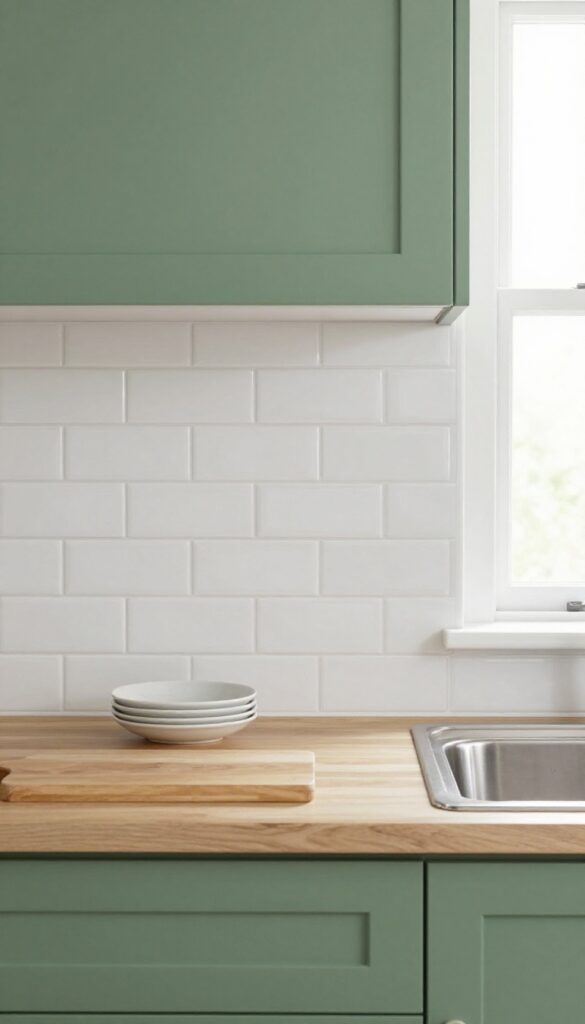
If your kitchen feels a little flat but you're not ready to commit to a full tile installation, a painted backsplash is a clever shortcut. With a few stencils and a steady hand, you can create the look of subway tile, hexagon, or even Moroccan patterns without the dust, cost, or permanence. It's the kind of weekend project that instantly makes the room feel more intentional and pulled together.
Why It Works
Paint is forgiving and removable, so you can test out a pattern before investing in real tile. The stencil creates crisp, repeatable shapes that trick the eye into seeing depth and texture, giving your kitchen a custom look for a fraction of the price.
Best For
Renters or homeowners who want a high-impact update without a big renovation. It's also perfect for small kitchens where real tile might feel overwhelming or expensive, since you can limit the painted area to just the backsplash behind the stove or sink.
Styling Tip
Pair a white or light gray stencil pattern with a soft sage or navy wall color for contrast. Use a matte finish paint to mimic the subtle sheen of ceramic tile, and seal it with a clear matte polyurethane for easy wiping.
3. Ceiling Color That Pulls the Room Together
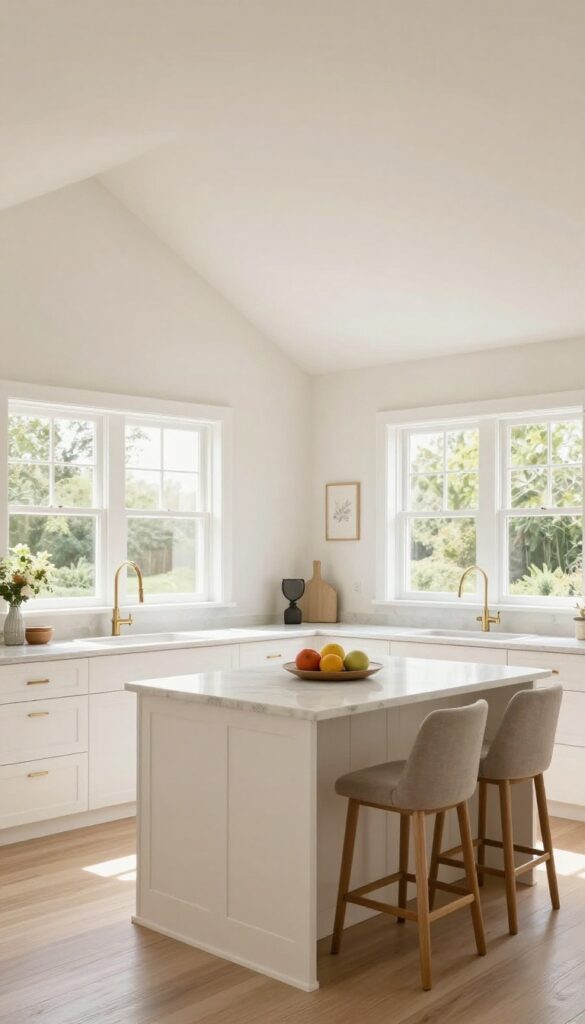
Most kitchens have white ceilings by default, but that doesn't mean it's the best choice for your space. A carefully chosen ceiling color can make the whole room feel more connected and polished. It's one of those subtle moves that doesn't scream for attention but quietly ties everything together.
Why It Works
Painting the ceiling a soft warm white or a pale version of your wall color eliminates the harsh contrast between walls and ceiling. This creates a visual flow that makes the kitchen feel larger and more intentional. It's especially effective in open-plan layouts where the eye travels from cabinets to countertops to ceiling.
Best For
This trick works wonders in kitchens with high or vaulted ceilings that can feel cavernous. It's also great for galley kitchens or small spaces where you want to avoid a chopped-up look. If your kitchen has an awkward roofline or angled ceilings, a unified color helps smooth out those quirks.
Styling Tip
Stick with flat or matte finish on the ceiling to minimize light bounce and keep the focus on your walls and cabinetry. If you're using a pale version of your wall color, test it in different lighting first—what looks subtle on a swatch can read much darker overhead.
4. An Accent Wall Behind Open Shelving
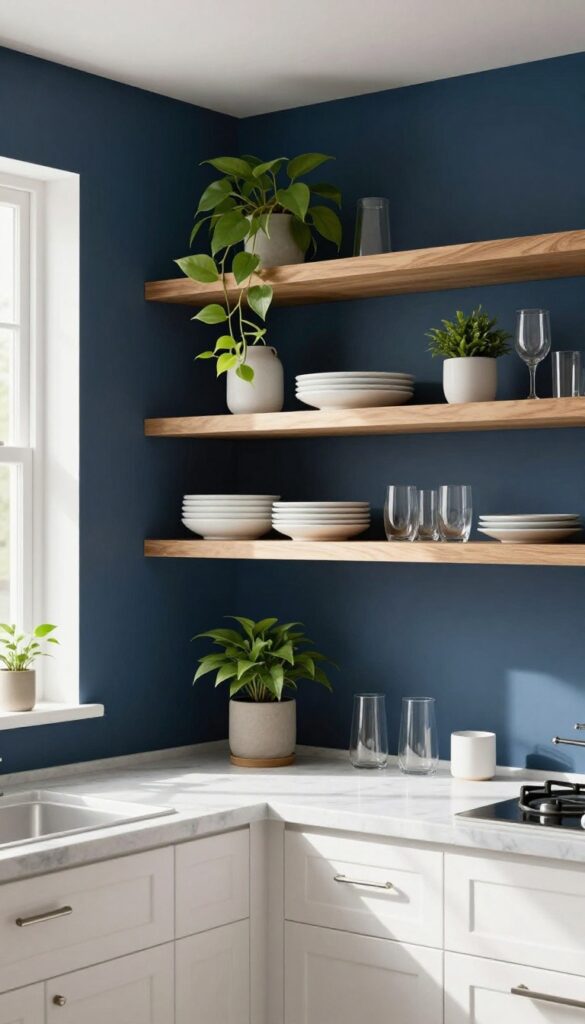
Open shelving is a go-to for kitchens that want to feel airy and curated, but the wall behind it often gets overlooked. Painting that strip of wall in a bold color or subtle pattern instantly frames your dishes and glassware, turning everyday items into a deliberate display. It's a low-commitment way to inject personality without touching your cabinets or countertops, and swapping the color later is as easy as a weekend afternoon.
Why It Works
The contrast between the painted wall and the shelves creates depth, making the space feel larger and more intentional. It draws the eye upward and gives your kitchen a custom, layered look without the cost of tile or wallpaper.
Best For
Kitchens with open shelving that feel flat or understyled, especially if you have a collection of colorful dinnerware, glassware, or ceramics you want to highlight. It's also great for renters who can paint back when they move out.
Styling Tip
Keep the shelves themselves simple—thin, floating wood or metal brackets—so the wall color stays the star. Group items in odd numbers and vary heights for a relaxed, vignette-like feel. A matte finish paint hides fingerprints better than gloss.
5. Painted Island in a Contrasting Hue
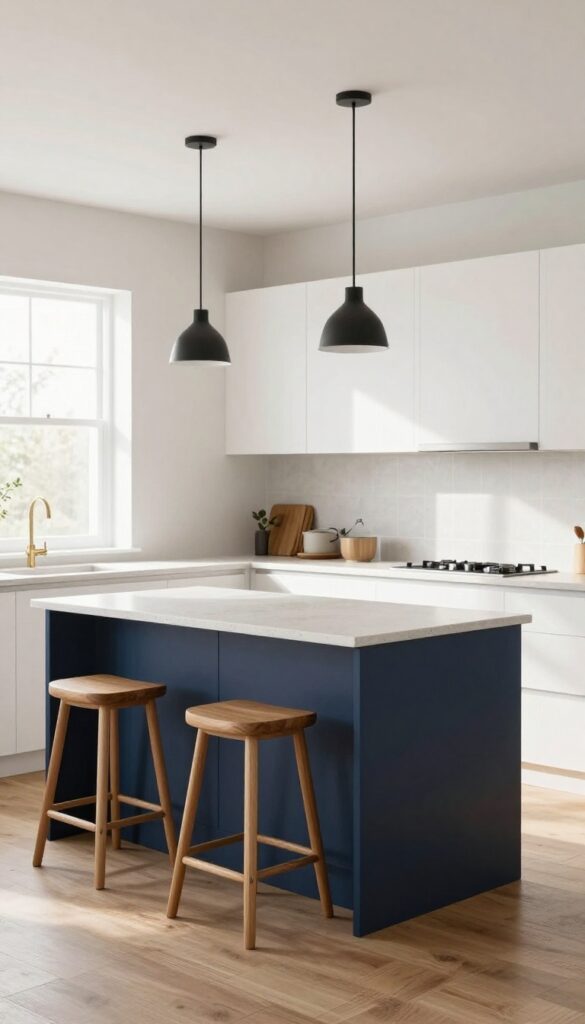
Your kitchen island doesn't have to match the rest of the cabinets. In fact, giving it a completely different color can make it the star of the room. A navy island against white perimeter cabinets feels crisp and intentional, while a forest green or deep terracotta adds warmth and personality.
It's a weekend-friendly project that instantly upgrades your kitchen without a full renovation.
Why It Works
A contrasting island breaks up the monotony of matching cabinetry and creates a natural focal point. It anchors the room visually, making the layout feel more deliberate and designed. Plus, it's an easy way to introduce a bold color without overwhelming the space.
Best For
This idea works well in kitchens with a neutral or all-white cabinetry scheme. It's especially effective in open-plan layouts where the island doubles as a visual divider between the kitchen and living area.
Styling Tip
Keep the island countertop light or neutral to balance the dark paint. Add a few bar stools in a complementary material like wood or metal, and finish with a simple pendant light above to draw the eye up.
6. Color-Blocked Cabinet Doors for Modern Flair
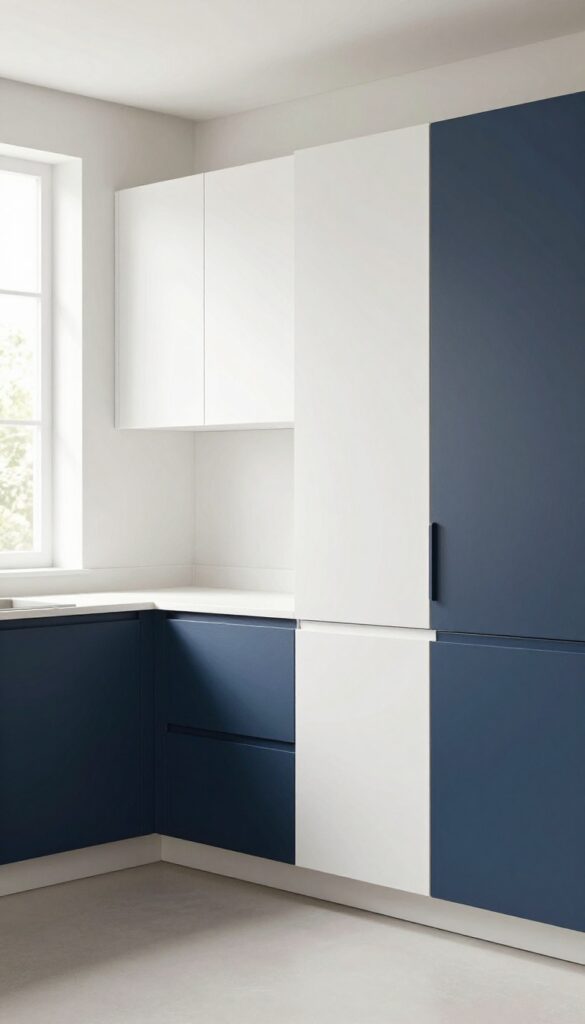
Cabinet fronts take up a lot of visual real estate, so even a small change there can shift the whole room's personality. Instead of repainting the entire set, try a two-tone approach: keep the frame one color and paint the inner panel a contrasting shade. It's like giving your cabinets a tailored jacket—structured, intentional, and surprisingly easy to pull off over a weekend.
Why It Works
This technique adds depth without overwhelming the space. The contrasting panel creates a subtle shadow effect that makes flat cabinet doors look more dimensional. Because you're only painting the recessed area, it uses less paint and less time than a full refinish, but the payoff looks custom and expensive.
Best For
Kitchens with flat-panel or shaker-style cabinets where the inner panel is clearly defined. It's especially effective in smaller kitchens because the two-tone trick draws the eye and can make the room feel more dynamic without adding clutter.
Styling Tip
Stick with one neutral and one bolder hue—like soft white frames with deep navy panels—to keep the look grounded. For a more subtle effect, use two shades of the same color (e.g., light gray and charcoal). Test your combo on a single door first to see how the colors interact in your kitchen's lighting.
7. A Painted Floor That Feels Like a Rug
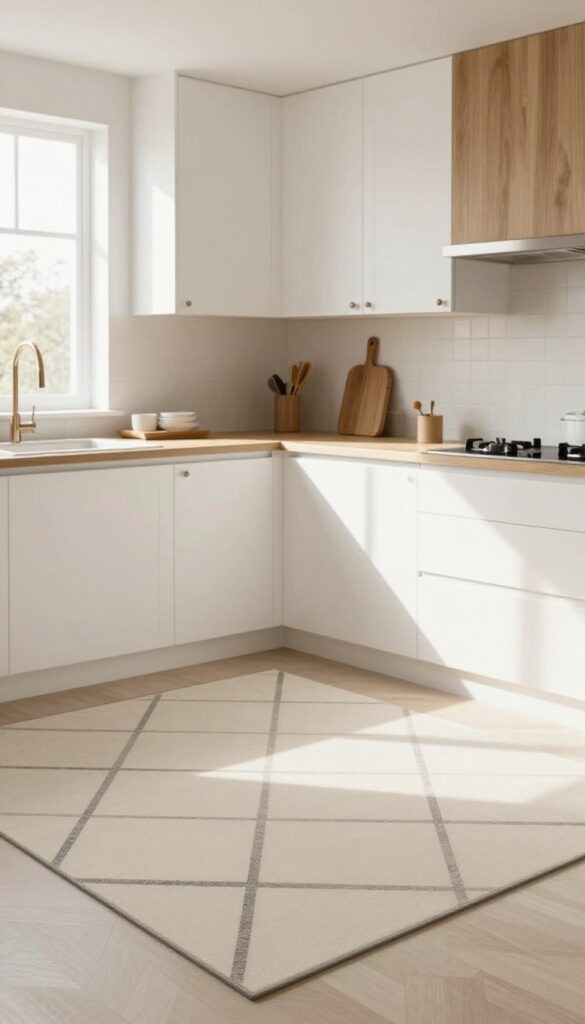
If your kitchen floor is looking a little tired but a full replacement isn’t in the budget, paint can work wonders. By mapping out a geometric or striped pattern directly on the floor, you get the look of a high-end rug without the upkeep of fabric. It’s a weekend project that instantly defines the cooking zone, especially in an open layout where the kitchen blends into the living area.
Why It Works
Floor paint is surprisingly durable and easy to clean—just a mop and mild soap keep it fresh. The painted “rug” anchors the space visually, making the kitchen feel intentional and pulled together. Plus, you can change the pattern whenever you want a new look, which is way simpler than swapping out a real rug.
Best For
Open-concept kitchens where you want to separate the cooking area from the dining or living space without adding walls. It’s also great for renters (with landlord permission) or anyone who wants a bold design statement without a big investment.
Styling Tip
Stick to two or three colors that tie into your existing palette—maybe a soft neutral base with a darker accent for the pattern. Use painter’s tape to create clean lines, and seal with a water-based polyurethane for extra protection. A simple diamond or chevron pattern feels classic and won’t compete with your cabinets.
8. Window Trim That Frames the View
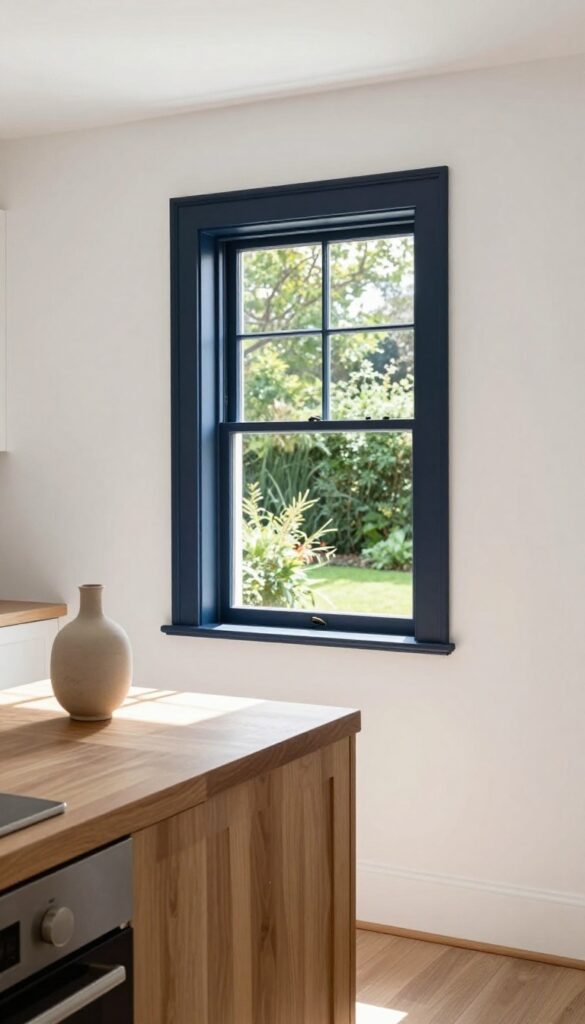
Your kitchen windows do more than let in light—they connect you to the outdoors. But plain white trim can make them blend into the wall, missing a chance to create a focal point. Painting the window frame in a contrasting color changes that instantly, turning the window into a deliberate design feature that draws your eye outward and makes the room feel larger.
It’s a weekend-friendly project that costs next to nothing but delivers a surprisingly polished look.
Why It Works
A dark or bold trim creates a visual frame around the glass, tricking the eye into seeing the window as bigger than it is. That contrast also adds depth to the wall, making the kitchen feel more layered and intentional without adding clutter.
Best For
Kitchens with a nice view—even if it’s just a garden or a tree—or rooms that feel a bit boxed in. It’s especially effective in galley kitchens or spaces where natural light is limited, because the contrast makes the window pop and pulls attention outward.
Styling Tip
Keep the rest of the trim in the room neutral to let the window stand out. For a cohesive look, echo the trim color in a small accessory nearby, like a vase or a bar stool, so the contrast feels purposeful rather than random.
9. Open Shelving Backs in a Surprising Shade
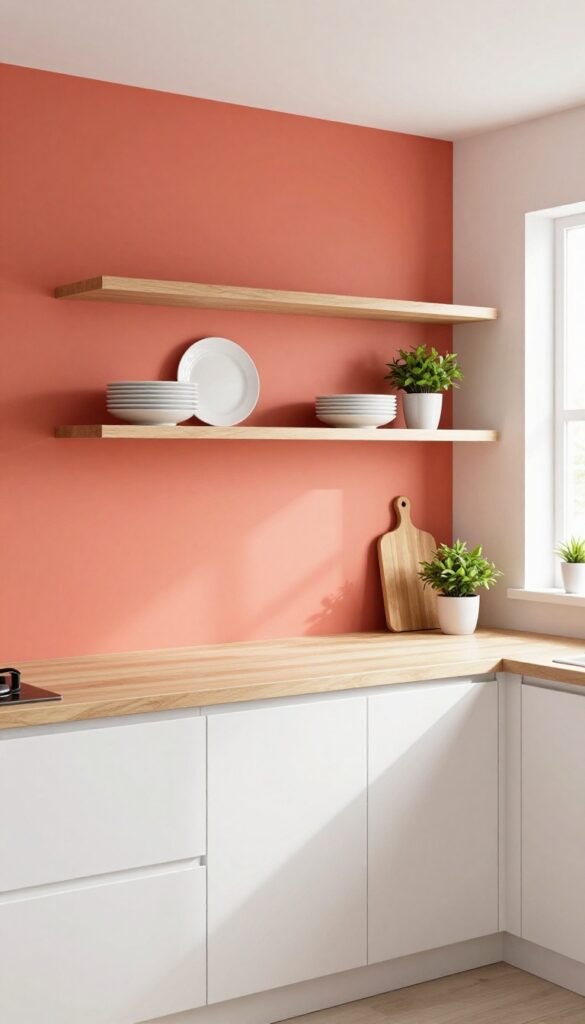
Open shelving is a kitchen favorite for good reason—it keeps everyday dishes within arm's reach and adds a collected, lived-in look. But if the standard white or wood back feels a little safe, try painting just the interior back panel a bold color. A pop of coral, mustard yellow, or even a deep teal behind your plates and bowls instantly wakes up the whole wall without a major commitment.
It's a weekend project that delivers a serious dose of personality, and when you're ready for a change, a fresh coat of paint is all it takes.
Why It Works
By limiting the color to the back panel, you get a high-impact accent that doesn't overwhelm the room. It draws the eye to your displayed items and creates a mini focal point that feels intentional. Plus, it's a low-stakes way to experiment with color—if you hate it, you can repaint in an afternoon.
Best For
This idea shines in kitchens that already have neutral cabinets and countertops, where a small burst of color can break up the monotony. It's also perfect for renters who can't paint the whole wall but want to add a personal touch (just use a peel-and-stick temporary option).
Styling Tip
Stick to a cohesive color story on the shelves—group white ceramics, wooden cutting boards, and a few green plants so the painted back doesn't compete. For extra depth, paint the back a shade that echoes an accent color already in your kitchen, like the hue in your dish towels or a vase.
10. A Monochromatic Scheme for a Streamlined Look
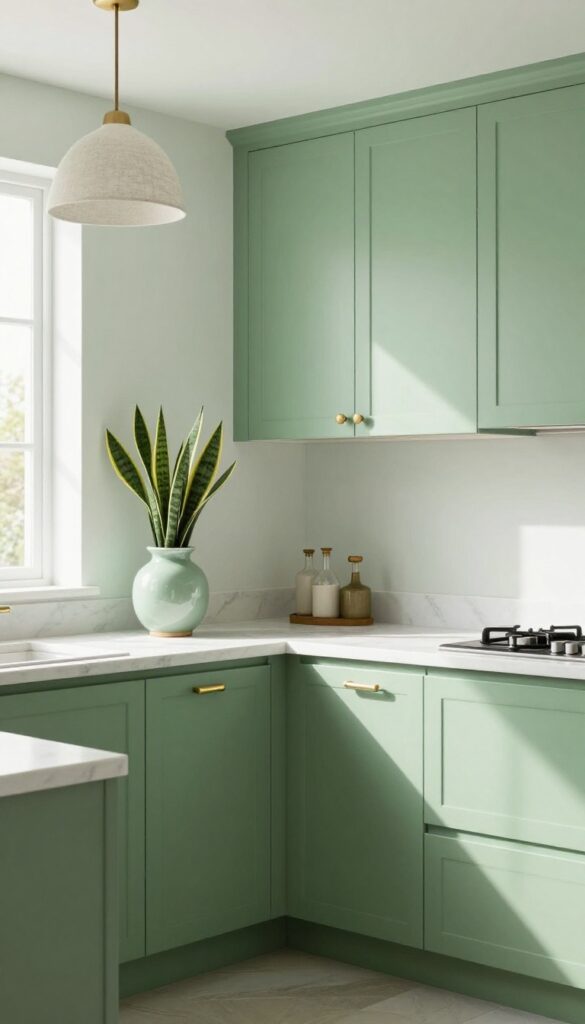
There's something quietly powerful about a kitchen dressed in one color family. By layering different shades of the same hue—say, a soft sage on the walls, a deeper moss on the lower cabinets, and a pale mint on the trim—you create a space that feels intentionally curated and calm. This isn't about being boring; it's about letting texture and subtle contrast do the heavy lifting.
The result is a kitchen that feels both pulled together and surprisingly spacious, even if you're working with a compact footprint.
Why It Works
A monochromatic palette reduces visual noise because your eye isn't jumping between competing colors. Instead, it glides smoothly across the room, making the kitchen feel larger and more serene. The varying shades add depth without clutter, so the space reads as sophisticated and intentional.
Best For
This approach is ideal for small kitchens, open-concept layouts where you want a seamless flow into adjoining rooms, or any kitchen that feels chaotic and needs a visual reset. It also works beautifully in kitchens with lots of architectural details like beadboard or shaker cabinets, because the subtle color shifts highlight the craftsmanship.
Styling Tip
To keep the look from falling flat, introduce texture through matte finishes, brushed metal hardware, and natural materials like a butcher block countertop or a linen shade. A few glossy ceramic accessories or a single contrasting plant (like a dark-leafed snake plant) can provide just enough visual pop without breaking the monochromatic spell.
11. Painted Appliance Panels for a Seamless Finish
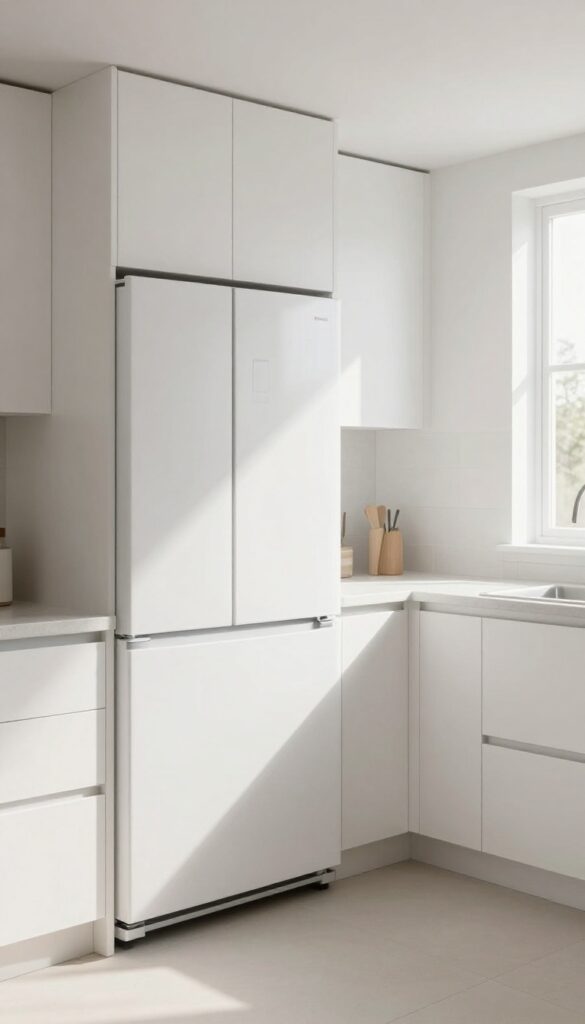
Your refrigerator and dishwasher don't have to stick out like sore thumbs. If they have replaceable panels, a coat of paint can make them blend right into your cabinetry. This trick gives your kitchen a built-in, custom look without the cost of new appliances.
It's a weekend project that instantly upgrades the room's flow and makes everything feel more intentional.
Why It Works
Matching appliance panels to your cabinets creates a seamless, uncluttered look that visually expands the space. It eliminates the visual break that different colors and materials cause, making the kitchen feel more cohesive and polished.
Best For
Kitchens with panel-ready appliances or models that allow front panel removal. It's especially effective in galley kitchens, small spaces, or any layout where you want a streamlined, uninterrupted line of cabinetry.
Styling Tip
Use the same paint finish as your cabinets—satin or semi-gloss for durability. If your cabinets have a grain or texture, consider a faux finish to mimic it. For a subtle contrast, paint just the dishwasher panel a slightly darker shade than the cabinets.
FAQ
What type of paint is best for kitchen cabinets?
For kitchen cabinets, use a high-quality semi-gloss or satin paint with a durable finish. Look for paints labeled as cabinet or trim paint, which are formulated to withstand moisture, grease, and frequent cleaning.
Can I paint my kitchen backsplash?
Yes, you can paint a tile backsplash with special tile paint or a high-adhesion primer and paint. For best results, clean the tiles thoroughly, apply a bonding primer, and use a paint designed for high-moisture areas.
How do I prepare my kitchen for painting?
Start by cleaning all surfaces with a degreaser to remove grease and grime. Sand glossy areas lightly, fill any holes or cracks, and apply a quality primer. Protect countertops, floors, and appliances with drop cloths and painter's tape.
Will painting my kitchen increase home value?
A fresh, well-executed paint job can boost your kitchen's appeal and potentially increase home value, especially if you choose neutral, timeless colors. However, overly bold or trendy choices might not appeal to all buyers.
How long does a kitchen paint job typically last?
With proper preparation and quality paint, a kitchen paint job can last 3 to 5 years before needing a touch-up. High-traffic areas like cabinet edges may show wear sooner, but regular cleaning helps extend the life.
Conclusion
These 11 clever painting ideas prove that a weekend refresh can completely transform your kitchen without breaking the bank. Whether you opt for a bold island or a subtle monochromatic scheme, each idea is designed to be achievable and impactful.
Remember, the key to a pulled-together kitchen is thoughtful planning and a little creativity. So pick the idea that speaks to you, grab your supplies, and enjoy the process of making your kitchen feel fresh and inviting.