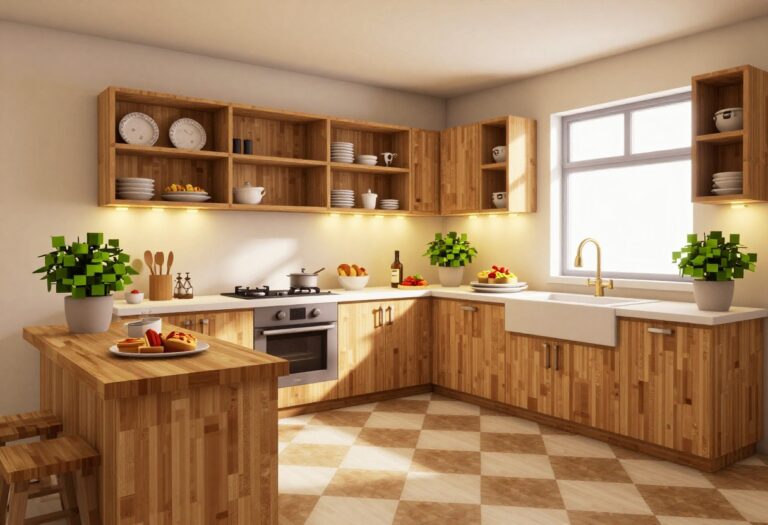
11+ Cozy Kitchen Island Ideas With Seating That Feel Fresh and Easy to Use
Your kitchen island can be more than just a prep station—it's the heart of your home, where meals are shared and conversations flow. Adding seating turns it into a cozy gathering spot, but finding the right balance between style and everyday use can be tricky.
The key is to choose ideas that feel natural, not forced, and that fit your space without overwhelming it. Whether you're working with a compact nook or a sprawling open layout, the best islands invite you to pull up a chair and stay awhile.
Think warm wood tones, soft lighting, and just enough storage to keep clutter at bay.
1. Butcher Block Warmth With Counter Stools
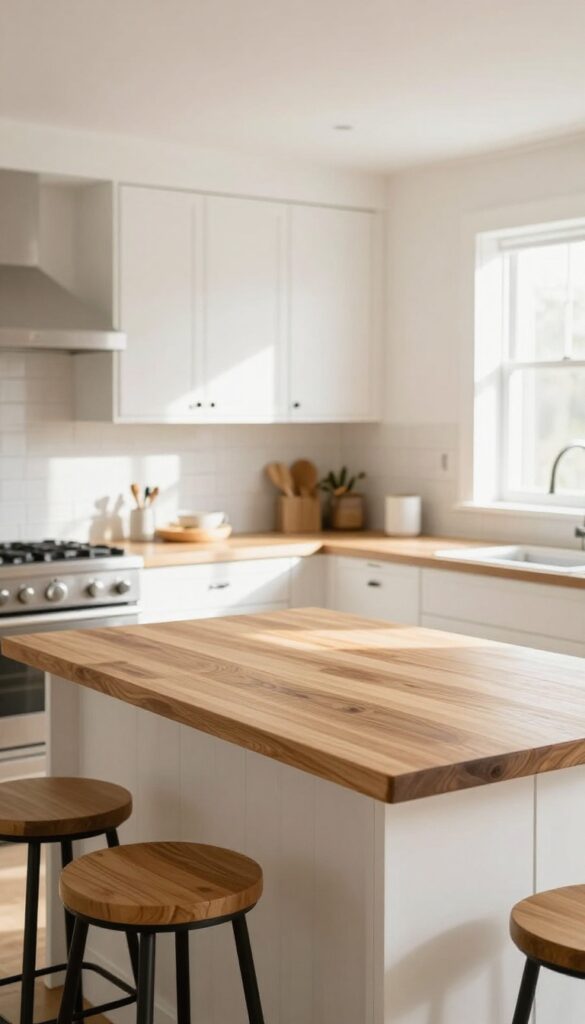
A butcher block countertop brings a natural, tactile quality that instantly makes a kitchen island feel more approachable. The wood grain softens the hard edges of cabinetry and appliances, creating a welcoming focal point. Paired with simple counter stools in a neutral finish, the look stays grounded and unfussy—perfect for everyday meals or a quick cup of coffee.
Why It Works
Wood has a way of making a space feel lived-in without trying too hard. Butcher block is durable enough for food prep yet warm enough to double as a casual dining surface. The neutral stools keep the focus on the island itself, so the whole setup feels cohesive and calm.
Best For
This idea shines in kitchens with lighter cabinetry or open layouts where a touch of natural material can break up monotony. It's also a smart choice for families who want a low-maintenance surface that ages gracefully.
Styling Tip
To keep the wood looking its best, apply a food-safe mineral oil every few months. For stools, look for a finish that complements the island's undertones—try black or dark walnut legs with a lighter butcher block top for contrast.
2. Two-Tier Island for Casual Dining
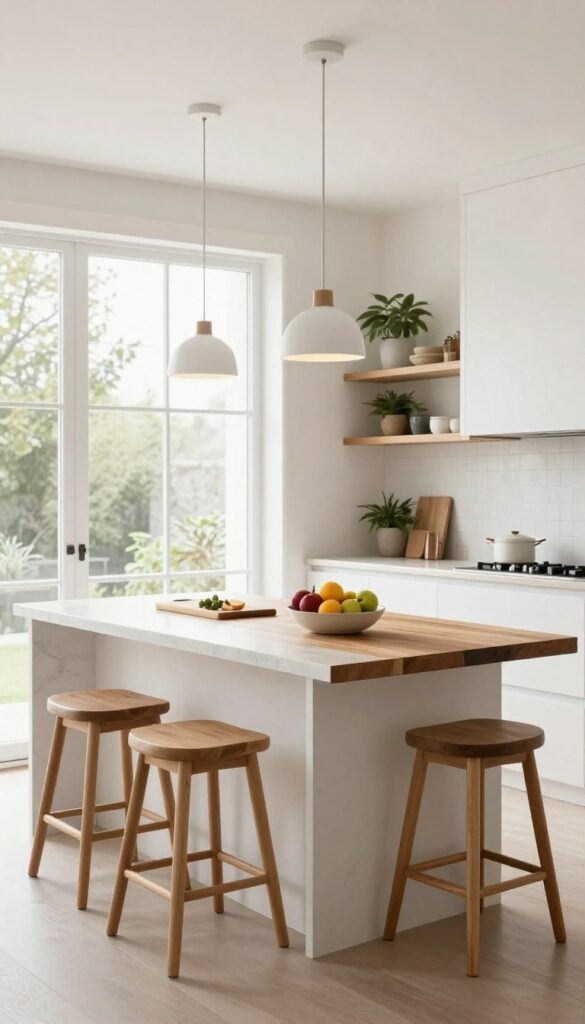
A two-tier island brings that coffee-shop energy right into your kitchen, with a raised counter on one side that instantly says 'pull up a stool and stay a while.' The lower main surface stays dedicated to food prep, while the elevated ledge becomes a natural spot for quick meals, homework, or morning coffee. It feels like you've added a whole extra room without moving a single wall.
Why It Works
The split-level design keeps your workspace clean and clutter-free, because dishes and chopping happen below while drinks and plates rest above. It also visually separates the cooking zone from the dining zone, which makes the kitchen feel more organized and intentional—even when things get busy.
Best For
This layout is a lifesaver in open-concept kitchens where the island doubles as a room divider. It's also perfect for families who need a place for kids to snack while dinner is being prepped, or for anyone who loves hosting but doesn't want guests hovering over a cutting board.
Styling Tip
Choose bar stools with a low back or no back so they tuck neatly under the overhang when not in use. Add a couple of small pendant lights above the raised counter to define the dining area and cast a warm glow that makes the space feel cozy, not clinical.
3. Open Shelving Below for Extra Storage
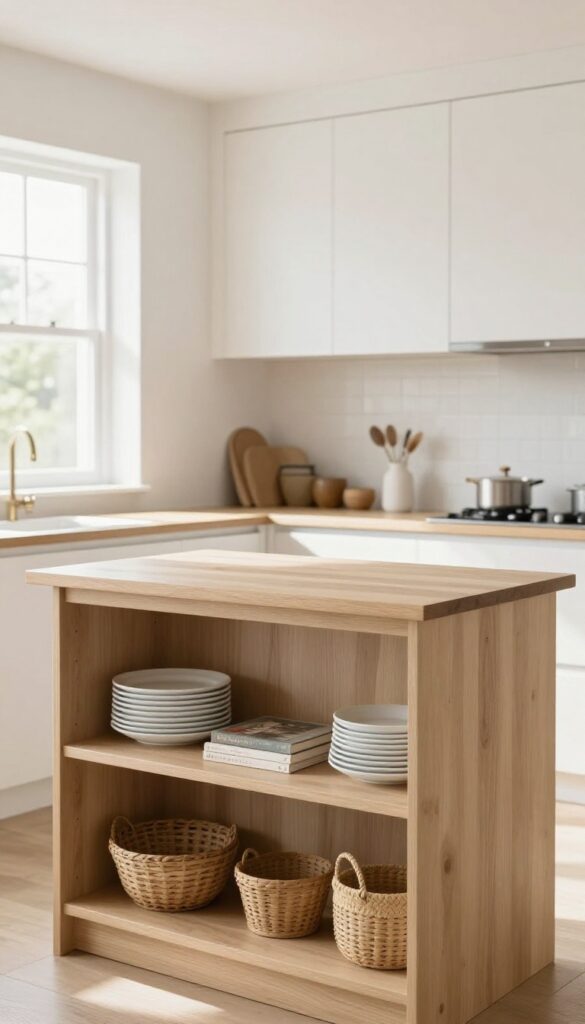
There’s something wonderfully inviting about open shelving under a kitchen island. It breaks up the solid mass of cabinetry and makes the whole space feel lighter. Instead of hiding everything behind doors, you get to display your prettiest cookbooks, a stack of colorful bowls, or woven baskets holding potatoes and onions.
It’s practical storage that also adds character—exactly the kind of warm, lived-in look that makes a kitchen feel like the heart of the home.
Why It Works
Open shelves keep everyday items within arm’s reach while making the island feel less bulky. The visual break between the counter and the floor creates a sense of airiness, which is especially welcome in smaller kitchens. Plus, it forces you to edit what you keep—only the essentials and the beautiful things make the cut.
Best For
This idea shines in kitchens where you want to showcase a curated collection or need quick access to frequently used dishes and ingredients. It’s also great for narrow islands where closed cabinets would feel too heavy. If you’re someone who loves rotating seasonal decor or displaying colorful cookware, open shelving is your friend.
Styling Tip
Stick to a tight color palette—neutral linens, white dishes, and a few earthy accents—to keep the look cohesive. Use low, rectangular baskets for bulkier items like napkins or root vegetables, and stack plates or bowls on small wooden risers for height variation. Leave some breathing room between objects so the shelves don’t look cluttered.
4. Round Island With a Cozy Banquette
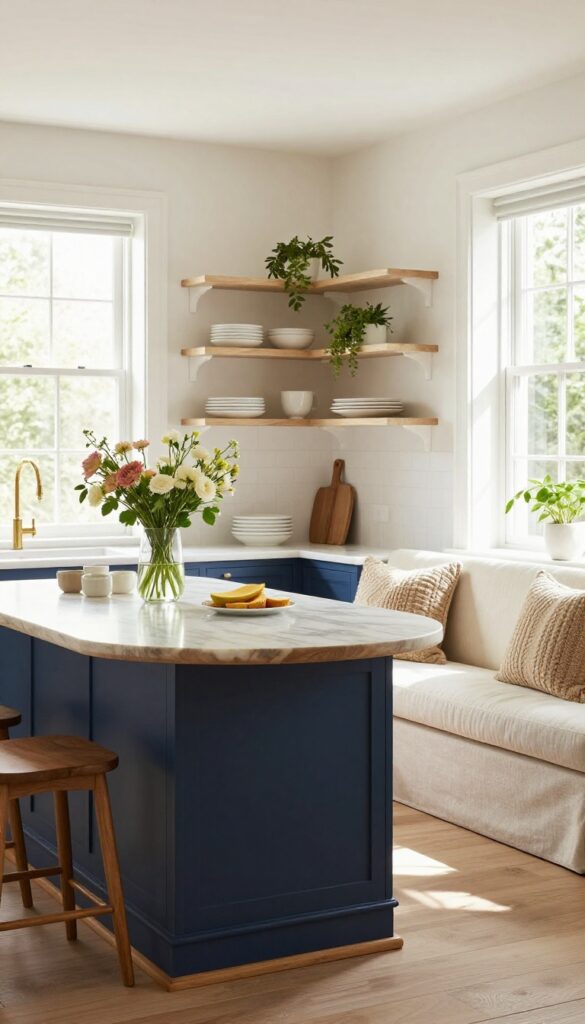
A round island breaks up all the straight lines in a kitchen, making the whole space feel softer and more inviting. Tucking a banquette on one side gives you that built-in booth vibe—perfect for morning coffee, homework sessions, or casual meals. The curved shape naturally encourages conversation, so nobody feels like they're sitting at the end of a long counter.
Why It Works
The round shape eliminates sharp corners, which makes traffic flow smoother in busy kitchens. Adding a banquette creates a dedicated seating zone that feels separate from the cooking area, so the island stays functional for prep while still offering a cozy spot to sit.
Best For
Open-plan kitchens where you want to define a casual dining nook without adding a full table. Also great for families with kids, since the banquette feels safe and contained, and the round island means no one gets poked by a corner.
Styling Tip
Choose a round island with a waterfall edge or a contrasting base to make it feel like furniture, not just cabinetry. For the banquette, use a bench cushion in a durable performance fabric and add a couple of toss pillows in warm textures like velvet or chunky knit.
5. Warm Wood Tones With Pendant Lighting
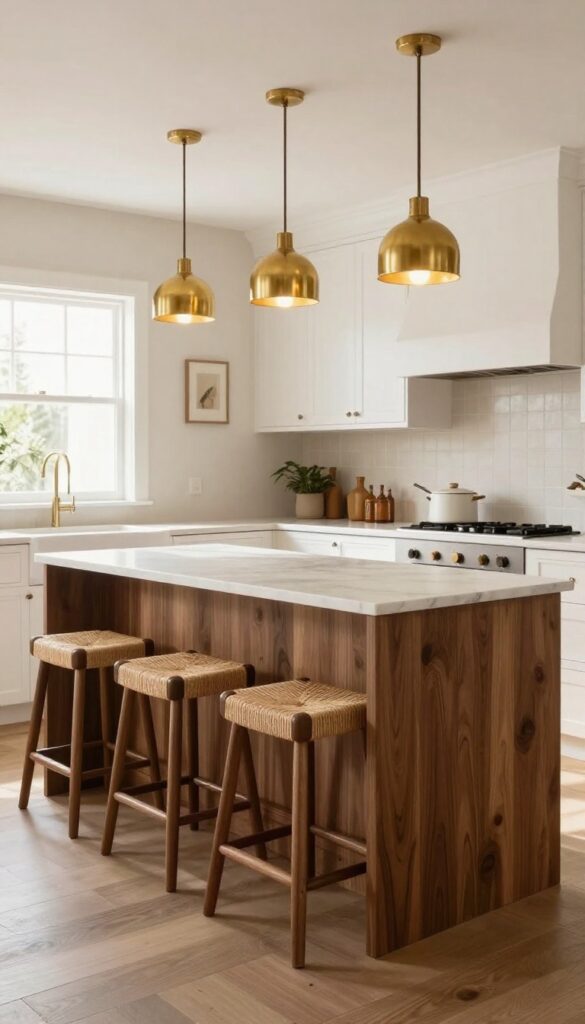
A kitchen island clad in rich, warm wood instantly brings a sense of natural comfort to the room. It’s a material that feels inherently welcoming, especially when you pair it with pendant lights that cast a soft, golden glow. This combination creates a cozy seating area that invites lingering over coffee or conversation, even in larger, more open kitchens.
Why It Works
The warmth of the wood softens the hard surfaces common in kitchens, while the pendants provide focused, intimate lighting over the seating area. Together, they balance each other—the wood grounds the space, and the light makes it feel lived-in and approachable.
Best For
This idea is ideal for kitchens with neutral or cool-toned cabinetry, where a wood island adds a much-needed layer of warmth. It also works well in open-plan layouts, helping to define the kitchen zone without closing it off.
Styling Tip
Choose a wood with visible grain, like oak or walnut, and pair it with pendants in brushed brass or copper for a cohesive warm palette. Keep the island surface clear of clutter so the wood and light remain the focal points.
6. Compact Island on Casters for Flexibility
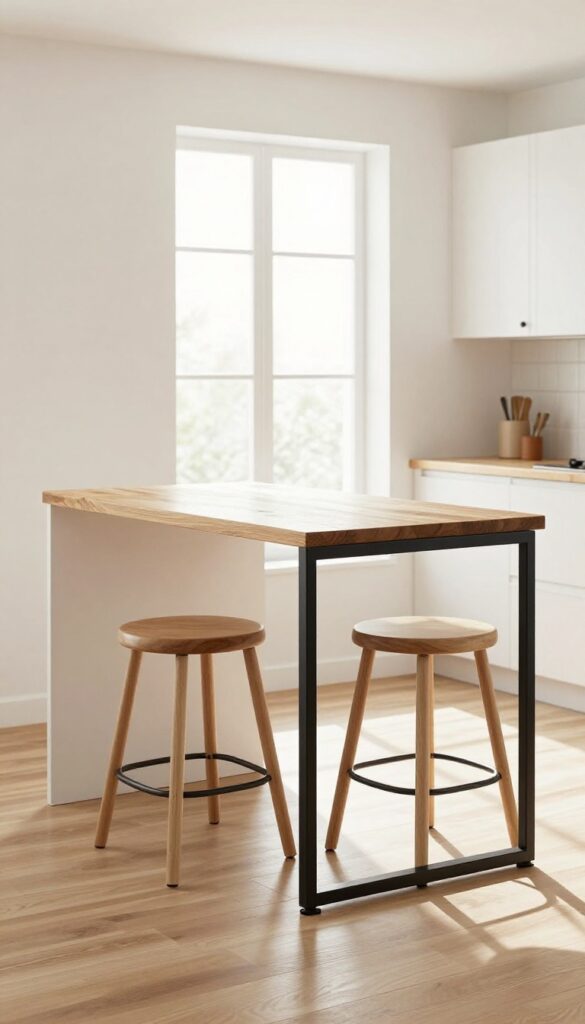
A kitchen island on wheels brings the best of both worlds: extra counter space when you need it and a wide-open floor plan when you don't. This rolling workhorse can be pushed against a wall to free up room for meal prep or pulled center stage for casual dining. The caster-based design feels especially smart in tight spaces where every square inch counts.
Plus, the ability to move it around means you can change your kitchen's layout on a whim—perfect for adapting to different cooking projects or entertaining needs.
Why It Works
The mobility of a caster island eliminates the permanence of built-in cabinetry, giving you the freedom to reconfigure your kitchen in seconds. It's a practical solution for renters or anyone hesitant to commit to a fixed layout. The added seating—usually two to three stools—turns it into an instant breakfast bar or a spot for guests to perch while you cook.
Best For
Small kitchens, galley layouts, or open-plan living where a stationary island would block traffic flow. It's also a great fit for those who love to rearrange their space seasonally or need extra room for holiday cooking and parties.
Styling Tip
Choose a butcher-block top for warmth and durability—it doubles as a cutting board and adds a natural texture that softens the industrial look of casters. Pair with a slim metal frame in matte black or brass for a touch of elegance. Keep the stools slim and backless so they can tuck neatly underneath when not in use.
7. Built-In Wine Rack and Stools
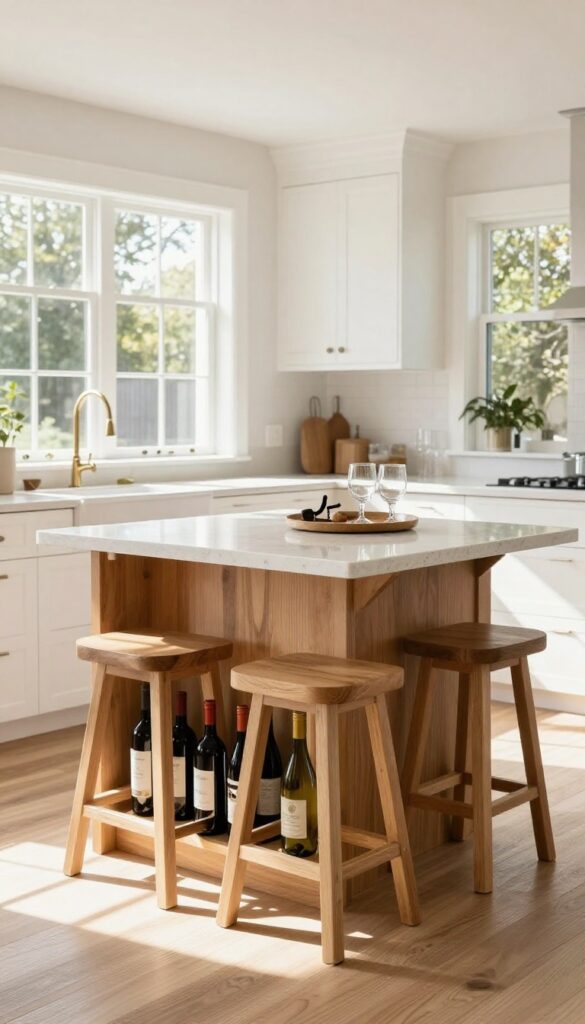
There's something effortlessly inviting about a kitchen island that doubles as a wine bar. By tucking a small wine rack into the base, you add a touch of sophistication without sacrificing an inch of counter space. Pair it with backless stools that slide completely under the overhang, and you get a setup that feels airy, uncluttered, and perfect for casual evenings.
Why It Works
The built-in wine rack keeps bottles organized and within easy reach, while the slim stools disappear when not in use. This combo maximizes floor space and maintains a clean, open look—ideal for smaller kitchens or islands that pull double duty as prep areas.
Best For
This idea shines in open-concept layouts where the kitchen flows into the living or dining area. It's also a smart pick for hosts who love having wine accessible during gatherings without taking up precious counter real estate.
Styling Tip
Choose stools with a natural wood or matte black finish to keep the look warm and grounded. Add a small tray on the counter with a corkscrew and a couple of stemless glasses to complete the vignette without cluttering the surface.
8. Mixed Materials: Marble and Wood
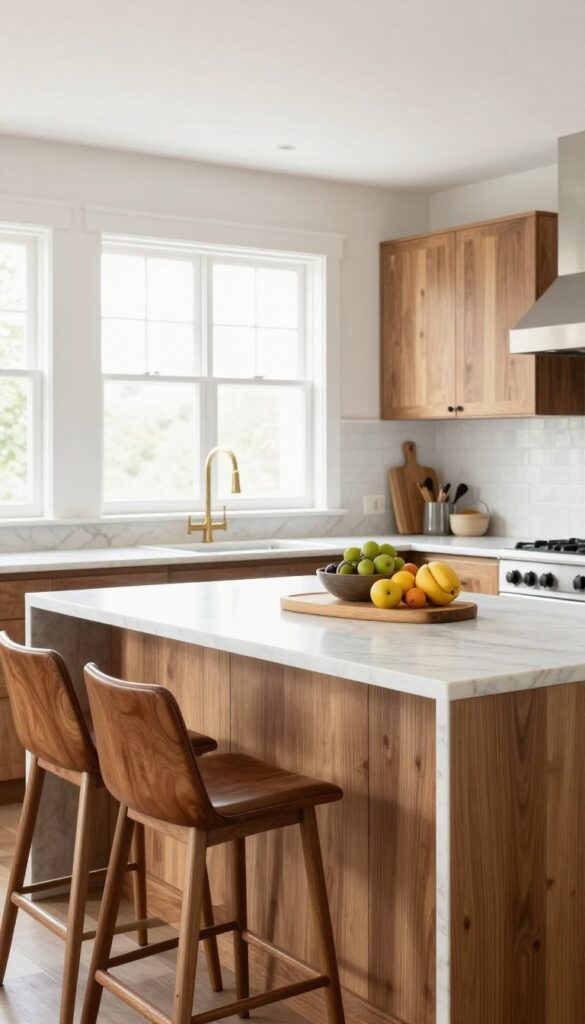
There’s a reason marble and wood keep showing up together in kitchens—they balance each other perfectly. The cool, polished surface of marble feels refined, while the warmth of wood keeps things grounded and cozy. On a kitchen island with seating, this combination creates a natural gathering spot that doesn’t try too hard.
It looks intentional but not precious, which is exactly what you want in a room that gets used every day.
Why It Works
The contrast between the two materials adds visual depth without clutter. Marble is easy to wipe down and stands up to spills, while wood softens the overall feel and makes the island less intimidating. Together, they read as both sophisticated and welcoming—a rare combo that works in busy family kitchens and sleek modern spaces alike.
Best For
This idea shines in kitchens that already have some natural elements, like hardwood floors or open shelving. It’s also great for open-concept layouts where the island needs to bridge a sleek kitchen and a more relaxed living area. If you love a bit of contrast but don’t want the space to feel cold, this is your sweet spot.
Styling Tip
- Keep the wood base in a medium or warm tone—oak or walnut works beautifully. For the marble, choose a honed finish instead of polished to avoid a too-formal look. Add a few barstools with wooden frames or leather seats to tie the materials together.
- A simple fruit bowl or a wooden cutting board on the countertop reinforces the mix without trying too hard.
9. Deep Drawers for Hidden Organization
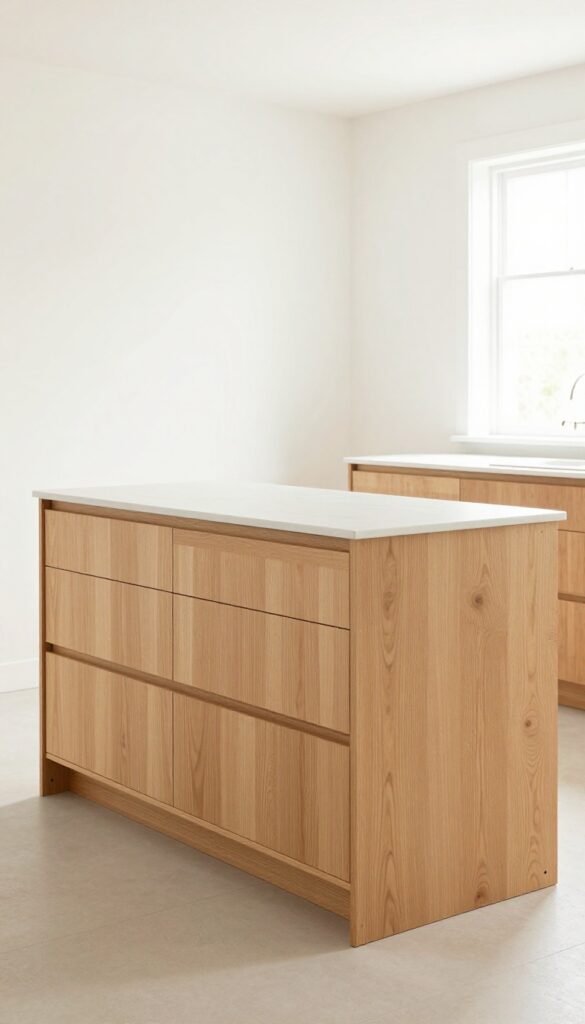
Sometimes the best storage is the kind you don't see. Deep drawers on the seating side of your kitchen island keep everyday items close but out of sight. This setup feels especially smart in a busy kitchen where counter space is precious and you want to maintain a calm, uncluttered look.
The warm wood or painted fronts add a cozy touch, while the drawers themselves make grabbing a placemat or a whisk almost effortless.
Why It Works
Deep drawers maximize every inch of your island's footprint. Unlike cabinets where you might have to kneel and dig, drawers slide out smoothly, letting you see and reach everything at once. They're perfect for storing bulkier items like mixing bowls, small appliances, or stacks of linen napkins, keeping your island counters clear for prep or casual meals.
Best For
This idea shines in family kitchens where you need quick access to daily essentials. It's also great for smaller islands where every storage decision counts, or for anyone who prefers a streamlined look without visible clutter. If you often host casual dinners or have kids grabbing snacks, deep drawers make life easier.
Styling Tip
Choose drawer fronts that complement your island's style—shaker-style for a classic look, flat-panel for modern, or beadboard for a cottage feel. Add soft-close slides for a quiet, premium experience. Inside, use dividers or small bins to keep utensils, gadgets, and linens neatly separated so nothing gets lost in the depth.
10. L-Shaped Island With Corner Seating
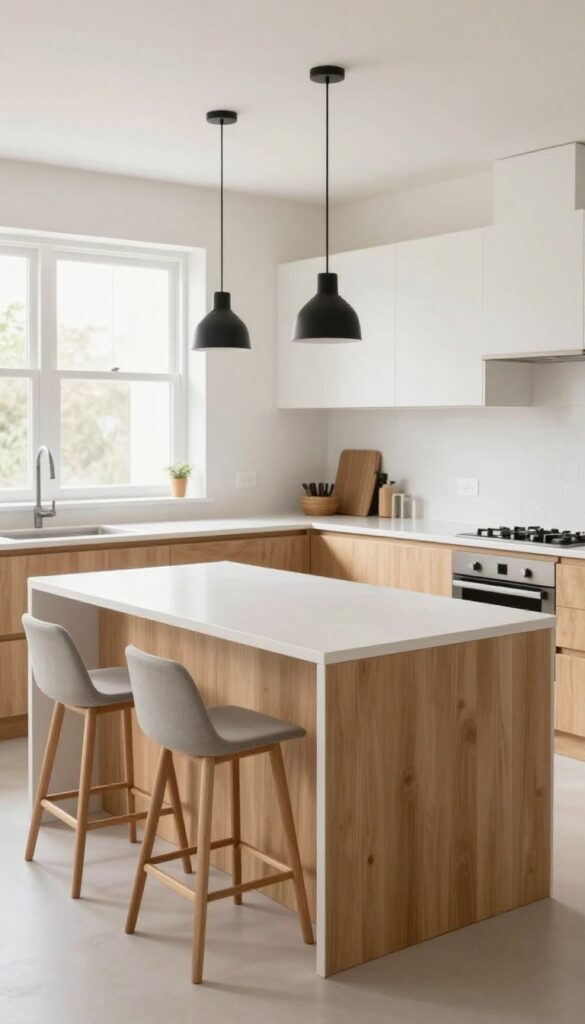
An L-shaped island that wraps around a corner does more than just add seating—it carves out a little nook that feels instantly inviting. Tucking stools into the crook of the L makes the space feel intentional and cozy, like a built-in breakfast banquette but with the flexibility of movable seats. The layout also keeps the main work zone open and uncluttered, so the kitchen stays airy even with extra seating.
Why It Works
This design turns an often-underused corner into a functional hangout spot. The continuous countertop creates a natural separation between cooking and lounging without blocking sightlines, so the cook can still chat with guests. It also adds counter space on both legs of the L, giving you more room for prep or serving.
Best For
Great for larger kitchens or open-plan layouts where you want a defined dining zone without building a full peninsula. It also works well in square rooms where a straight island would leave awkward gaps on either side.
Styling Tip
Keep the corner open underneath so stools can tuck in neatly when not in use. Use a mix of counter stools with low backs and a small pendant light centered over the corner to define the seating area without overwhelming the space.
11. Floating Island With a Slim Profile
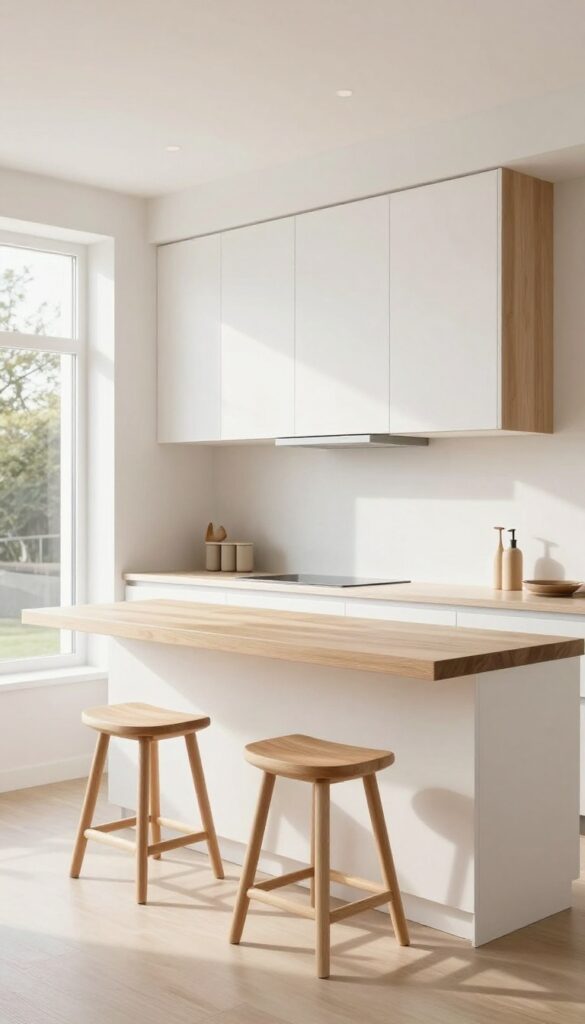
A slim, floating island with a cantilevered top offers seating without bulky legs. This sleek option keeps sightlines open and works beautifully in narrow kitchens or galley layouts. It feels airy and intentional, not like an afterthought.
Why It Works
By eliminating visible supports, the island creates an illusion of more floor space. The cantilevered top provides enough overhang for comfortable seating while maintaining a clean, uncluttered look that makes the kitchen feel larger.
Best For
Narrow kitchens, galley layouts, or any space where a standard island would feel cramped. It's also great for small apartments or open-concept homes where you want to define the kitchen without blocking the flow.
Styling Tip
Pair with slim, backless stools that tuck completely under the overhang when not in use. Choose a warm wood or matte finish for the top to add texture, and keep the base the same color as your cabinetry for a seamless look.
12. Painted Base With a Natural Wood Top
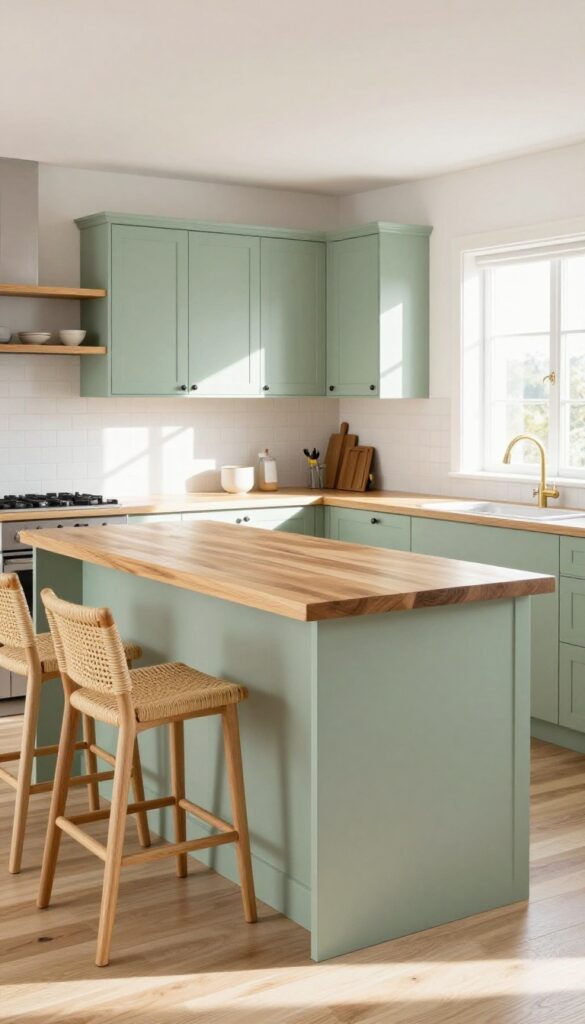
Some kitchen islands feel like they belong in a catalog, not a real home. This one walks the line between polished and personal. By painting the base in a soft, muted color like sage or navy and letting the countertop stay raw wood, you get contrast that catches the eye without screaming for attention.
The warmth of the wood keeps the whole setup grounded, while the painted base adds just enough structure to make it feel intentional. It's the kind of island that looks like it evolved naturally, not something you picked out of a showroom.
Why It Works
The two-tone approach breaks up the visual weight of a large island, making it feel lighter and more approachable. Painted bases hide everyday scuffs and fingerprints better than wood, while the natural top develops a patina over time that adds character. It's a low-maintenance way to bring color into the kitchen without committing to an all-painted island that might feel too bold.
Best For
This idea shines in kitchens that already have some wood elements—open shelving, a butcher block counter, or wood floors. It also works well in smaller kitchens where a single block of color could feel overwhelming; the wood top keeps the island from dominating the room. If your style leans modern farmhouse, coastal, or even a bit Scandinavian, this combo fits right in.
Styling Tip
Choose a wood top with visible grain, like oak or walnut, and seal it with a matte food-safe finish so it can handle daily use without looking plastic. For the base, stick with a matte or eggshell paint—glossy finishes can feel too formal. Add a few woven bar stools and a simple pendant light above to tie the natural and painted elements together.
FAQ
How much space do I need for a kitchen island with seating?
Aim for at least 36 inches of clearance around the island for easy movement. For seating, allow about 24 inches of counter space per stool and 12 inches of legroom between the counter and the seat.
What's the best height for kitchen island seating?
Standard counter height is 36 inches, so use counter stools with a seat height of 24 to 26 inches. For a bar-height island (42 inches), choose stools with a seat height of 30 to 32 inches.
Can I add seating to a small kitchen island?
Yes, opt for a slim island with backless stools that tuck underneath. A movable island on casters also works well, as you can reposition it as needed.
What materials are best for a cozy kitchen island?
Wood, especially butcher block or reclaimed wood, adds warmth. Marble or quartz can be paired with wood for a balanced look. For the base, painted wood or open shelving keeps it light.
How many stools should I put at my kitchen island?
A general rule is one stool per 24 to 30 inches of counter length. For a 6-foot island, two to three stools are comfortable. Leave some space between stools for easy access.
Conclusion
Creating a cozy kitchen island with seating is all about blending function with a warm, lived-in feel. Whether you choose a butcher block top, a movable cart, or a built-in banquette, the goal is to make your kitchen a place where people naturally gather.
Small details like warm lighting, mixed materials, and smart storage can transform a simple island into the heart of your home. Remember, the best ideas are the ones that fit your daily life.