11 Creative Kitchen Rug Ideas That Help the Room Feel More Intentional
A kitchen rug does more than protect your floors—it sets the tone for the whole room. The right rug can warm up a cold tile floor, define a cooking zone, or add a pop of personality. But with so many options, it's easy to grab something generic that doesn't quite fit.
That's where intentionality comes in. Instead of just picking any rug, think about what your kitchen needs: a soft landing by the sink, a durable runner in the work zone, or a bold pattern that ties your color scheme together.
A well-chosen rug makes the kitchen feel finished and lived-in. In this list, you'll find 11 creative kitchen rug ideas that balance style and function.
1. A Long Runner That Follows the Work Triangle
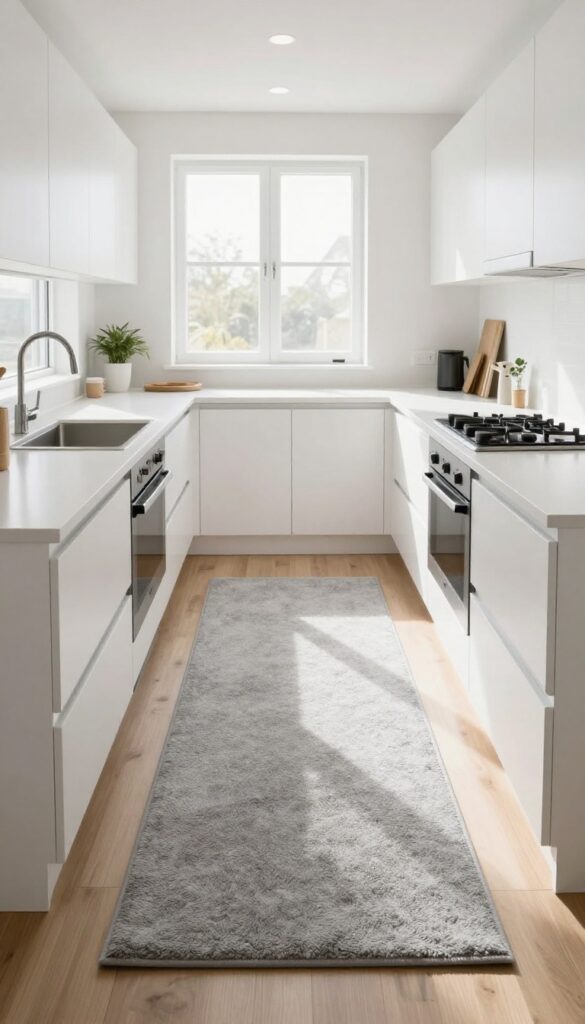
The kitchen work triangle—the path between sink, stove, and fridge—sees the most foot traffic in any cooking space. A long runner placed along that route does more than protect your floors; it visually connects the three key zones and makes the whole layout feel more deliberate. In a modern kitchen, a low-pile runner in a neutral tone keeps the look clean and streamlined, letting the architecture and cabinetry take center stage.
Why It Works
A runner that follows the work triangle reduces floor wear in high-traffic areas and softens the hard surfaces common in contemporary kitchens. Its linear shape reinforces the natural flow of movement, so the space feels organized rather than chaotic. Because it’s low-pile and stain-resistant, you get durability without sacrificing a sleek appearance.
Best For
This idea shines in galley kitchens, L-shaped layouts, or any open-plan kitchen where the sink, stove, and fridge form a clear path. It’s also ideal for busy households that want a stylish but no-fuss solution—especially if you have kids or pets tracking in dirt.
Styling Tip
Choose an indoor-outdoor polypropylene rug in a warm greige or soft charcoal to hide crumbs and spills while keeping a minimalist vibe. Make sure the runner is at least 36 inches wide so it feels substantial underfoot, and leave about 6 inches of bare floor on each side to maintain that airy modern look.
2. A Bold Geometric Pattern Under the Island
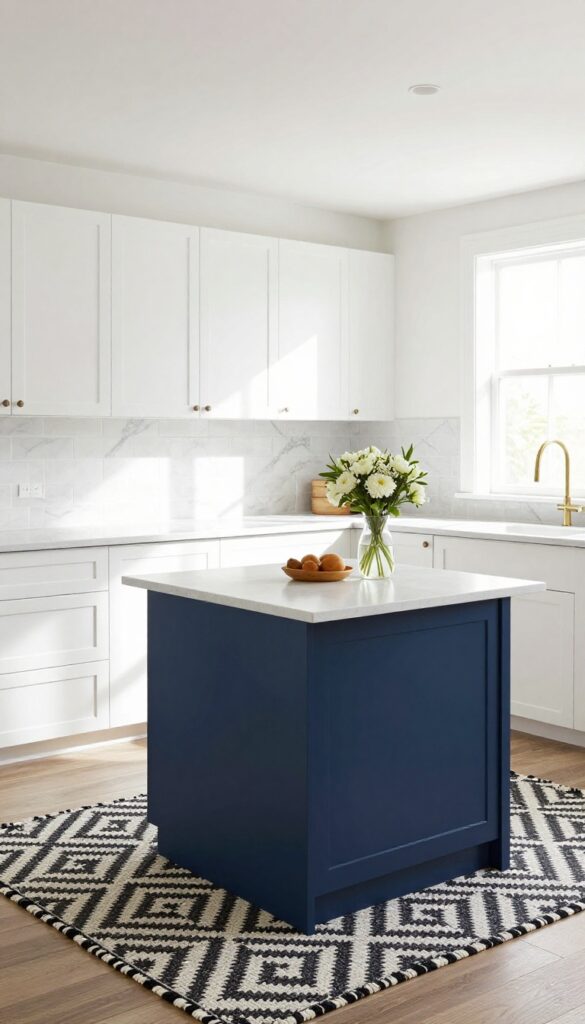
Your kitchen island is already a natural gathering spot, so why not give it a little extra personality? A geometric patterned rug underneath instantly anchors the space and draws the eye. Black and white or navy and cream combos bring just enough contrast without feeling busy.
When you keep the surrounding decor clean and minimal, that rug becomes the star of the room.
Why It Works
Geometric patterns add structure and visual interest to an open floor plan. The rug defines the island as its own zone, making the kitchen feel more intentional and less like a pass-through space.
Best For
This idea shines in modern kitchens with neutral cabinetry and simple backsplashes. It works especially well if your island is a different color from the perimeter cabinets, because the rug bridges the two.
Styling Tip
Choose a low-pile or flat-weave rug so chair legs glide easily. Make sure it's large enough to extend beyond all sides of the island by at least 24 inches for balanced proportions.
3. A Natural Jute Runner for Texture
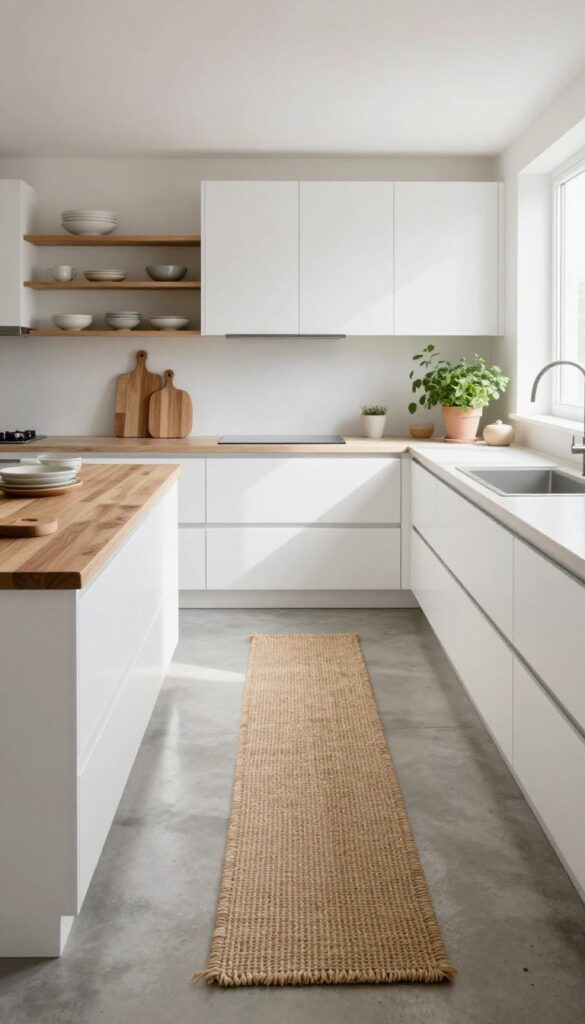
Jute is one of those materials that instantly makes a space feel warmer and more grounded. In a modern kitchen, where surfaces tend to be sleek and polished, a natural fiber runner adds just the right amount of organic texture. The neutral tones blend effortlessly with almost any color scheme, while the woven surface softens the hard edges of tile or hardwood floors.
It’s an easy way to bring a bit of nature indoors without overwhelming the room.
Why It Works
Jute is durable enough to handle foot traffic in a busy kitchen, and its subtle color variations hide minor spills and dirt better than a solid light rug. The texture also helps break up the monotony of uniform flooring, adding visual interest without introducing pattern that might clash with other elements.
Best For
This idea works especially well in galley kitchens or along a long counter where a runner can define the walkway. It’s also great for open-concept spaces where you want to zone the kitchen area without closing it off from the living or dining room.
Styling Tip
Pair your jute runner with wooden cutting boards, butcher block countertops, or open shelving with ceramic dishes to reinforce the natural aesthetic. Add a few potted herbs on the windowsill or a trailing pothos on top of cabinets to complete the earthy look. Keep the rest of the decor simple so the texture stays the star.
4. A Vintage-Inspired Washable Rug by the Sink
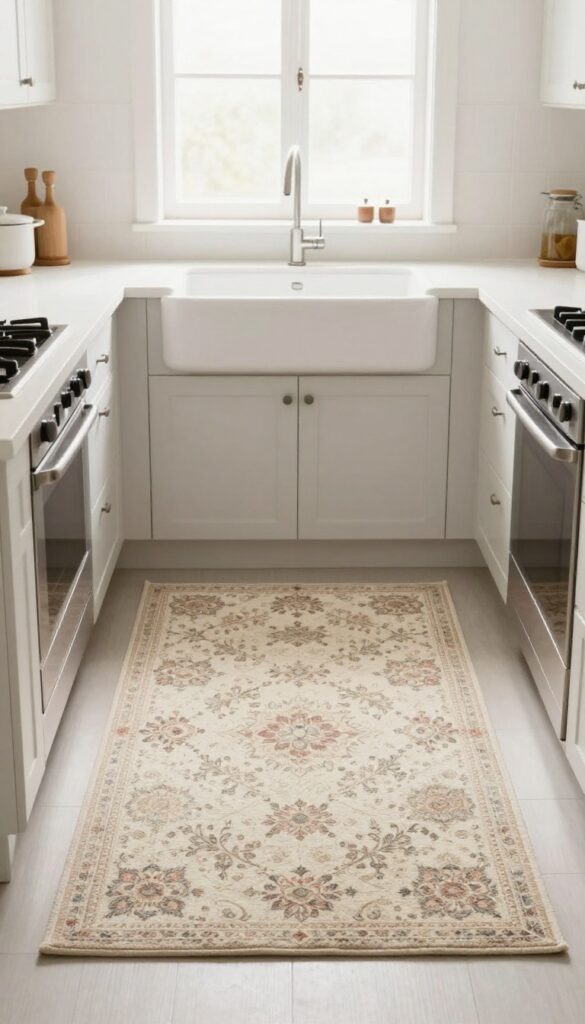
That spot in front of the kitchen sink sees a lot—splashes, drips, and the occasional dropped sponge. A vintage-inspired rug with a faded floral or medallion pattern brings softness and character to an otherwise utilitarian zone. The trick is choosing a washable version (like those from Ruggable) so you can toss it in the machine after messes without guilt.
It’s an easy way to add warmth and a collected-over-time feel, even in a modern, clean kitchen.
Why It Works
Washable rugs solve the biggest problem with vintage styles: keeping them clean. You get the charm of an antique look without worrying about stains or wear. The low-pile design also lies flat, so it won’t trip you up near the sink.
Best For
Busy kitchens that want personality without sacrificing practicality. It’s especially great for families or anyone who cooks often and needs a rug that can handle real life.
Styling Tip
Anchor the rug slightly off-center from the sink so it extends into the walkway—this makes the kitchen feel larger and gives your feet a soft landing as you move between tasks.
5. A Layered Look: Flatweave Over a Larger Neutral
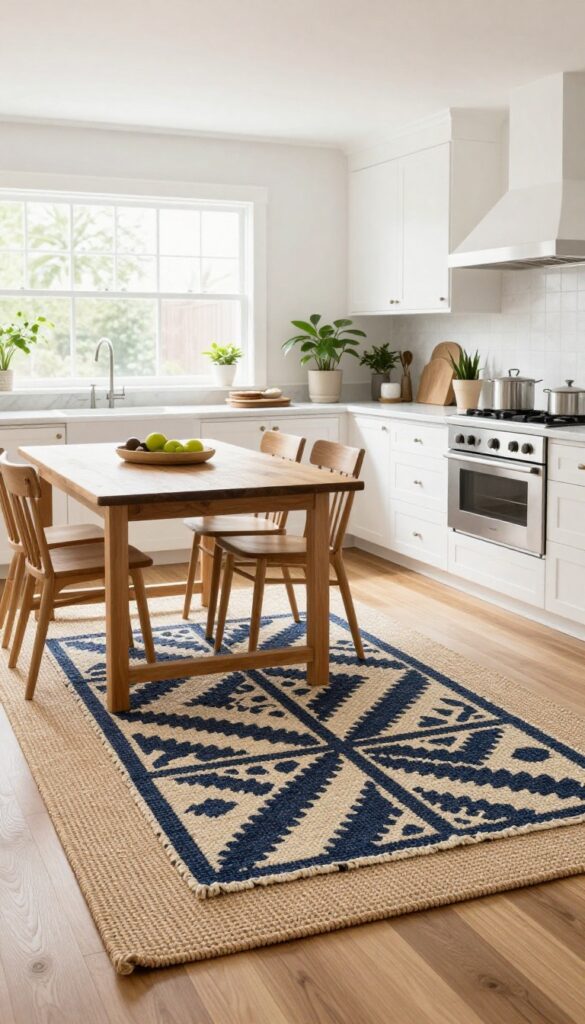
Layering rugs isn't just for living rooms—it works beautifully in kitchens too. By placing a smaller, patterned flatweave rug on top of a larger neutral sisal or jute mat, you get a custom look that feels intentional and collected. The contrast in textures and the ability to swap out the top layer with the seasons makes this approach both stylish and practical.
Why It Works
The neutral base anchors the space and provides a soft, natural foundation, while the flatweave adds color, pattern, or texture without overwhelming the room. This combination creates visual depth and makes the kitchen feel layered and lived-in. Plus, it's easy to clean or replace the top rug if it gets stained.
Best For
This idea is perfect for kitchens with an open layout or an island that doubles as a dining area. It works especially well in modern or transitional spaces where you want to add warmth without clutter. If you have hardwood or tile floors, the layered rugs also help define zones in a larger room.
Styling Tip
Keep the color palette tonal—think a cream sisal base with a navy or terracotta flatweave on top. Make sure the bottom rug extends at least 6 inches beyond the top one on all sides for a deliberate, balanced look. Place the layered set under a kitchen table or in front of the sink for maximum impact.
6. A Striped Runner for a Classic Nautical Feel
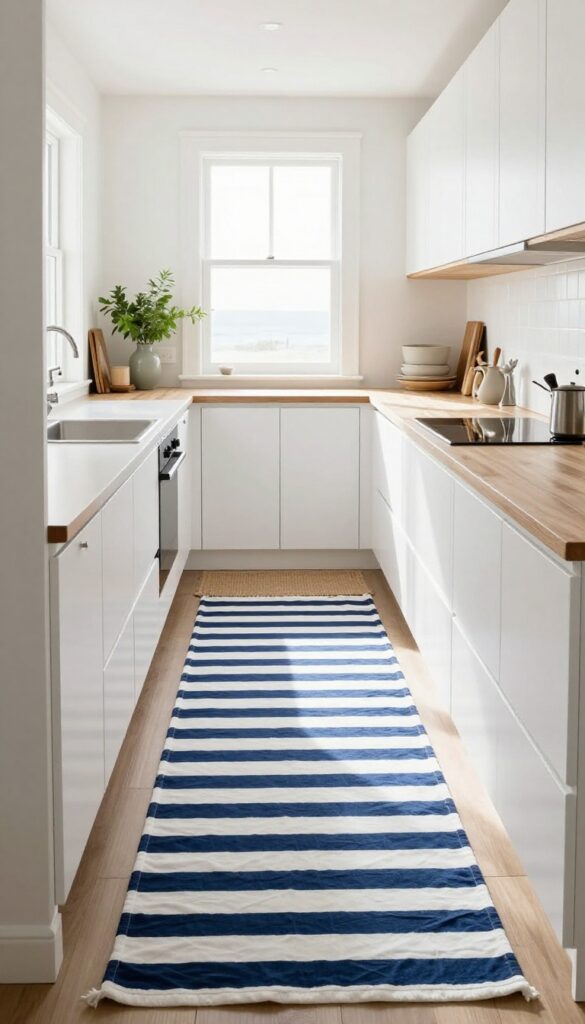
Stripes have a way of making a space feel both crisp and timeless. In a narrow kitchen, a blue-and-white striped runner instantly adds structure and a breezy, coastal vibe. It’s an easy way to inject pattern without overwhelming the room, especially when you keep the rest of the decor clean and neutral.
Why It Works
The linear pattern naturally draws the eye along the length of the kitchen, making the space feel longer and more deliberate. A durable cotton or wool blend handles heavy foot traffic and spills, so it’s as practical as it is pretty.
Best For
Galley kitchens or any narrow layout where you want to emphasize length. Also great for homes with a coastal, modern farmhouse, or Scandinavian aesthetic.
Styling Tip
Anchor the runner with a simple jute or seagrass mat underneath for added texture. Keep countertops clutter-free and let the stripes be the star—pair with white cabinets and warm wood accents for balance.
7. A Round Rug Under a Breakfast Nook Table
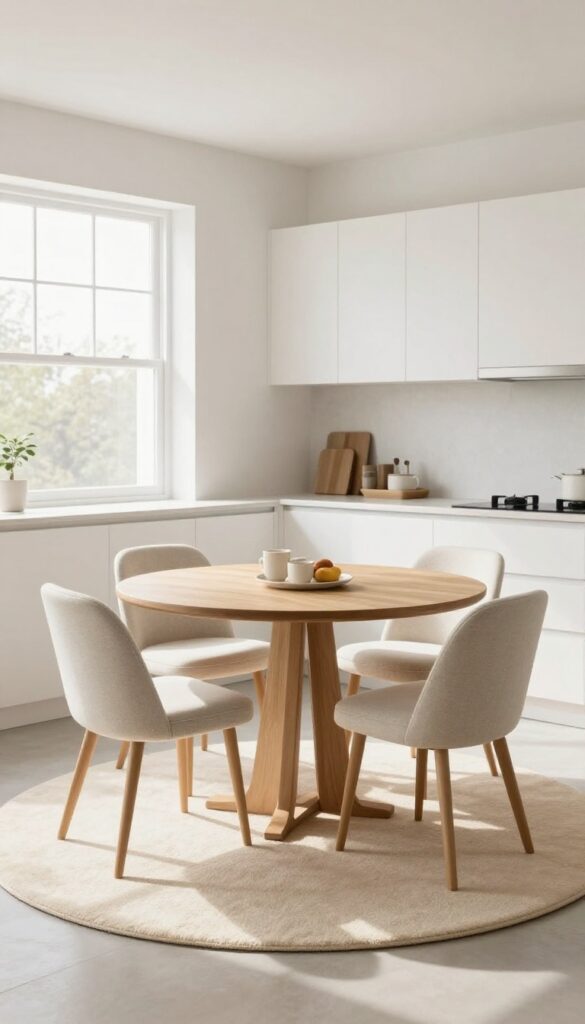
Breakfast nooks can sometimes feel a bit boxy, especially if your table is square or rectangular. A round rug softens those hard edges and makes the whole setup feel more intentional. It creates a natural anchor for the table and chairs, giving the space a defined zone without making it feel crowded.
The curved shape also adds visual flow, which is especially nice in kitchens with lots of straight lines from cabinets and countertops.
Why It Works
A round rug breaks up the angular geometry of a kitchen, drawing the eye gently around the space. It also makes the breakfast nook feel like its own little destination rather than an afterthought. Because there are no corners to trip over, it's easier to slide chairs in and out, and the circular shape naturally mirrors the curve of a round table if you have one.
Best For
This idea works best in small dining areas or kitchen corners where a rectangular rug would look too bulky or cut off awkwardly. It's also great for open-plan kitchens where you want to define the eating area without blocking sightlines.
Styling Tip
Go for a low-pile wool or cotton rug in a solid color or subtle pattern—busy designs can compete with the table. Make sure the rug is large enough that chairs stay on it even when pulled out; measure your table and add at least 24 inches on all sides.
8. A Monochrome Pattern for a Sleek Modern Look
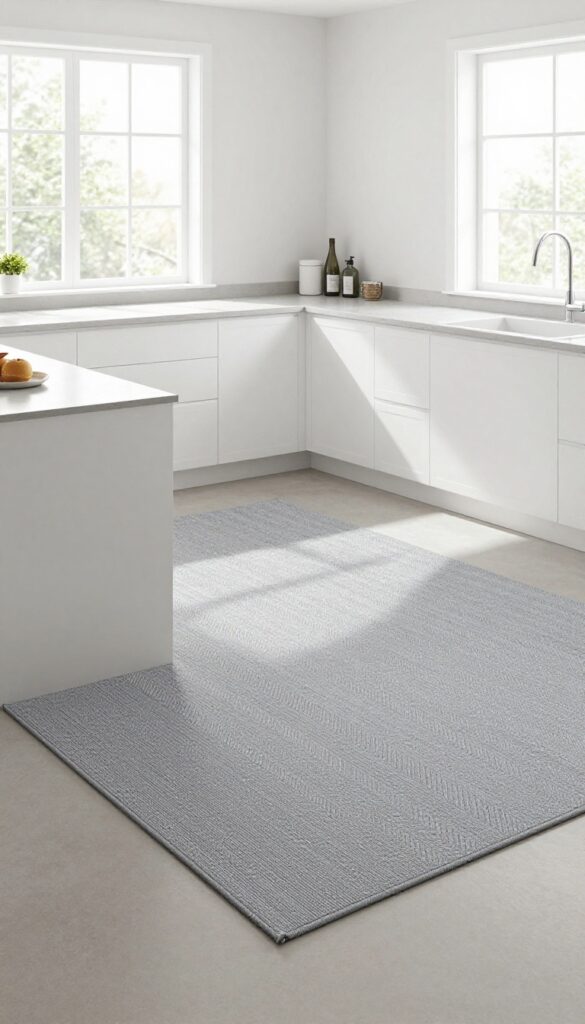
Sticking to one color family might sound boring, but when you add a subtle pattern like herringbone or chevron, it changes everything. A monochrome rug in shades of gray or beige brings texture and movement without screaming for attention. It’s the kind of quiet detail that makes a minimalist kitchen feel polished and intentional—not cold or sterile.
Why It Works
A single-color palette with a pattern keeps the rug visually interesting without clashing with your cabinets or countertops. The pattern adds depth, while the limited color range maintains a clean, cohesive look. It’s an easy way to introduce personality into a space that’s all about simplicity.
Best For
This works beautifully in modern kitchens with neutral cabinetry—think white, light gray, or warm wood. It’s also great for open-concept layouts where the rug needs to blend with adjacent living areas without competing.
Styling Tip
Choose a low-pile wool or flatweave rug for easy cleaning and durability in high-traffic zones. Layer it under a kitchen island or in front of the sink to anchor the space. Keep other accessories—like dish towels or countertop decor—in the same color family to reinforce the monochrome vibe.
9. A Cowhide Rug for Unexpected Edge
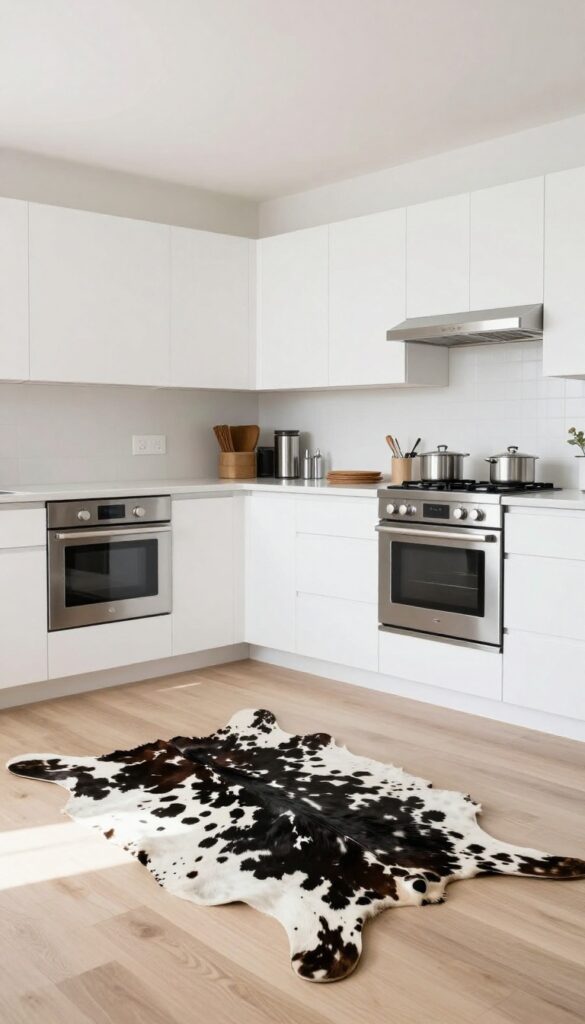
Cowhide rugs bring an unexpected texture into the kitchen that instantly feels both rugged and refined. The natural hide pattern adds organic movement to an otherwise hardworking space, while the neutral tones blend seamlessly with modern finishes like stainless steel and white cabinetry. It's a small swap that makes the kitchen feel intentionally curated rather than just functional.
Why It Works
Cowhide is naturally durable and stain-resistant, making it surprisingly practical for high-traffic kitchen zones. Spills wipe up easily, and the rug lies flat without curling at the edges—no tripping hazards. Plus, its one-of-a-kind pattern means no two kitchens will look exactly alike.
Best For
This idea shines in modern kitchens with clean lines and neutral palettes, where a single textured piece can anchor the space without clutter. It works especially well in front of a farmhouse sink, under a small island, or in a galley kitchen where you want to define the walking path.
Styling Tip
Keep the rest of the floor bare to let the cowhide stand out. If your kitchen has warm wood tones, choose a hide with darker spots; for gray or white floors, go with a lighter hide with high contrast. Avoid synthetic versions—real hide wears better and has that subtle irregular shape that feels more intentional.
10. A Colorful Moroccan Beni Ourain Runner
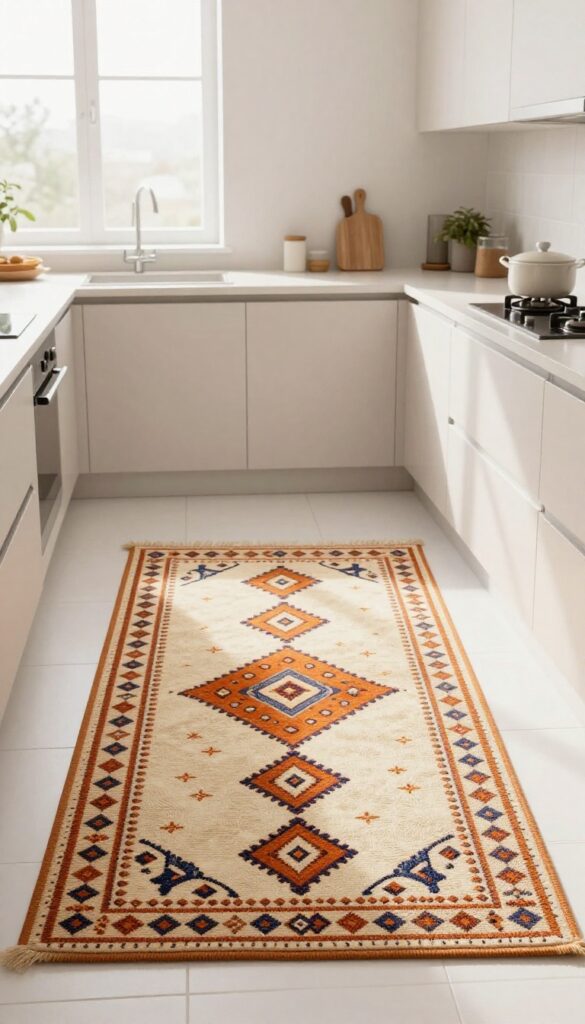
Beni Ourain rugs are known for their plush, high-pile wool and minimalist diamond motifs, but adding a pop of color—like saffron, rust, or indigo—gives them a fresh, modern twist. A runner version keeps the look streamlined and practical, especially in a kitchen where you want softness underfoot without overwhelming the floor. The contrast between the creamy base and vibrant pattern feels intentional and warm, not chaotic.
Why It Works
The high pile adds comfort to hard tile or wood floors, making long cooking sessions easier on your feet. The diamond pattern brings subtle visual texture that breaks up large expanses of flooring without competing with countertops or cabinets. Plus, the natural wool fibers are durable and stain-resistant—a big plus in a busy kitchen.
Best For
Open-plan kitchens where you want to define the cooking zone without closing off the space. Also great for galley kitchens with neutral cabinetry, as the rug adds personality without overwhelming the room.
Styling Tip
Choose a runner that picks up an accent color already present in your kitchen—like the undertone in your backsplash or a shade from your dish towels. Keep the rug clean by placing it away from the sink and stovetop; use a low-profile rug pad to prevent slipping.
11. A Custom-Sized Rug for an Awkward Layout
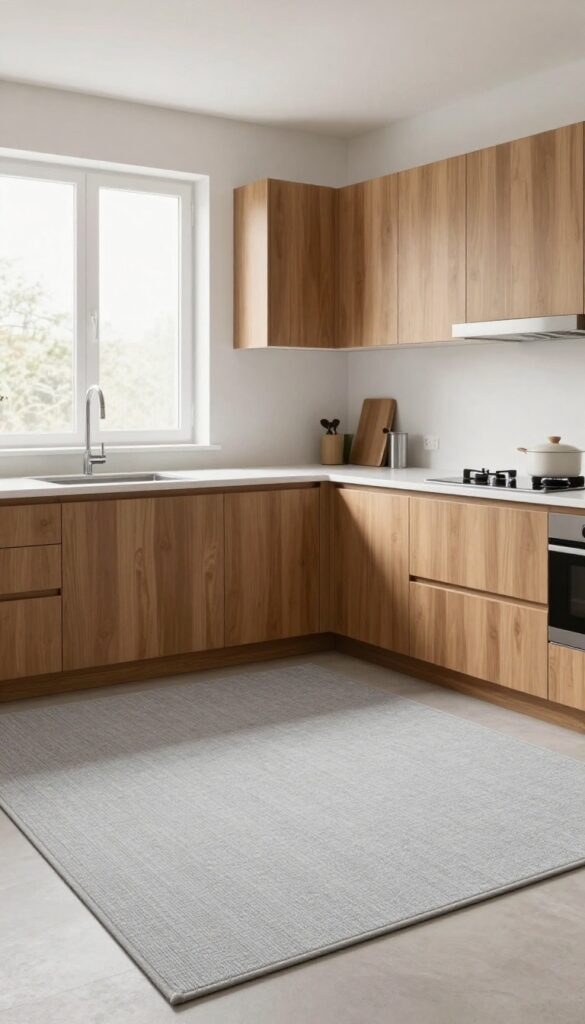
Not every kitchen is a perfect rectangle. If yours has an L-shape, a peninsula, or an odd nook, standard rug sizes can leave you with awkward gaps or weird overlaps. A custom-sized rug solves that problem beautifully.
By ordering a rug cut exactly to your floor plan, you get a piece that feels like it was designed with the room—not just dropped in. The result is a clean, intentional look that makes the whole space feel more pulled together.
Why It Works
When a rug fits the exact dimensions of your kitchen's footprint, it visually anchors the area without fighting the layout. There's no bunching under cabinets or empty strips of floor. The seamless fit creates a sense of flow and purpose, making even an irregular space feel planned and polished.
Best For
This idea is ideal for galley kitchens with a bump-out, L-shaped layouts where one leg is longer than the other, or any kitchen with a peninsula that extends into the main path. It's also great for renters who want to define zones without permanent changes.
Styling Tip
Go for a low-profile flatweave or indoor-outdoor material that won't snag on cabinet doors or chair legs. Choose a neutral tone with subtle texture—like a light gray wool blend or a natural jute—to keep the look modern and calm. If your kitchen has warm wood tones, a cream or beige rug will tie it all together softly.
FAQ
What size rug should I use in a kitchen?
For runners, measure the length of your work zone and add 12-18 inches on each end. For island rugs, choose one that extends at least 24 inches beyond the island on all sides so stools don't catch.
Are kitchen rugs sanitary?
Yes, as long as you choose washable or easy-to-clean materials like cotton, polypropylene, or indoor-outdoor rugs. Vacuum regularly and spot-clean spills immediately to keep them fresh.
What's the best material for a kitchen rug?
Low-pile polypropylene is durable and stain-resistant. Cotton and wool are comfortable but need more care. Jute and sisal are natural but can be rough and absorb spills quickly.
Should I use a rug pad under my kitchen rug?
Absolutely. A rug pad prevents slipping, adds cushioning, and helps the rug lie flat. Look for a non-slip pad that's slightly smaller than the rug so it doesn't show at the edges.
Can I put a rug in front of the stove?
Yes, but choose a heat-resistant material like wool or polypropylene. Avoid synthetic rubber backing near heat sources. Keep the rug at least 6 inches away from the stove to prevent fire hazards.
Conclusion
Choosing a kitchen rug is about more than just covering the floor—it's about making the space feel intentional and complete. Whether you go for a bold pattern or a natural texture, the right rug can transform how your kitchen looks and feels.
Take your time to measure, pick a material that fits your lifestyle, and don't be afraid to experiment with color or layering. A thoughtful rug choice will make your kitchen feel more put-together every time you step inside.