12 Corner Shower Ideas That Make Small Bathrooms Feel Smarter
Corners in small bathrooms either become wasted space or quietly solve half your layout problems. The difference usually comes down to how intentionally you use them and whether the shower design works with the room instead of fighting it. I’ve seen tiny bathrooms feel twice as functional just by rethinking that one awkward corner.
Most people default to standard square showers, even when the room clearly doesn’t support it. A corner setup, when done right, opens up walking space, improves flow, and somehow makes everything feel less cramped without changing the footprint. And honestly, once you notice the difference, it’s hard to go back.
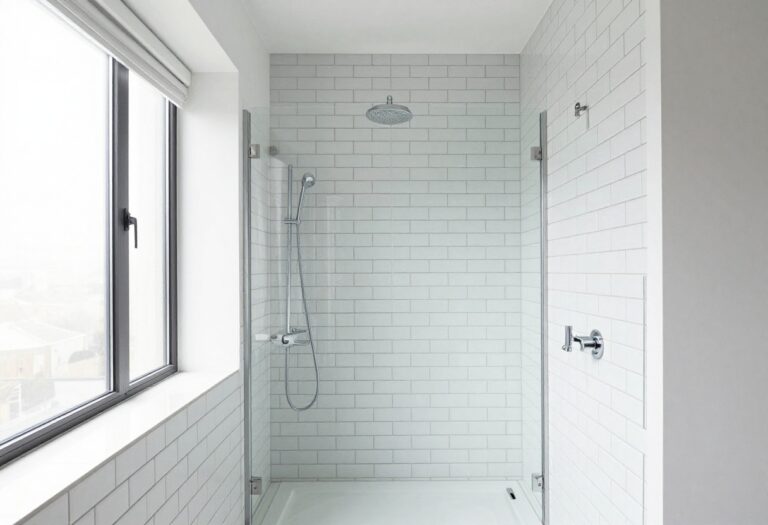
1. Glass Corner Shower with Minimal Frame
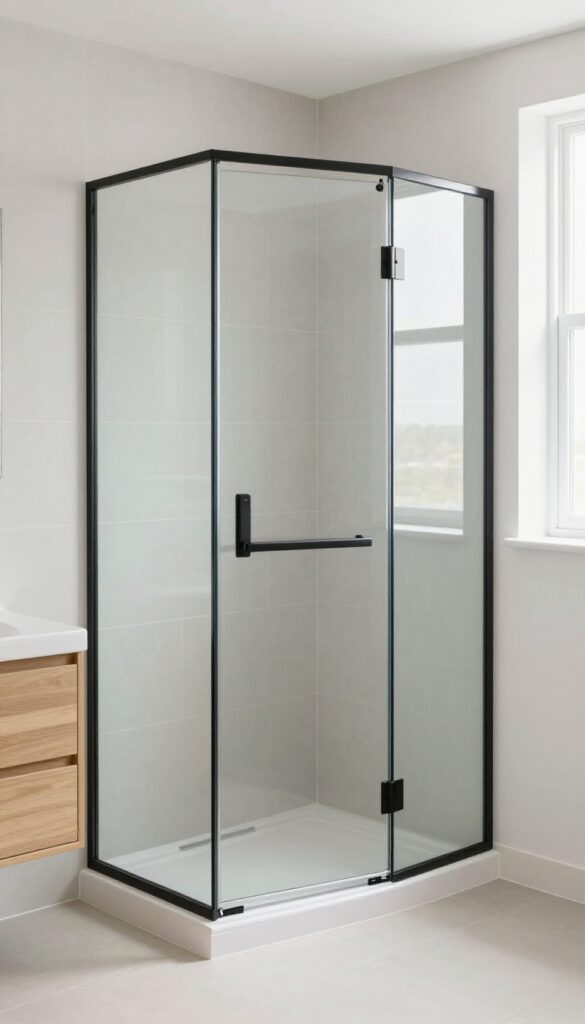
Standard bulky shower enclosures often eat into precious visual space, making small bathrooms feel tighter than they actually are. Switching to a glass corner shower with a minimal or frameless design removes that heaviness instantly. I tried this in a compact guest bathroom, and it made the entire space feel lighter without changing anything else.
The idea is simple: let the eye travel freely across the room without interruption. Clear glass keeps the layout open while still defining the shower area in a clean, modern way.
Why This Works
Glass reduces visual barriers, which tricks your brain into seeing more space than what’s physically there. A minimal frame avoids visual clutter and keeps everything looking sleek and intentional.
How to Do It
- Measure your corner precisely before choosing panels
- Go for frameless or thin black/metal trims
- Use clear glass instead of frosted for openness
- Install a simple hinged or sliding door depending on space
Style & Design Tips
Stick with neutral tiles inside the shower so the glass remains the focal point. Avoid heavy hardware because even small details can make the enclosure feel bulky.
Pro Tip or Budget Hack
If full frameless feels expensive, go semi-frameless and just keep the framing thin. It gives a similar look without the premium price tag.
2. Curved Corner Shower for Softer Flow
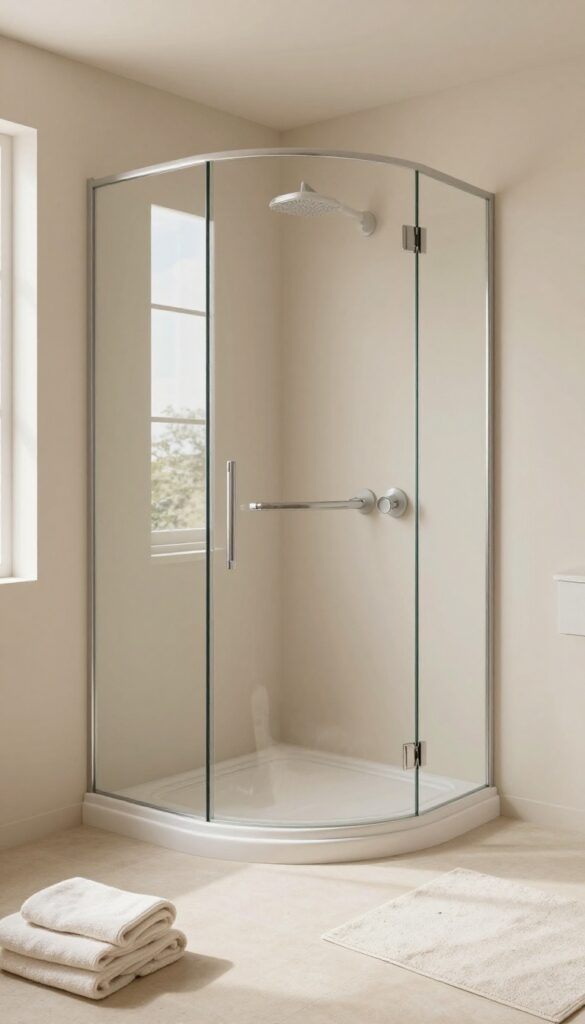
Sharp angles can make a small bathroom feel boxed in, especially when everything already feels tight. A curved corner shower softens those lines and improves movement around the space. I’ve noticed it especially helps in bathrooms where the door swings nearby.
Instead of bumping into corners, the rounded shape guides your movement naturally. It feels smoother, both visually and physically.
Why This Works
Curves break up rigid layouts and create a more fluid flow. They also reduce awkward edges that can interrupt movement in tight areas.
How to Do It
- Choose a curved shower base that fits your corner
- Pair it with matching curved glass panels
- Keep surrounding fixtures aligned with the curve
- Leave enough clearance for easy access
Style & Design Tips
Use soft tones and rounded fixtures to complement the shape. Avoid mixing too many sharp-edged elements nearby, or the curve loses its effect.
Pro Tip or Budget Hack
Pre-fabricated curved shower kits are usually cheaper than custom builds and still look polished if installed properly.
3. Tiled Corner Shower with Built-In Niche
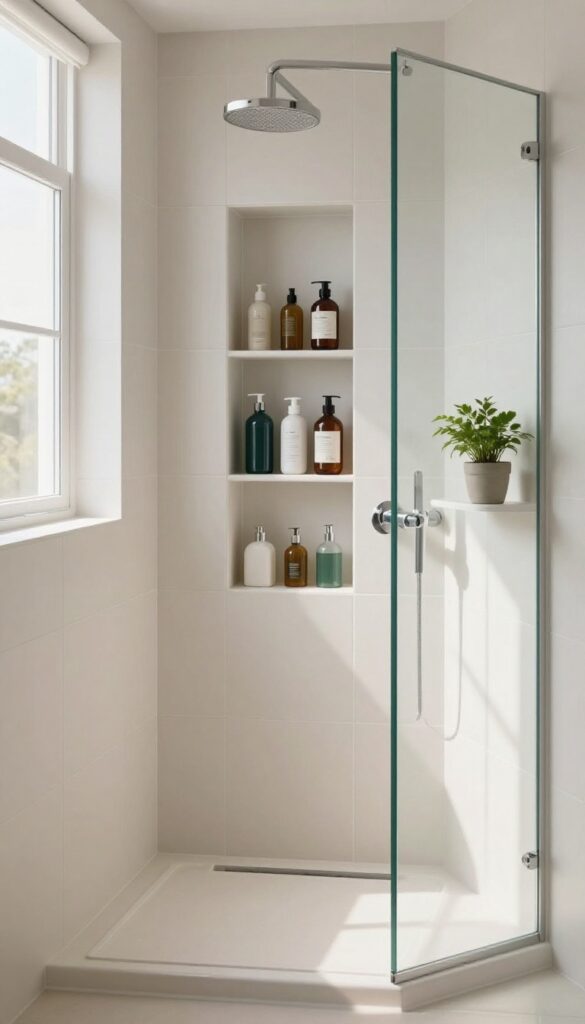
Shower bottles scattered on the floor or hanging racks quickly make a small space feel messy. A tiled corner shower with a built-in niche keeps everything organized without adding extra bulk. This is one of those upgrades that feels small but changes daily use a lot.
The niche blends into the wall, so you don’t sacrifice space for storage. It keeps essentials accessible while maintaining a clean look.
Why This Works
Built-in storage eliminates the need for external organizers, which often create clutter. It also keeps the shower visually streamlined.
How to Do It
- Plan niche placement during wall construction
- Position it at chest or eye level for easy access
- Waterproof properly before tiling
- Use contrasting tiles inside the niche for depth
Style & Design Tips
Highlight the niche with accent tiles or subtle patterns. Avoid making it too large, or it starts to look like a gap instead of a feature.
Pro Tip or Budget Hack
One well-placed niche works better than multiple small ones, which can feel busy and harder to maintain.
4. Corner Shower with Sliding Doors
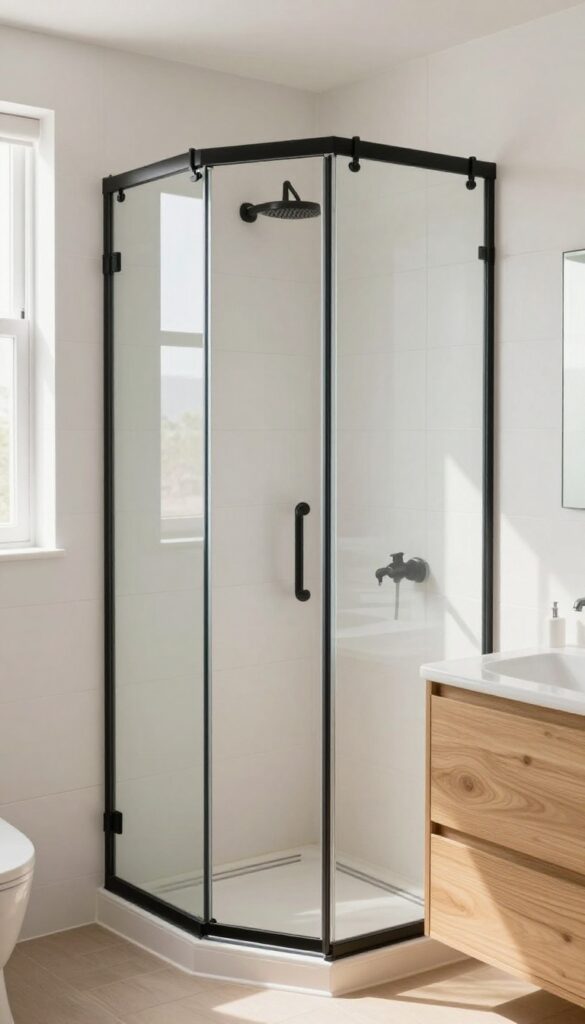
Swing doors in tight bathrooms can be surprisingly annoying. A corner shower with sliding doors eliminates that issue and keeps everything contained within the footprint. I’ve had to fix layouts where the door kept hitting the vanity, and sliding doors solved it instantly.
It’s a practical solution that doesn’t compromise style if done right.
Why This Works
Sliding doors save clearance space and prevent awkward door collisions. They also keep the layout efficient and predictable.
How to Do It
- Choose high-quality sliding tracks for smooth movement
- Install doors that glide quietly and securely
- Ensure proper sealing to avoid leaks
- Keep tracks clean for longevity
Style & Design Tips
Go for matte black or brushed metal rails for a modern touch. Avoid bulky frames that can make the shower look dated.
Pro Tip or Budget Hack
Top-mounted sliding systems tend to feel smoother and require less maintenance than bottom-heavy tracks.
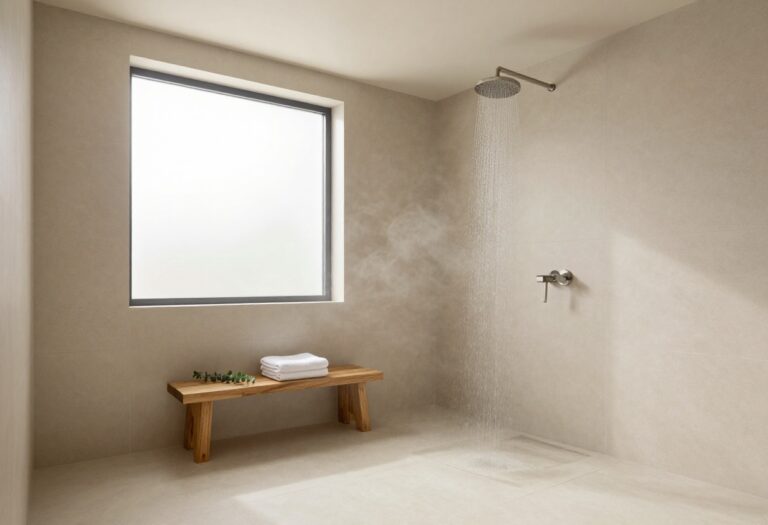
5. Open Walk-In Corner Shower
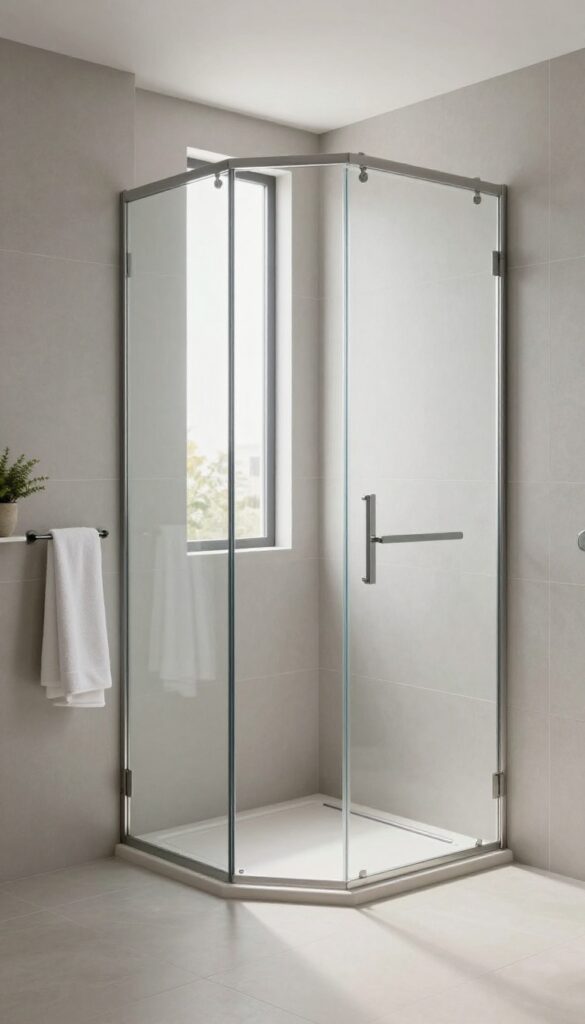
Small bathrooms sometimes benefit more from removing barriers than adding them. An open walk-in corner shower skips doors entirely and creates a seamless look. I was skeptical at first, but when done correctly, it feels surprisingly luxurious.
The key is proper layout and drainage so water stays where it should.
Why This Works
Open designs eliminate visual interruptions and make the bathroom feel continuous. They also simplify access, which is great for daily use.
How to Do It
- Slightly slope the floor toward the drain
- Install a linear drain for better water control
- Use a partial glass panel to block splashes
- Keep enough distance from other fixtures
Style & Design Tips
Stick with large-format tiles to enhance the seamless effect. Avoid busy patterns that break the clean flow.
Pro Tip or Budget Hack
A single fixed glass panel is cheaper than full enclosures and still provides enough splash protection.
6. Corner Shower with Floor-to-Ceiling Tiles
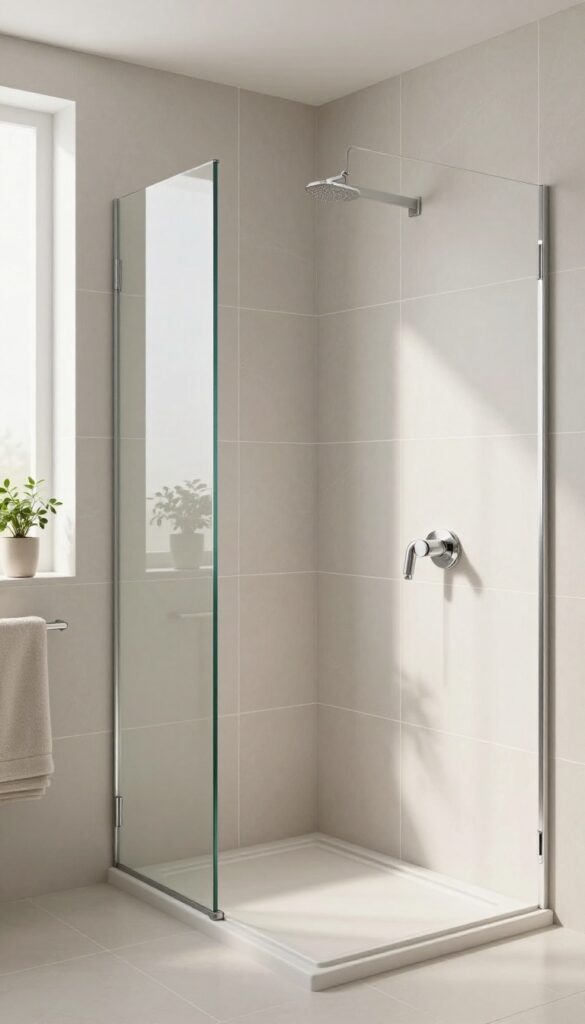
Short tile sections can make a shower feel incomplete. Extending tiles from floor to ceiling creates a cohesive and taller look. I’ve used this trick in narrow bathrooms, and it instantly adds visual height.
It feels more intentional and less like an afterthought.
Why This Works
Continuous vertical lines draw the eye upward, making ceilings appear higher. It also protects walls better from moisture.
How to Do It
- Choose tiles that complement the rest of the bathroom
- Align grout lines for a clean finish
- Extend tiles fully without breaks
- Seal everything properly
Style & Design Tips
Use vertical tile layouts to emphasize height. Avoid mixing too many tile types, which can disrupt the clean look.
Pro Tip or Budget Hack
Use more affordable tiles on higher sections where they’re less noticeable to save money.
7. Black Frame Corner Shower for Contrast
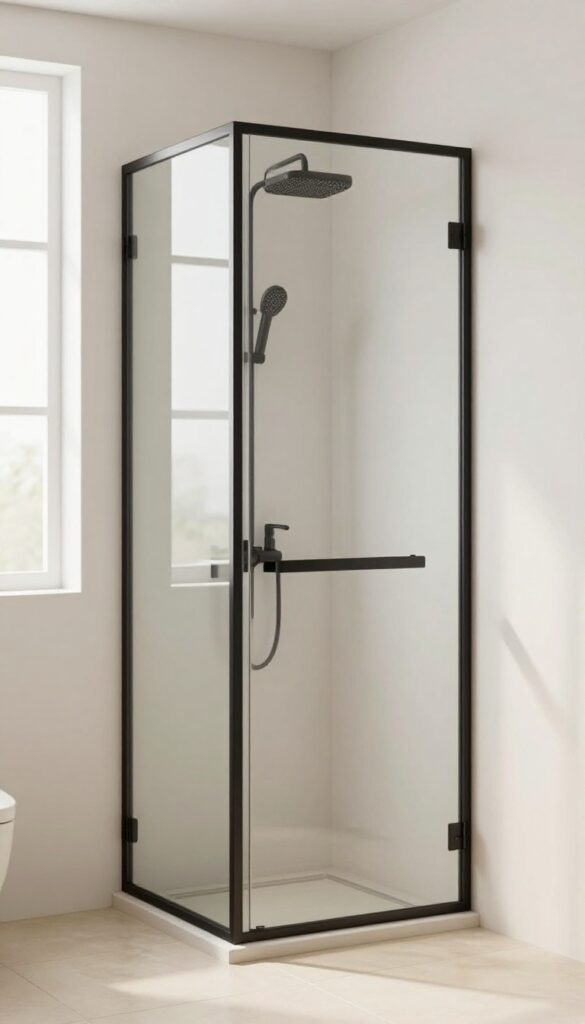
Sometimes a small bathroom needs a bit of definition instead of blending everything together. A black frame corner shower adds contrast and gives the space a structured look. I’ve seen this work especially well in neutral bathrooms that feel a bit flat.
It adds personality without overwhelming the room.
Why This Works
Dark frames create clear boundaries and visual interest. They also anchor the space, making it feel more designed.
How to Do It
- Choose thin black metal frames
- Pair with clear glass panels
- Match other fixtures like faucets or handles
- Keep the rest of the palette simple
Style & Design Tips
Balance the look with light-colored tiles and walls. Too many dark elements can make the space feel smaller.
Pro Tip or Budget Hack
Use black hardware elsewhere to tie the look together without adding extra cost.
8. Corner Shower with Bench Seating
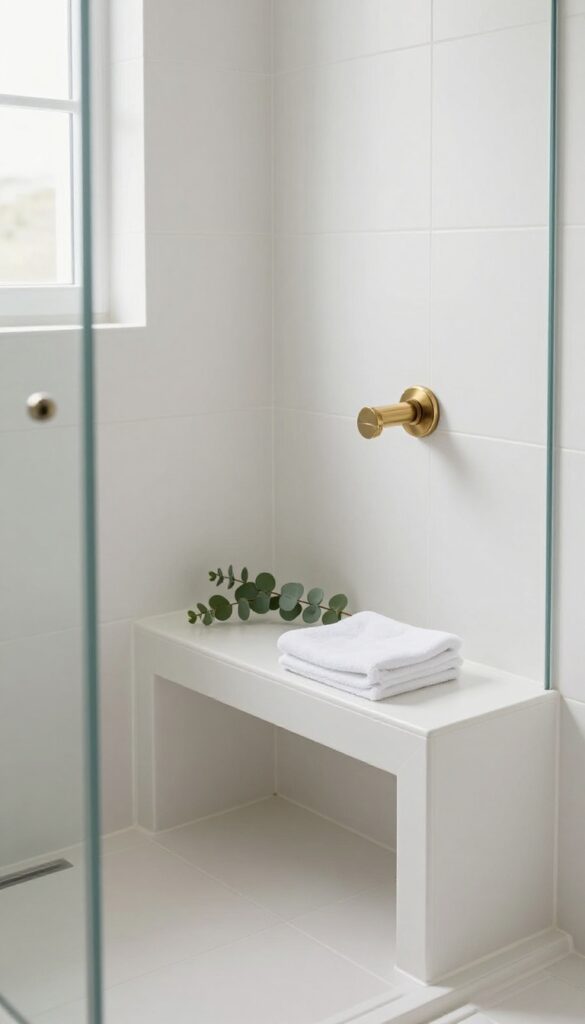
Standing showers aren’t always the most comfortable, especially during longer routines. Adding a small corner bench brings comfort without taking up too much space. I didn’t think I’d use it much, but it ended up being one of those features you appreciate daily.
It’s practical and adds a subtle spa-like touch.
Why This Works
A bench adds functionality while using an otherwise unused corner section. It also enhances comfort and accessibility.
How to Do It
- Build a compact triangular or rectangular bench
- Waterproof thoroughly before tiling
- Position it away from direct water flow
- Ensure it’s sturdy and properly supported
Style & Design Tips
Match the bench tiles with the shower walls for a seamless look. Avoid oversized benches that reduce standing space.
Pro Tip or Budget Hack
A floating bench uses less material and looks lighter compared to a full built-in block.
9. Frosted Glass Corner Shower for Privacy
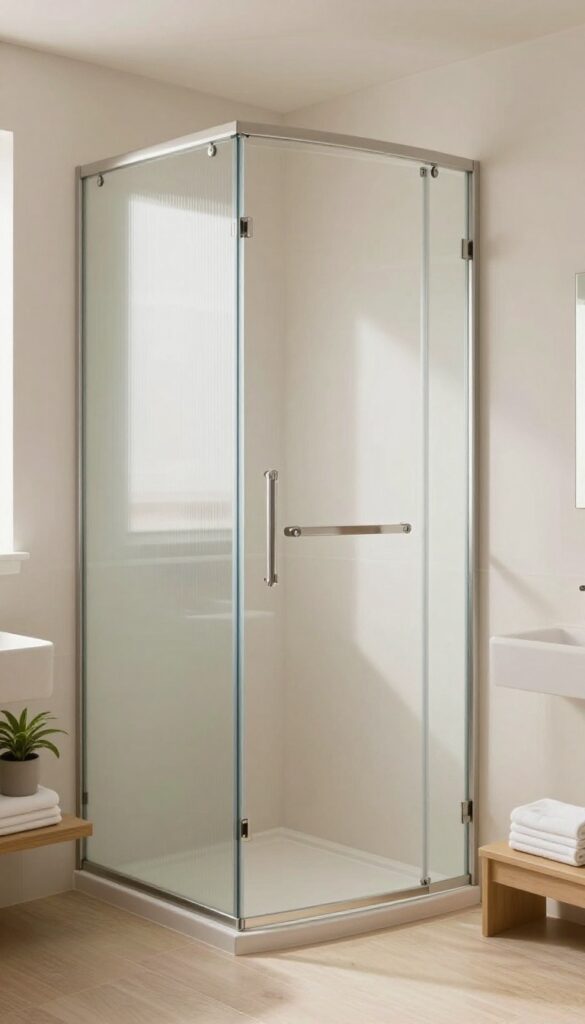
Not every bathroom allows for full openness, especially shared ones. Frosted glass gives privacy while still letting light pass through. I’ve used this in family bathrooms where transparency wasn’t ideal.
It strikes a balance between openness and comfort.
Why This Works
Frosted glass diffuses light without exposing the interior. It keeps the space bright while maintaining privacy.
How to Do It
- Choose high-quality frosted or textured glass
- Combine with minimal framing
- Install proper seals to prevent leaks
- Keep the rest of the design simple
Style & Design Tips
Pair with soft neutral tones to maintain a calm feel. Avoid overly decorative glass patterns that can look dated.
Pro Tip or Budget Hack
You can apply frosted film to clear glass as a cheaper alternative, though it won’t look as refined.
10. Corner Shower with Accent Tile Wall
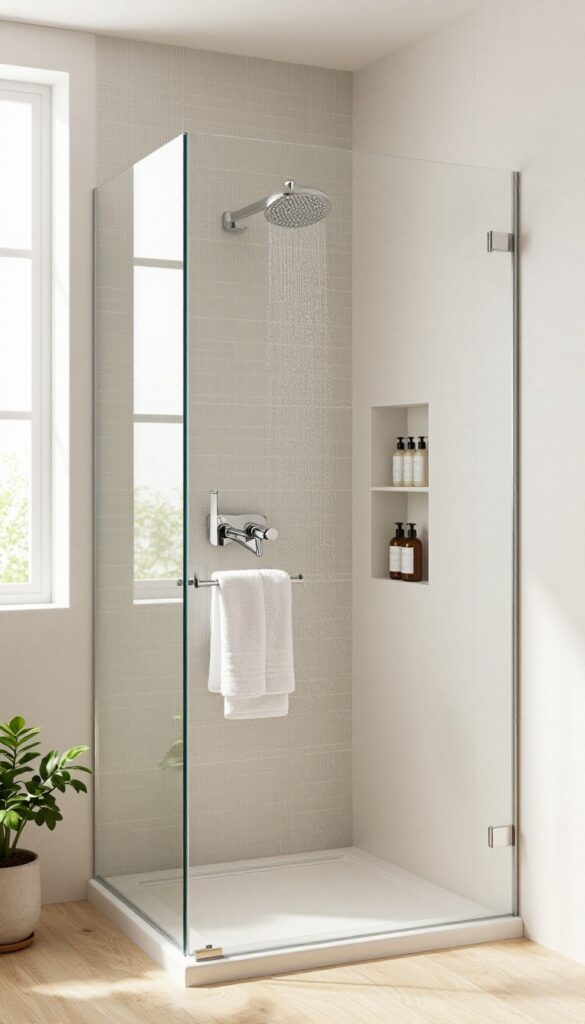
A fully neutral bathroom can sometimes feel a bit lifeless. Adding an accent tile wall inside the corner shower introduces character without overwhelming the space. I like using this as a focal point that doesn’t spill into the rest of the bathroom.
It’s a controlled way to add personality.
Why This Works
Accent walls draw attention and create depth. They also break monotony without cluttering the design.
How to Do It
- Choose one wall for the accent
- Use patterned or textured tiles
- Keep other walls simple
- Align patterns carefully
Style & Design Tips
Limit bold patterns to one area to avoid visual overload. Stick with coordinated color palettes for a balanced look.
Pro Tip or Budget Hack
Use leftover or discounted tiles for the accent wall to reduce costs without compromising style.
11. Compact Corner Shower with Smart Storage
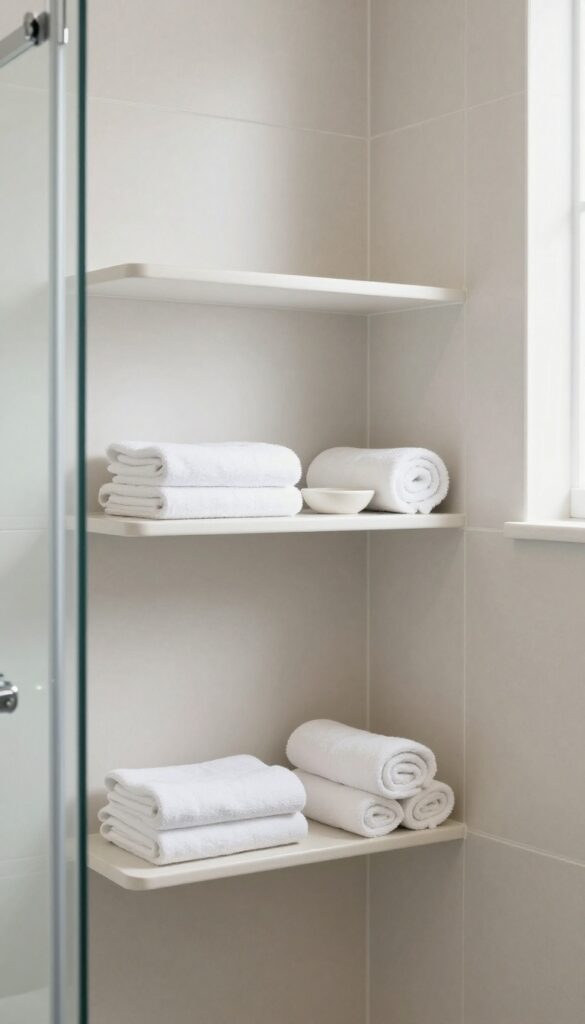
Storage is usually the first thing to suffer in small bathrooms. A compact corner shower with integrated shelves solves that without adding extra fixtures. I’ve seen this work best in ultra-small layouts where every inch counts.
It keeps everything within reach and organized.
Why This Works
Integrated storage uses vertical space efficiently. It reduces clutter and improves usability.
How to Do It
- Add corner shelves or recessed storage
- Keep shelves at different heights
- Use durable, waterproof materials
- Avoid overcrowding
Style & Design Tips
Keep shelves subtle and aligned with tile lines. Avoid bulky add-ons that disrupt the clean design.
Pro Tip or Budget Hack
Simple corner shelves are cheaper and easier to install than full niches while still offering good storage.
12. Dual-Tone Corner Shower Design
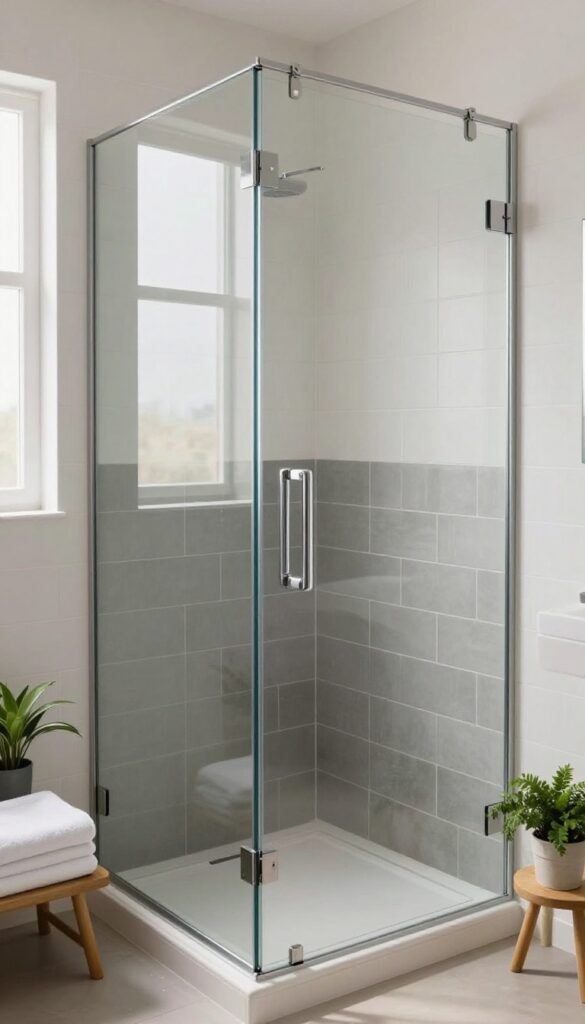
Using a single color throughout can sometimes feel flat. A dual-tone corner shower introduces contrast while keeping things cohesive. I’ve experimented with this using darker lower tiles and lighter upper sections, and it works surprisingly well.
It adds dimension without making the space busy.
Why This Works
Color contrast creates visual separation and depth. It also helps define zones within the shower.
How to Do It
- Choose two complementary tile colors
- Use darker tones on the lower half
- Keep transitions clean and straight
- Match grout colors carefully
Style & Design Tips
Stick with two tones only to avoid confusion. Too many colors can make the space feel chaotic.
Pro Tip or Budget Hack
Use premium tiles only on visible sections and budget-friendly ones in less noticeable areas.
Final Thoughts
Corners don’t need to stay awkward or wasted when they can carry the entire layout of a small bathroom. A smart shower setup changes how the space feels and functions without needing a full renovation.
Pick one idea that fits your layout and commit to it fully instead of mixing too many styles. I’ve learned that simple, intentional choices always end up looking better than trying to do everything at once.