10 DIY Range Hood Cover Ideas for a Custom Look
Good kitchens rarely happen by accident; they usually come from fixing the awkward details most people ignore. Range hoods fall into that category more often than anyone admits. They work fine, but visually they tend to look like an afterthought.
A simple DIY cover changes that balance instantly. Instead of staring at a metal box, the hood suddenly feels like a built-in architectural piece. That small shift often makes the entire kitchen look more expensive than it actually is.
The fun part is that most of these projects are surprisingly approachable. With some wood, basic tools, and a little patience, you can turn a bland vent into something that actually feels intentional.
1. Classic Wood Box Range Hood Cover
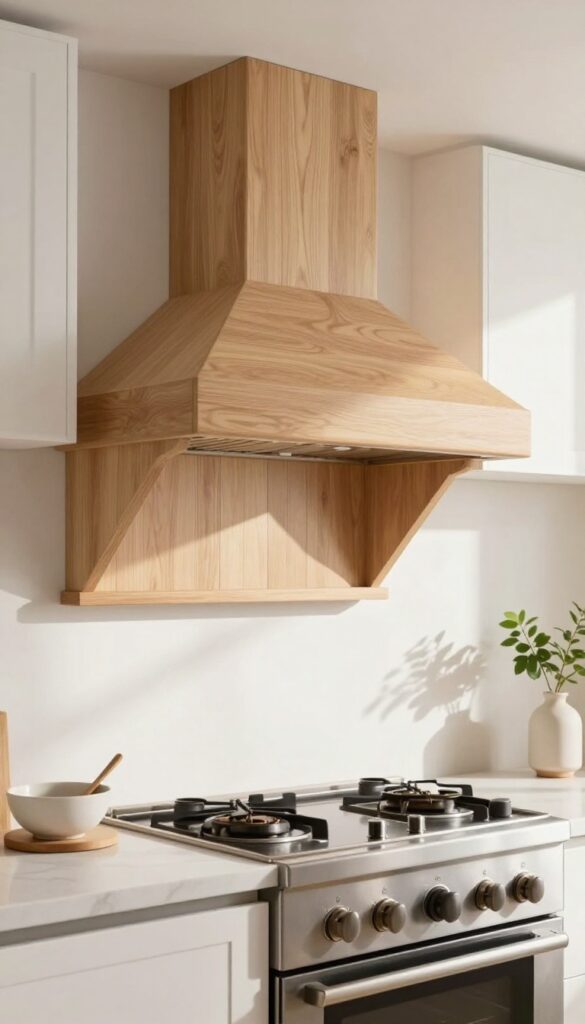
Most kitchens already have a simple metal vent hood hiding under a cabinet, and visually it does nothing for the space. A classic wood box cover solves that problem by wrapping the hood in a clean rectangular frame. It instantly turns a basic appliance into a built-in feature.
I tried this approach in a small rental kitchen years ago, and the difference was ridiculous. Suddenly the stove wall looked structured and balanced instead of random and unfinished.
Why This Works
A wood box hood creates strong vertical lines that anchor the stove area. Kitchens often lack architectural depth, and this type of cover introduces just enough structure without overwhelming the room.
It also blends easily with cabinets because the shape feels familiar. Instead of standing out, the hood starts acting like another piece of cabinetry.
How to Do It
• Measure the hood carefully and leave at least 1–2 inches of clearance on each side
• Build a lightweight wooden frame using 1×2 boards
• Attach plywood or MDF panels to the frame to create the outer box
• Mount the cover to the cabinet above using screws or brackets
• Finish with paint or stain that matches the cabinets
Each step matters because tight measurements prevent awkward gaps. A slightly oversized cover also keeps airflow unobstructed.
Style & Design Tips
Use cabinet-matching paint if you want the hood to blend seamlessly with the kitchen. If contrast appeals to you, choose a slightly darker stain to make the hood feel like a focal feature.
Avoid oversized boxes that feel bulky. The goal is balance, not a giant wooden helmet over your stove.
Pro Tip or Budget Hack
Check lumber clearance racks before buying full boards. Short offcuts often cost half the price and work perfectly for small hood frames.
2. Farmhouse Shiplap Range Hood Cover
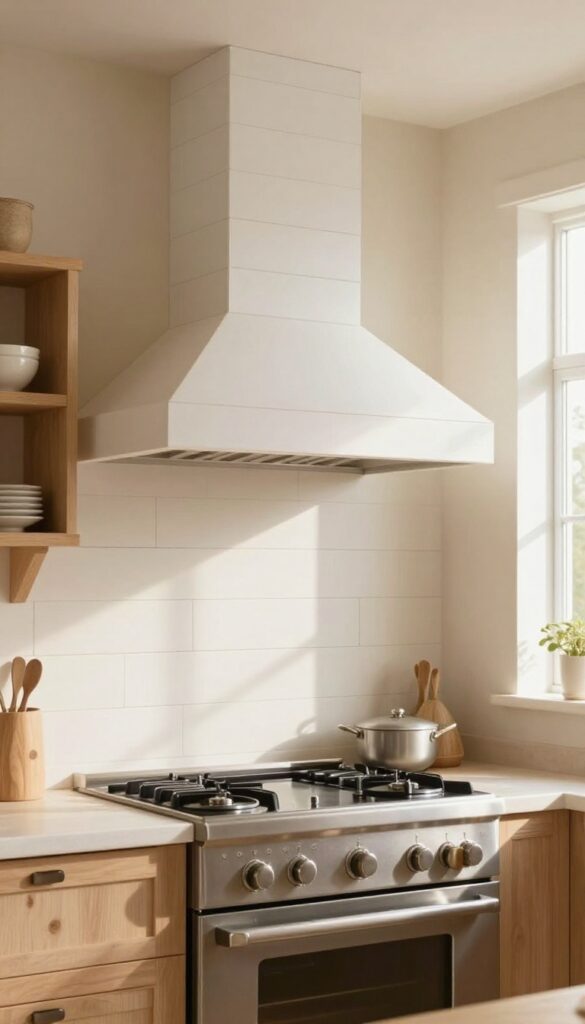
Flat surfaces sometimes feel boring, especially in farmhouse kitchens where texture plays a big role. Shiplap panels instantly solve that by adding subtle horizontal lines. When wrapped around a range hood cover, the result feels warm and intentional.
I’ve always liked this style because it hides small construction flaws. Those grooves between boards disguise uneven seams surprisingly well.
Why This Works
Shiplap introduces depth without heavy decoration. The layered boards add character while still keeping the overall shape simple.
It also connects the hood visually with farmhouse walls or backsplashes. Instead of floating awkwardly above the stove, the hood becomes part of the kitchen’s texture story.
How to Do It
• Build a simple plywood hood box frame
• Cut shiplap boards to fit the sides and front
• Nail boards horizontally starting from the bottom
• Fill nail holes with wood filler
• Paint the finished hood with semi-gloss paint
Starting from the bottom keeps board spacing consistent. It also prevents uneven overlaps at the top.
Style & Design Tips
White shiplap works best if your kitchen already leans farmhouse. If the space feels too bright, try soft beige or warm gray paint to keep things cozy.
Avoid thick board spacing because it makes the hood look chunky. Subtle grooves always look more polished.
Pro Tip or Budget Hack
You don’t need real shiplap boards. Cut shallow grooves into plywood using a router to create a convincing faux version.
3. Curved Plaster-Style Range Hood Cover
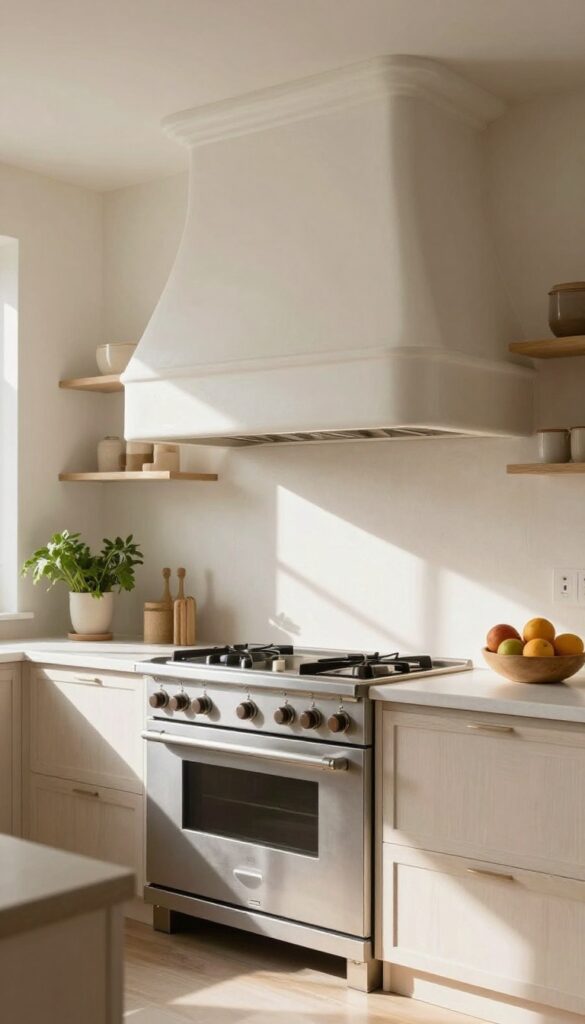
Sharp corners dominate most kitchens, which sometimes makes the room feel rigid. A curved plaster hood introduces soft lines that break that pattern. The result feels elegant and slightly Mediterranean.
I first noticed this style in older European kitchens, and the softness immediately stood out. It feels handcrafted instead of factory-built.
Why This Works
Curved shapes soften visual tension in a kitchen filled with cabinets and appliances. The plaster finish also reflects light gently, which adds subtle texture.
That combination makes the hood look like a custom architectural element rather than a removable appliance cover.
How to Do It
• Build a lightweight wooden hood frame
• Cut curved side panels from flexible plywood
• Attach panels to the frame using screws
• Cover the structure with drywall or cement board
• Apply plaster or joint compound and sand smooth
Thin plywood bends easily, which allows you to shape the curve without complicated tools.
Style & Design Tips
Neutral plaster colors like warm white or soft cream keep the hood timeless. Dark colors tend to emphasize imperfections in curved surfaces.
Avoid overly dramatic curves unless the kitchen is large. Gentle curves usually look more sophisticated.
Pro Tip or Budget Hack
Joint compound works surprisingly well as a faux plaster finish. Apply two thin coats and sand lightly for a smooth look.
4. Rustic Beam Range Hood Cover
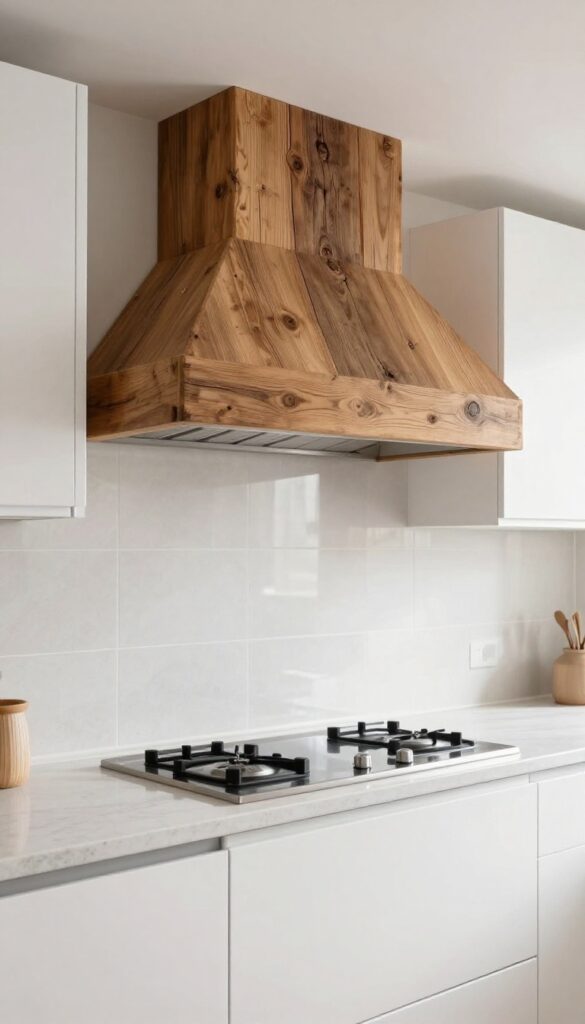
Some kitchens feel slightly flat because everything looks too polished. Adding rustic wood beams around a hood cover changes that instantly. The contrast between rough wood and modern cabinets creates depth.
I once helped a friend install reclaimed beam trim around a hood, and it transformed the entire kitchen wall.
Why This Works
Natural wood grain adds warmth that painted cabinets often lack. Beams also frame the stove area visually, making it feel like a focal point.
The rustic texture balances sleek surfaces like quartz counters or tile backsplashes.
How to Do It
• Build a simple rectangular hood box
• Cut reclaimed wood beams to size
• Attach beams to the front edges of the box
• Secure beams with wood screws from inside the frame
• Seal the wood with clear polyurethane
Mounting screws from inside keeps hardware hidden.
Style & Design Tips
Choose medium-tone wood stains for the most versatile look. Extremely dark beams can feel heavy in smaller kitchens.
Avoid overly distressed wood unless the rest of the kitchen matches that style.
Pro Tip or Budget Hack
Old fence posts often contain beautiful weathered wood. A quick sanding session turns them into surprisingly nice trim pieces.
5. Minimalist Floating Range Hood Cover
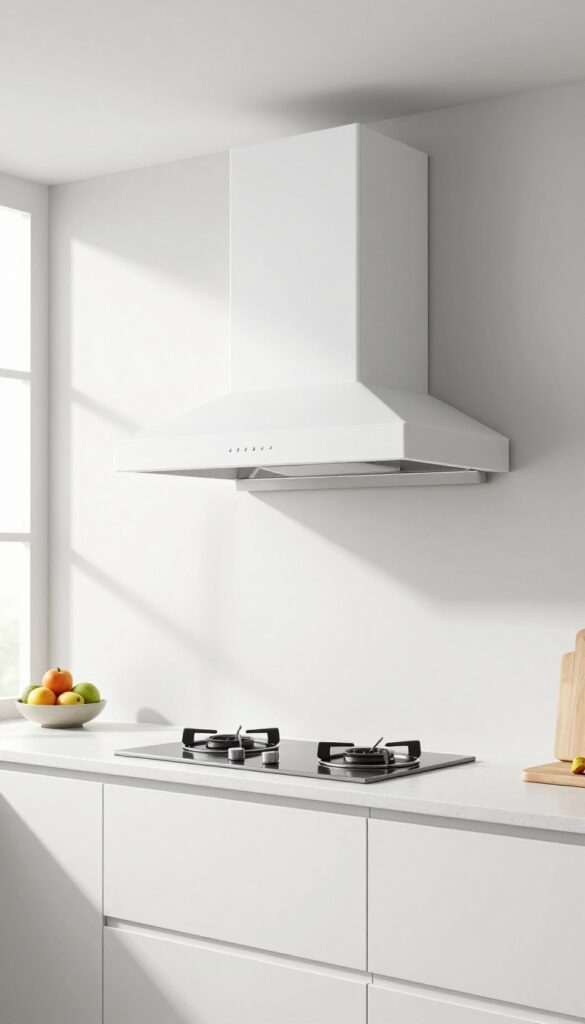
Heavy designs sometimes overwhelm modern kitchens. A floating hood cover keeps the design clean and minimal.
This style focuses on straight lines and smooth surfaces. It looks simple, but that simplicity requires careful execution.
Why This Works
Floating hoods leave space between cabinets and the hood edges. That negative space helps the kitchen feel open.
Minimal shapes also age well because they avoid trendy decorative details.
How to Do It
• Build a slim rectangular hood frame
• Use smooth plywood or MDF panels
• Mount the hood slightly away from side cabinets
• Fill seams and sand perfectly smooth
• Paint with satin cabinet paint
Smooth sanding is essential because minimalist designs highlight imperfections.
Style & Design Tips
Stick with matte white or soft gray paint for a modern look. High-gloss finishes tend to emphasize tiny flaws.
Avoid decorative trim because it breaks the minimalist effect.
Pro Tip or Budget Hack
Pre-primed MDF saves hours of sanding and priming work.
6. Tile-Covered Range Hood Cover
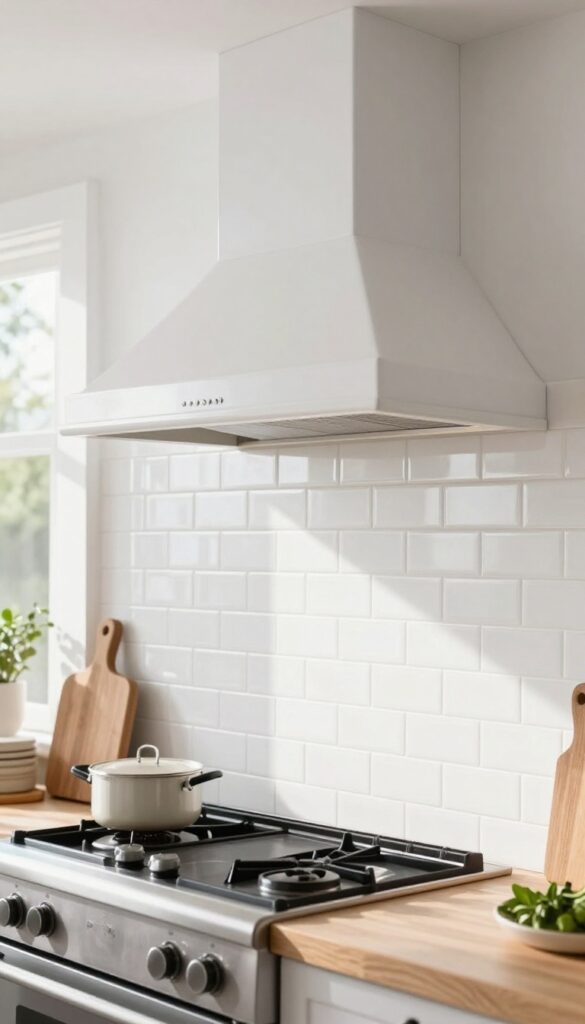
Tile isn’t just for backsplashes. Wrapping a hood cover with tile creates a seamless visual flow across the cooking wall.
This style works especially well in kitchens where the backsplash already features interesting tile patterns.
Why This Works
Repeating materials creates visual continuity. When the hood matches the backsplash, the kitchen feels more cohesive.
Tile also handles heat and grease better than many painted surfaces.
How to Do It
• Build a sturdy plywood hood box
• Attach cement backer board
• Apply tile adhesive with a notched trowel
• Install tiles starting from the bottom
• Finish with grout and sealant
Starting from the bottom keeps tile rows straight.
Style & Design Tips
Choose simple subway tiles if the kitchen already has strong patterns elsewhere. If everything feels plain, patterned tile adds personality.
Avoid large grout gaps because they attract grease.
Pro Tip or Budget Hack
Leftover tile from a backsplash project often covers a hood easily.
7. Industrial Metal Frame Hood Cover
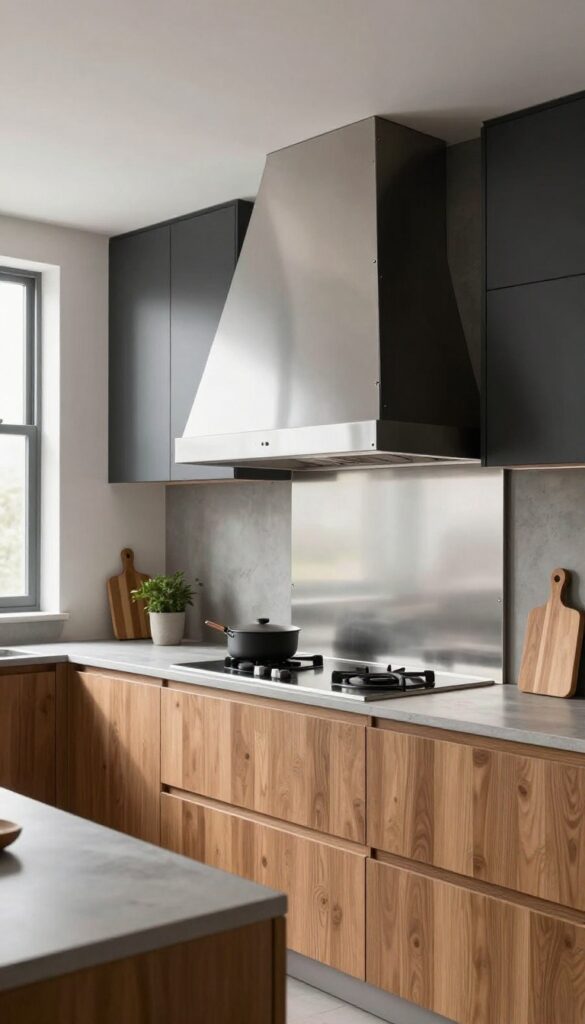
Modern kitchens sometimes need a little edge. A metal-framed hood cover adds industrial character without feeling overly harsh.
This design works particularly well with dark cabinets or concrete counters.
Why This Works
Metal frames introduce contrast against wood cabinetry. That contrast adds visual interest without extra decoration.
The thin frame also keeps the hood feeling lightweight.
How to Do It
• Build a simple wood hood structure
• Attach thin steel angle bars to edges
• Secure metal using small screws
• Paint the frame matte black
• Seal the wooden panels
Metal edges protect corners from damage as well.
Style & Design Tips
Matte finishes work best because shiny metal feels overly commercial.
Avoid thick metal bars that dominate the design.
Pro Tip or Budget Hack
Aluminum strips from hardware stores cost far less than custom steel.
8. Cabinet-Integrated Range Hood Cover
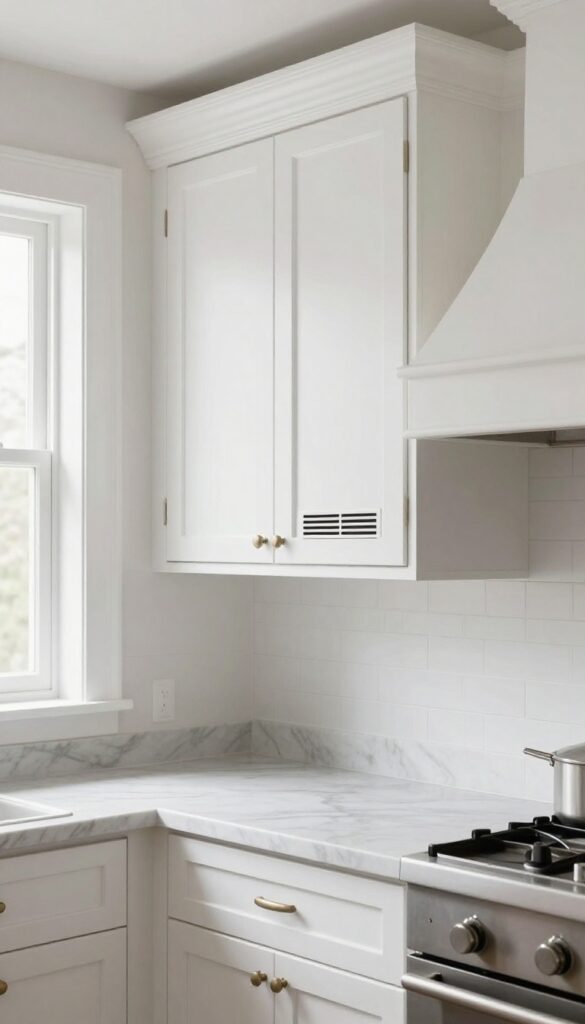
Some kitchens look best when appliances disappear entirely. A cabinet-integrated hood cover hides the vent inside matching cabinetry.
This style works especially well in traditional kitchens.
Why This Works
Matching cabinetry creates visual continuity. When the hood blends with cabinets, the kitchen feels larger and more organized.
It also reduces visual clutter around the cooking area.
How to Do It
• Build a hood frame matching cabinet depth
• Attach cabinet panels to the front
• Add decorative trim to match surrounding cabinets
• Paint or stain the hood exactly like cabinets
• Install under the cabinet row
Consistency matters because mismatched finishes ruin the illusion.
Style & Design Tips
Use matching cabinet hardware or trim for a cohesive appearance.
Avoid dramatic shape changes that break cabinet alignment.
Pro Tip or Budget Hack
Cabinet door panels from salvage stores often match surprisingly well.
9. Decorative Trim Range Hood Cover
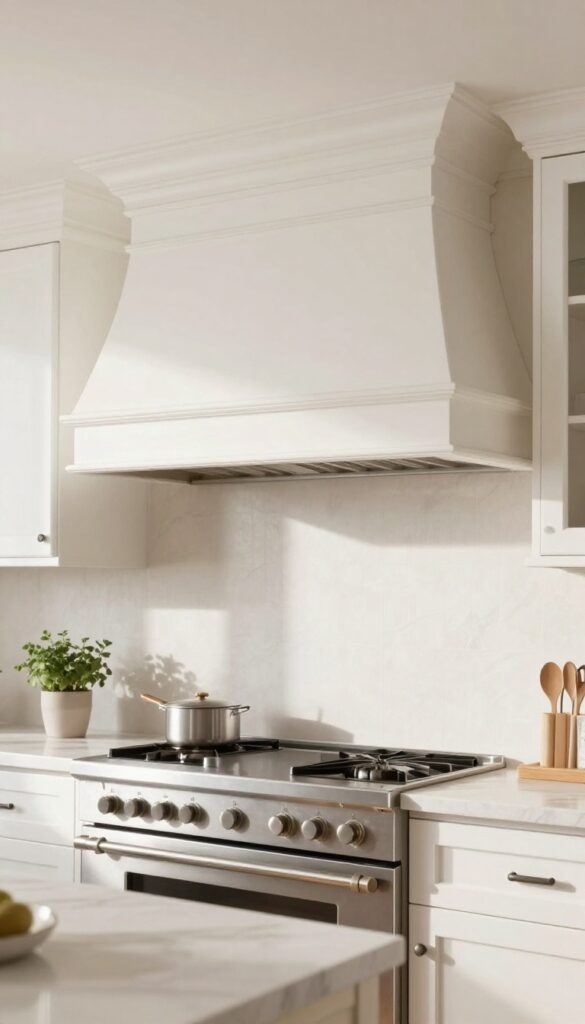
Sometimes the simplest hood cover feels unfinished. Adding decorative trim creates a more custom look.
Crown molding or panel trim instantly upgrades the design.
Why This Works
Trim adds layered detail that mimics custom cabinetry. Those small shadows around molding create depth.
It also ties the hood visually to crown molding around the room.
How to Do It
• Build a simple hood box
• Cut trim pieces with a miter saw
• Attach trim using finishing nails
• Fill nail holes and sand
• Paint the hood and trim together
Painting after installation keeps seams invisible.
Style & Design Tips
Choose subtle trim profiles instead of ornate ones.
Overly complex molding can feel outdated quickly.
Pro Tip or Budget Hack
Foam trim molding costs less and cuts easily.
10. Two-Tone Statement Range Hood Cover
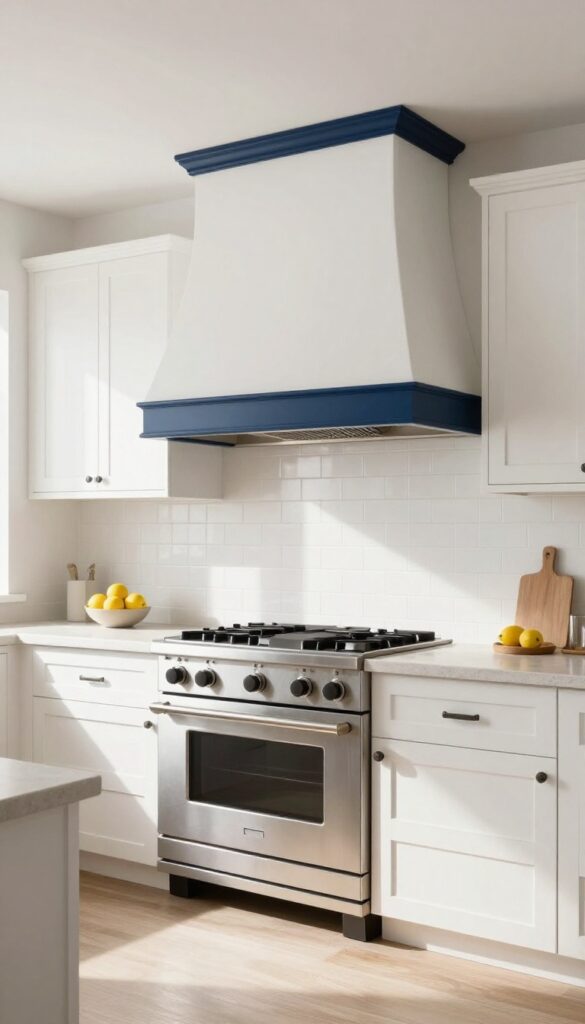
Neutral kitchens sometimes feel safe but forgettable. A two-tone hood cover introduces contrast in a controlled way.
This style treats the hood like a focal piece rather than background cabinetry.
Why This Works
Color contrast draws attention to the cooking area. That attention anchors the kitchen visually.
It also allows creativity without repainting all cabinets.
How to Do It
• Build a wood hood cover
• Paint the main body a neutral color
• Paint trim or edges a contrasting shade
• Seal with satin polyurethane
• Install carefully above the stove
The contrast works best when colors remain balanced.
Style & Design Tips
Pair dark navy or forest green with white cabinets for dramatic contrast.
Avoid clashing tones that fight with the backsplash.
Pro Tip or Budget Hack
Sample paint jars are perfect for accent colors.
Final Thoughts
Range hood covers sit in one of the most visible spots in the kitchen, yet they rarely get the design attention they deserve. A thoughtful DIY cover turns that overlooked area into a design feature that quietly elevates the entire room.
None of these projects require professional carpentry skills. With a few tools, some patience, and a clear plan, the hood can shift from appliance to centerpiece faster than most people expect.
Personally, I still lean toward simple wood designs because they age well and match almost any kitchen style. But honestly, the best choice is whichever version makes the kitchen feel more like your space.