10 Bedroom Ideas for Two Boys That Look Fun
Sharing a bedroom between two kids usually turns into a puzzle of space, storage, and personality. One bed too big, one desk too small, and suddenly the whole room feels cramped.
Most parents try to solve the problem by squeezing more furniture inside, which usually makes things worse. A better approach focuses on layout, function, and smart décor choices that actually make the room enjoyable for both boys.
The good news is that you don’t need a huge space or a big budget to make it work. A few thoughtful design decisions can turn a shared bedroom into a fun place that feels fair, organized, and surprisingly stylish.
1. Bunk Beds with Built-In Storage
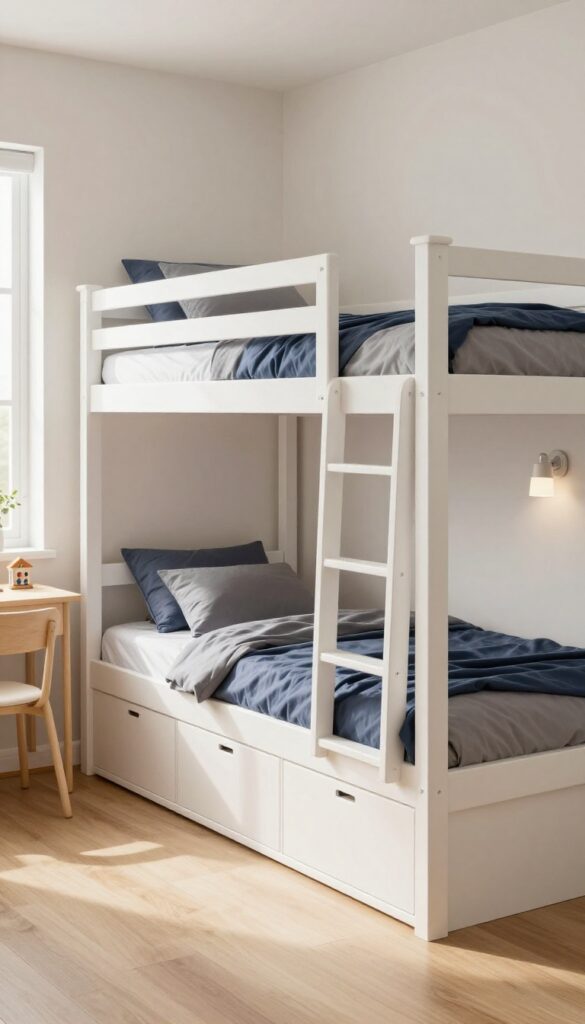
When two boys share a room, the biggest problem is almost always floor space. Two separate beds instantly eat up half the room and leave very little space for play, storage, or desks.
Bunk beds solve that issue fast because they stack sleeping space vertically. I’ve seen this setup transform tiny bedrooms into rooms that suddenly feel twice as big.
The real trick, though, is choosing bunk beds with drawers, shelves, or hidden compartments built into the frame. Those small storage areas quietly eliminate clutter without adding extra furniture.
Why This Works
Vertical space is the most underused part of most bedrooms. By stacking the beds, you immediately free up the floor for desks, toy bins, or a small play area.
Built-in storage also prevents the room from filling up with random dressers and plastic containers. Everything stays inside the bed frame, which keeps the room cleaner and easier to maintain.
How to Do It
- Choose a bunk bed with drawers under the bottom bunk for clothes or toys
- Look for side shelves built into the ladder frame for books and small items
- Use labeled storage bins inside the drawers so each child has their own section
- Install a wall reading light for each bunk so both kids can read comfortably
Style & Design Tips
Stick with simple colors like white, oak, or light gray for the bunk frame. Those colors make the room feel brighter and keep the furniture from looking bulky.
Avoid overly themed bunk beds shaped like castles or trucks. They may look fun for a year or two, but kids outgrow them quickly and the room starts feeling childish.
Pro Tip or Budget Hack
If built-in bunk beds are expensive, add storage baskets or rolling drawers under a basic bunk frame. It gives you almost the same function for a fraction of the price.
2. Color-Coded Personal Zones
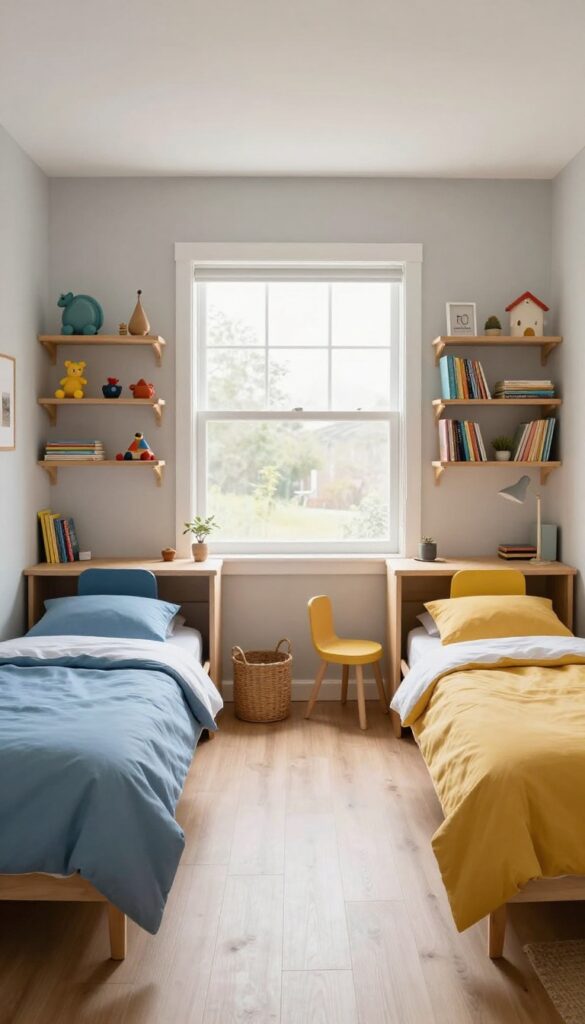
Sharing a room often leads to arguments over territory. One kid’s toys spread into the other kid’s space, and suddenly everyone feels like their stuff is being taken over.
A simple fix is creating two clearly defined personal zones using color. Each boy gets his own small section of the room that reflects his personality.
I’ve seen this work surprisingly well because kids immediately understand visual boundaries.
Why This Works
Color creates instant separation without building physical barriers. The room still feels open, but each child naturally recognizes his area.
It also gives both boys a sense of ownership. When kids feel like something is “their spot,” they usually take better care of it.
How to Do It
- Assign one accent color to each child
- Use that color in bedding, desk chairs, or wall shelves
- Add small wall art or posters in their chosen color theme
- Label storage boxes or baskets with their names
Style & Design Tips
Keep the base room color neutral so the accent colors stand out. Light gray, soft beige, or white walls work perfectly.
Avoid clashing color combinations like neon green and bright orange. Try balanced pairs like blue and mustard, green and navy, or red and charcoal.
Pro Tip or Budget Hack
Instead of painting entire walls, use removable wall decals or peel-and-stick panels in each color zone. It’s cheaper and easy to change as the kids grow.
3. A Shared Study Station
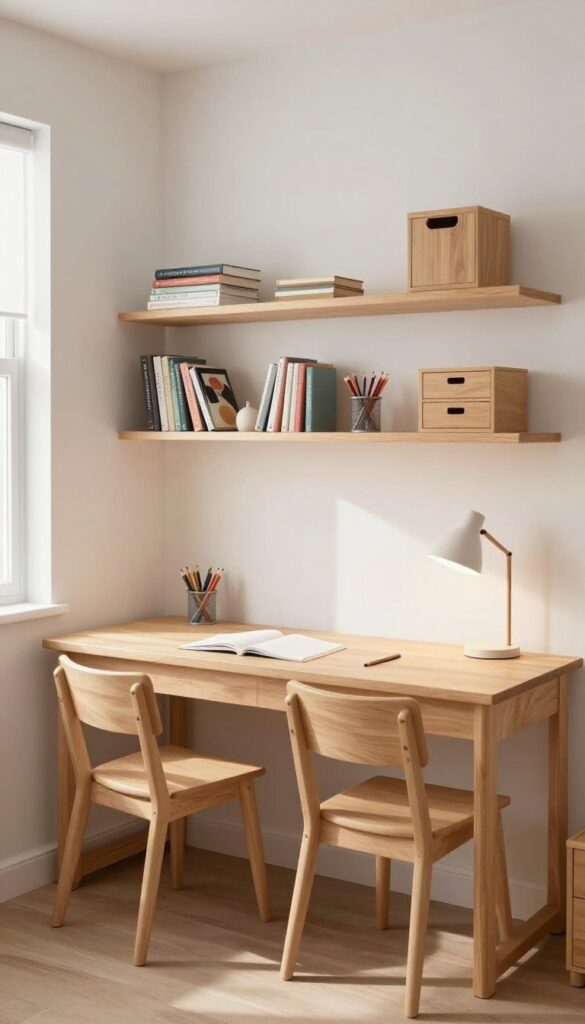
Homework becomes chaos when two kids try to work on separate beds or random corners of the room. Papers disappear, pencils vanish, and focus goes out the window.
A shared study station fixes this problem by giving both boys a dedicated workspace. Think of it as a mini homework hub inside the bedroom.
The goal is simple: keep everything they need in one organized place.
Why This Works
Kids work better when their environment supports the task. A proper desk setup encourages focus and reduces distractions.
It also prevents the rest of the room from turning into a homework mess. Everything related to school stays in one area.
How to Do It
- Install a long desk that fits two chairs side by side
- Add wall shelves above the desk for books and supplies
- Use separate drawer organizers for each child
- Place a task lamp on each side of the desk
Style & Design Tips
Choose a desk color that blends with the room instead of dominating it. Light wood or white desks keep the space feeling open.
Avoid tiny desks that barely hold notebooks. A shared workspace needs enough room for both kids to spread out comfortably.
Pro Tip or Budget Hack
A simple countertop placed on two drawer units makes a great DIY desk. It costs far less than buying a large double desk.
4. Wall-Mounted Toy Storage
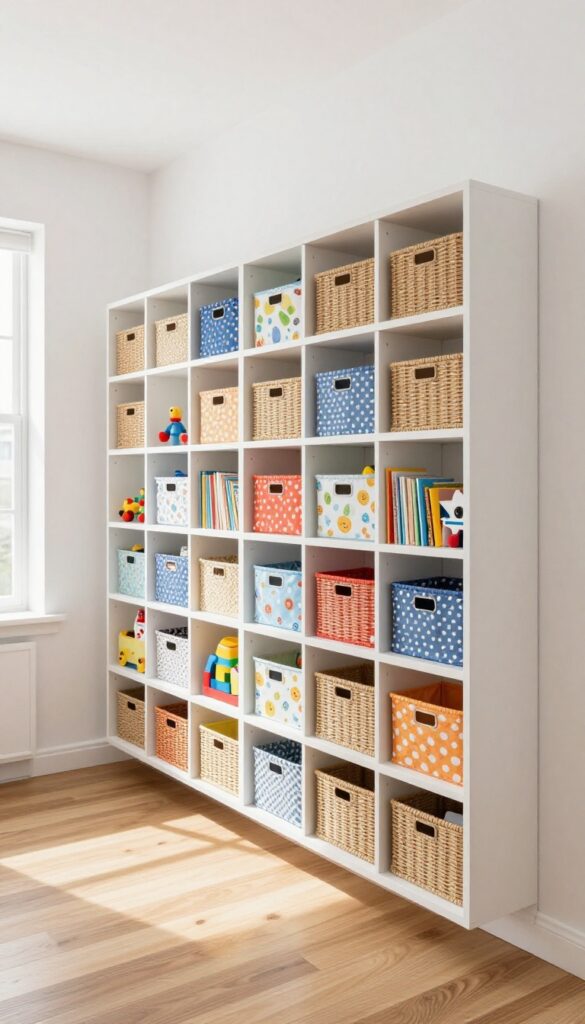
Toy clutter spreads faster than you expect in a shared bedroom. The more kids share a space, the faster toys end up covering the floor.
Wall-mounted storage solves this by moving toys upward instead of outward. It keeps the floor clear and the room easier to clean.
I’m a big fan of this approach because it turns storage into part of the décor.
Why This Works
When storage goes vertical, the room instantly feels bigger. Open wall shelves also make it easier for kids to find and return their toys.
Visible storage encourages better organization. Kids are more likely to put things back when they can see where everything belongs.
How to Do It
- Install floating shelves along one wall
- Use colorful storage bins for small toys
- Add low shelves that younger kids can reach easily
- Reserve the top shelves for display items or books
Style & Design Tips
Mix open shelves with baskets so the wall doesn’t look cluttered. Too many small items on display can make the room feel messy.
Choose sturdy shelves with strong wall anchors. Kids sometimes treat shelves like jungle gyms, whether we like it or not.
Pro Tip or Budget Hack
Use inexpensive cube shelves and mount them horizontally on the wall. They provide lots of storage and look surprisingly modern.
5. A Fun Shared Play Corner
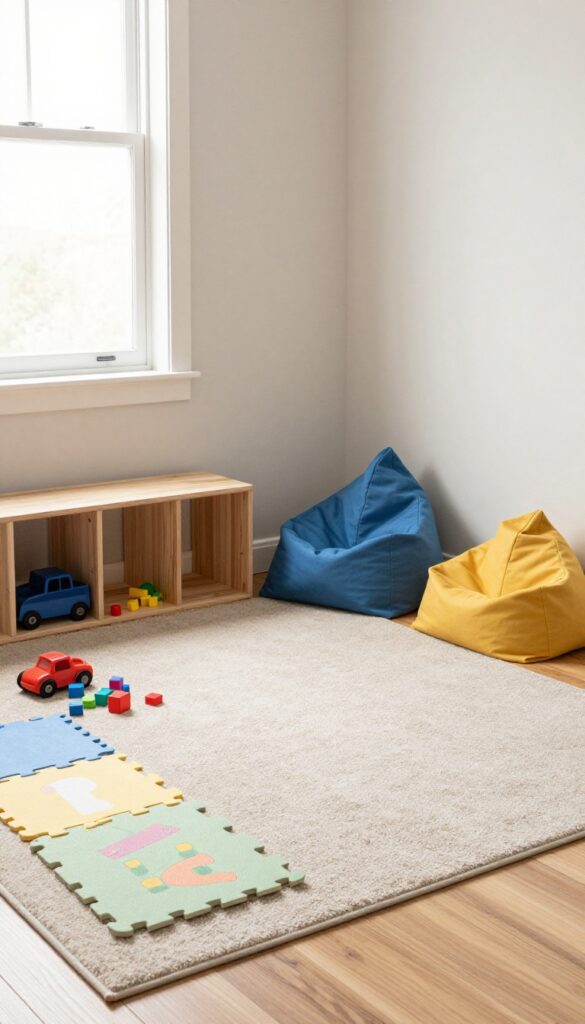
Not every bedroom needs to be strictly for sleeping. When two boys share a room, a small play corner can make the space feel more enjoyable.
This doesn’t require a huge area. Even a small rug and a toy bin can create a dedicated play spot.
The key is keeping it contained so the rest of the room stays tidy.
Why This Works
Kids naturally gather where play items are stored. When toys have a specific area, they stop spreading across the entire room.
It also gives both boys a shared activity zone, which helps reduce arguments about personal spaces.
How to Do It
- Place a soft rug in one corner of the room
- Add a toy chest or storage bench nearby
- Include floor cushions or bean bags for comfort
- Keep only a few toys available at once
Style & Design Tips
Choose durable materials that handle rough play. Rugs with low pile are easier to clean and hold up better over time.
Avoid overcrowding the play area with too many toys. Rotating toys every few weeks keeps things interesting without creating clutter.
Pro Tip or Budget Hack
A large foam puzzle mat works great as a play rug. It’s affordable, soft, and easy to clean.
6. Under-Bed Drawer Storage
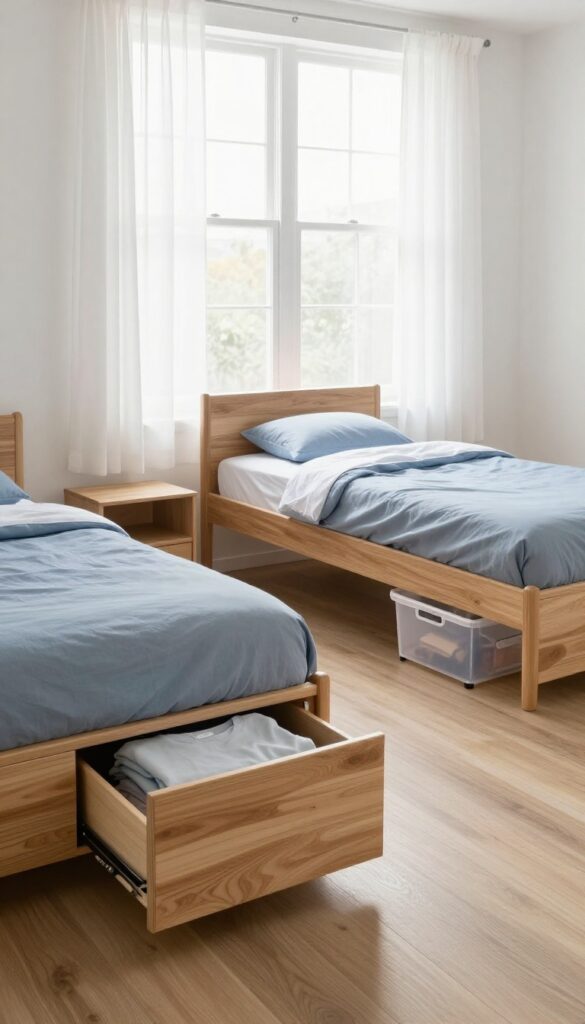
Closet space often disappears quickly when two kids share a bedroom. Clothes, sports gear, and random items pile up faster than expected.
Under-bed drawers provide hidden storage that most people forget about. It’s one of the simplest ways to add extra space without adding furniture.
I started recommending this idea to friends years ago, and honestly, it works almost every time.
Why This Works
Beds take up a lot of floor space anyway. Using the area underneath makes that footprint more efficient.
Hidden storage also keeps the room looking cleaner. When clutter disappears under the bed, the whole room feels calmer.
How to Do It
- Choose beds with built-in drawers if possible
- Use rolling storage bins if the bed frame is open underneath
- Assign specific drawers to each child
- Store seasonal clothes or extra bedding inside
Style & Design Tips
Neutral bed frames work best because they blend with the room. Oversized or decorative beds can overwhelm smaller bedrooms.
Keep under-bed storage organized with dividers. Without them, drawers quickly become chaotic.
Pro Tip or Budget Hack
Plastic rolling bins from big box stores work perfectly under most beds. They’re cheap, durable, and surprisingly spacious.
7. Sports-Themed Wall Display
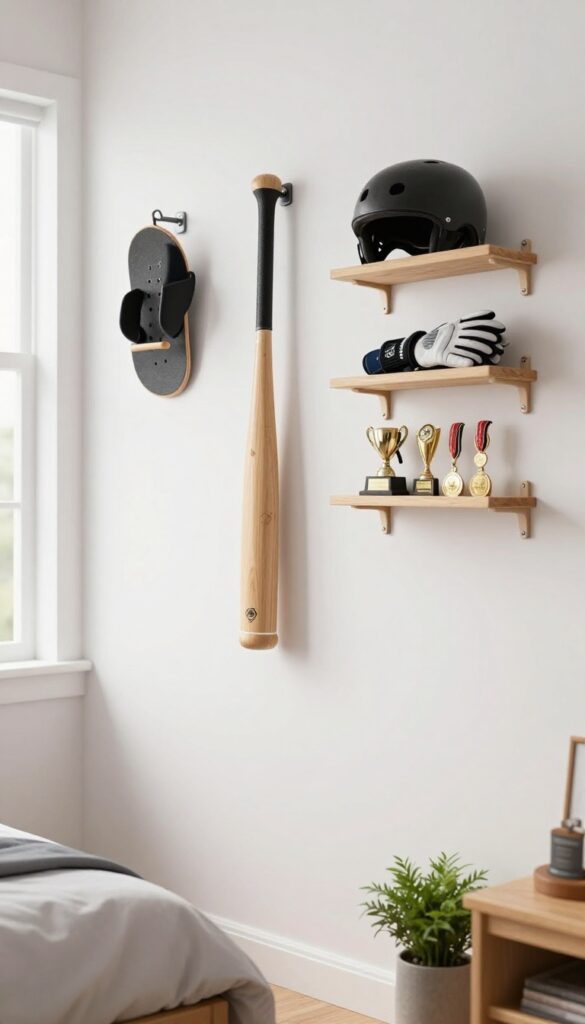
Many boys love sports gear, but equipment tends to pile up in messy corners. Balls, helmets, and gloves often end up on the floor.
Turning sports gear into wall décor solves two problems at once. It keeps the room organized while adding personality.
I’ve seen baseball bats and skateboards displayed on walls in ways that actually look pretty cool.
Why This Works
Wall displays make use of vertical space while highlighting things kids care about. Instead of hiding gear in closets, it becomes part of the room’s design.
It also encourages kids to keep equipment organized because everything has a specific place.
How to Do It
- Install wall hooks or racks for sports gear
- Hang bats, helmets, or skateboards neatly on display
- Use small shelves for trophies or medals
- Leave some empty space so the wall doesn’t feel crowded
Style & Design Tips
Keep the display balanced rather than stuffing everything on one wall. A few well-placed items look much better than clutter.
Choose simple racks that match the room’s style. Industrial metal racks often work well for sporty themes.
Pro Tip or Budget Hack
Use inexpensive wall hooks from hardware stores instead of specialty sports racks. They hold gear just as well and cost far less.
8. A Cozy Reading Nook
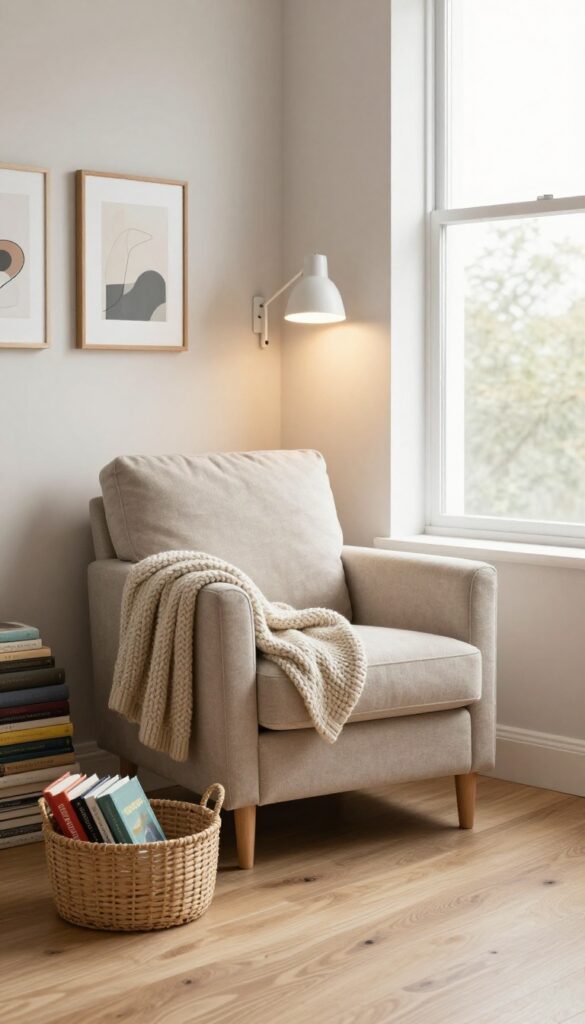
Kids don’t always want to sit at desks to read. A cozy corner with pillows or a chair can make reading feel more relaxing.
This idea works especially well in shared bedrooms because it creates a calm spot away from the beds.
I’ve noticed kids spend more time reading when the space feels comfortable instead of formal.
Why This Works
Comfort encourages longer reading sessions. When a child enjoys the environment, the activity becomes more appealing.
A reading nook also introduces a quiet zone within the room. That helps balance the energy of a shared space.
How to Do It
- Place a small armchair or bean bag in a corner
- Add a soft throw blanket for comfort
- Install a wall lamp or reading light nearby
- Include a small basket of favorite books
Style & Design Tips
Choose neutral furniture that works for both kids. Bright themed chairs might clash with the rest of the room.
Avoid placing the reading nook in high-traffic areas. Quiet corners make the space feel more relaxing.
Pro Tip or Budget Hack
Floor cushions stacked against a wall create an easy reading nook. They’re cheap, flexible, and kids usually love them.
9. A Double Closet Organization System
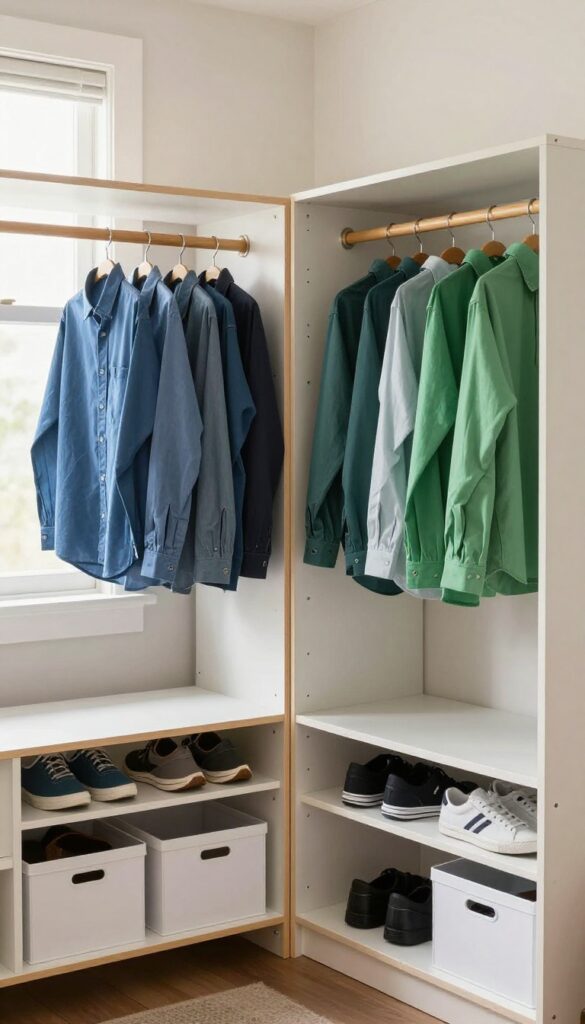
Closets become chaotic fast when two boys share one. Shirts mix together, shoes pile up, and nobody knows where anything belongs.
A double organization system divides the closet into two clearly defined sections. Each child gets his own shelves, hanging rods, and storage bins.
It’s a simple change that prevents a lot of daily frustration.
Why This Works
Clear boundaries inside the closet reduce confusion. Kids can find their own clothes quickly without digging through someone else’s things.
It also teaches basic organization skills. When everything has a place, maintaining order becomes easier.
How to Do It
- Install two hanging rods side by side or stacked
- Use separate bins labeled for each child
- Add small shoe racks for individual storage
- Place hooks for backpacks or jackets
Style & Design Tips
Use matching storage containers so the closet still looks neat. Even if each child has different items, uniform bins keep things visually tidy.
Avoid overfilling shelves. Leaving a little empty space makes the closet easier to maintain.
Pro Tip or Budget Hack
Cheap tension rods can create an extra hanging level in most closets. It’s one of the easiest DIY organization tricks around.
10. Glow-in-the-Dark Ceiling Stars
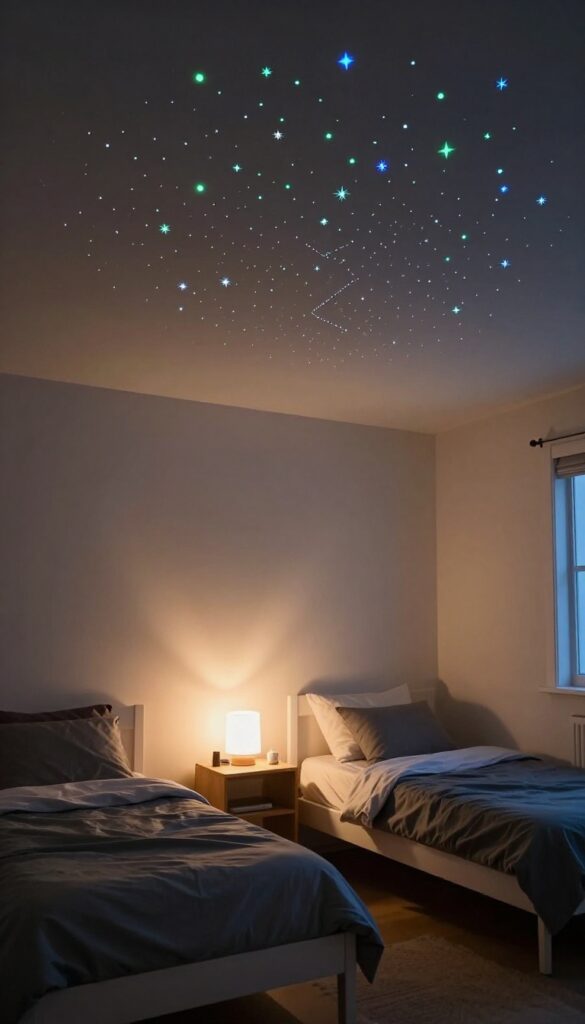
Some décor ideas exist purely for fun, and this one absolutely counts. Glow-in-the-dark stars turn a regular bedroom ceiling into something kids actually look forward to at night.
I helped install these in my nephew’s room once, and honestly, the excitement level was pretty hilarious.
The room instantly felt more magical without spending much money.
Why This Works
Nighttime décor changes the room’s atmosphere after the lights go off. Kids often feel more comfortable sleeping when the room still has a gentle glow.
It also adds personality without taking up any space.
How to Do It
- Buy glow-in-the-dark star stickers or decals
- Arrange them across the ceiling like a star map
- Add a few larger planet shapes for variety
- Keep spacing natural rather than perfectly even
Style & Design Tips
Stick with subtle patterns instead of covering the entire ceiling. Too many glow stickers can look cluttered.
Choose soft green or blue glow colors. They tend to look calmer at night.
Pro Tip or Budget Hack
Look for removable glow decals so you can easily replace them later. Kids change tastes faster than we expect.
Final Thoughts
Shared bedrooms can absolutely work without feeling cramped or chaotic. A smart layout, thoughtful storage, and a few fun details make a huge difference.
The trick is balancing function with personality so both boys feel comfortable in the space. Once the room works for sleep, play, and organization, everything else becomes much easier.
Honestly, some of the most creative bedrooms I’ve seen were shared spaces. Sometimes working with limitations pushes you toward better design decisions.