8 Rectangle Bathroom Ideas That Feel Balanced
Bathroom layouts tend to become awkward when the room stretches longer than it is wide. Fixtures line up like dominoes, walking space feels cramped, and the entire design starts to look unintentionally narrow. That’s where smart layout choices make a huge difference.
Rectangle bathrooms actually have a hidden advantage most people overlook. When you lean into the shape instead of fighting it, the space suddenly starts working with you instead of against you.
A few small layout tweaks, better fixture placement, and the right visual balance can transform a long bathroom into something that feels calm, organized, and surprisingly stylish.
1. Centered Vanity With Symmetrical Storage
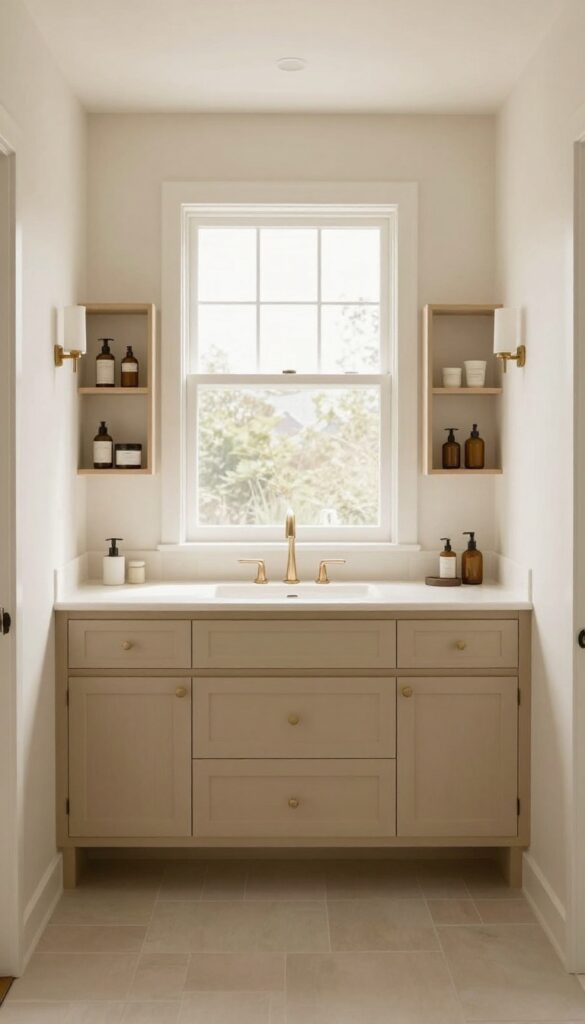
Long bathrooms often suffer from a lopsided look where everything hugs one wall. You walk in and instantly feel like the room tilts to one side, which isn’t exactly the peaceful vibe anyone wants from a bathroom. A centered vanity with balanced storage on both sides fixes that problem immediately.
Instead of pushing the vanity to a corner, place it directly along the middle of the long wall. Then frame it with matching storage elements like wall cabinets, shelves, or sconces. I tried this layout in a narrow guest bathroom once, and the difference in visual balance was honestly kind of shocking.
Why This Works
Symmetry naturally calms the eye. When elements mirror each other across a central point, the room feels organized and intentional rather than random.
Rectangle bathrooms benefit from this because the long shape becomes structured instead of stretched. The vanity acts like an anchor that visually stabilizes the entire room.
How to Do It
- Measure the center point of your longest wall before installing anything
- Choose a medium-width vanity rather than a tiny one that looks lost
- Install matching wall sconces or cabinets on both sides of the mirror
- Keep equal spacing between the vanity and nearby fixtures
- Use a mirror that aligns with the vanity width for cleaner proportions
Style & Design Tips
Choose a vanity that has some visual weight so it doesn’t look overwhelmed by the length of the wall. A floating vanity with drawers usually works great because it keeps the floor visible while still grounding the space.
Avoid mixing too many different cabinet styles nearby. Consistency keeps the symmetry believable, while mismatched storage quickly breaks the balance.
Pro Tip or Budget Hack
Instead of buying expensive custom cabinets, install two identical floating shelves on each side of the mirror. Matching baskets or containers instantly create the same symmetrical effect without blowing the budget.
2. Walk-Through Layout With Fixtures in Sequence
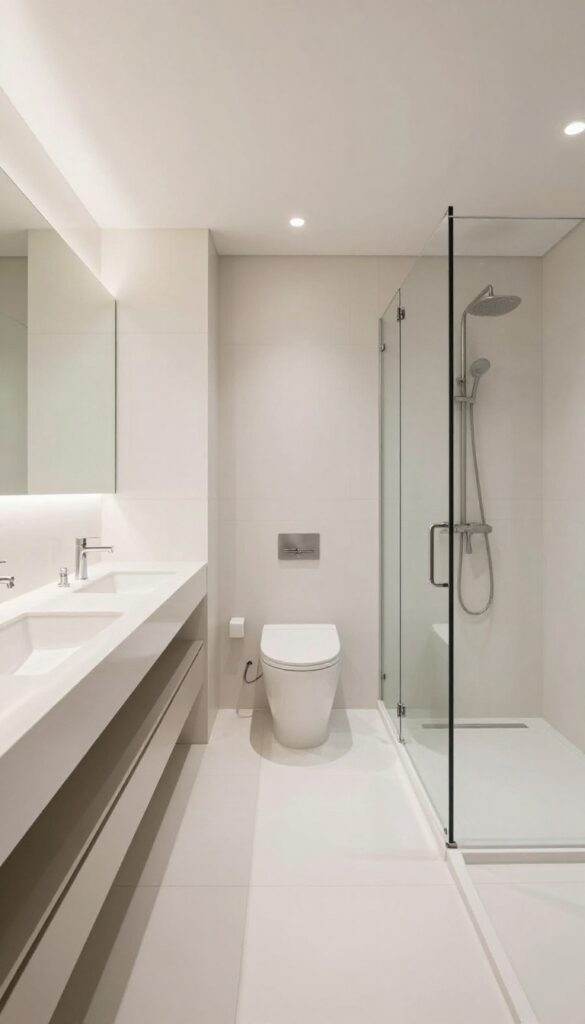
Rectangle bathrooms naturally lend themselves to a linear flow, but people often place fixtures randomly and ruin the usability. A walk-through layout solves this by arranging the vanity, toilet, and shower in a logical sequence along the length of the room.
Think of it like a simple path instead of scattered stops. You enter, use the vanity first, move past the toilet, and end at the shower. Once you follow this order, the room suddenly feels intentional rather than cramped.
Why This Works
Human movement prefers predictable flow. When fixtures follow a natural progression, the bathroom feels easier to use even if the square footage stays the same.
Rectangle rooms already guide movement from one end to the other. Using that shape to organize fixtures simply makes the layout smarter.
How to Do It
- Place the vanity closest to the entrance for quick access
- Position the toilet in the middle zone of the room
- Install the shower or tub at the far end
- Leave at least 30 inches of walkway space between fixtures
- Align everything along one wall for smoother circulation
Style & Design Tips
Keep materials consistent along the layout to reinforce the sense of flow. Matching floor tiles, coordinated hardware, and similar finishes prevent the room from feeling chopped into sections.
A common mistake is overdecorating the middle area. Too many visual elements interrupt the movement, making the room feel crowded instead of streamlined.
Pro Tip or Budget Hack
Use one continuous mirror that runs above the vanity area and slightly beyond. It visually stretches the wall while making the narrow room feel noticeably wider.
3. Horizontal Tile Patterns That Widen the Room
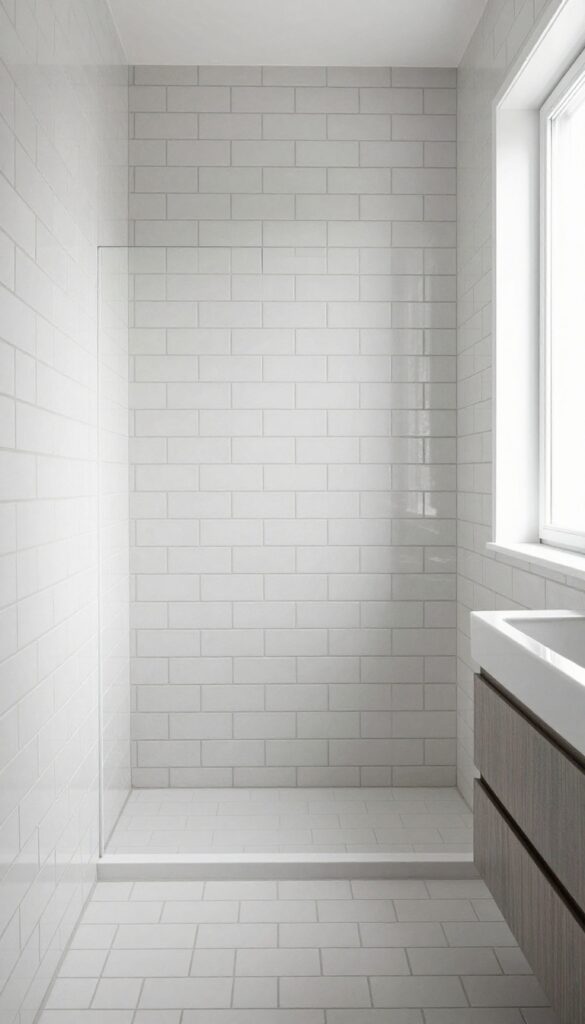
A long narrow bathroom can feel like a hallway if the walls emphasize vertical height too much. Horizontal tile layouts help counteract that by visually widening the room instead of stretching it further.
Tiles arranged in stacked or offset horizontal lines draw your eye side to side. I’ve seen small bathrooms look almost twice as wide just from changing tile orientation.
Why This Works
The brain reads visual lines as spatial cues. Horizontal patterns trick the eye into interpreting the room as wider than it actually is.
Rectangle bathrooms benefit especially from this because the visual weight shifts away from the long dimension.
How to Do It
- Choose subway tiles or rectangular tiles rather than squares
- Install them in a horizontal stacked or brick pattern
- Extend the tile pattern across the entire wall if possible
- Keep grout lines thin to maintain clean horizontal flow
- Continue the same tile direction inside the shower area
Style & Design Tips
Large tiles work better than tiny mosaics for this trick. Smaller tiles introduce too many grout lines, which visually clutter the wall.
Stick to neutral colors or soft contrast grout for the cleanest effect. High-contrast grout can accidentally highlight the narrow shape instead of hiding it.
Pro Tip or Budget Hack
If full wall tile isn’t in the budget, tile just the vanity wall horizontally and paint the remaining walls. The eye will still read the horizontal lines and widen the room visually.
4. Glass Shower Wall at the Far End
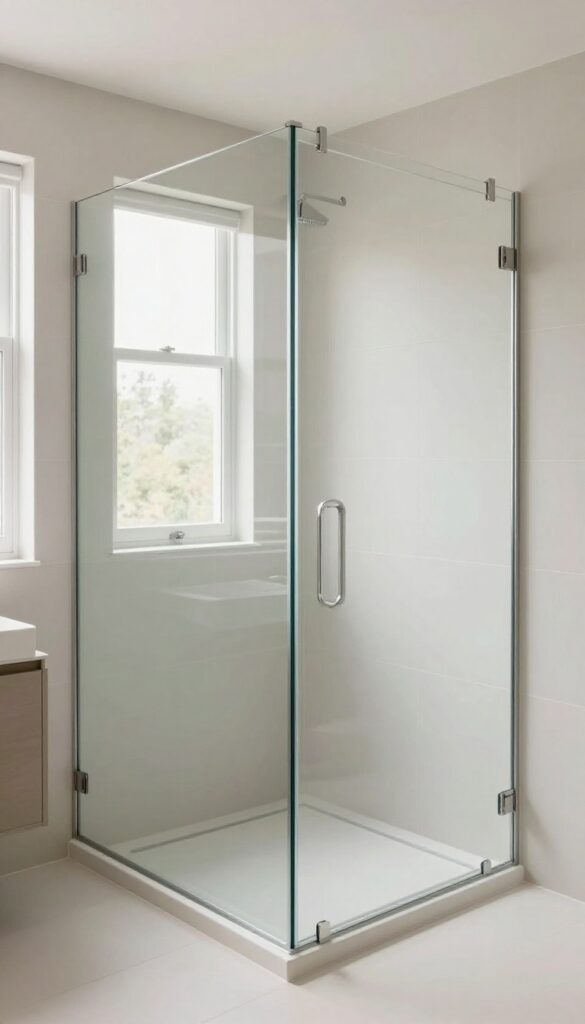
Traditional shower curtains or solid shower walls often block the view in long bathrooms. When the far end of the room looks closed off, the entire space suddenly feels shorter and heavier.
A glass shower enclosure keeps sightlines open. Instead of visually stopping the room, the eye travels through the shower area, making the bathroom feel deeper and more spacious.
Why This Works
Open sightlines create the illusion of more square footage. When nothing interrupts the visual path, the brain perceives a larger space.
Rectangle bathrooms rely heavily on visual depth. Transparent materials help preserve that depth.
How to Do It
- Install the shower at the far end of the bathroom
- Use clear frameless glass panels instead of frosted glass
- Keep shower fixtures aligned neatly along one wall
- Choose large tiles inside the shower for continuity
- Avoid bulky shower frames or heavy borders
Style & Design Tips
A frameless glass panel always looks more modern than framed doors. The minimal hardware keeps the room visually lighter and more open.
Avoid overly dark tiles inside the shower area. Lighter colors maintain visual depth, while dark walls can make the back of the room feel closed off.
Pro Tip or Budget Hack
Instead of a full glass enclosure, install a single fixed glass panel with a walk-in opening. It costs less and still maintains the open feel.
5. Long Floating Vanity for Continuous Lines
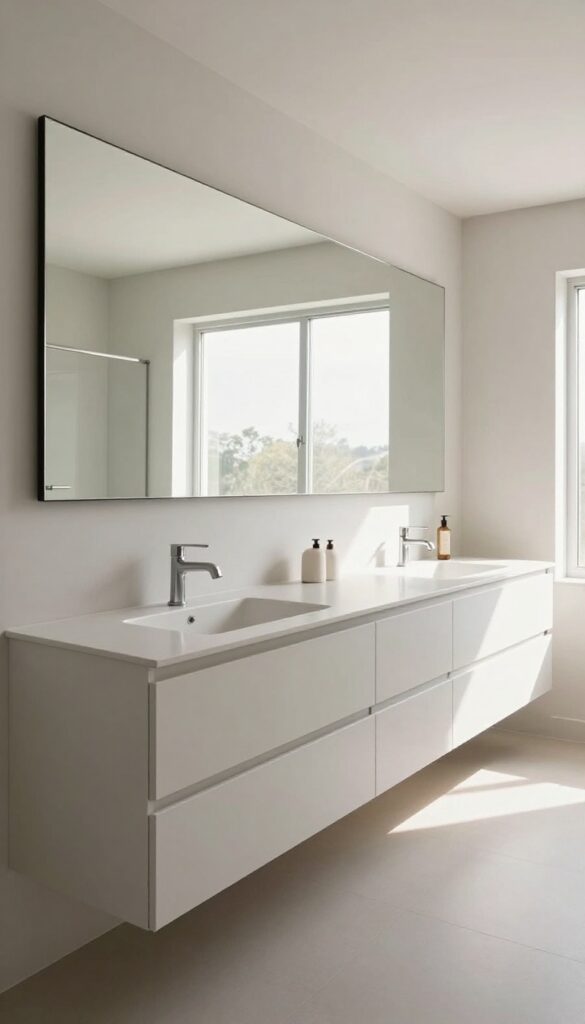
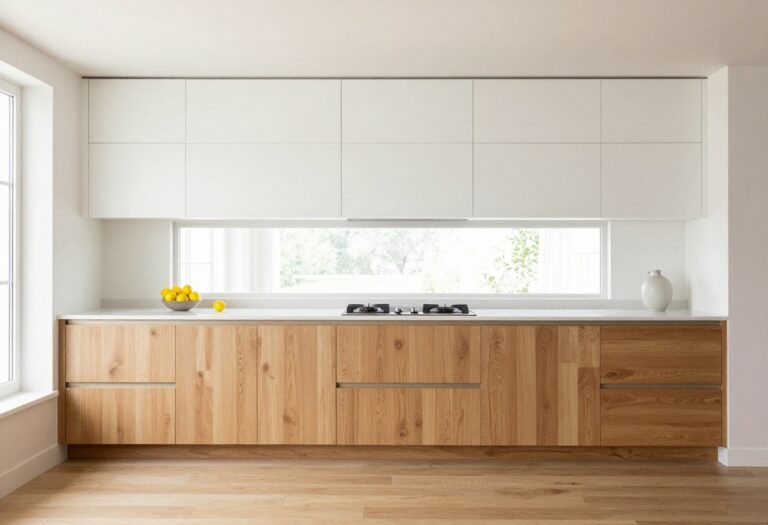
Short vanities often look awkward in rectangular bathrooms because they interrupt the long wall. A longer floating vanity creates one continuous horizontal line that complements the shape of the room.
The wall suddenly feels organized rather than broken into pieces. Plus, floating vanities expose the floor underneath, which helps the space breathe a little.
Why This Works
Continuous lines visually unify long rooms. Instead of multiple elements competing for attention, the eye reads one clean design feature.
Rectangle bathrooms already emphasize length. A long vanity works with that shape rather than fighting it.
How to Do It
- Choose a vanity between 48–72 inches wide if space allows
- Mount the vanity a few inches above the floor for a floating look
- Install wide drawers instead of small cabinets
- Pair the vanity with a large rectangular mirror
- Keep hardware simple and minimal
Style & Design Tips
Floating vanities look best when the plumbing is hidden inside the wall. Visible pipes instantly ruin the sleek appearance.
Stick with flat-front drawers and subtle handles for the cleanest design. Ornate cabinets usually feel too busy in a narrow bathroom.
Pro Tip or Budget Hack
Use IKEA kitchen cabinets mounted to the wall as a DIY floating vanity. They’re sturdy, affordable, and surprisingly stylish when paired with a custom countertop.
6. Zoning the Room With Lighting Layers
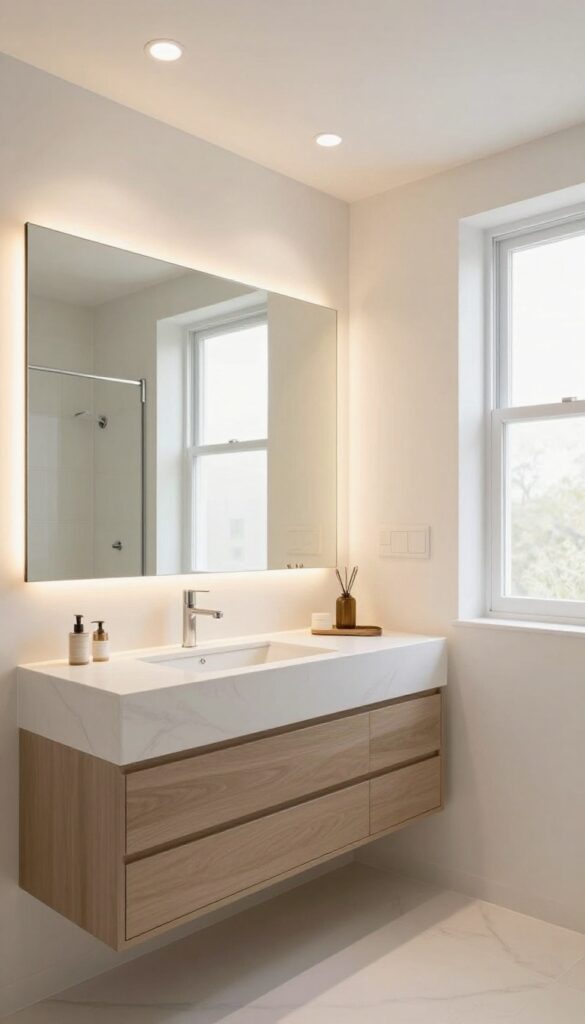
Long bathrooms sometimes feel like one endless strip of space. Strategic lighting helps divide the room into functional zones without adding physical barriers.
Vanity lighting, overhead lighting, and shower lighting each highlight different areas. Suddenly the bathroom feels structured instead of stretched.
Why This Works
Lighting naturally directs attention. When certain areas are brighter than others, the brain understands where activities happen.
Rectangle bathrooms benefit from this because zoning prevents the room from feeling like a long corridor.
How to Do It
- Install sconces beside the vanity mirror for task lighting
- Add recessed ceiling lights spaced evenly along the room
- Use a dedicated waterproof light inside the shower
- Place lights about 3–4 feet apart for even coverage
- Add a dimmer switch for adjustable brightness
Style & Design Tips
Warm white lighting usually looks best in bathrooms. Cool lighting can make the space feel sterile and overly harsh.
Avoid relying on a single ceiling light in the middle of the room. Layered lighting creates depth, which helps balance the long layout.
Pro Tip or Budget Hack
LED strip lights under a floating vanity create a soft glow that visually lifts the cabinet. It’s inexpensive but adds a surprisingly high-end touch.
7. Statement Wall at the Short End
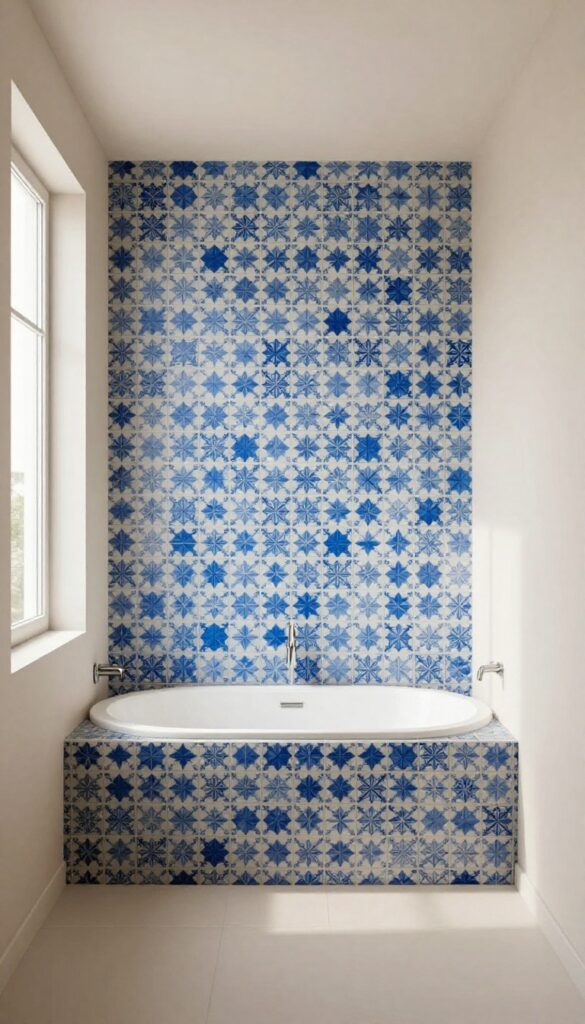
Long bathrooms sometimes lack a focal point. Everything stretches sideways, and the room ends up feeling directionless.
A statement wall at the far short end fixes that immediately. Bold tile, wallpaper, or a unique paint color gives the eye somewhere to land.
Why This Works
Focal points stabilize long spaces. When one area grabs attention, the rest of the room feels organized around it.
Rectangle bathrooms especially benefit from this because the eye naturally travels down the length of the room.
How to Do It
- Choose the shortest wall at the far end of the bathroom
- Add patterned tile, wallpaper, or bold paint
- Keep surrounding walls more neutral for contrast
- Align the focal wall with the shower or bathtub area
- Use lighting to highlight the feature
Style & Design Tips
Bold patterns work best when confined to a single wall. Covering every surface usually overwhelms a narrow bathroom.
Stick to one strong design element rather than multiple competing patterns. Too many features fight for attention and ruin the balance.
Pro Tip or Budget Hack
Peel-and-stick wallpaper can create a dramatic feature wall without permanent commitment. It’s perfect if you like changing styles every few years.
8. Floor Tile That Runs Lengthwise
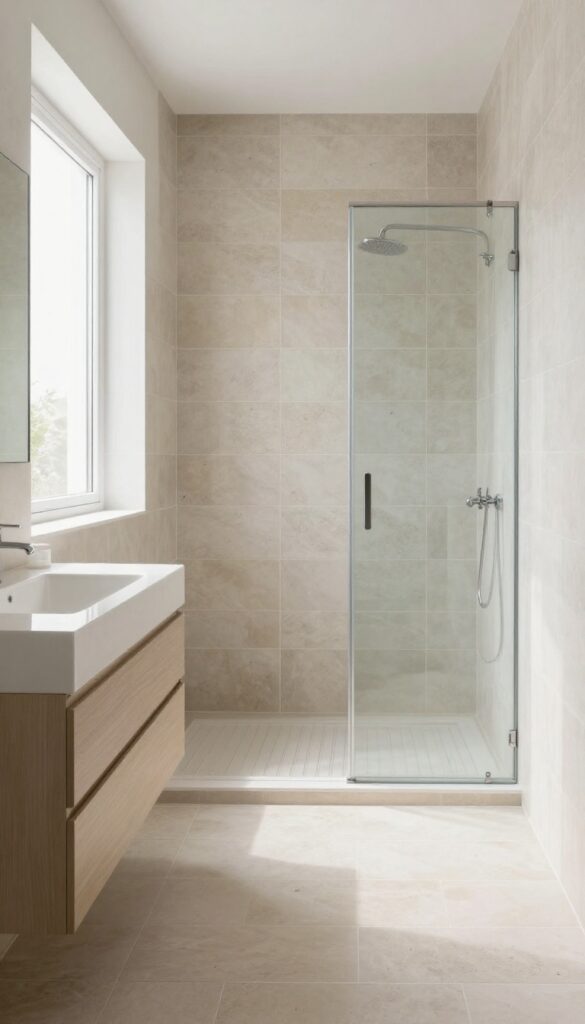
Floor patterns influence how a room feels more than most people realize. In a rectangle bathroom, tile direction can either exaggerate the narrow shape or balance it.
Running floor tiles lengthwise along the room creates a sense of movement and structure. The space feels intentional instead of awkwardly stretched.
Why This Works
Directional flooring guides how the eye travels through a space. When tiles align with the room’s shape, the layout feels natural.
Rectangle bathrooms benefit from this because the flooring reinforces the room’s proportions rather than fighting them.
How to Do It
- Choose rectangular floor tiles rather than square ones
- Install them parallel with the longest wall
- Use medium or large tile sizes to reduce grout lines
- Keep grout color close to the tile color for smoother flow
- Extend the same flooring into the shower area if possible
Style & Design Tips
Natural stone-look porcelain tiles work beautifully in rectangular bathrooms. They provide texture without overwhelming the room.
Avoid diagonal tile layouts unless the bathroom is large. Diagonal patterns can make narrow spaces feel chaotic instead of balanced.
Pro Tip or Budget Hack
Luxury vinyl plank flooring often mimics stone or wood extremely well. It’s waterproof, budget-friendly, and much easier to install than ceramic tile.
Final Thoughts
Rectangle bathrooms might seem tricky at first, but the layout actually offers more design opportunities than people realize. The key is working with the shape instead of trying to hide it.
Balanced layouts, continuous lines, and thoughtful focal points can transform a long bathroom into something stylish and functional. Once everything falls into place, the space suddenly feels calm, organized, and a lot more enjoyable to use.
Honestly, some of my favorite bathroom designs come from awkward layouts like this. A little creativity turns limitations into surprisingly great design ideas.