10 Deck Ideas Off the Back of Your House
Outdoor space becomes wasted potential when it turns into nothing more than a patch of boards and a lonely grill.
A back deck should solve real-life problems like traffic flow, storage, privacy, and comfort instead of just sitting there looking unfinished.
The difference between “we have a deck” and “we actually use our deck” usually comes down to design decisions that feel intentional.
Some layouts invite people to gather without effort, while others quietly push everyone back inside. Smart deck design balances function, movement, and style without turning the whole backyard into a construction project.
The ideas below focus on practical upgrades that make a deck feel like a natural extension of the house rather than an afterthought.
1. Covered Lounge Deck Extension
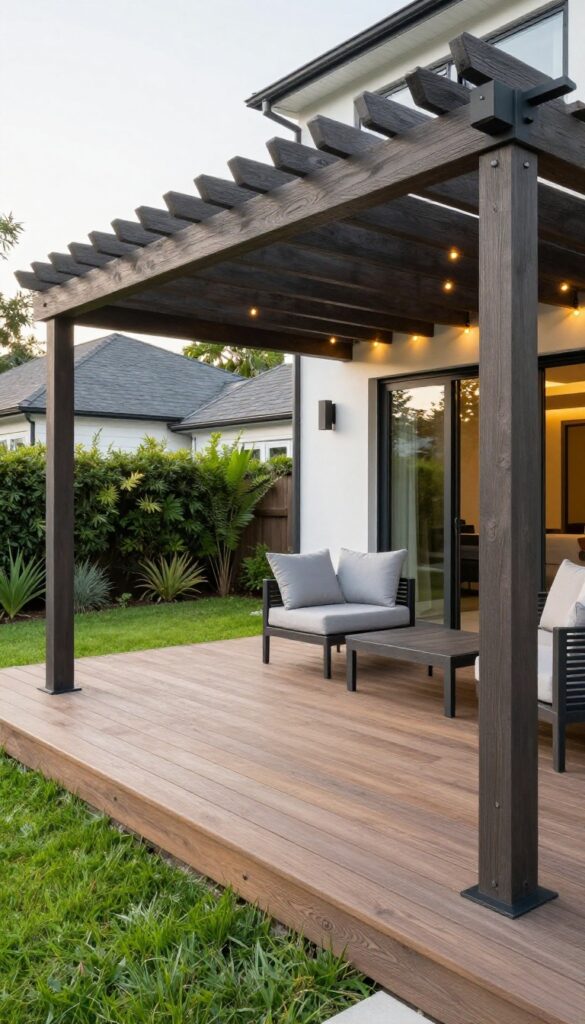
Rain and harsh sun ruin more backyard plans than anyone admits. A covered lounge deck solves that issue immediately by creating a protected area that works in multiple seasons instead of only on perfect-weather days.
I’ve seen decks double in actual use just by adding a simple roof structure or pergola overhead.
Why This Works
A covered section creates a psychological boundary that feels like an outdoor room rather than an exposed platform.
It defines space without building walls and makes furniture placement feel intentional instead of scattered. Shade also protects cushions and wood finishes, which means less maintenance over time.
How to Do It
- Measure the footprint of your current deck to determine how much coverage makes sense without overwhelming the structure.
- Install a pergola or solid roof tied securely into the house framing for structural safety.
- Add outdoor-rated lighting beneath the cover so the space works after sunset.
- Seal all wood or metal materials properly to prevent moisture damage.
Each step matters because structural stability and weather protection determine how long the upgrade lasts.
Style & Design Tips
Choose materials that match your home’s exterior so the addition feels cohesive instead of tacked on. Neutral beams with black hardware create a clean, modern look without overpowering the backyard. Avoid overly ornate details because simple lines age better and won’t look dated in five years.
Pro Tip or Budget Hack
If a full roof feels expensive, start with a high-quality retractable canopy or shade sail. It costs far less and still provides flexibility. Later, you can upgrade the structure once you confirm how much you actually use the space.
2. Split-Level Deck Zones
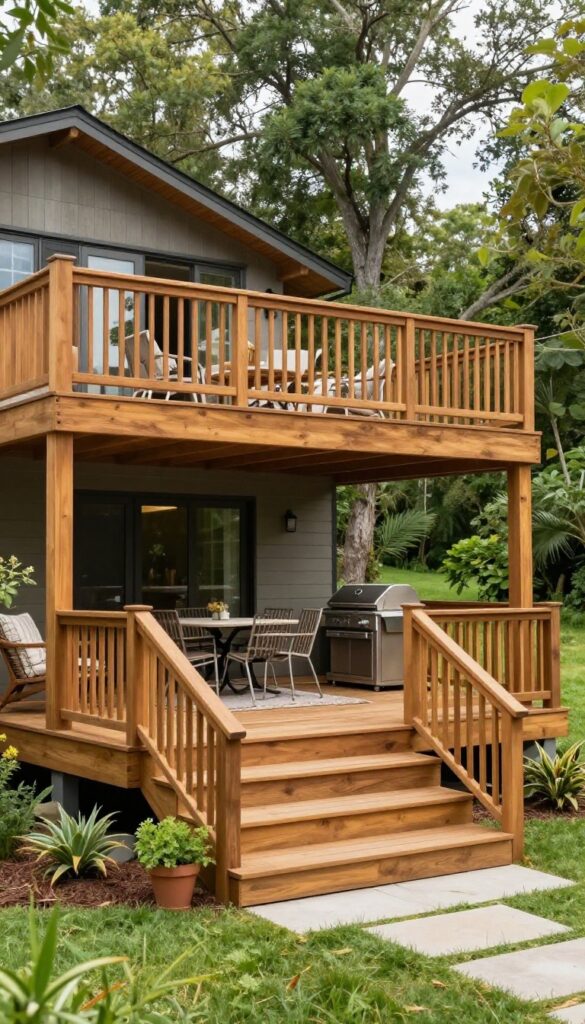
One big flat deck can feel awkward when you try to mix dining, lounging, and grilling in the same area. A split-level design creates natural zones without adding walls or fences. I’ve always liked how a small step down instantly changes the vibe without needing extra square footage.
Why This Works
Different levels visually organize activity and improve traffic flow. Guests intuitively understand where to sit, eat, or stand because the layout guides them. Elevation changes also add depth, making even modest decks feel larger.
How to Do It
- Sketch your current deck and mark separate areas for cooking, dining, and relaxing.
- Frame a secondary level that’s one or two steps lower than the main platform.
- Reinforce structural supports to meet local building codes.
- Install matching railing to maintain visual consistency.
Planning ahead prevents awkward stair placements that interrupt movement.
Style & Design Tips
Keep railing styles consistent across levels to avoid visual clutter. Use contrasting stain tones between tiers if you want subtle definition without changing materials. Avoid overcomplicating the design because too many levels can feel chaotic instead of intentional.
Pro Tip or Budget Hack
If rebuilding isn’t realistic, fake the split-level look by using outdoor rugs and planter boxes to divide areas. It’s not structural, but it visually separates functions at almost zero cost.
3. Built-In Bench Seating With Storage
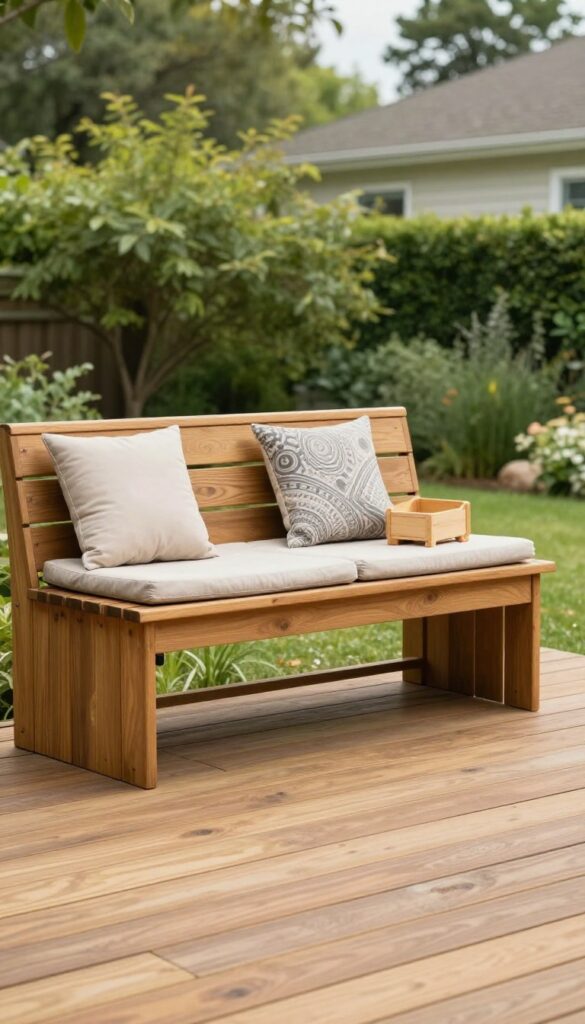
Loose chairs constantly get rearranged and rarely line up neatly. Built-in bench seating fixes that problem and adds hidden storage at the same time. I once replaced bulky patio chairs with benches, and suddenly the whole deck felt twice as organized.
Why This Works
Permanent seating anchors the layout and maximizes square footage. Storage compartments underneath keep cushions, gardening tools, or kids’ toys out of sight. It creates efficiency without sacrificing comfort.
How to Do It
- Frame bench bases directly into the deck perimeter for stability.
- Add hinged tops or removable panels for storage access.
- Use weather-resistant cushions with removable covers.
- Seal every exposed edge to prevent water damage.
Proper sealing matters because trapped moisture can ruin wood quickly.
Style & Design Tips
Match the bench stain to the deck for a seamless built-in look. Add patterned cushions to inject personality without committing to bold paint. Avoid oversized pillows because too much padding can make the space look cluttered.
Pro Tip or Budget Hack
Repurpose sturdy wooden storage boxes instead of custom building from scratch. Paint or stain them to match the deck and secure them in place so they look intentional.
4. Outdoor Dining Deck With Defined Layout
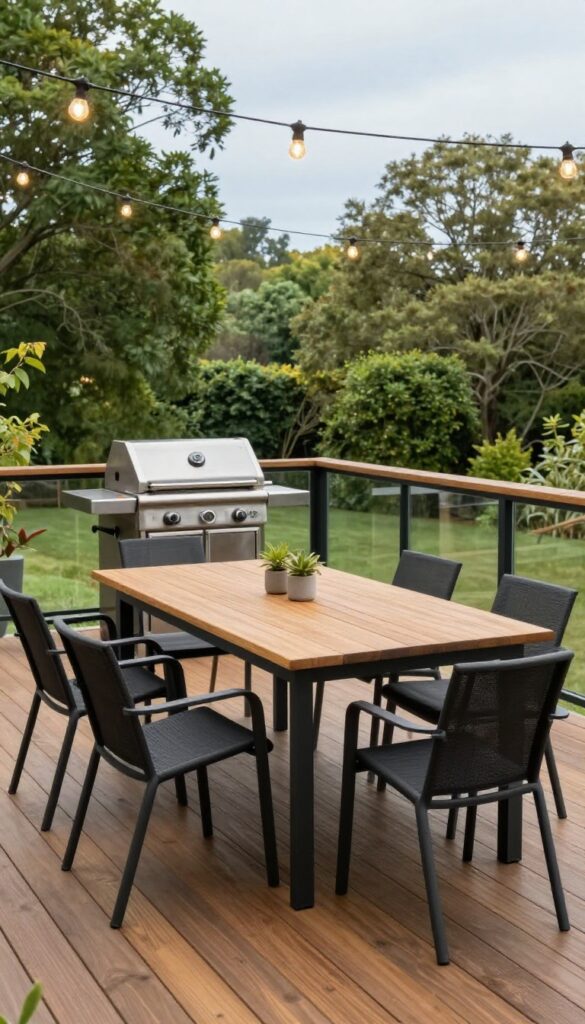
A grill shoved against the railing doesn’t count as a dining setup. A proper outdoor dining layout needs breathing room and logical spacing. When the table feels centered and balanced, the deck instantly feels purposeful.
Why This Works
A defined dining zone encourages regular use, not just special occasions. Clear space around chairs prevents awkward shuffling and makes hosting easier. Structure reduces friction, which means people actually linger longer.
How to Do It
- Measure the table footprint and allow at least three feet around it for chair movement.
- Position the grill within reach but not directly next to seating.
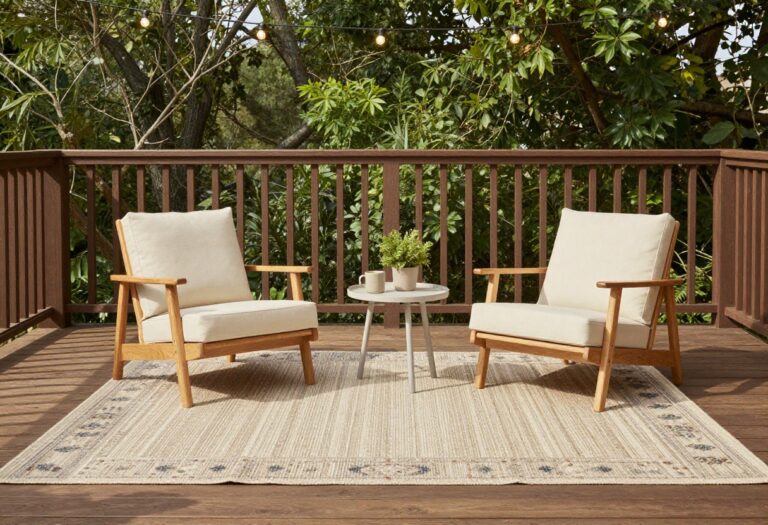
- Anchor the space with an outdoor rug rated for moisture.
- Install overhead string lights or pendant lighting for nighttime meals.
Spacing matters because tight layouts discourage comfort.
Style & Design Tips
Choose a table size proportional to the deck instead of cramming in the largest option available. Black metal frames paired with natural wood tops create a modern but warm feel. Avoid mixing too many materials because visual noise makes small decks feel chaotic.
Pro Tip or Budget Hack
Refinish an old indoor table with exterior paint instead of buying new patio furniture. Seal it properly and swap in weather-resistant chairs for a cohesive, affordable setup.
5. Deck With Privacy Screens
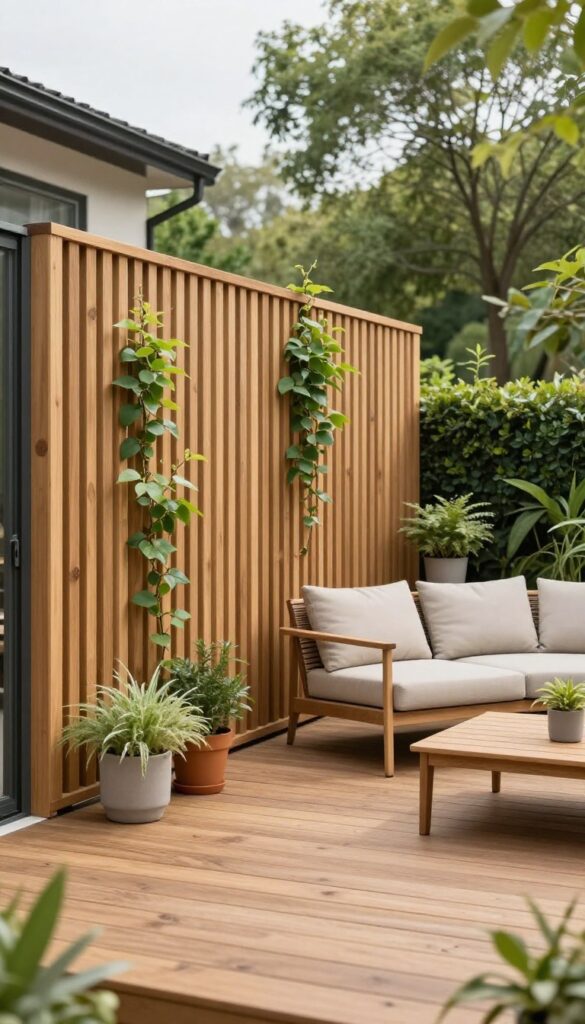
Neighbors often sit closer than anyone wants to admit. Privacy screens add comfort without building a full fence around the yard. I’ve found that even partial screening changes how relaxed a space feels.
Why This Works
Strategic barriers block sightlines while still allowing airflow. They create a cozy enclosure that feels intentional instead of defensive. Privacy increases usability, especially in suburban layouts.
How to Do It
- Identify the most exposed sightlines from neighboring properties.
- Install vertical slat panels or lattice screens anchored securely to the deck frame.
- Stain or paint panels to match your deck color.
- Add climbing plants for natural coverage over time.
Positioning matters more than coverage size.
Style & Design Tips
Keep slats evenly spaced for a modern aesthetic. Paint screens the same color as the deck railing for cohesion. Avoid overly dense panels because blocking all light can make the deck feel boxed in.
Pro Tip or Budget Hack
Outdoor curtains attached to a simple rod offer flexible privacy at a fraction of the cost. They can be tied back when you want openness and closed when needed.
6. Deck With Built-In Planter Boxes
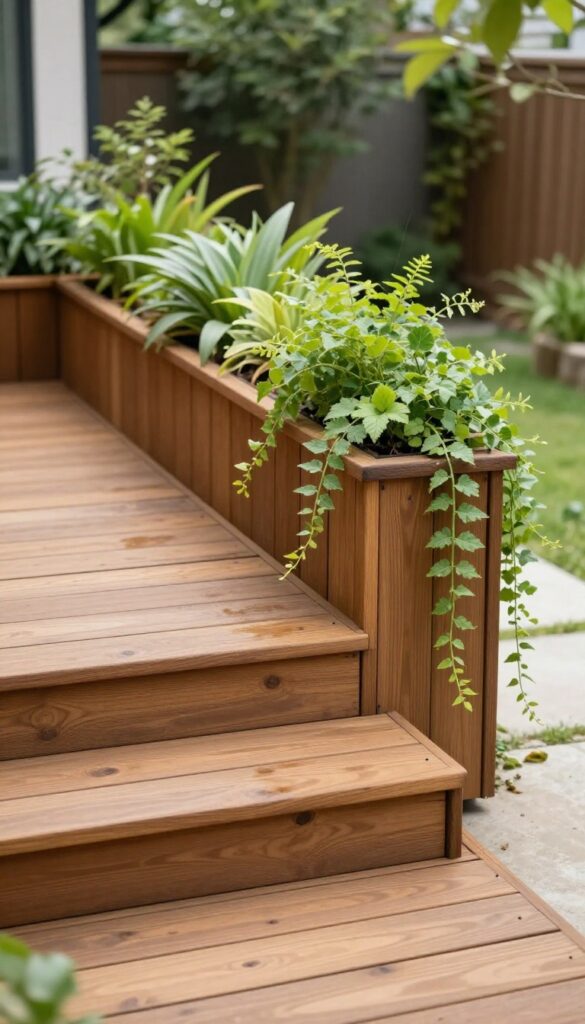
Empty corners on a deck often look unfinished. Built-in planter boxes soften hard edges and bring life into the layout. I always notice how greenery makes wood tones look richer and more intentional.
Why This Works
Planters create natural borders without adding walls. Plants also break up monotony in large wood surfaces. The added texture enhances visual depth.
How to Do It
- Frame planter boxes into deck corners or along railings.
- Line interiors with moisture-resistant barriers.
- Drill drainage holes to prevent water buildup.
- Choose low-maintenance plants suited to your climate.
Drainage is critical to prevent wood rot.
Style & Design Tips
Stick with one or two plant varieties for a clean look. Mix trailing greenery with upright plants for contrast. Avoid overcrowding because too many plant types can feel messy.
Pro Tip or Budget Hack
Use large freestanding pots first to test placement before committing to built-ins. Once you’re confident, convert the layout into permanent boxes.
7. Fire Pit Gathering Deck
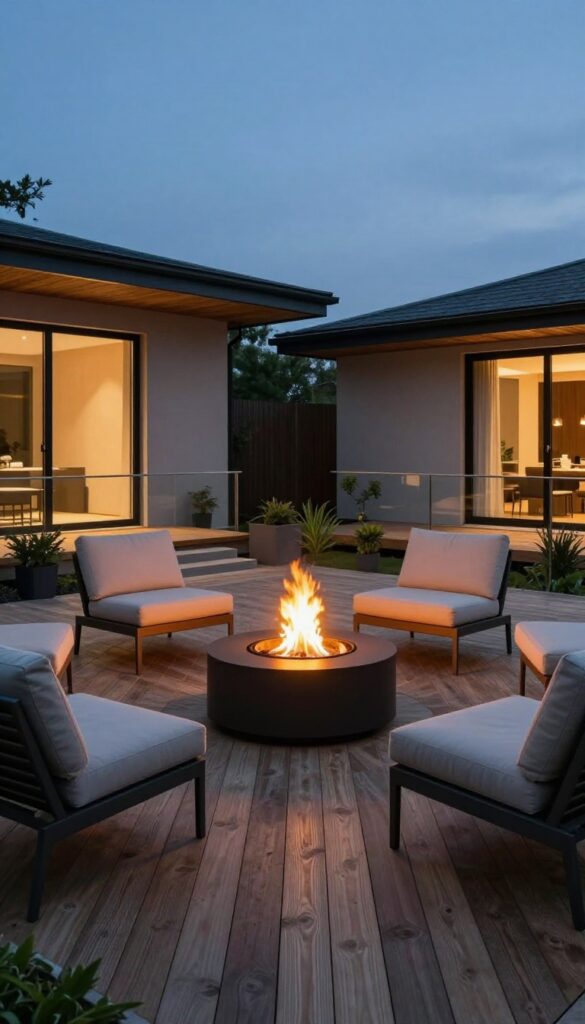
Even mild evenings can feel cool once the sun drops. A fire pit instantly draws people together and gives the deck a focal point. I’ve seen conversations last twice as long when there’s a fire involved.
Why This Works
A central heat source anchors the seating layout. It creates symmetry and encourages circular arrangement. Warmth increases seasonal usability.
How to Do It
- Choose a fire pit rated for deck use, preferably gas-powered for safety.
- Place it on a fire-resistant mat to protect decking.
- Arrange seating evenly around the pit.
- Maintain safe clearance from railings and walls.
Safety spacing prevents accidents.
Style & Design Tips
Keep seating low-profile so the fire remains the visual focus. Neutral cushions let flames stand out naturally. Avoid oversized pits because proportion matters more than drama.
Pro Tip or Budget Hack
Portable propane fire pits cost less than built-in versions and require no major installation. They’re also easier to move if you rearrange furniture later.
8. Outdoor Kitchen Deck Upgrade
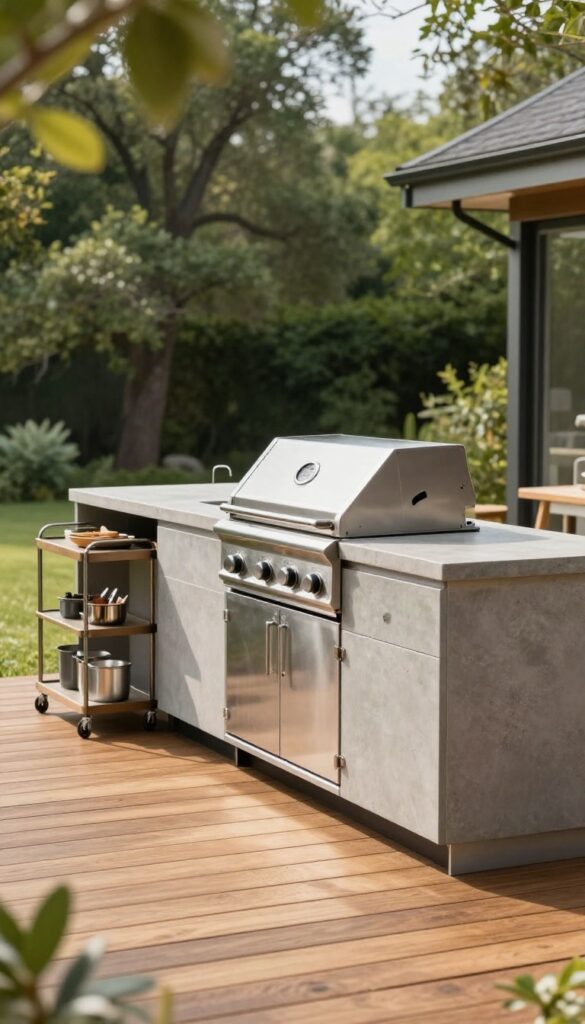
Basic grilling works, but a true outdoor kitchen changes how often you entertain. Adding counter space and storage removes constant trips back inside. I underestimated this upgrade until I tried prepping everything outdoors in one place.
Why This Works
Functional zones improve workflow and reduce interruptions. Counter space makes cooking feel efficient instead of chaotic. Organization increases enjoyment.
How to Do It
- Install weather-resistant base cabinets designed for outdoor use.
- Add a durable countertop like concrete or stone.
- Include storage for utensils and grilling tools.
- Ensure proper ventilation and safe gas connections.
Professional installation prevents costly mistakes.
Style & Design Tips
Keep materials consistent with your home’s exterior for cohesion. Stainless steel pairs well with wood decking. Avoid cluttering counters because clear surfaces feel intentional and upscale.
Pro Tip or Budget Hack
Start with a rolling prep cart instead of permanent cabinetry. It provides flexibility and costs significantly less.
9. Under-Deck Patio Conversion
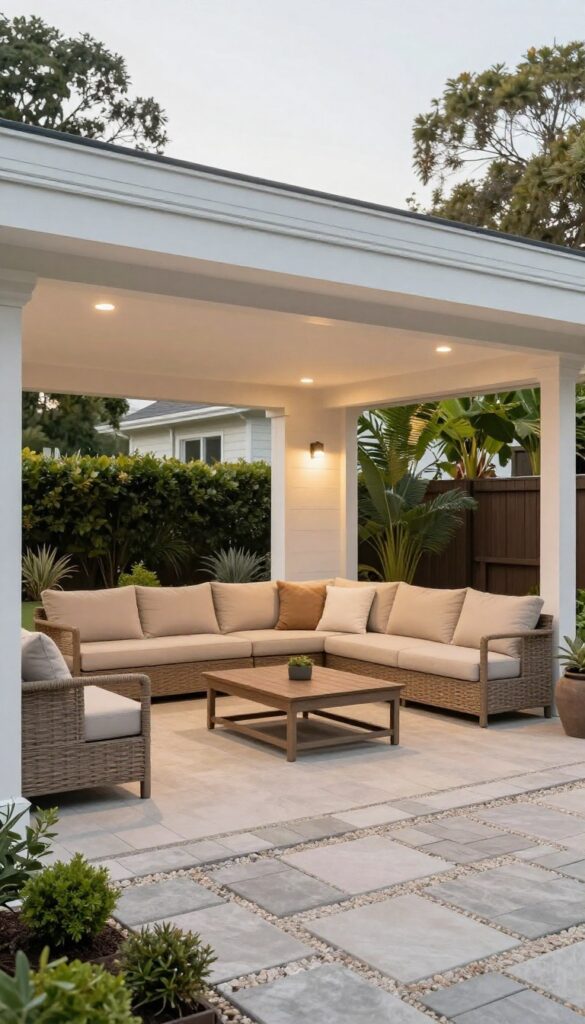
Raised decks waste valuable space underneath. Converting that area into a patio doubles your usable square footage. I’ve seen this transform narrow backyards completely.
Why This Works
Layered outdoor space increases versatility. Shade from the deck above creates a naturally cooler seating area. It maximizes vertical potential.
How to Do It
- Install a waterproof under-deck drainage system.
- Lay pavers or concrete for a finished floor.
- Add lighting beneath the deck structure.
- Furnish with weather-resistant seating.
Waterproofing prevents constant maintenance issues.
Style & Design Tips
Paint the underside of the deck a light neutral to brighten the patio. Add subtle landscaping around the perimeter. Avoid dark finishes because they absorb light and shrink the space visually.
Pro Tip or Budget Hack
Gravel and stepping stones offer an affordable flooring alternative to full pavers.
10. Minimalist Modern Deck Design
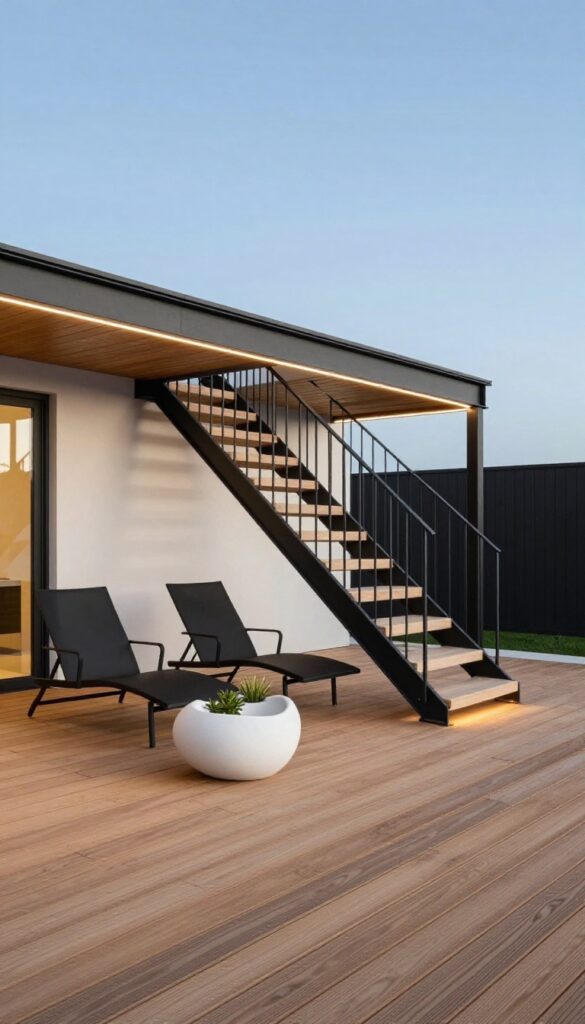
Overdecorating ruins more decks than underdecorating. A minimalist approach prioritizes clean lines and intentional spacing. I used to pile on décor until I realized restraint looked far better.
Why This Works
Less clutter creates visual calm. Clean layouts emphasize structure and proportion. Simplicity improves long-term style longevity.
How to Do It
- Remove excess furniture and keep only functional pieces.
- Choose a cohesive color palette of two or three tones.
- Install subtle lighting integrated into railing or stairs.
- Maintain clear walking paths at all times.
Intentional spacing keeps the deck breathable.
Style & Design Tips
Stick to matte finishes and neutral shades. Add one statement piece like a sculptural chair. Avoid trendy accents because timeless design outlasts passing fads.
Pro Tip or Budget Hack
Refresh your deck by sanding and restaining instead of replacing boards. A clean, updated finish often makes the biggest difference for the least money.
Final Thoughts
A deck off the back of the house should work harder than it currently does. Small structural shifts and smarter layout decisions often matter more than expensive décor upgrades. Function always leads style.
Once the layout feels intentional, everything else falls into place. I’d start with one upgrade that solves your biggest frustration and build from there. Done right, the deck becomes the spot everyone gravitates toward without even thinking about it.