10 Composite Deck Ideas for Modern Homes
Function always beats flash when it comes to outdoor spaces. A deck that looks good but doesn’t hold up to weather, foot traffic, or real-life mess ends up being more frustrating than impressive.
Composite decking changed that game completely. It gives you the clean lines and modern feel you want without the yearly sanding, staining, and “why is this board splintering again?” drama.
If you’re planning to upgrade your backyard or build from scratch, these composite deck ideas will help you create something that feels polished, practical, and actually worth the investment.
1. Multi-Level Composite Deck Layout
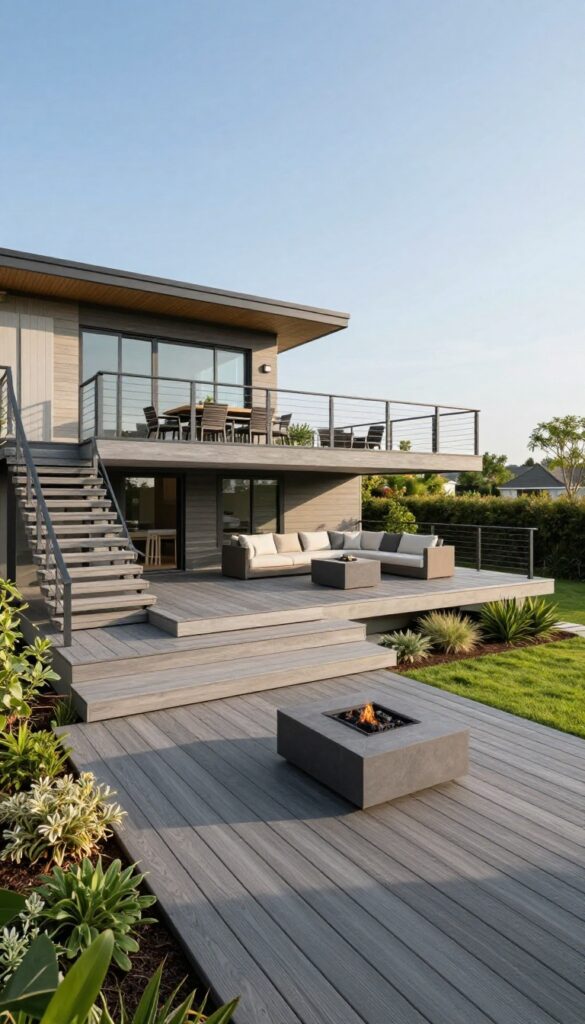
Most backyards aren’t perfectly flat, and pretending they are usually wastes space. A single slab-style deck often feels oversized in one area and cramped in another, especially if you’re trying to fit dining, lounging, and maybe a grill station all in one spot.
A multi-level composite deck solves that by naturally separating zones. You can dedicate one level to dining, another to a cozy seating area, and maybe a lower platform for a fire pit or hot tub. I’ve seen this completely transform awkward sloped yards into layered, intentional outdoor living spaces.
The best part is how clean it looks when done with modern composite boards. The lines stay sharp, and you don’t get that uneven weathered look that often happens with traditional wood over time.
Why This Works
Breaking a deck into levels creates visual structure without adding walls. It guides movement and makes the space feel designed instead of random.
It also helps with flow during gatherings. People naturally spread out into different levels, which makes the deck feel bigger than it actually is.
How to Do It
- Map out how you actually use the space before deciding on levels. This prevents building a fancy tier no one ever uses.
- Keep each level purpose-driven, like dining on one and lounging on another. Clear intent makes the layout feel cohesive.
- Use consistent composite board color across all levels. That keeps it modern and avoids visual clutter.
- Add wide transition steps between levels for safety and a more polished look.
Style & Design Tips
Stick to neutral composite tones like charcoal, warm gray, or natural oak for a modern feel. Mixing too many colors can make the levels look busy instead of layered.
Avoid tiny, awkward tiers that feel like an afterthought. Each level should feel intentional and large enough to hold furniture comfortably.
Pro Tip or Budget Hack
If full multi-level construction feels pricey, create the illusion of levels with a single step-up platform for dining. That one change can add dimension without doubling your framing costs.
2. Picture Frame Border Detailing
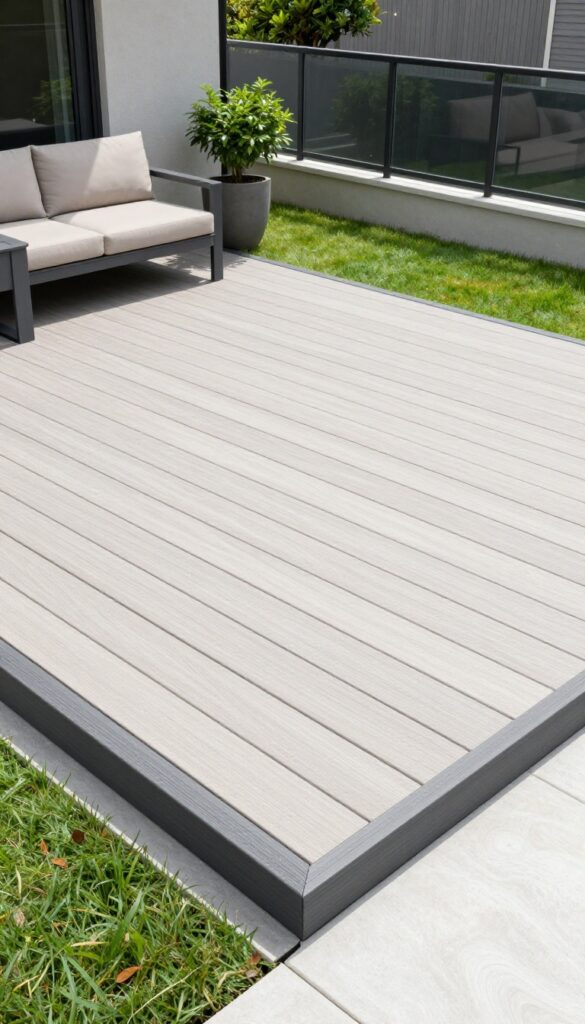
Plain deck boards laid straight across can look fine, but sometimes they feel unfinished. The edges especially tend to look abrupt, like someone just stopped building.
Adding a picture frame border around your composite deck instantly tightens up the design. It’s basically a perimeter of boards installed perpendicular to the main layout, creating a framed effect.
I used this detail on a smaller backyard project once, and it made the whole deck look custom-built instead of basic builder-grade.
Why This Works
A border creates contrast and defines the deck’s shape. It makes the surface look intentional and high-end without adding complexity to the structure.
It also hides cut ends of boards, which keeps everything looking neat and symmetrical.
How to Do It
- Install the main field boards first, leaving space around the perimeter.
- Frame the edges with boards running in the opposite direction. This creates that classic picture-frame effect.
- Keep spacing consistent so gaps look clean and modern.
- Double-check alignment before fastening permanently.
Style & Design Tips
Use a slightly darker composite shade for the border if you want subtle contrast. The difference should be noticeable but not dramatic.
Don’t overdo decorative patterns inside the deck if you’re already adding a frame. Simplicity keeps it modern.
Pro Tip or Budget Hack
If you’re working with leftover composite boards from another project, use them for the border. It’s a smart way to elevate the look without buying extra material.
3. Built-In Composite Bench Seating
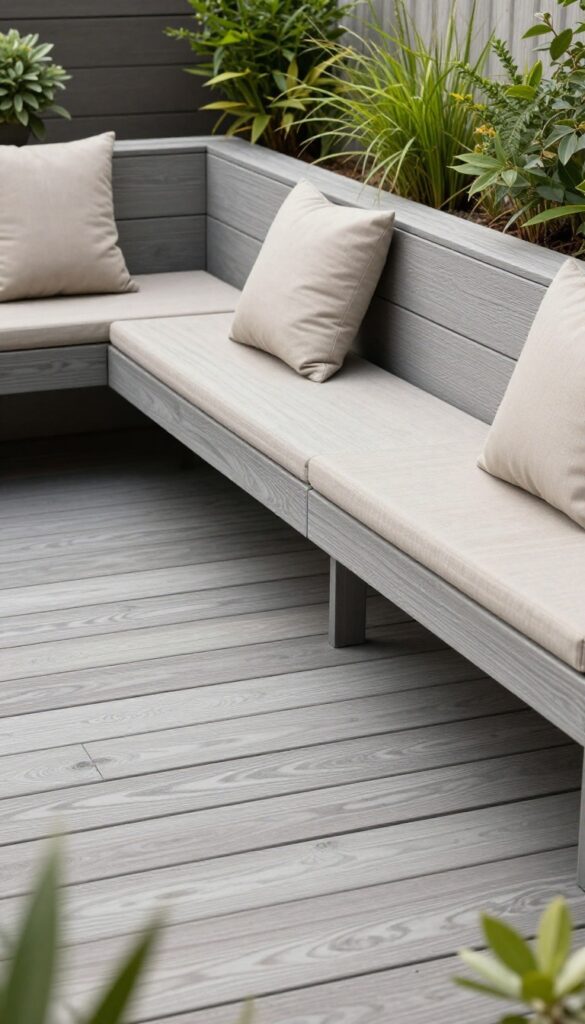
Outdoor furniture shifts, rusts, and eventually looks tired. Built-in bench seating eliminates that problem while keeping your deck organized.
A composite deck with integrated benches feels streamlined and purposeful. You can line the perimeter with seating or build an L-shaped bench in one corner for a cozy hangout spot.
I personally love built-ins because they make small decks feel intentional instead of cramped with mismatched chairs.
Why This Works
Built-in seating maximizes usable space. It hugs the edges instead of floating awkwardly in the middle.
It also reduces clutter and makes cleaning easier. No dragging chairs around when you’re sweeping.
How to Do It
- Frame the bench structure using treated lumber. Stability matters here.
- Cover visible surfaces with matching composite boards for a seamless look.
- Add a slight backward tilt to the backrest for comfort.
- Finish with weather-resistant cushions.
Style & Design Tips
Choose low-profile cushions in neutral tones to maintain a modern vibe. Avoid overly patterned fabrics that distract from the clean deck lines.
Keep the bench height consistent with standard seating measurements. Comfort always beats style.
Pro Tip or Budget Hack
Leave the seat tops hinged for hidden storage underneath. It’s perfect for stashing outdoor pillows or gardening tools.
4. Wide Plank Composite Boards
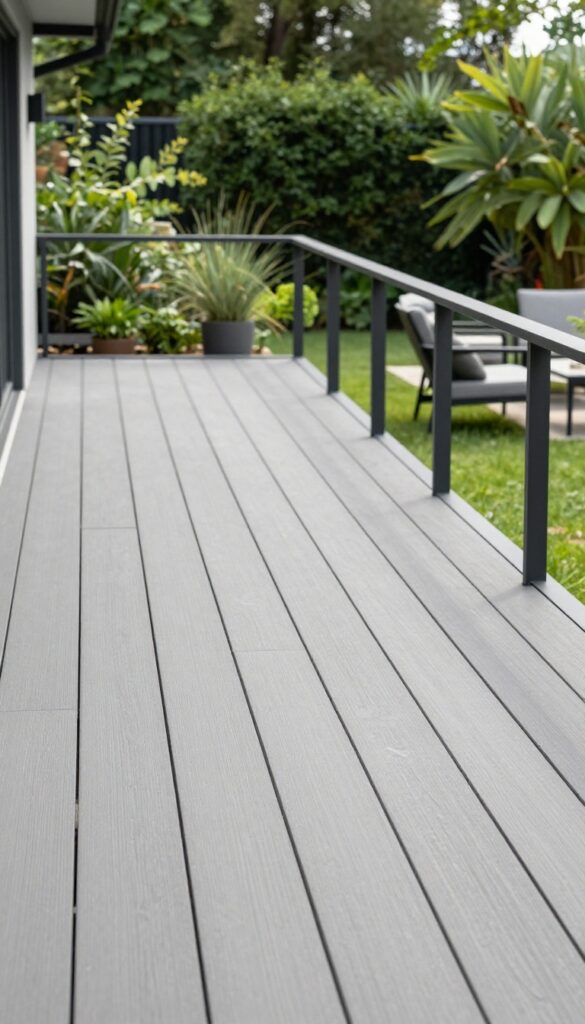
Narrow boards can make a deck feel busy. Wide plank composite boards create a smoother, more expansive look.
They reduce the number of visible seams, which makes the surface feel calmer and more modern. I’ve noticed wide boards also photograph better, which matters if you love sharing home updates.
Why This Works
Fewer seams mean fewer visual interruptions. The deck looks larger and more open.
It also speeds up installation since you’re covering more area per board.
How to Do It
- Choose high-quality wide composite boards designed for structural spacing.
- Ensure joists are properly spaced to support wider planks.
- Keep alignment straight from the first row to avoid a domino effect of crooked boards.
Style & Design Tips
Stick to matte finishes for a modern feel. Glossy boards can look artificial.
Pair wide planks with minimal railing designs to keep the look sleek.
Pro Tip or Budget Hack
If wide planks stretch your budget, use them only in visible areas and standard boards elsewhere.
5. Dark Charcoal Composite Deck
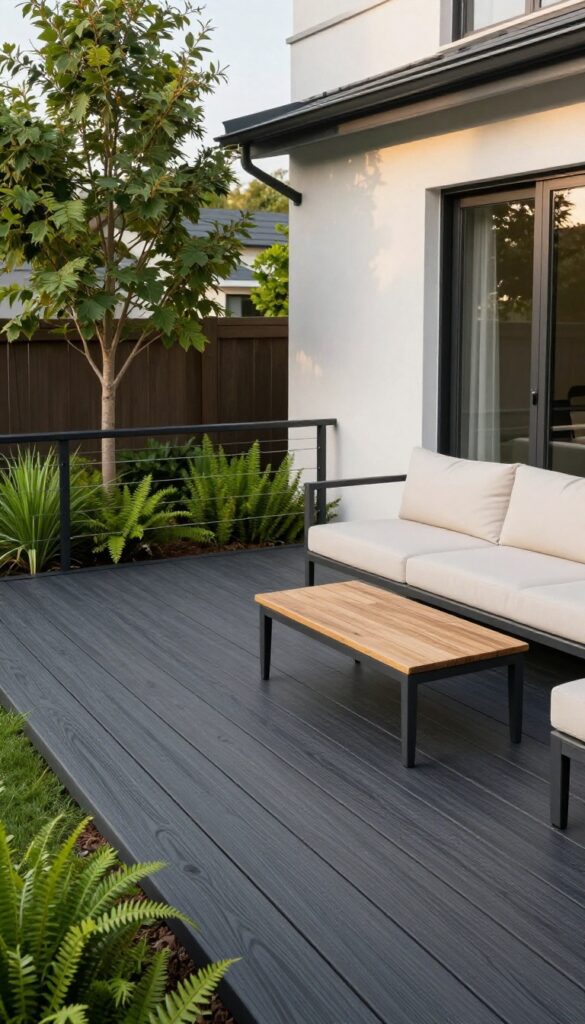
Light decks show dirt quickly. A dark charcoal composite deck hides everyday wear and feels bold without trying too hard.
I used to think dark decks would make spaces feel smaller, but when paired with light furniture and greenery, they look incredibly sharp.
Why This Works
Dark surfaces create contrast against landscaping and exterior walls. It grounds the entire backyard design.
Composite material also resists fading better than painted wood.
How to Do It
- Select UV-resistant charcoal composite boards.
- Pair with stainless steel or black railing for cohesion.
- Add warm lighting to soften the darker tone at night.
Style & Design Tips
Balance dark decking with light outdoor furniture or natural wood accents.
Avoid too many dark accessories. You want contrast, not a cave effect.
Pro Tip or Budget Hack
Buy sample boards first and view them in direct sunlight. Some charcoals lean blue, others brown.
6. Composite Deck with Hidden Fasteners
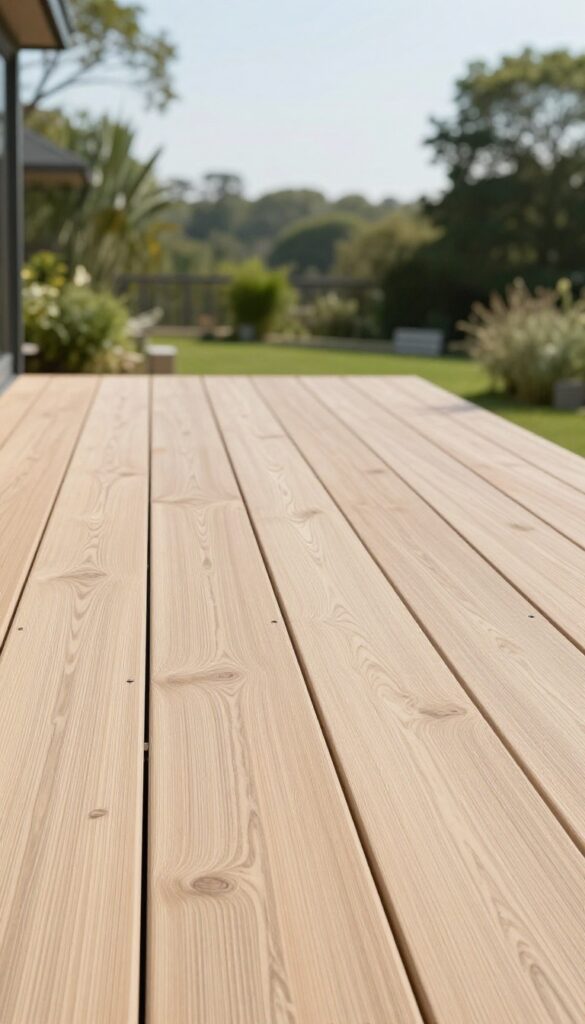
Visible screws can make even a modern deck look dated. Hidden fastener systems solve that instantly.
They create a smooth, uninterrupted surface that feels high-end and clean.
Why This Works
No visible hardware means a more polished look. It also prevents snagging bare feet.
The deck boards expand and contract more naturally with proper fastening systems.
How to Do It
- Use manufacturer-recommended hidden clip systems.
- Maintain consistent spacing between boards.
- Follow installation guidelines carefully.
Style & Design Tips
Choose consistent board grain patterns to enhance the seamless look.
Avoid mixing fastener systems.
Pro Tip or Budget Hack
Hidden fasteners cost more upfront but reduce maintenance headaches later.
7. Composite Deck with Metal Cable Railing
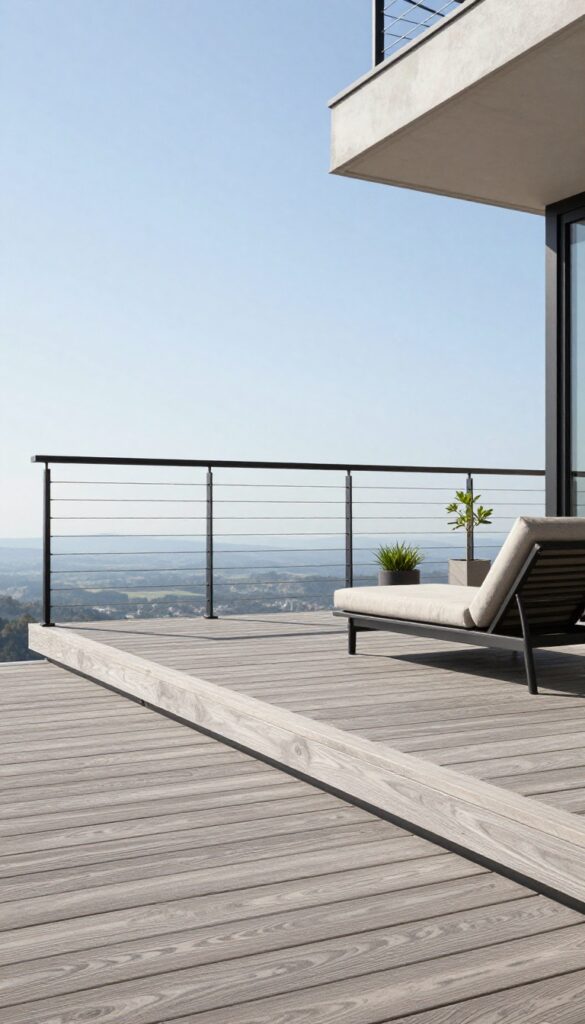
Bulky railings can block your view and ruin clean lines. Metal cable railing keeps sightlines open while maintaining safety.
It pairs beautifully with composite decking for a modern aesthetic.
Why This Works
Thin cables create transparency. The deck feels larger and less boxed in.
It works especially well for elevated decks with a view.
How to Do It
- Install sturdy posts first.
- Thread stainless steel cables evenly.
- Tension properly to avoid sagging.
Style & Design Tips
Keep posts in black or brushed metal for a sleek look.
Avoid mixing railing styles.
Pro Tip or Budget Hack
DIY kits can reduce installation costs significantly.
8. Integrated LED Deck Lighting
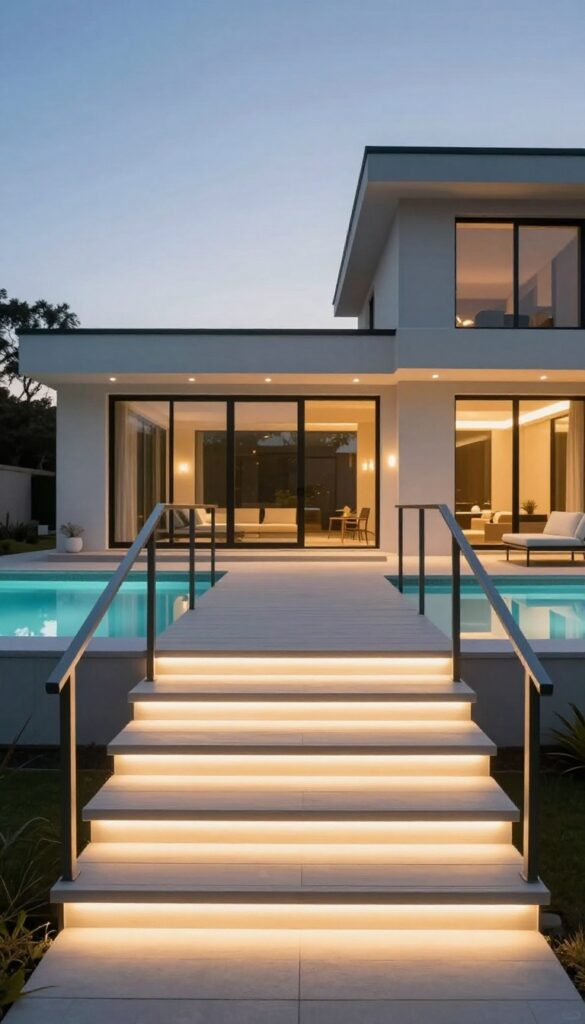
Harsh floodlights kill ambiance. Integrated LED deck lighting keeps things subtle and practical.
Built-in lights along stairs and railings improve safety without clutter.
Why This Works
Low-profile lighting enhances visibility while maintaining a modern vibe.
It highlights architectural features of your deck.
How to Do It
- Install low-voltage wiring during deck construction.
- Place lights along stairs and under railings.
- Test placement before final installation.
Style & Design Tips
Use warm white LEDs instead of cool blue tones.
Keep spacing even for symmetry.
Pro Tip or Budget Hack
Solar stair lights can reduce wiring costs.
9. Floating Composite Deck Platform
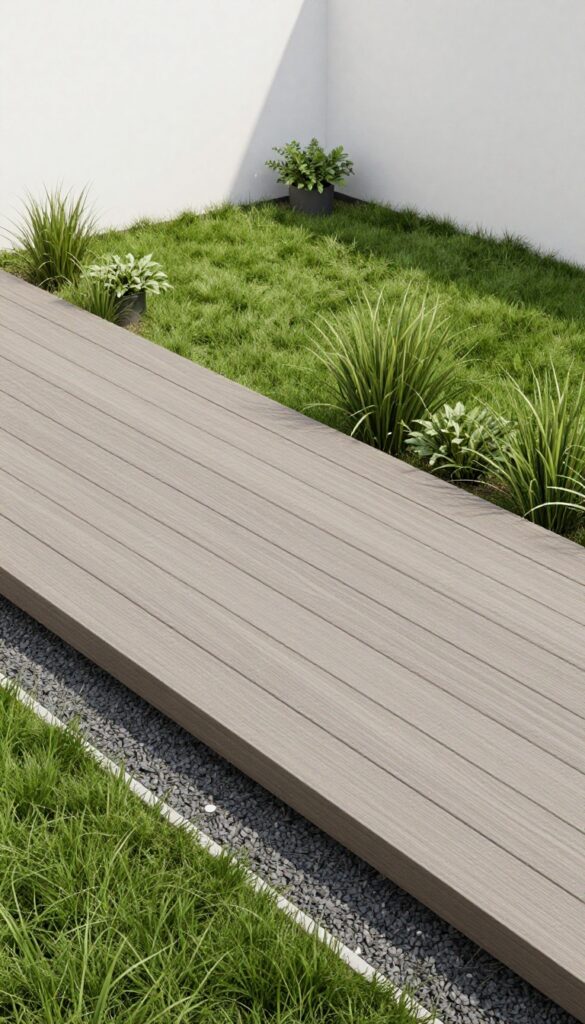
Not every yard needs a massive raised structure. A floating composite deck platform sits low to the ground and feels minimalist.
It works great for smaller backyards or patio extensions.
Why This Works
Low height keeps construction simpler and often avoids railing requirements.
It blends easily with landscaping.
How to Do It
- Level the ground thoroughly.
- Build a stable frame close to grade.
- Install composite boards as usual.
Style & Design Tips
Keep the platform edges crisp and squared.
Add potted plants for softness.
Pro Tip or Budget Hack
Use gravel underneath for drainage and weed control.
10. Two-Tone Composite Deck Design
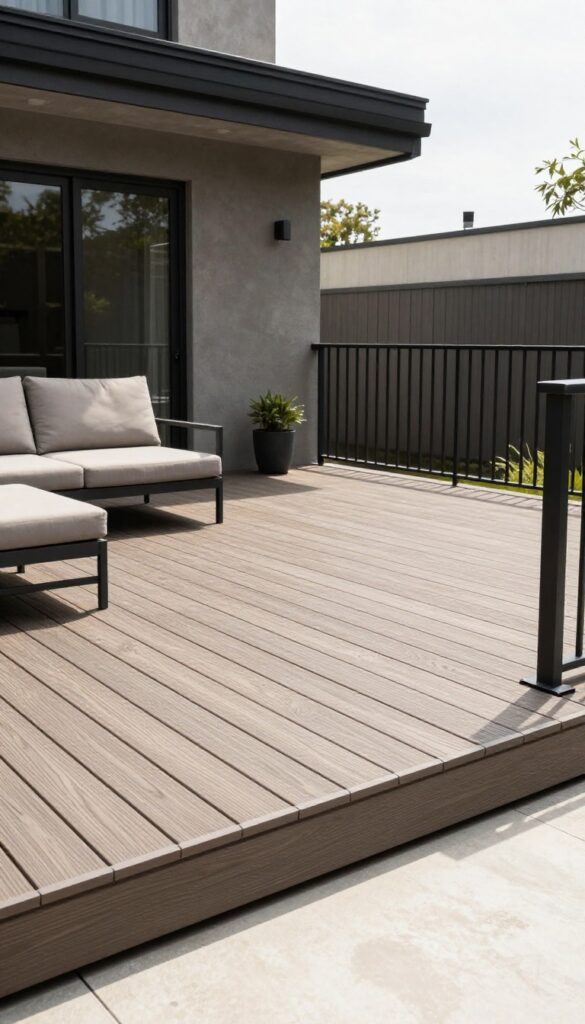
A single color can look flat in large spaces. Two-tone composite decking adds depth without chaos.
You can combine complementary shades for borders, steps, or feature zones.
Why This Works
Contrast defines areas and adds subtle personality.
It keeps the design interesting while staying modern.
How to Do It
- Choose shades within the same undertone family.
- Use darker tones for borders or stairs.
- Lay out the pattern before installation.
Style & Design Tips
Limit yourself to two tones only.
Avoid overly dramatic contrasts.
Pro Tip or Budget Hack
Use leftover boards from previous projects for accent sections.
Final Thoughts
Smart design choices make composite decking feel intentional instead of trendy. When you focus on function first, the style naturally follows.
I’ve learned that the best outdoor spaces balance clean lines with practical details. Pick one or two ideas that fit your lifestyle, build them well, and enjoy a deck that actually works for you.