10 Budget-Friendly Deck decorating Ideas
A deck without intention turns into wasted square footage fast. Most people spend money on furniture first and then wonder why the space still feels awkward or unfinished.
Small changes in layout, texture, and layering make a bigger difference than expensive pieces ever will.
I’ve played around with a few of these ideas on my own deck, and honestly, some of the cheapest tweaks made it look the most pulled together.
1. Define the Space with an Outdoor Rug
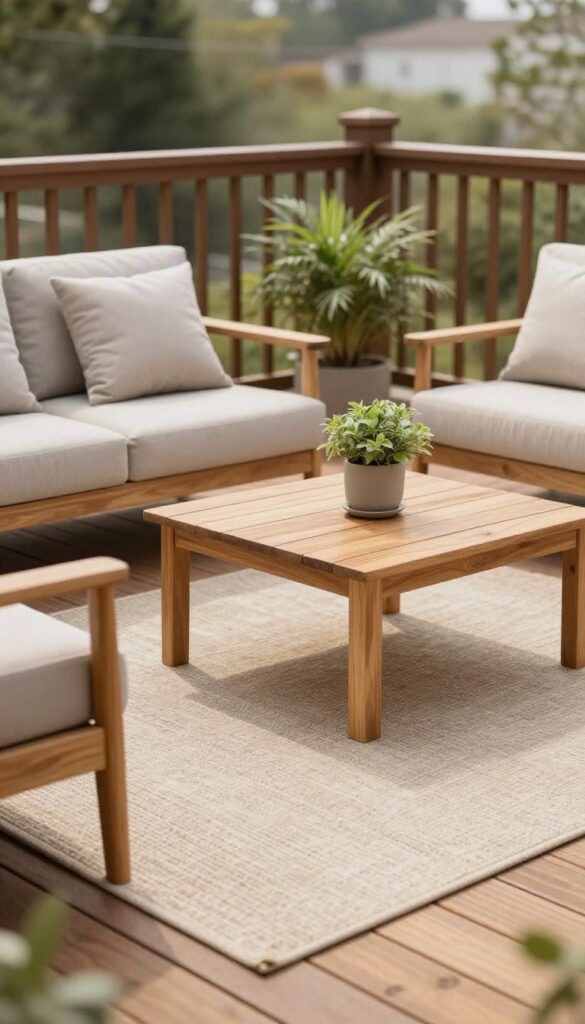
Deck boards alone can make a space feel flat and unfinished. Furniture placed directly on wood often looks scattered instead of intentional. An outdoor rug instantly creates structure without changing anything permanent.
I used to think rugs outside were unnecessary until I tried one under a small seating setup. The whole area suddenly felt like an outdoor living room instead of random chairs hanging out on wood.
Why This Works
A rug visually anchors furniture and defines a “zone” on your deck. It tricks the eye into seeing a cohesive setup instead of separate pieces.
It also softens all the hard lines of wood planks and railings. That contrast makes everything feel warmer and more inviting without adding clutter.
How to Do It
- Measure your seating area first so the rug fits at least under the front legs of your furniture.
- Choose a weather-resistant material like polypropylene so it handles rain and sun.
- Stick to neutral tones if your furniture already has patterns.
- Secure corners with rug tape to prevent shifting.
Each of these steps prevents that awkward “floating rug” look and keeps the layout balanced.
Style & Design Tips
Go slightly bigger than you think you need. A too-small rug makes everything feel cramped.
If your deck boards run horizontally, try a rug with a subtle vertical pattern for contrast. Avoid overly busy prints unless the rest of your décor stays simple.
Pro Tip or Budget Hack
Check indoor clearance sections for flatweave rugs. Many of them hold up surprisingly well outdoors if your deck is partially covered.
2. Add String Lights for Instant Warmth
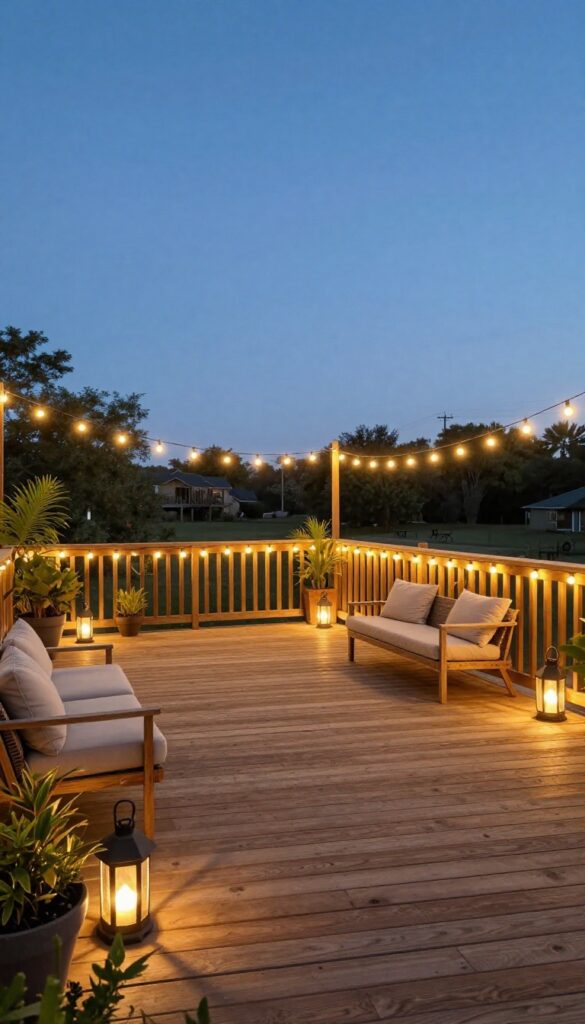
Deck lighting often gets overlooked until you actually try to use the space at night. A single porch light rarely creates the vibe you want.
I hung simple string lights across my railing once, and it changed the entire mood for under $40. No electrician, no complicated setup.
Why This Works
Lighting controls how a space feels more than any furniture piece. Soft, layered light makes even basic décor look intentional.
String lights create gentle illumination that doesn’t overpower the space. They also draw the eye upward, which makes a small deck feel larger.
How to Do It
- Choose warm white bulbs for a cozy glow.
- Use outdoor-rated clips or hooks to secure the strand safely.
- Run lights along railings, overhead beams, or in a zigzag pattern.
- Plug into a timer so they turn on automatically.
Planning placement first keeps the look clean instead of tangled.
Style & Design Tips
Avoid sagging lines unless you’re intentionally going for a relaxed look. Straight, evenly spaced strands feel more polished.
Pair lights with simple lanterns for depth. Just don’t mix cool and warm bulbs unless you want a mismatched effect.
Pro Tip or Budget Hack
Solar string lights eliminate the need for outlets. They cost slightly more upfront but save hassle long term.
3. Create a DIY Privacy Screen
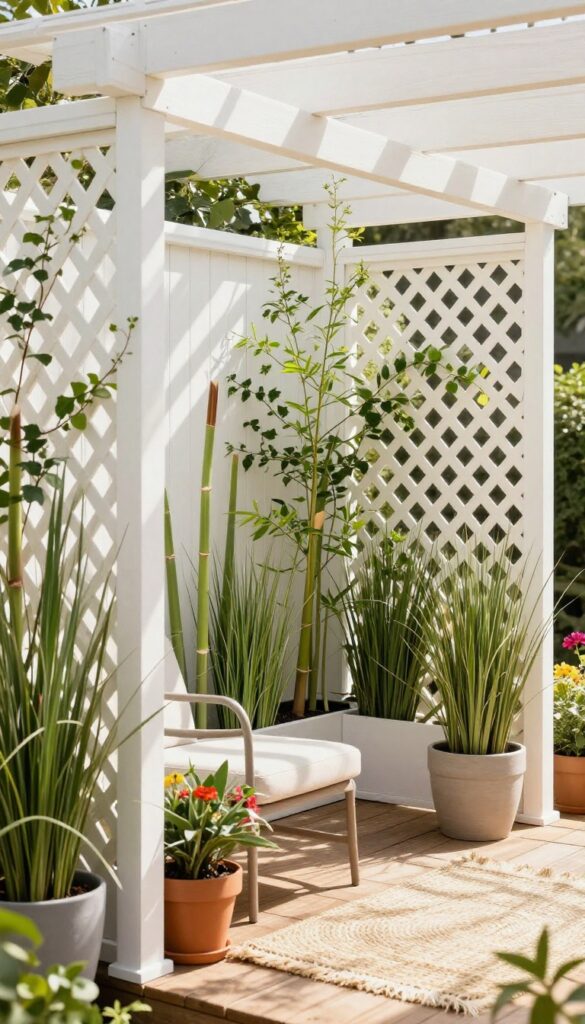
Open decks sometimes feel exposed, especially if neighbors sit close by. That lack of privacy can make you use the space less.
I once used simple lattice panels to block a side view, and it instantly made the deck feel like a retreat instead of a stage.
Why This Works
A privacy screen adds structure and height without building permanent walls. It creates boundaries that make the space feel intentional.
It also provides a backdrop for plants or décor, which helps layering look deliberate rather than random.
How to Do It
- Purchase affordable lattice panels or outdoor fabric.
- Attach panels to existing railings with brackets.
- Secure fabric using a tension rod or outdoor hooks.
- Add climbing plants for extra coverage over time.
Each step keeps installation simple and renter-friendly.
Style & Design Tips
Paint lattice the same color as your railing for a seamless look. Contrasting colors create a bold statement but require balance.
Keep patterns minimal if you already have busy décor. Too much visual noise can shrink the space.
Pro Tip or Budget Hack
Use tall potted plants like bamboo or ornamental grasses as movable privacy screens. They’re flexible and budget-friendly.
4. Repurpose Indoor Furniture with a Weatherproof Twist
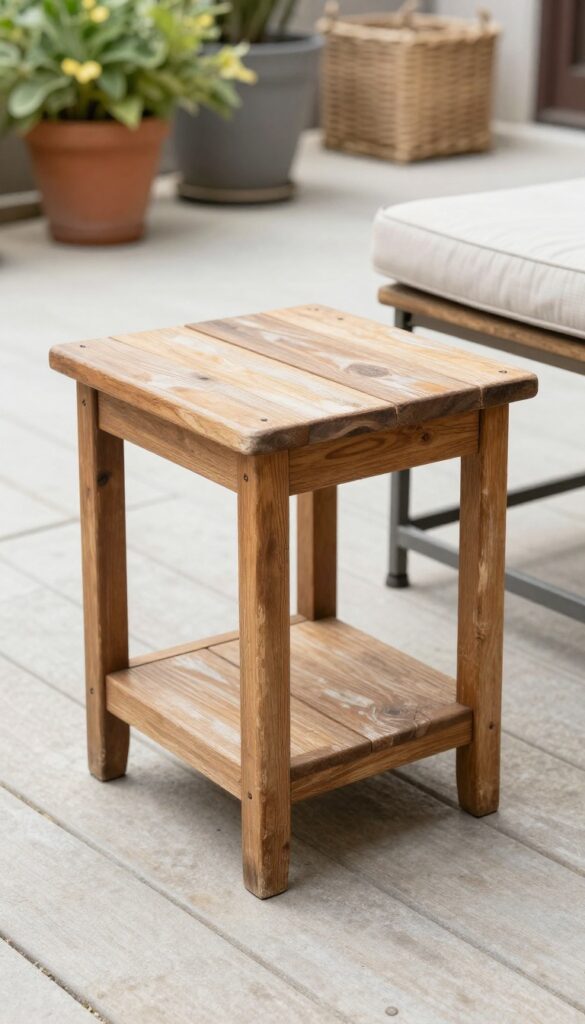
Buying full outdoor sets gets expensive fast. Many indoor pieces can transition outside with a little creativity.
I moved an old wooden side table outdoors and sealed it with exterior polyurethane. It’s been holding up surprisingly well.
Why This Works
Repurposing saves money while adding character. Outdoor sets from stores often look identical, but reused pieces feel personal.
It also reduces waste and gives forgotten furniture a second life.
How to Do It
- Choose sturdy materials like wood or metal.
- Sand lightly before applying exterior sealant.
- Add weather-resistant cushions if needed.
- Store indoors during harsh weather.
Proper sealing prevents cracking and extends lifespan.
Style & Design Tips
Mix textures thoughtfully. Pair wood with metal or wicker for depth.
Avoid delicate fabrics that fade quickly. Stick to neutral bases and add color with accessories.
Pro Tip or Budget Hack
Thrift stores often have solid wood pieces for cheap. A small sanding session can make them deck-ready.
5. Build a Simple Pallet Sofa
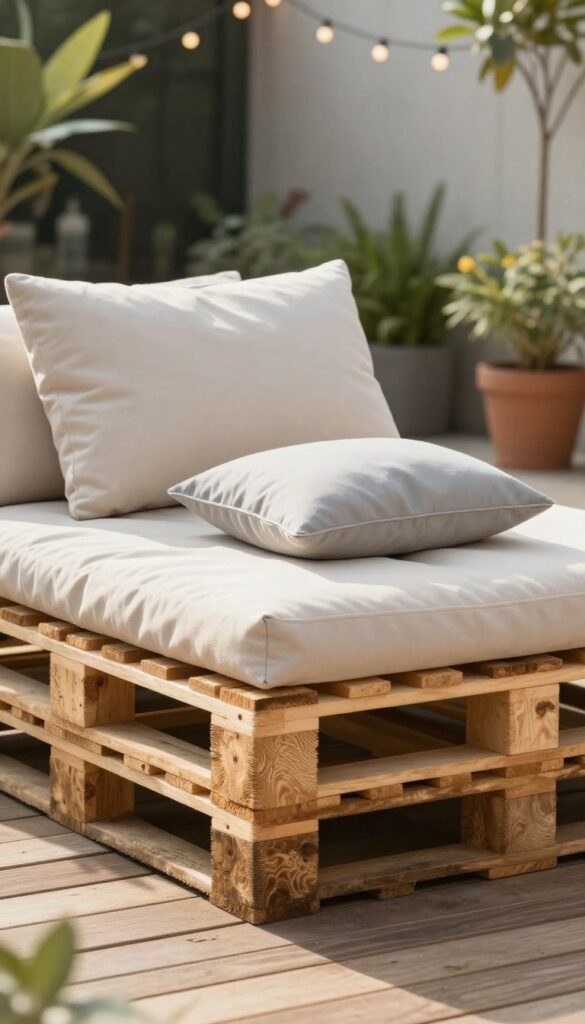
Seating eats up most deck budgets. A pallet sofa cuts costs while giving you flexibility in layout.
I built one in a weekend using free pallets and inexpensive cushions. It wasn’t fancy, but it was comfortable and practical.
Why This Works
Pallets create modular seating you can rearrange anytime. The structure feels solid without requiring advanced carpentry.
They also give a relaxed, casual vibe that works great outdoors.
How to Do It
- Source clean, untreated pallets.
- Sand thoroughly to remove splinters.
- Stack two pallets for height.
- Add thick outdoor cushions on top.
Securing pallets together prevents shifting over time.
Style & Design Tips
Paint or stain pallets for a polished look. Natural wood works, but a soft gray or white feels intentional.
Layer throw pillows in coordinated colors for personality without chaos.
Pro Tip or Budget Hack
Check local warehouses for free pallets. Many businesses give them away.
6. Incorporate Vertical Planters
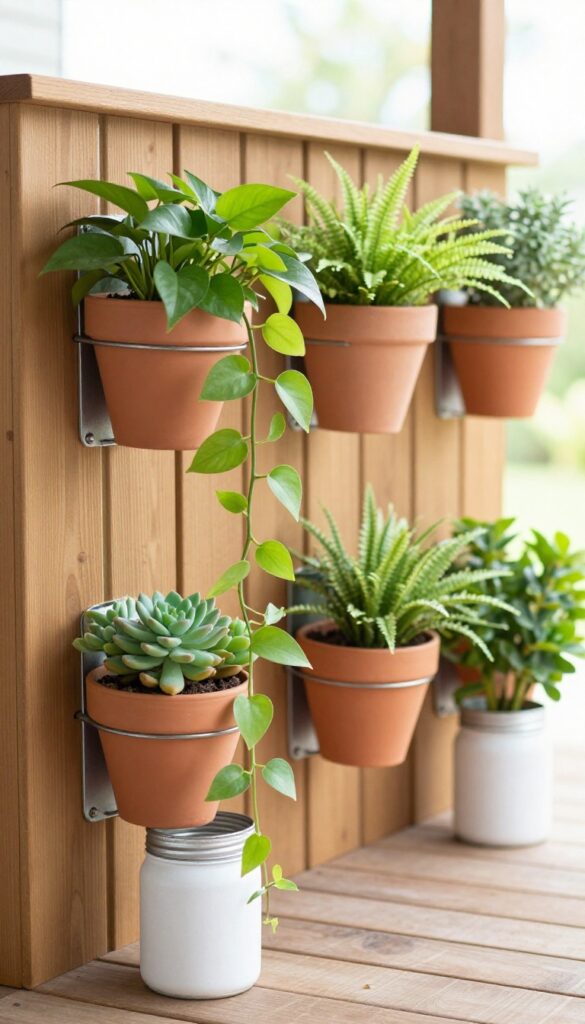
Floor space fills up quickly on small decks. Going vertical keeps things open while adding greenery.
I installed a few wall-mounted planters once, and it completely changed the energy of the space.
Why This Works
Vertical elements draw the eye upward, making the deck feel taller. Plants soften hard lines and add life.
They also maximize space without crowding walking areas.
How to Do It
- Install wall hooks or brackets securely.
- Use lightweight pots to avoid strain.
- Choose low-maintenance plants.
- Water carefully to prevent deck stains.
Planning drainage avoids long-term damage.
Style & Design Tips
Stick to a consistent pot color for a cohesive look. Mixed styles can feel cluttered fast.
Group plants in odd numbers for better visual balance.
Pro Tip or Budget Hack
Repurpose tin cans or mason jars as planters. A little spray paint makes them look intentional.
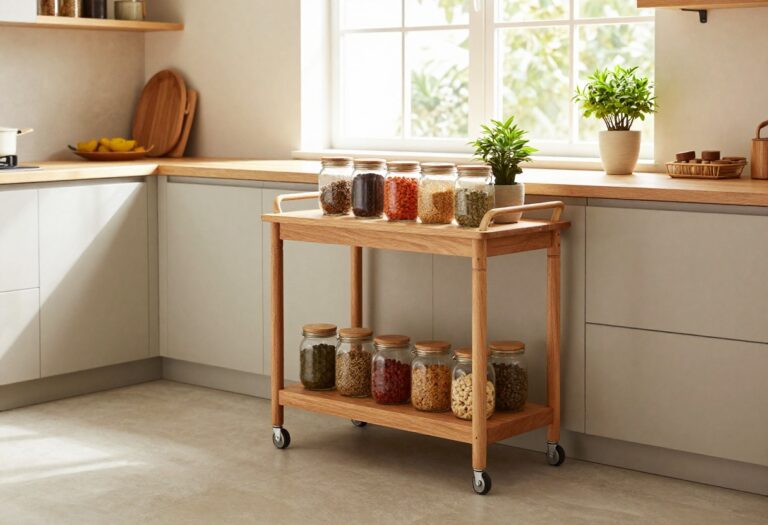
7. Add a Small Outdoor Bar Cart
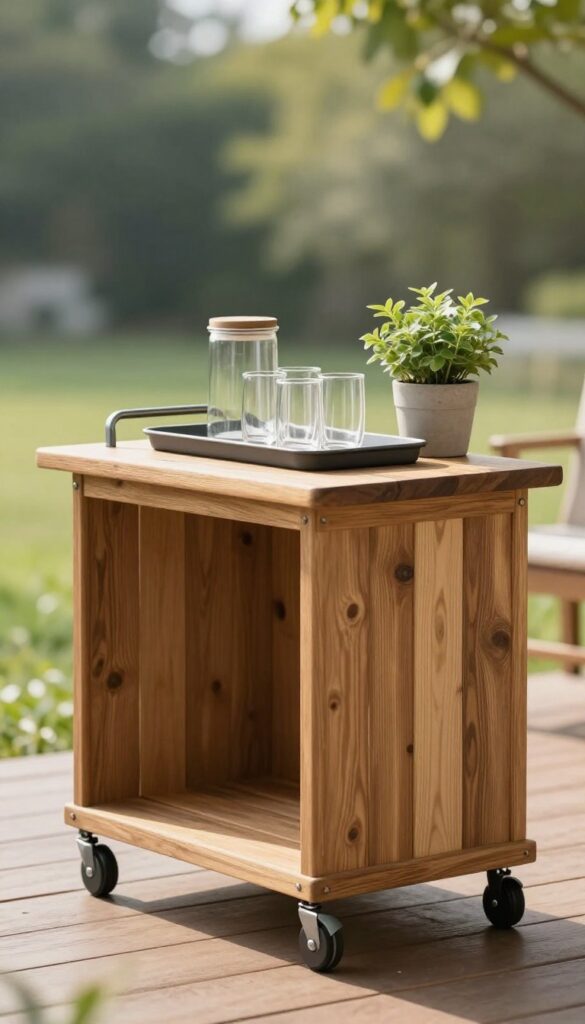
Entertaining outdoors becomes easier with a dedicated serving area. Carrying items back and forth gets old quickly.
A simple bar cart keeps everything in one place and makes gatherings smoother.
Why This Works
Functional décor adds convenience and style simultaneously. A cart adds mobility, which fixed furniture can’t provide.
It also creates a focal point without overwhelming the layout.
How to Do It
- Choose a weather-resistant cart.
- Add trays to organize drinks and snacks.
- Store items in sealed containers.
- Roll indoors after use if needed.
Mobility keeps the deck flexible.
Style & Design Tips
Keep the top surface uncluttered. Display only essentials and one decorative element.
Use matching glassware for a polished feel.
Pro Tip or Budget Hack
A repainted utility cart from a garage sale works just as well as expensive outdoor versions.
8. Install Simple Railing Décor
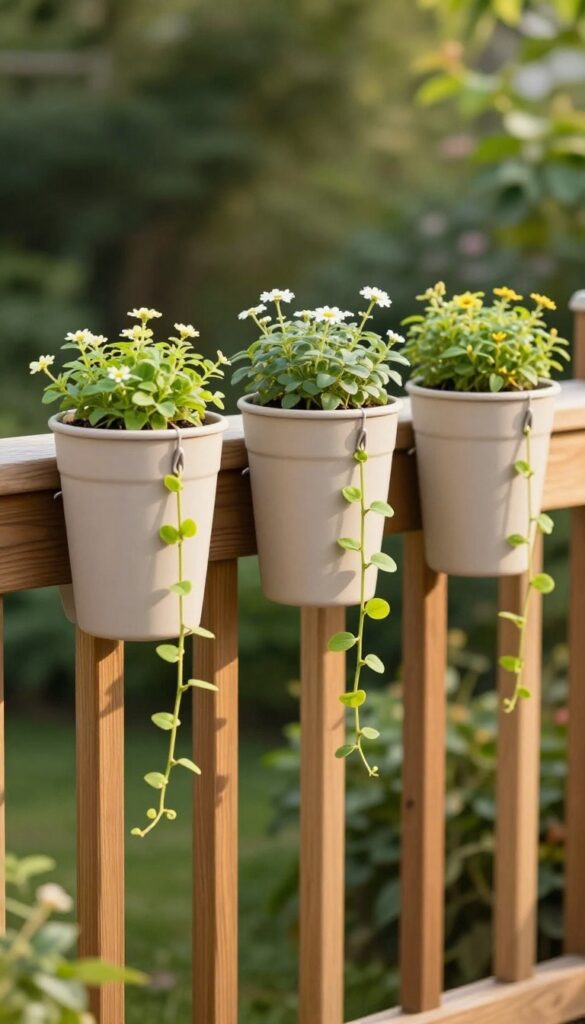
Deck railings often sit bare and unnoticed. That unused space holds a lot of decorating potential.
I hung small planters along mine, and it made the perimeter feel intentional.
Why This Works
Decorating railings frames the space. It draws attention outward and expands the visual boundary.
It also adds personality without using floor space.
How to Do It
- Attach railing planters securely.
- Choose lightweight materials.
- Space evenly for symmetry.
- Check drainage regularly.
Proper spacing prevents overcrowding.
Style & Design Tips
Keep planter colors consistent. Mixing too many finishes feels messy.
Avoid oversized décor that blocks views.
Pro Tip or Budget Hack
DIY wooden boxes attach easily and cost far less than store-bought versions.
9. Layer Throw Pillows and Blankets
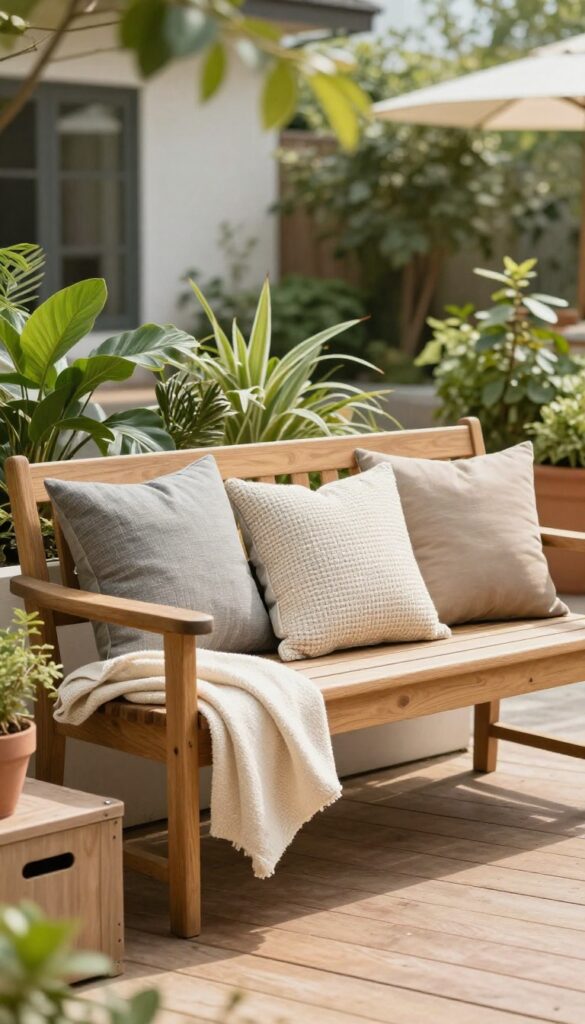
Hard outdoor seating needs softness. Without textiles, decks can feel stiff and uninviting.
I underestimated how much a few throw pillows could change comfort levels until I tried it.
Why This Works
Textiles add warmth and visual depth. They also introduce color without committing to permanent changes.
Layering makes basic furniture look styled instead of sparse.
How to Do It
- Choose outdoor-rated fabrics.
- Mix solid and subtle patterns.
- Store cushions in a deck box.
- Rotate colors seasonally.
Weatherproof storage protects your investment.
Style & Design Tips
Limit your palette to three colors for cohesion. Too many shades can feel chaotic.
Add one textured pillow for dimension.
Pro Tip or Budget Hack
Buy pillow covers separately and reuse inserts. It saves money long term.
10. Create a Cozy Corner Nook
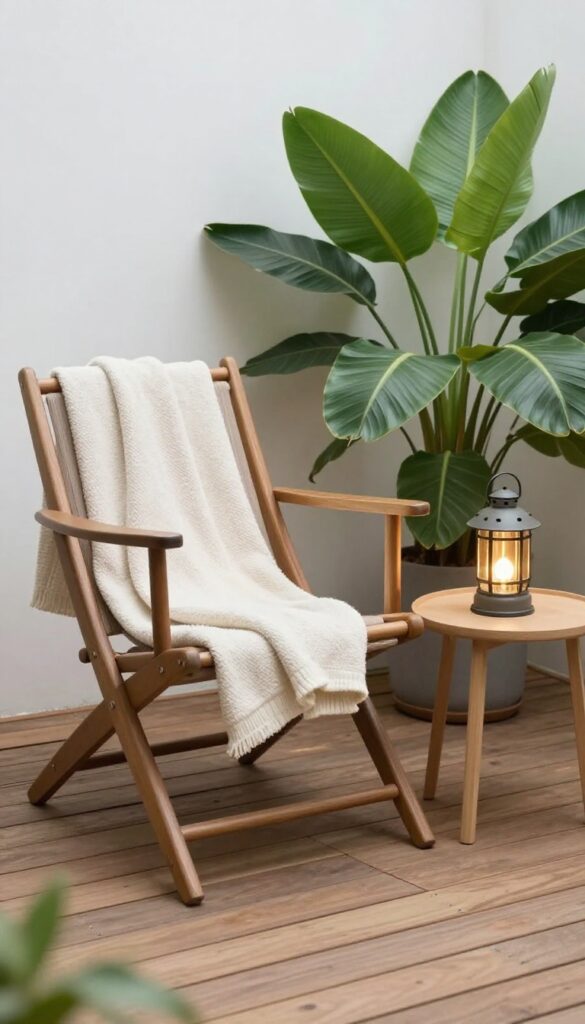
Empty corners waste potential. Turning one into a reading or relaxation spot adds purpose.
I placed a single chair, small table, and plant in a corner once, and it became my favorite part of the deck.
Why This Works
Defined corners create intimacy. Smaller zones feel intentional rather than leftover.
They also break up large open layouts.
How to Do It
- Choose a comfortable accent chair.
- Add a small side table.
- Include soft lighting nearby.
- Keep décor minimal.
Balancing comfort and simplicity keeps the nook usable.
Style & Design Tips
Position seating at an angle for a relaxed feel. Straight lines sometimes look rigid.
Use one statement plant instead of several small ones.
Pro Tip or Budget Hack
Shop clearance sections at the end of summer for discounted outdoor chairs.
Final Thoughts
Budget decorating isn’t about cutting corners; it’s about choosing smarter upgrades. Small, intentional tweaks often outperform big purchases.
I’ve learned that layering, lighting, and layout matter more than price tags. Start with one idea, adjust it to fit your space, and build from there.