10 Kitchen Flooring Ideas That Wow Instantly
Most kitchens look “fine” until the floor starts looking tired, stained, or weirdly dated. And once you notice it, you can’t unsee it.
Flooring has this sneaky power where it can make a kitchen feel expensive, cozy, modern, or chaotic… without changing a single cabinet.
The good news is you don’t need some luxury renovation budget to make your kitchen floor look amazing. You just need the right idea and a little strategy. Some of these options are genuinely gorgeous, and some are surprisingly practical too.
1. Classic Checkerboard Tile (Black and White or Soft Neutrals)
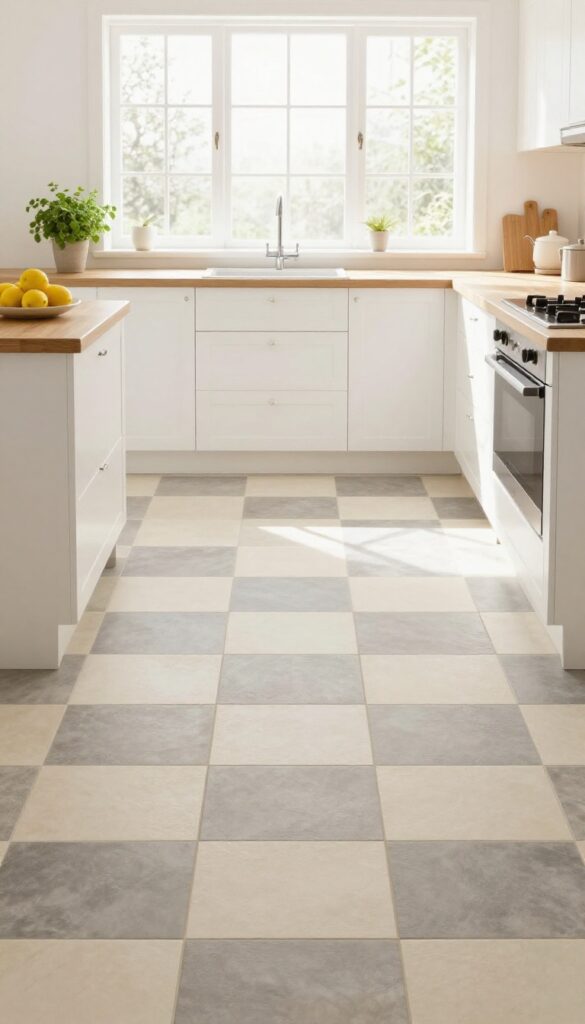
A kitchen can have beautiful cabinets and nice countertops, but if the floor feels flat, the whole space still looks unfinished.
That’s where checkerboard tile comes in, because it instantly adds personality without needing extra décor. It also gives the kitchen that “designed on purpose” look instead of “everything was picked separately.”
Checkerboard floors aren’t just for retro diners or old houses either. You can make them feel modern with softer colors like cream and warm gray, or even beige and white. I’ve seen a small kitchen go from boring to high-end just because of this one flooring choice.
The best part is it hides everyday mess better than solid-colored floors. Spills and crumbs don’t scream for attention as much, which is honestly a blessing if you actually use your kitchen like a real human.
Why This Works
Checkerboard tile works because it creates contrast and movement. The pattern naturally draws your eye across the space, which makes the kitchen feel bigger and more intentional. It also balances out plain cabinets or simple countertops by adding visual interest down low.
It’s one of those designs that feels “classic” instead of trendy, so you won’t regret it in two years. Plus, it gives the room structure, like it’s holding everything together.
How to Do It
- Choose two colors that match your kitchen vibe (classic black/white, warm beige/cream, or gray/white).
- Pick tile size based on the kitchen size (smaller kitchens usually look better with medium tiles).
- Lay out the pattern before installation so the squares line up evenly.
- Use dark grout if you want low-maintenance, or light grout for a cleaner look.
- Seal the grout properly so it doesn’t turn into a stain magnet.
Each step matters because checkerboard patterns look awful if they’re slightly off. This is one of those times where measuring and planning saves you from daily annoyance.
Style & Design Tips
If your cabinets are bold or colorful, keep the checkerboard more subtle with soft neutral tones. If your kitchen is mostly white or wood, you can go dramatic with black and white for that crisp pop. Avoid super glossy tiles unless you enjoy seeing every footprint like it’s an evidence scene.
A common mistake is pairing checkerboard with busy countertops or loud backsplashes. The floor is already doing the talking, so let the rest of the kitchen chill.
Pro Tip or Budget Hack
If real tile installation is too expensive, you can get the look with peel-and-stick vinyl tiles in a checkerboard pattern. It’s not quite the same as real ceramic, but it looks shockingly good when installed carefully. Just don’t rush the alignment, because crooked squares will haunt you forever.
2. Wide-Plank Luxury Vinyl That Looks Like Real Hardwood
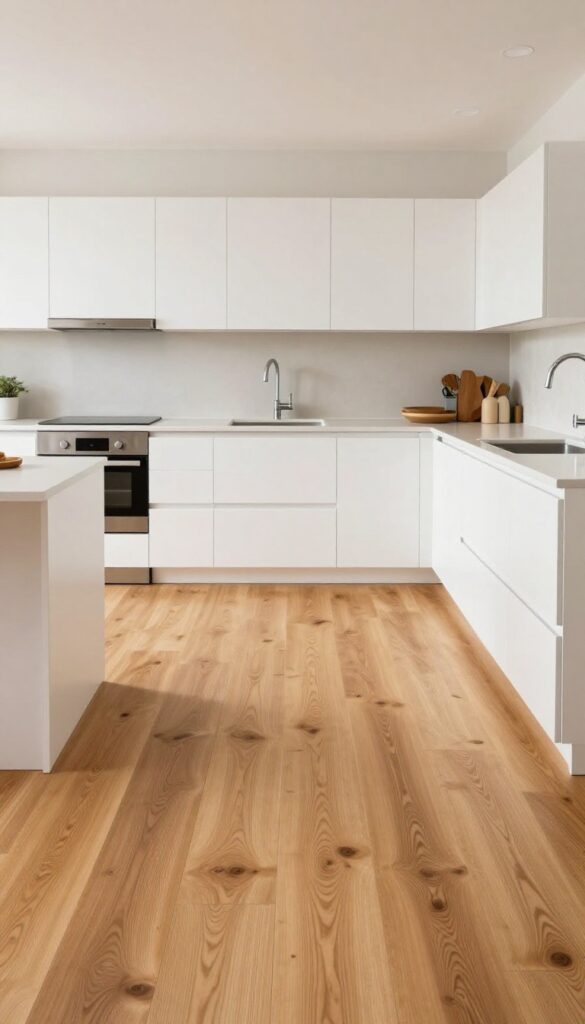
A lot of people love the look of hardwood floors in the kitchen, but hardwood and kitchens don’t always get along. Water spills, dropped pans, and constant foot traffic can mess it up fast. Wide-plank luxury vinyl gives you the same cozy wood vibe without making you panic every time someone splashes the sink.
This is one of my favorite flooring choices because it looks expensive even when it isn’t. Wide planks make the kitchen feel bigger and more open, and the texture options now are honestly impressive. Some of these vinyl floors look so real you’d have to get on your knees and inspect them like a flooring detective.
If you want a “Pinterest kitchen” without the maintenance drama, this is the move. It also feels warmer underfoot than tile, which matters more than people admit.
Why This Works
Wide planks work because they create fewer seams, which makes the floor look cleaner and more high-end. The wood grain pattern adds warmth and softness, which balances out cold elements like stainless steel appliances. Vinyl also holds up against water and daily wear, so it’s practical, not just pretty.
It gives you that modern farmhouse or cozy contemporary vibe without locking you into one style. That flexibility is a big win if you like changing décor.
How to Do It
- Choose a color tone that matches your cabinets (warm oak, honey, walnut, or gray wood).
- Pick a plank width that fits your kitchen size (wider planks look more modern).
- Prep the subfloor so it’s smooth and clean.
- Use click-lock vinyl planks for easier DIY installation.
- Leave expansion gaps along the edges so the floor doesn’t buckle.
The prep step matters more than people think. If the floor underneath is uneven, vinyl will show bumps and gaps over time.
Style & Design Tips
If you want an upscale look, choose vinyl with matte texture and natural grain variation. Avoid overly orange wood tones unless your cabinets are very neutral. I also recommend skipping super gray flooring unless you’re sure your kitchen won’t feel cold.
Pair wide-plank vinyl with simple rugs, not overly patterned ones, because the wood grain already brings texture. Too much pattern can make the kitchen feel messy.
Pro Tip or Budget Hack
Buy one extra box of planks even if you don’t think you need it. Flooring gets discontinued all the time, and if you ever have to replace a damaged section later, you’ll be glad you did. Future-you will thank you and feel weirdly responsible.
3. Patterned Cement Tile for a Bold Statement Floor
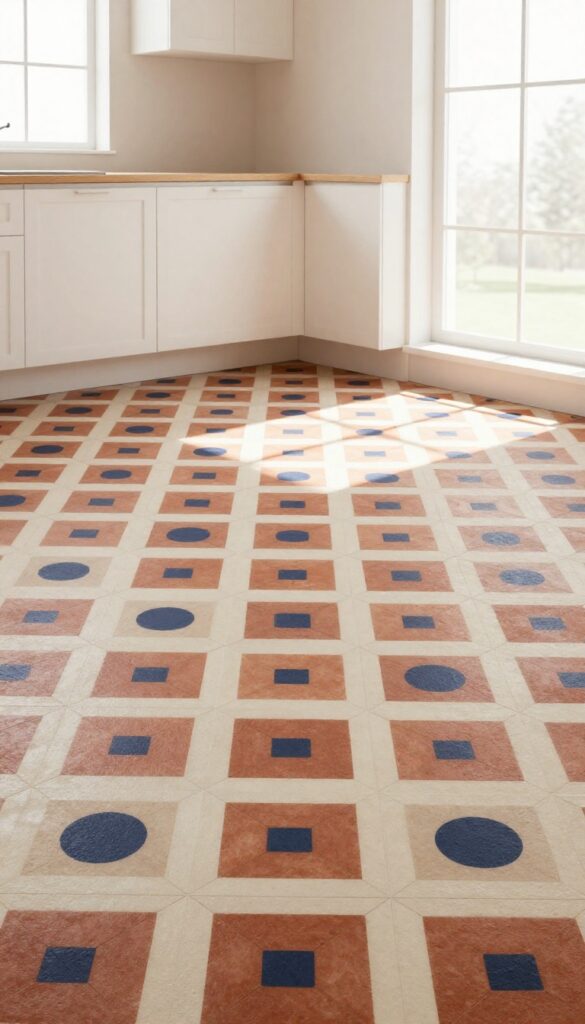
Some kitchens feel bland because everything is neutral and safe. Patterned cement tile fixes that problem immediately, because it turns the floor into a design feature instead of just a surface you walk on. It’s the kind of flooring that makes guests go, “Wait… your floor is amazing.”
This is a great choice if you want your kitchen to feel unique without buying expensive designer cabinets. I’ve seen people completely upgrade a basic kitchen just by adding a bold tile pattern, and suddenly the whole room looks custom.
The key is choosing a pattern that feels timeless instead of trendy. If you go too wild, it can feel dated fast, but a good pattern feels like it belongs forever.
Why This Works
Patterned cement tile works because it adds instant depth and character. It also creates visual movement, which makes the kitchen feel more layered and interesting. Instead of relying on décor clutter, the floor becomes the personality piece.
It’s also practical because patterns hide small stains and crumbs better than plain floors. That’s not glamorous, but it’s real life.
How to Do It
- Pick a pattern that matches your kitchen style (Mediterranean, vintage, geometric, or modern).
- Choose colors that connect with your cabinets and backsplash.
- Use the patterned tile in the main floor area and keep the rest simple.
- Install with consistent spacing and level alignment.
- Seal the tile properly to protect it from moisture and stains.
Sealing is non-negotiable. Cement tile is porous, and unsealed tile will soak up spills like a sponge.
Style & Design Tips
If your cabinets are busy or have heavy wood grain, go with a more subtle pattern. If your cabinets are plain white or light wood, you can go bolder. Try to stick with two to three main colors in the tile so it doesn’t feel chaotic.
Avoid pairing patterned floors with loud wallpaper or super busy countertops. A common mistake is making every surface fight for attention.
Pro Tip or Budget Hack
If real cement tile is out of budget, look for porcelain tile that mimics cement patterns. It’s cheaper, easier to maintain, and still gives you that dramatic designer look. Porcelain also holds up better to kitchen abuse, which is kind of important if you cook like a normal person.
4. Light Stone-Look Porcelain Tile for a Clean, Upscale Feel
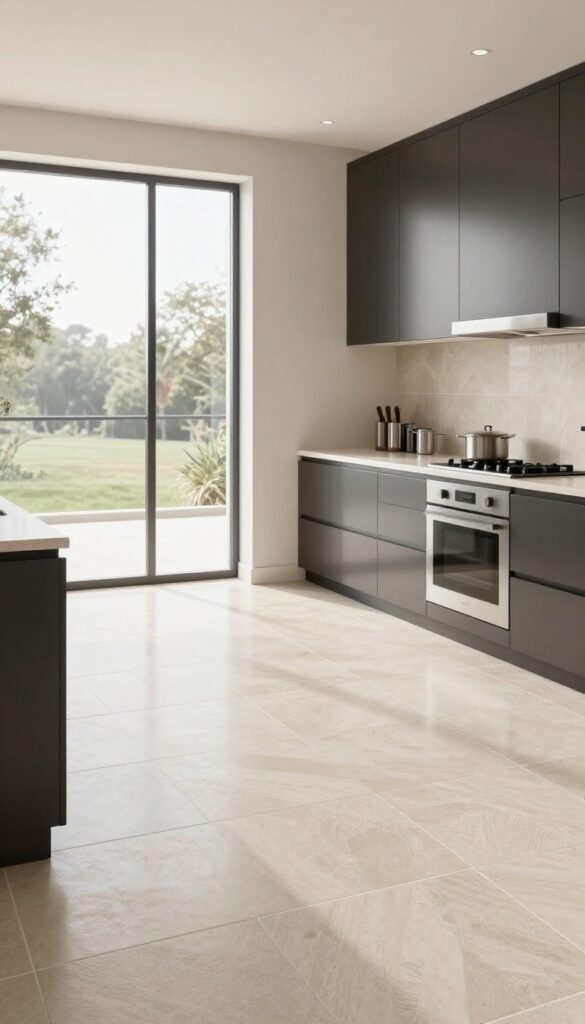
Some kitchens feel dark and cramped even when they have decent lighting. A light stone-look porcelain tile can brighten everything instantly and make the space feel more open. It’s like the floor version of a glow-up.
This style works especially well if your kitchen has dark cabinets or a lot of stainless steel. The lighter floor balances everything out and makes the room feel fresh. I’m not even exaggerating when I say it can make a kitchen look like it belongs in a high-end home listing.
Stone-look tile gives you that luxury vibe without the maintenance issues of real stone. And honestly, real stone can be a pain.
Why This Works
Light stone-look porcelain works because it reflects light and visually expands the space. It also gives the kitchen a clean, polished foundation that makes everything else look more expensive. The subtle natural pattern adds texture without being loud.
Porcelain is also incredibly durable, so you can drop pans, spill water, and live your life without stressing. That’s the kind of flooring peace I respect.
How to Do It
- Choose a stone-look porcelain in a light tone (cream, beige, soft gray, or ivory).
- Pick a tile size that fits your kitchen (large-format tiles look more modern).
- Use thin grout lines for a cleaner look.
- Select grout color close to the tile color for a seamless effect.
- Install with a leveling system to avoid lippage.
Large tiles look amazing, but they show uneven installation more easily. That’s why leveling tools matter.
Style & Design Tips
Go for a matte or satin finish instead of glossy. Glossy tile reflects too much light and can look cheap or slippery. Pair light stone tile with warm wood accents so the kitchen doesn’t feel sterile.
Avoid using bright white grout because it will get dirty fast. People always think they’ll keep it clean, and then reality shows up.
Pro Tip or Budget Hack
If you want a luxury look without paying luxury prices, shop for tile at end-of-season clearance sales. Stores constantly rotate inventory, and you can score high-end porcelain for way less. Just make sure you buy enough all at once, because matching batches later can be a nightmare.
5. Dark Slate-Look Tile for a Moody, Modern Kitchen
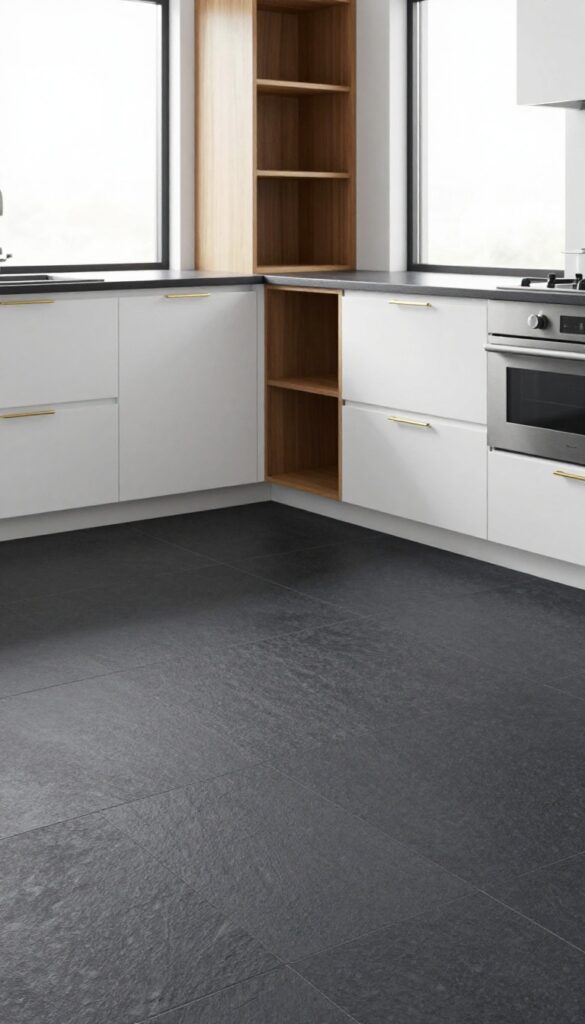
Not every kitchen needs to be bright and airy. Sometimes you want moody, dramatic, and sleek, and dark slate-look tile can deliver that instantly. It makes the kitchen feel grounded and sophisticated, like the floor is wearing a tailored suit.
This style looks amazing with white cabinets because the contrast is sharp and modern. It also pairs beautifully with wood cabinetry if you want a cozy but upscale vibe. I used to think dark floors would feel too heavy, but when done right, they look insanely good.
The secret is balance. If the kitchen is already dark, you’ll need lighter walls or counters to keep it from feeling like a cave.
Why This Works
Dark slate-look tile works because it adds depth and contrast. It also hides stains better than light tile, which is honestly a major perk if you cook a lot. The subtle stone texture keeps it from looking flat, so it feels rich instead of dull.
It also makes stainless steel appliances pop, which gives the kitchen that modern edge. It’s one of those choices that looks expensive without screaming for attention.
How to Do It
- Choose a slate-look porcelain tile with texture and variation.
- Pick a tile size that matches your style (large tiles look modern, smaller ones feel rustic).
- Use dark grout to reduce visible staining.
- Add good lighting so the floor doesn’t make the room feel too heavy.
- Seal grout lines for easy maintenance.
Lighting is crucial here. Dark floors look amazing, but they can absorb light, so you need to plan around that.
Style & Design Tips
Pair this floor with warm wood accents or brass hardware so the kitchen doesn’t feel cold. Avoid pairing it with too many gray tones unless you want a very industrial look. Also, don’t go too shiny, because glossy dark tile shows dust and footprints like crazy.
If you want the slate vibe without the “constant cleaning” vibe, matte finish is your best friend.
Pro Tip or Budget Hack
Use dark slate-look tile in the main kitchen area, but add a washable runner rug near the sink. It breaks up the darkness and saves your feet during long cooking sessions. Bonus points because it also protects the tile from heavy wear where you stand the most.
6. Brick-Style Flooring for a Warm, Rustic Kitchen
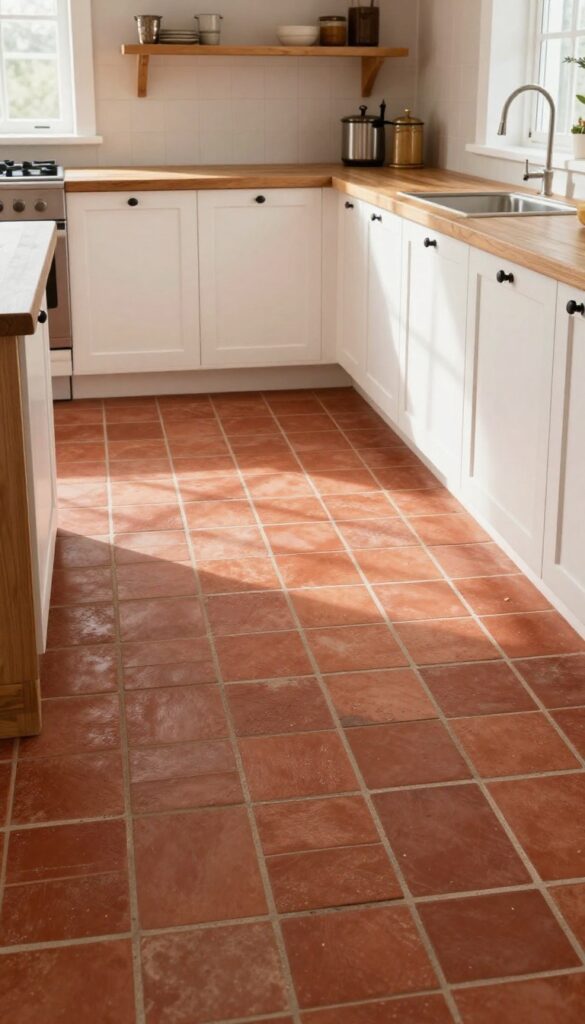
Some kitchens feel too polished, like you’re not allowed to actually cook in them. Brick-style flooring adds warmth and texture that makes a kitchen feel lived-in, cozy, and charming. It’s the kind of floor that makes you want to bake bread, even if you have no business doing that.
Real brick floors exist, but they’re expensive and a lot of work. The good news is brick-look tile has come a long way, and it looks surprisingly authentic. You can get that rustic farmhouse vibe without needing to renovate like you’re restoring a castle.
I love this style because it hides dirt well and adds character instantly. It’s basically the opposite of a sterile kitchen.
Why This Works
Brick-style flooring works because it adds natural texture and warmth. It makes the kitchen feel grounded and homey, especially if you have white cabinets or wood countertops. The pattern also creates movement, which keeps the floor visually interesting.
It’s also a forgiving surface visually. Scratches, crumbs, and everyday wear blend in better than on sleek modern floors.
How to Do It
- Choose brick-look porcelain tile in a warm tone (red clay, terracotta, or soft brown).
- Decide on your layout (traditional staggered brick pattern works best).
- Use grout that matches the tile tone for a natural look.
- Seal grout lines to prevent staining.
- Add a few rustic accents like wood shelves or black metal hardware.
The layout matters because brick patterns can look awkward if they’re not aligned properly. Staggered patterns usually look the most natural.
Style & Design Tips
If you want a cozy farmhouse look, pair brick floors with white cabinets and wood accents. If you want something more modern, go for a muted brick tone like gray-brown or washed terracotta. Avoid super orange brick unless your kitchen style supports it.
A common mistake is using bright white grout, which makes the brick pattern look too harsh and artificial. Softer grout tones look more realistic.
Pro Tip or Budget Hack
Instead of doing the entire kitchen in brick tile, you can use it as an accent zone, like under a kitchen island or in a breakfast nook area. It gives you the vibe without the full installation cost. It’s kind of like giving your kitchen a feature wall, but on the floor.
7. Herringbone Wood-Look Tile for Instant Designer Energy
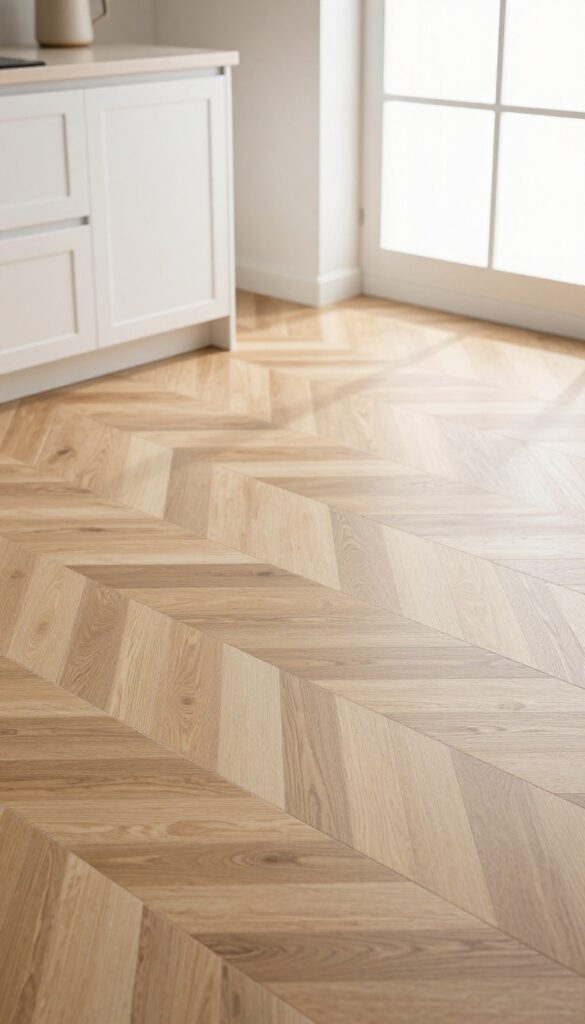
Some flooring patterns just look expensive, even when they aren’t. Herringbone is one of those patterns, because it feels detailed and custom. It’s the kind of thing you see in high-end homes and think, “Okay wow, they did not mess around.”
Using wood-look tile in a herringbone layout gives you the best of both worlds. You get the warmth of wood, but the durability of tile, which is perfect for kitchens. I’ve always loved this look because it feels stylish without being loud.
It also makes narrow kitchens feel more dynamic. Instead of the floor feeling like a long hallway, the pattern breaks it up in a really flattering way.
Why This Works
Herringbone works because it adds movement and sophistication. The pattern naturally draws the eye around the room, which makes the space feel more interesting. It also adds texture without needing bright colors or bold designs.
Wood-look tile adds warmth, and the herringbone layout adds structure. Together, they make the kitchen feel intentional and high-end.
How to Do It
- Choose wood-look porcelain tile planks in a natural tone.
- Decide on a herringbone scale (smaller planks look more intricate).
- Plan the layout carefully before installation.
- Start from the center point to keep the pattern symmetrical.
- Use grout that matches the tile color for a seamless look.
Planning is everything here. Herringbone looks stunning, but if it’s crooked, it looks like a DIY fail instantly.
Style & Design Tips
Stick to natural wood tones like oak, walnut, or warm beige for the most timeless look. Avoid overly gray wood-look tile unless the rest of the kitchen is warm enough to balance it. Pair this floor with simple cabinets because the pattern is already doing a lot of work.
Also, don’t use super contrasting grout unless you want the herringbone to scream at people. Subtle grout makes it feel more elegant.
Pro Tip or Budget Hack
If full herringbone tile is too expensive to install, you can mimic the look with herringbone vinyl planks. Some brands make pre-patterned sheets or click-lock pieces that create the same design. It’s not identical, but it gets you close without paying custom installation prices.
8. Concrete-Look Flooring for a Minimalist Modern Kitchen
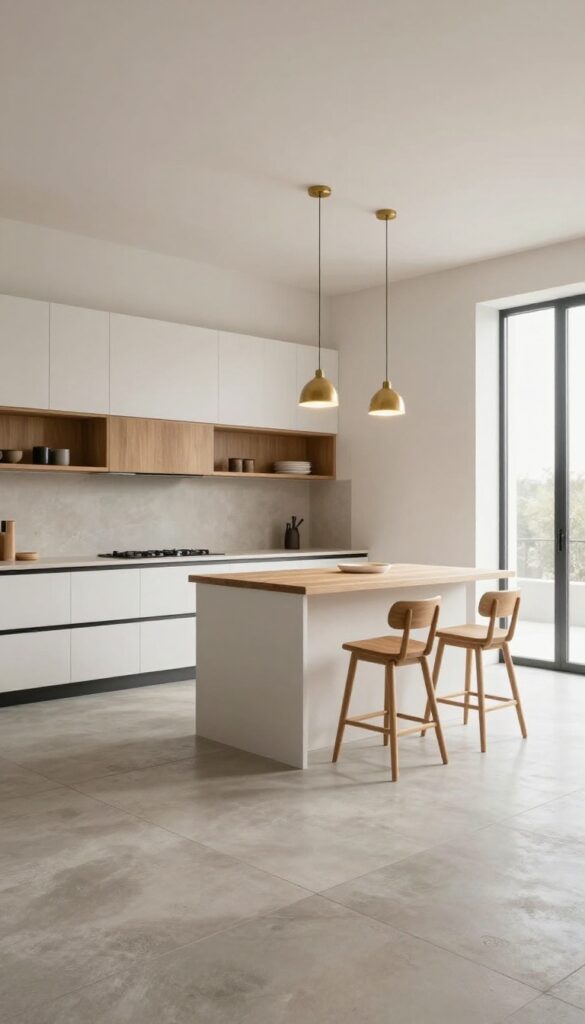
Some people love kitchens that feel sleek and modern, almost like a high-end loft. Concrete-look flooring nails that style instantly. It gives the kitchen a clean, minimal base that makes everything else look sharper.
Concrete-look tile or vinyl works great if you want a modern vibe without cold industrial harshness. I’ve seen this style look amazing in kitchens with white cabinets, black hardware, and simple open shelving. It can also look surprisingly warm if you pair it with wood accents.
The key is choosing the right shade of “concrete.” Too dark and it feels heavy, too light and it can look like unfinished drywall.
Why This Works
Concrete-look flooring works because it’s neutral and grounding. It makes the kitchen feel modern and uncluttered, which is perfect if you like a clean aesthetic. The subtle texture adds depth without making the space busy.
It also pairs well with almost any cabinet color, which makes it a safe choice for people who like switching décor styles. It’s basically the “black t-shirt” of flooring.
How to Do It
- Choose concrete-look porcelain tile or luxury vinyl in a mid-tone gray or warm greige.
- Decide on large-format tiles for a modern seamless look.
- Use minimal grout lines to keep it sleek.
- Add warm accents like wood stools or brass lighting.
- Seal grout lines and clean regularly to maintain the smooth look.
Large-format tiles are especially important here because small tiles can make the floor look too busy. Concrete is supposed to feel simple and continuous.
Style & Design Tips
Pair concrete-look floors with warm wood cabinets or white cabinetry for balance. Avoid pairing it with too many cold gray tones, because then the whole kitchen can feel lifeless. Add warmth through beige rugs, wooden cutting boards, or soft lighting.
A common mistake is choosing a concrete-look tile that has weird blue undertones. Always check samples in your actual kitchen lighting.
Pro Tip or Budget Hack
If you want the concrete look without tile installation, you can use concrete-look sheet vinyl. It’s affordable, easy to clean, and surprisingly convincing from a normal standing height. Just make sure you pick one with realistic texture and not a flat printed design.
9. Terrazzo Flooring for a Playful, High-End Look
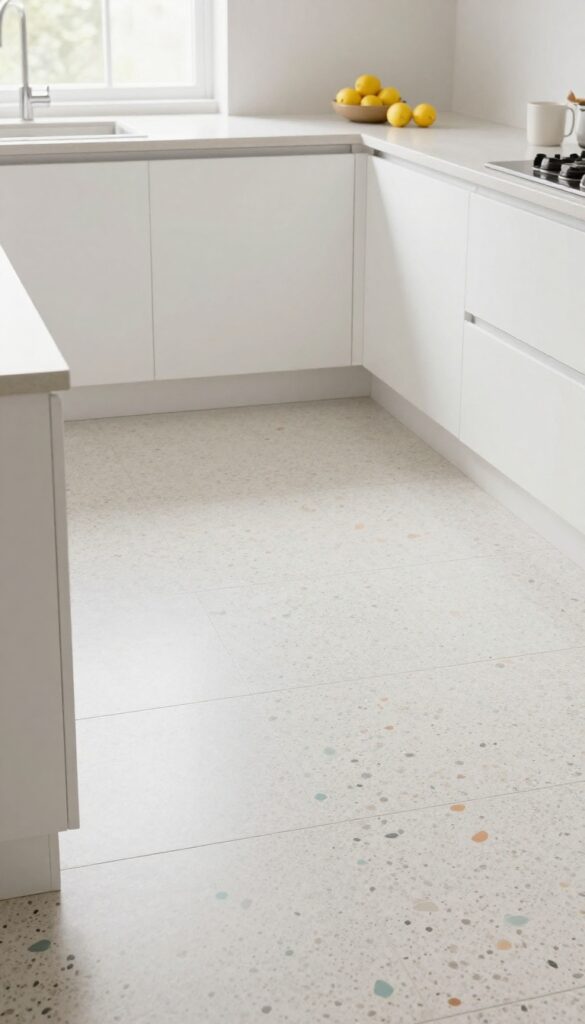
Terrazzo flooring is one of those styles that feels both modern and timeless. It’s playful, but still classy, which is kind of rare in home design. If you want a kitchen floor that feels unique and stylish, terrazzo is a strong choice.
The little speckled pieces add color and texture without making the room feel cluttered. It’s especially great in kitchens that feel too plain or overly neutral. I’ve always liked terrazzo because it gives personality without being loud, like it knows it looks good but doesn’t need to brag.
It also works with so many design styles. Modern kitchens love it, but even retro or eclectic kitchens can pull it off.
Why This Works
Terrazzo works because it adds subtle color variation and texture. It breaks up the monotony of plain floors and gives the kitchen a custom designer feel. The speckles also hide small dirt and crumbs better than solid colors.
It creates visual interest without needing dramatic contrast. That makes it a good option if you want something fun but not chaotic.
How to Do It
- Choose terrazzo-look porcelain tile for durability and easier maintenance.
- Pick a terrazzo color base that matches your cabinets (white base, beige base, or gray base).
- Keep grout lines minimal so the floor feels continuous.
- Pair with simple walls and counters so the terrazzo stands out.
- Seal grout properly to prevent staining.
Real terrazzo is expensive and difficult, so porcelain terrazzo-look tile is usually the smartest option. You still get the vibe without the headache.
Style & Design Tips
If your kitchen has bold cabinets, choose terrazzo with small subtle speckles. If your kitchen is neutral, you can go bolder with colorful terrazzo chips. Avoid pairing terrazzo with overly busy backsplashes because it can start to feel like a design battle.
Also, keep your rugs simple. Terrazzo already has movement, so rugs should calm things down.
Pro Tip or Budget Hack
If you want terrazzo style without redoing your entire floor, you can use terrazzo-look tile as an accent zone, like around the island or in a breakfast corner. It creates that designer moment without costing you a fortune. It’s a smart way to test the style before committing.
10. Painted Wood Floors for a Cheap but Shockingly Stylish Upgrade
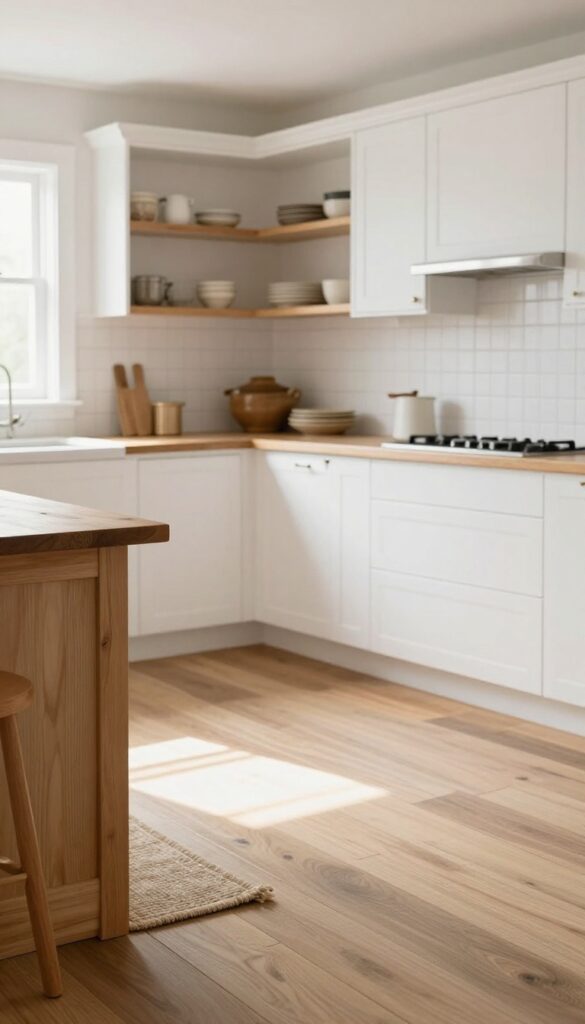
Sometimes you don’t need new flooring at all. Sometimes your kitchen just needs a fresh look, and painted wood floors can do that without destroying your budget. If you have old hardwood or even worn plywood subfloor, paint can turn it into something that looks intentional.
This idea works best in kitchens that feel outdated but still have decent bones. A painted floor can hide imperfections and add charm, especially in older homes. I’ve seen people paint their floors and suddenly their kitchen looks like a cute farmhouse renovation instead of a “we’re saving up” situation.
The trick is doing it the right way, because bad paint jobs peel fast and look rough. But if you do it properly, it can look seriously good.
Why This Works
Painted floors work because they transform what you already have. Instead of spending thousands on new flooring, you create a new surface visually. It also gives you the chance to add style through color or pattern, like painted stripes or a stenciled design.
It’s also one of the easiest ways to personalize your kitchen. Nobody else has your exact floor color choice, and that makes it feel unique.
How to Do It
- Clean the floor thoroughly and sand it lightly for better adhesion.
- Patch cracks or holes with wood filler.
- Apply a high-quality primer made for floors.
- Paint with durable floor paint in thin coats.
- Finish with multiple coats of polyurethane sealer.
Skipping primer is the fastest way to ruin this project. The paint needs something to grip onto, or it will peel like a bad sunburn.
Style & Design Tips
Neutral painted floors like soft gray, warm white, or muted sage look timeless. If you want something bold, black floors look amazing, but they show dust easily. You can also paint a simple checkerboard pattern if you want a vintage vibe without tile installation.
Avoid glossy finishes because they show scratches and feel slippery. Satin or matte sealed finishes look more natural and hide flaws better.
Pro Tip or Budget Hack
If you want extra durability, use porch and patio paint instead of regular interior paint. That stuff is designed to handle heavy wear, and kitchens definitely qualify as heavy wear zones. It’s one of those boring product choices that makes a huge difference long-term.
Final Thoughts
A kitchen floor can completely change how the whole space feels, even if you don’t touch your cabinets or counters. I’ve always thought flooring is one of the smartest upgrades because it affects everything else, from lighting to how “finished” the kitchen looks.
If you want my honest opinion, go with something durable first and stylish second, because pretty floors aren’t fun when they’re constantly scratched or stained. Pick a look that matches your lifestyle, and your kitchen will feel like a whole new room without the full renovation stress.