8 Living Room Seating Ideas That Feel Inviting
A living room can look “finished” and still feel awkward if the seating doesn’t actually work for real life.
If people don’t know where to sit, or they sit too far apart, the whole space feels off even if the décor is gorgeous. Seating is basically the social engine of the room.
And honestly, this is one of those design problems that doesn’t get fixed by buying one expensive sofa.
You fix it with layout choices, small upgrades, and a few smart seating tricks that make the room feel like it’s actually meant to be lived in.
1. The Classic Sofa + Two Accent Chairs Setup
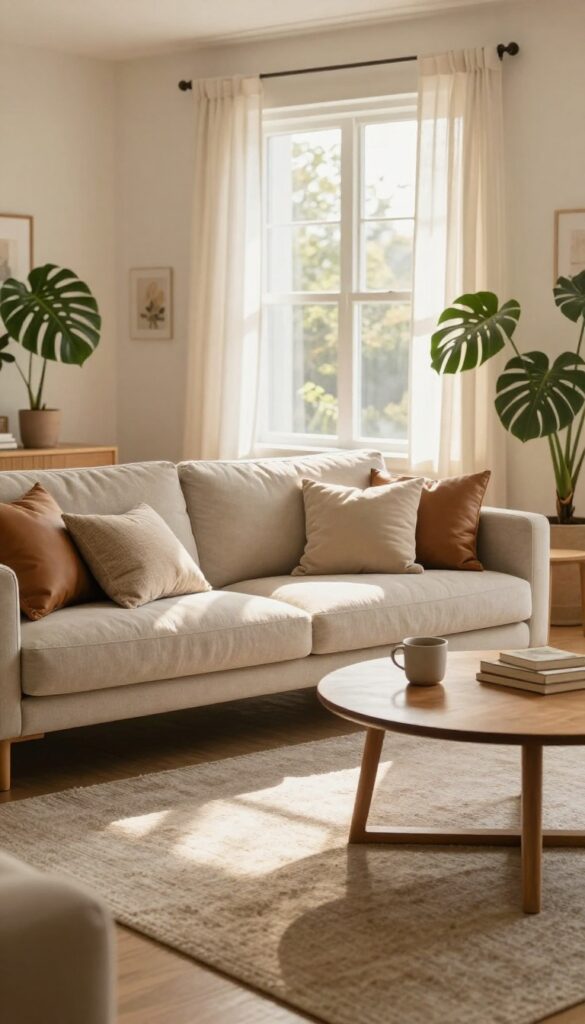
Most living rooms feel cold because everything faces the TV like it’s a movie theater, and nobody can talk comfortably. The sofa-and-two-chairs setup fixes that instantly by creating a real conversation zone.
It gives you balance, flexibility, and more seating without making the room feel stuffed. I’ve used this layout in multiple spaces, and it always makes the room feel more “intentional” in about five minutes.
Why This Works
A sofa anchors the room, but chairs add movement and shape. Two accent chairs create symmetry without being boring, and they help the seating area feel complete instead of unfinished.
This setup also makes the room feel more welcoming because guests don’t have to fight for “the good spot.”
It also makes conversation easier because people naturally face each other. When chairs angle slightly inward, the room feels like it’s encouraging people to sit down and stay awhile.
How to Do It
- Place the sofa as your main anchor, usually facing the focal point (fireplace, TV wall, or large window).
- Add one accent chair on each side of the sofa, slightly angled inward.
- Keep about 16–18 inches between chairs and the coffee table for comfortable leg room.
- Add a rug large enough so the front legs of all seating pieces sit on it.
- Use a side table beside at least one chair so drinks don’t end up balancing dangerously on someone’s knee.
Style & Design Tips
Pick chairs that don’t perfectly match the sofa, because matching sets usually feel like a furniture showroom. Instead, aim for contrast in texture or shape, like a soft fabric sofa with structured leather chairs. Keep the chair legs similar in finish to the sofa legs or coffee table so it still feels cohesive.
One mistake people make is choosing chairs that look cute but sit like punishment. If you want inviting seating, the chairs need depth, arm support, and at least one cozy throw pillow.
Pro Tip or Budget Hack
If new chairs aren’t in the budget, look for secondhand chairs with good frames and reupholster them. Even a simple slipcover can make them look custom. You can also buy mismatched chairs and tie them together using the same throw pillow fabric on both.
2. The L-Shaped Sectional With a Cozy Corner Table
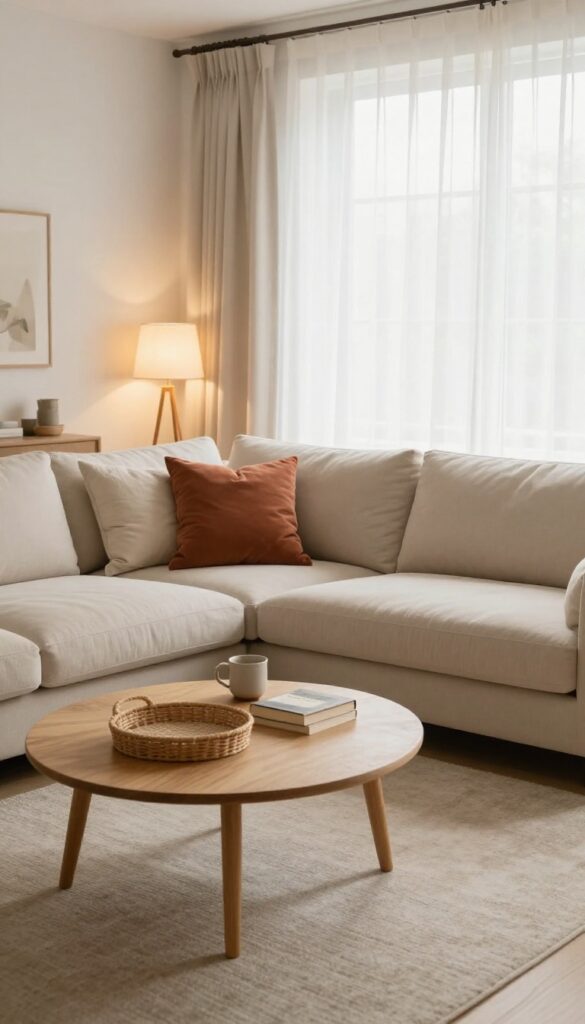
Sometimes a room feels uninviting because there’s nowhere to stretch out. An L-shaped sectional solves that, but the trick is making it feel cozy instead of massive. The secret is adding a corner table or small surface at the sectional’s bend. That tiny detail makes the whole setup feel practical and intentional, not like a giant couch blob.
Why This Works
Sectionals naturally create a lounge vibe, but they can also feel like they dominate the room. A corner table breaks up the heaviness and gives the layout structure. It also makes the seating more functional because people actually have a place to put a drink, a book, or a snack plate.
This layout works especially well for families or anyone who loves movie nights. It feels casual in the best way, like the room is saying “sit down and stay awhile.”
How to Do It
- Choose a sectional size that leaves at least 30 inches of walkway space around it.
- Position the sectional so it frames the room rather than blocks the entrance.
- Add a corner table or wedge table at the inside corner of the sectional.
- Place a coffee table or oversized ottoman in front with enough reach for all seats.
- Add lighting nearby, like a floor lamp, so the corner doesn’t feel dark or dead.
Style & Design Tips
If your sectional is bulky, choose a coffee table with slim legs to visually lighten things up. Use layered pillows in different textures so the couch looks inviting instead of flat. A sectional in a neutral color works best because you can change the vibe with accessories instead of replacing furniture later.
A common mistake is shoving the sectional against the wall. Pull it out a few inches if possible, because that small breathing room makes the room look more expensive and thoughtfully designed.
Pro Tip or Budget Hack
If you can’t find a corner table that fits, use a round stool or small pedestal side table. It doesn’t have to be a perfect wedge shape to work. I’ve even seen people use a sturdy woven basket with a tray on top, and honestly, it looked amazing.
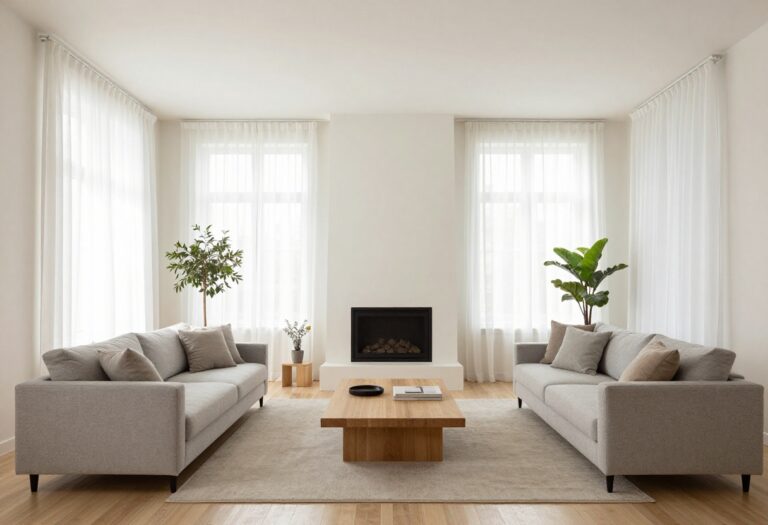
3. Two Sofas Facing Each Other (The “Real Conversation” Layout)
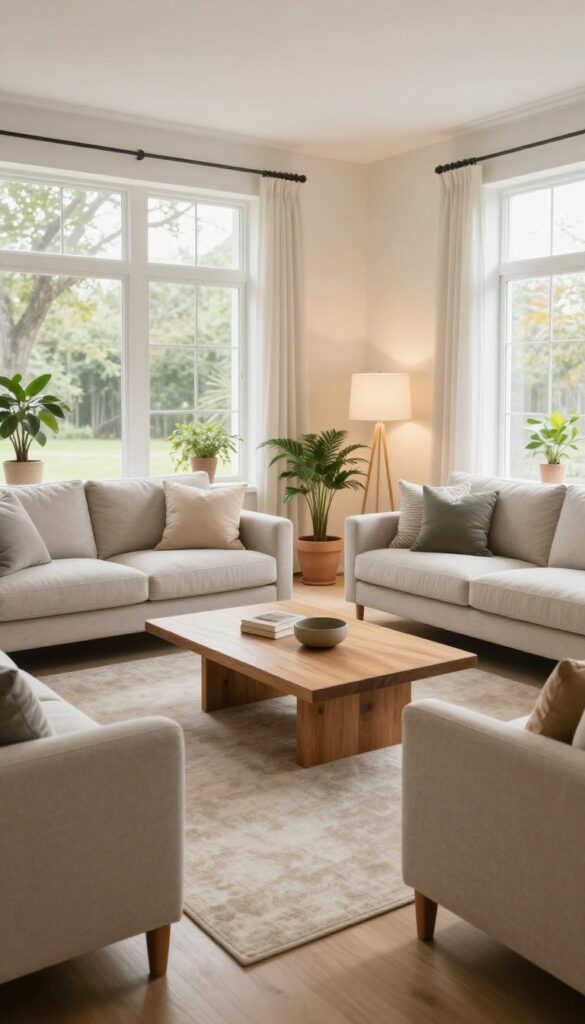
A living room feels instantly more welcoming when the seating isn’t scattered. Two sofas facing each other creates a layout that feels social and grown-up, without being formal. This is one of those setups that makes guests naturally sit down and start talking, because the room basically does the work for you.
I’ve always liked this layout because it makes the living room feel like it has purpose beyond watching TV. It feels like a space where people actually connect.
Why This Works
Facing sofas create symmetry, balance, and a strong focal point. It encourages conversation because everyone can see each other without twisting their body like they’re trying to solve a mystery. It also gives you a nice center space for a coffee table that feels functional and not squeezed in.
This setup also works well in longer rooms where one sofa alone looks too small. Two sofas fill the space properly without needing a bunch of random chairs.
How to Do It
- Place one sofa as the anchor, facing the main focal point.
- Position the second sofa directly across from it, leaving 3–4 feet between them.
- Add a large coffee table or ottoman in the middle for function.
- Place a rug under both sofas to visually connect the layout.
- Add one accent chair or bench on the side if you need extra seating.
Style & Design Tips
If the sofas match, use different pillows on each so it doesn’t look too “catalog.” If the sofas don’t match, keep them similar in scale so one doesn’t overpower the other. A rectangular coffee table works best here, but a large round one can soften the symmetry if the room feels too stiff.
One big mistake is making the space between sofas too wide. If people have to shout across the room, the layout stops feeling intimate and starts feeling awkward.
Pro Tip or Budget Hack
If you can’t afford two full sofas, use a loveseat as the second piece. It still gives you the same conversation-friendly effect. Another option is using a daybed-style sofa from IKEA or a simple futon frame dressed up with pillows and a throw.
4. The Sofa + Oversized Ottoman “Soft Seating” Zone
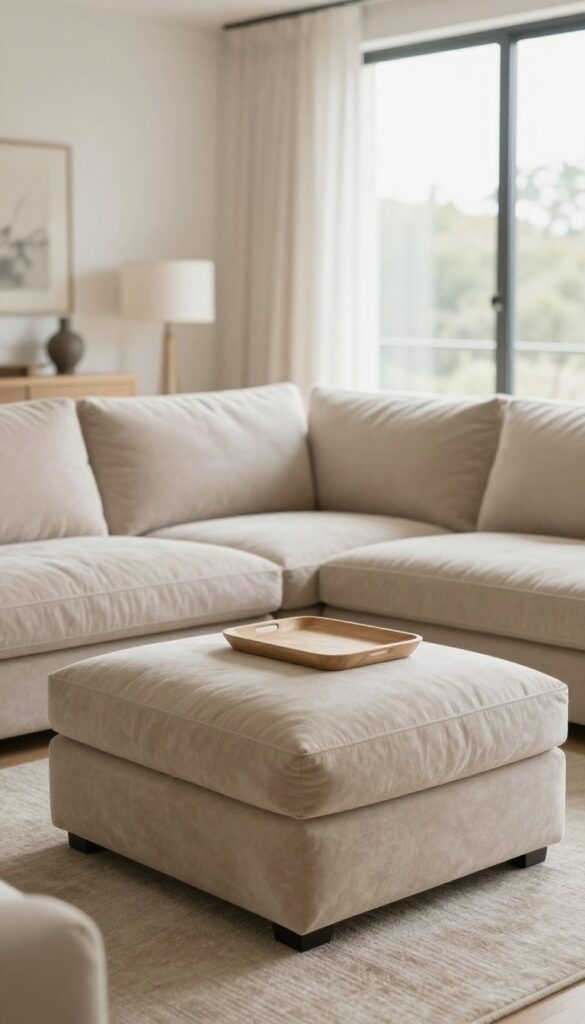
Some living rooms feel inviting because they’re not overly structured. A sofa with an oversized ottoman creates that relaxed, loungey vibe without needing a sectional. It gives you flexible seating, a footrest, and sometimes even a coffee table alternative. This setup is especially good if you like to put your feet up the second you sit down, which is honestly the correct way to live.
I’ve done this setup before and it’s dangerously comfortable. Like, you’ll sit down “for a second” and suddenly it’s two hours later.
Why This Works
An ottoman feels less rigid than a coffee table, which makes the whole room feel softer and more welcoming. It also gives you extra seating when guests come over, because people can perch on it without feeling awkward. The ottoman also helps fill open floor space so the room doesn’t feel empty.
This setup works best for families, casual entertaining, or anyone who wants their living room to feel cozy instead of formal.
How to Do It
- Choose an ottoman large enough to work as a shared footrest.
- Place it about 14–18 inches from the sofa for comfortable reach.
- Add a tray on top if you want a stable surface for drinks.
- Layer a rug underneath to anchor the furniture visually.
- Add one or two chairs on the side if you need more structure.
Style & Design Tips
Go for an ottoman in a durable fabric like performance velvet, leather, or textured linen blend. If your sofa is plain, choose an ottoman with tufting or texture to add interest. If your sofa already has a lot going on, keep the ottoman simple and solid.
The biggest mistake is buying an ottoman that’s too small. A tiny ottoman looks lost, and it won’t give the cozy “everyone can lounge” vibe you’re going for.
Pro Tip or Budget Hack
If a big ottoman is expensive, buy a budget one and upgrade it with a custom cover. You can also use two matching storage ottomans pushed together to create the same effect. That option is great if you want hidden storage without sacrificing seating.
5. A Window Bench With Cushions as Bonus Seating
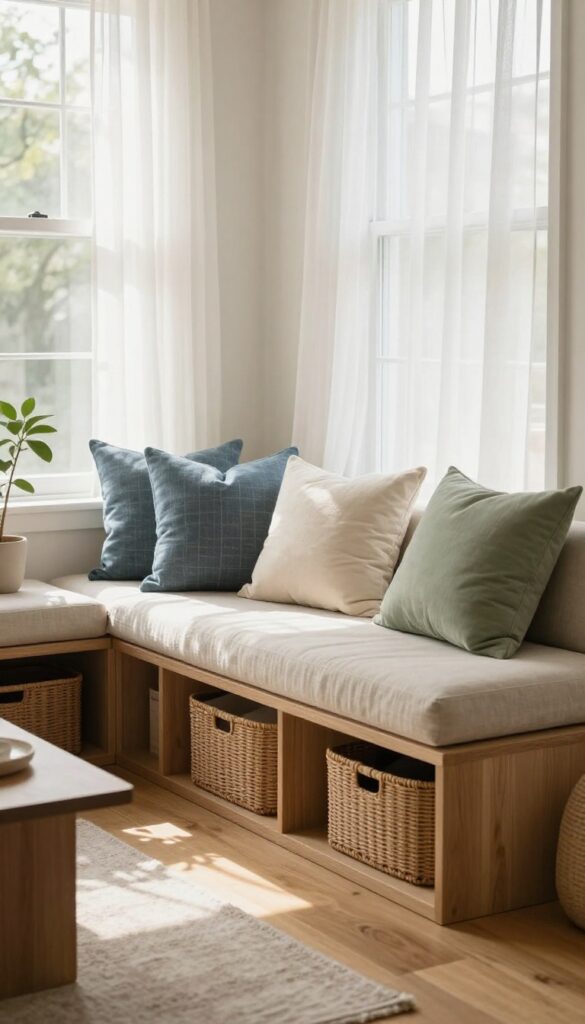
A living room can feel uninviting when the walls are empty and the layout feels too centered around one sofa. Adding a window bench changes the entire vibe because it creates a second seating zone that feels casual and charming. It also makes the room feel layered, like there’s more to it than just “the couch area.”
I love window benches because they make a room feel lived-in without looking messy. They’re basically the introvert’s favorite seat.
Why This Works
A bench adds seating without taking up as much visual space as a chair. It makes the room feel cozy and functional, especially if the window area was previously wasted space. People naturally gravitate toward window seating because it feels like a little retreat.
It also adds architectural interest. Even if your living room is plain, a bench makes it feel custom and designed.
How to Do It
- Measure the window wall and decide how long the bench should be.
- Build a simple bench frame or buy a ready-made bench base.
- Add a thick foam cushion for comfort, ideally 2–4 inches thick.
- Use pillows in mixed sizes to make it feel inviting.
- Add baskets underneath for storage if the bench is raised.
Style & Design Tips
Use a cushion fabric that’s durable, because window benches get used more than people expect. Add two or three throw pillows and keep the colors tied to your living room palette. If you want a designer look, use one patterned pillow and the rest in solids.
A common mistake is making the bench too shallow. If it’s less than 16 inches deep, it starts feeling like decorative seating instead of real seating.
Pro Tip or Budget Hack
Instead of building a bench, use two low cabinets side by side and add a cushion on top. This gives you storage and seating in one shot. You can also use a long storage chest and style it the same way.
6. A Pair of Swivel Chairs for Flexible Seating
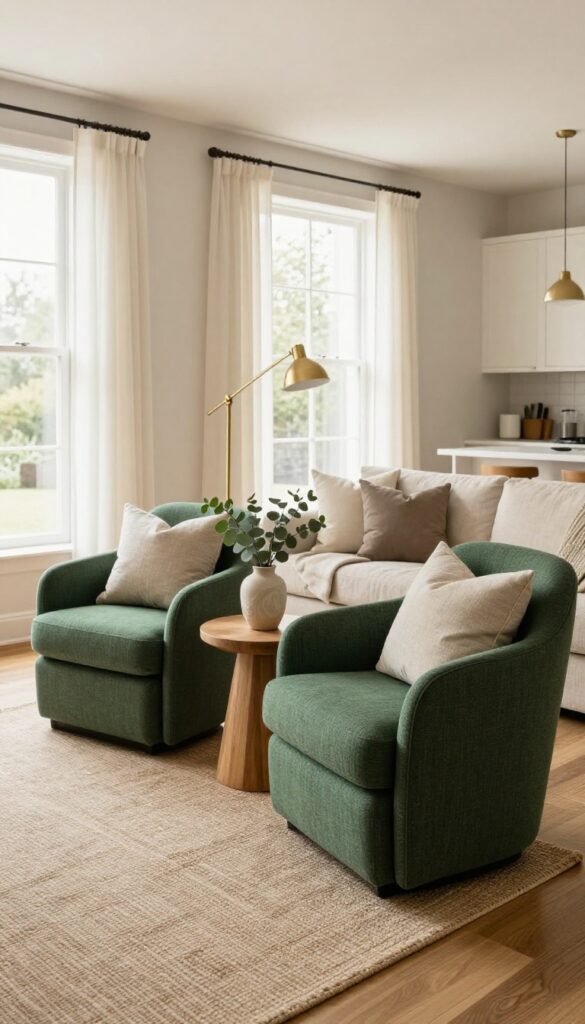
Swivel chairs are one of those furniture choices that seems unnecessary until you have them. Then suddenly you realize they solve like five living room problems at once. They let people face the conversation, turn toward the TV, or rotate toward the window without dragging furniture around.
They also make a living room feel more high-end. I don’t know why, but swivel chairs always look like someone hired a designer.
Why This Works
Swivel chairs make the room feel interactive and flexible. They keep the layout from feeling stiff because they naturally create movement. They’re also great for open-concept spaces where you might want seating that can turn toward the kitchen or dining area.
This idea works best when you want chairs that don’t feel like they’re stuck in one position forever.
How to Do It
- Place two swivel chairs across from the sofa or angled toward it.
- Keep enough space behind them so they can rotate freely.
- Add a small table between the chairs for function.
- Anchor them with a rug so they don’t feel like floating furniture.
- Add a floor lamp nearby to create a cozy reading corner.
Style & Design Tips
Choose chairs with a rounded back or soft arms if you want the room to feel inviting. Avoid overly sharp, modern shapes unless the rest of your room is super sleek. If you want the chairs to blend in, match them to your sofa color, but if you want them to pop, go with a bold fabric like deep green, navy, or textured cream.
One mistake is buying swivel chairs that are too bulky. They can quickly overpower a smaller room, so always check the dimensions.
Pro Tip or Budget Hack
If swivel chairs are pricey, look for them during seasonal furniture sales. You can also buy slipcovered swivel chairs, which often cost less and are easier to keep clean. Another sneaky trick is buying one swivel chair and one stationary chair if you want the look without doubling the cost.
7. A Small Loveseat Paired With a Sofa (Perfect for Smaller Rooms)
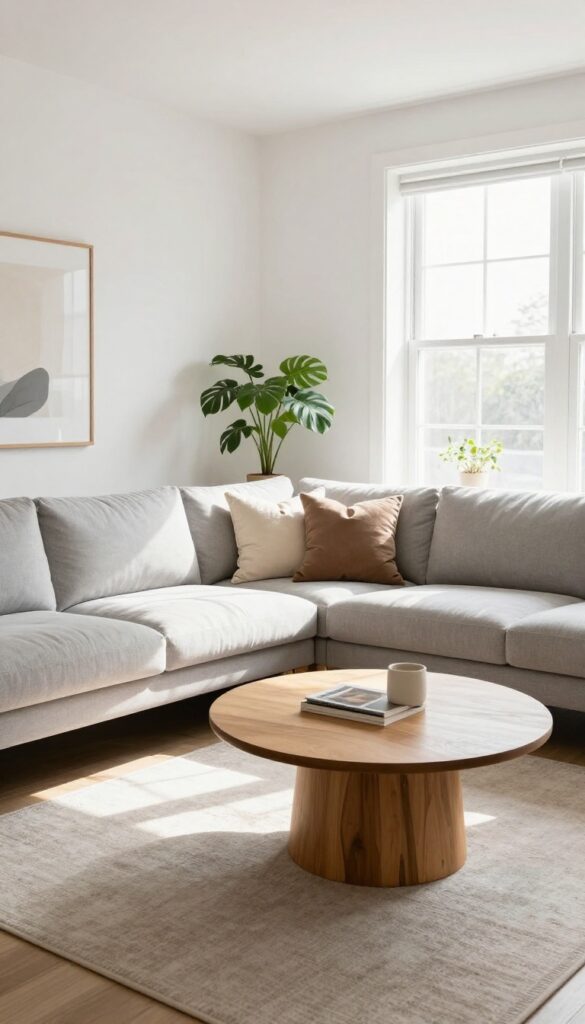
Not every living room can handle a big sectional or multiple chairs. Sometimes the room just needs a smarter scale. A sofa paired with a loveseat gives you extra seating without overwhelming the space. It also makes the room feel fuller and more inviting than a single sofa sitting alone like it’s waiting for company.
I’ve seen this setup save small living rooms that felt empty no matter how much décor people added.
Why This Works
A loveseat adds seating while keeping the room open. It creates a more balanced layout because you’re adding a second main furniture piece without taking up the footprint of a full sofa. It also helps define the seating zone in apartments or open layouts.
This arrangement also makes the room feel more social, because you’re creating multiple seating “choices” instead of one big couch monopoly.
How to Do It
- Place the sofa as the main anchor piece.
- Position the loveseat perpendicular to the sofa to form an L-shape.
- Keep at least 30 inches of clearance for walking paths.
- Add a coffee table that fits the scale, not oversized.
- Use a rug to connect both pieces visually.
Style & Design Tips
If the sofa and loveseat match, add different pillows to break up the sameness. If they don’t match, keep them in the same color family so the room doesn’t feel chaotic. A loveseat in a lighter tone can make a small room feel bigger, especially if the sofa is darker.
One mistake is pushing both pieces against the wall. Even in a small room, pulling them slightly inward makes the space feel more designed and cozy.
Pro Tip or Budget Hack
If a loveseat is too expensive, use a small futon or armless loveseat-style settee. You can dress it up with pillows and a throw and nobody will care where it came from. Another trick is buying a loveseat secondhand and replacing the legs with modern ones for an instant upgrade.
8. A Layered Seating Mix: Sofa + Chair + Poufs
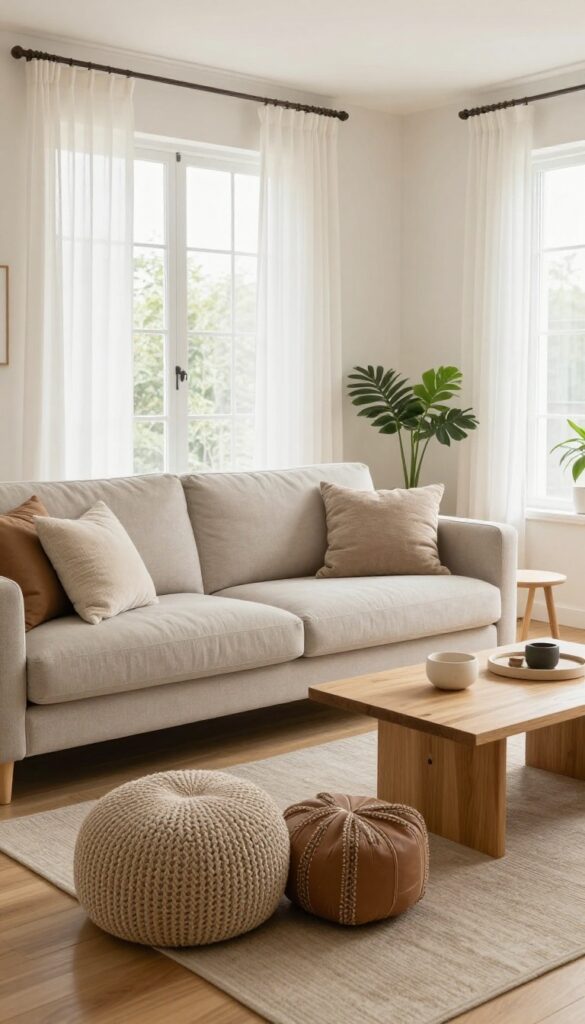
If you want your living room to feel inviting, stop thinking in matching furniture sets. The most welcoming rooms usually have a mix of seating types, because it feels relaxed and real. A sofa, one accent chair, and a couple poufs creates a layered look that feels cozy, flexible, and easy to live with.
This is honestly one of my favorite setups because it works in almost any living room size. It also makes the space feel casual but still stylish.
Why This Works
Poufs add extra seating without feeling heavy. They’re easy to move around, which makes them perfect for guests, kids, or lazy evenings when you want to kick your feet up. The mix of seating types also makes the room feel curated, like you collected pieces over time instead of buying a set.
This layout creates a lived-in vibe without looking cluttered, which is kind of the dream.
How to Do It
- Start with a sofa as your main anchor.
- Add one accent chair opposite or diagonal to the sofa.
- Place one or two poufs near the coffee table or under a console.
- Add a side table so at least one seat has a surface nearby.
- Keep the layout open so the poufs don’t block walkways.
Style & Design Tips
Choose poufs in durable materials like leather, woven fabric, or thick knit. If your room has a lot of smooth surfaces, poufs add texture and warmth. Keep the chair as the statement piece if you want a focal point, and let the poufs blend in.
One common mistake is using poufs that are too small or too squishy. If they collapse when someone sits, they won’t feel like real seating, and people will avoid them.
Pro Tip or Budget Hack
You can DIY poufs with firm foam and a fabric cover if you want a custom look. Another cheap trick is using sturdy floor cushions instead of poufs, especially if you like a relaxed, boho vibe. If you want them to look more expensive, choose neutral tones and add structured stitching or leather handles.
Final Thoughts
Inviting seating isn’t about having the biggest sofa or the fanciest furniture, it’s about making the room feel easy to use. If people can sit comfortably, reach a table, and actually talk without yelling across the room, you’ve already won. Small layout changes usually matter more than buying new pieces.
If you try even one of these seating ideas, you’ll notice your living room feels warmer almost immediately. And trust me, once you get the layout right, decorating the rest becomes way more fun.