9 Cottage Living Room Ideas With Cozy Charm
Cottage living rooms always look effortless, but the truth is they’re usually the result of smart choices that make the space feel softer, warmer, and less “stiff.”
Most living rooms don’t need a total makeover, they just need better layers and better flow.
The funny part is, cozy doesn’t come from buying expensive furniture. It comes from making your room feel lived-in on purpose. And yes, that’s a real skill.
If your living room feels empty, cold, or weirdly unfinished, you’re not alone. Cottage style fixes that problem fast because it’s basically built around comfort, texture, and charm without trying too hard.
1. Layered Neutral Textiles That Feel Soft, Not Boring
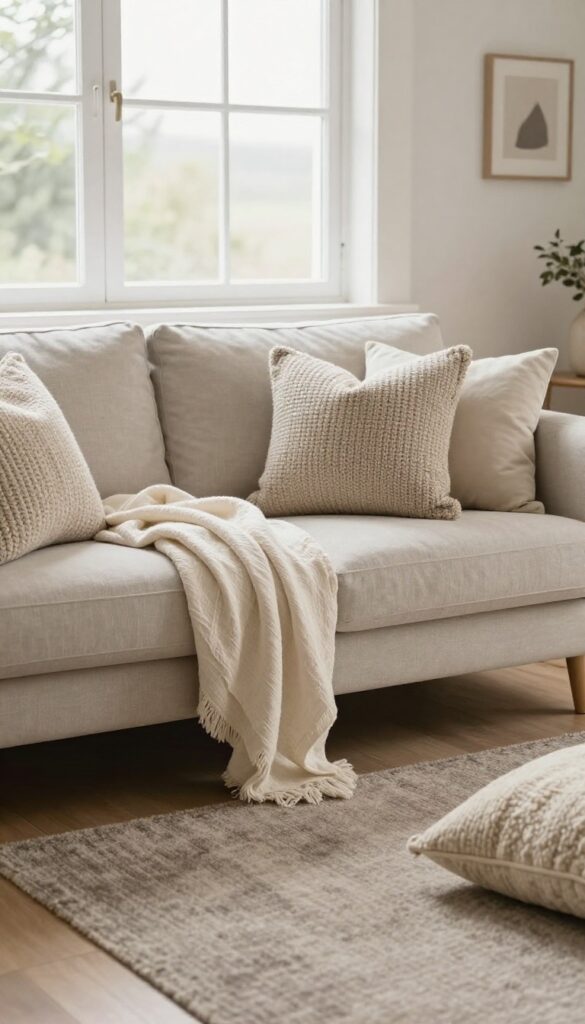
Most living rooms feel “off” because everything has the same texture, and cottage style fixes that with layers. The goal isn’t just adding throw pillows for decoration, it’s building a space that feels comfortable the second you sit down.
When you mix soft linen, chunky knit, and washed cotton together, the room starts to feel finished without looking staged.
I used to think neutrals were bland until I realized the trick is using different shades and fabrics instead of one flat beige everywhere.
A creamy throw blanket, a warm oatmeal pillow, and a slightly darker rug can look rich without being loud. The best part is, this works even if your furniture is basic or cheap.
Why This Works
Texture does the heavy lifting when color stays calm. Cottage rooms feel cozy because your eyes see depth, even when everything stays neutral. You’re basically creating warmth without needing bright colors or dramatic décor.
This also makes your living room feel more relaxing because the tones don’t fight each other. The space feels calmer, and the furniture looks more intentional. It’s like your living room finally stops screaming and starts whispering.
How to Do It
- Pick 2–3 neutral shades like cream, beige, warm gray, or soft taupe
- Add at least three different fabric textures (linen, knit, cotton, faux fur)
- Layer a throw blanket across the sofa arm instead of folding it perfectly
- Use pillow inserts that are slightly bigger than the cover so they look full
- Add a soft area rug even if your floor is already decent
Each layer matters because cottage style relies on softness and comfort. If everything is smooth and flat, it won’t look cozy no matter how cute your furniture is.
Style & Design Tips
Mixing patterns helps, but keep them subtle like thin stripes, small florals, or faded checks. Avoid super bold geometric patterns because they can instantly pull the room into modern farmhouse territory. Also, don’t buy matching pillow sets because that always looks like you clicked “add to cart” without thinking.
The best cottage look happens when things feel collected over time. Stick to warm undertones instead of cool gray neutrals, because cool shades can make the room feel sterile.
Pro Tip or Budget Hack
Buy pillow covers instead of new pillows, and switch them seasonally. A $5 linen cover can completely change the vibe of a $15 pillow insert you already own. Also check thrift stores for wool blankets because they’re usually better quality than the trendy ones online.
2. Soft Painted Walls That Make the Room Feel Calm
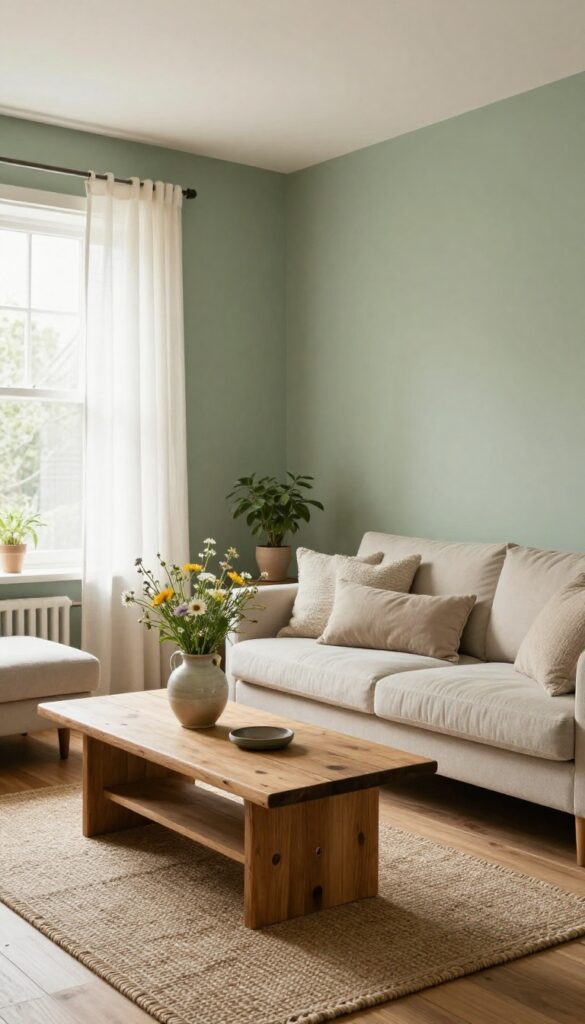
A cottage living room almost always starts with wall color, because harsh white walls can feel too sharp. The right soft paint color instantly makes the room feel gentler and more welcoming. It’s one of those upgrades that doesn’t require buying furniture, yet it changes everything.
I’ve seen people spend money on rugs and décor while ignoring the walls, and it’s like trying to decorate a room that’s still wearing the wrong outfit. Cottage style loves creamy whites, dusty greens, pale blues, and warm taupe tones. The point is to make the room feel relaxed, not “bright and shiny.”
Why This Works
Paint sets the mood of the entire space and affects how every other item looks. Soft cottage colors create a background that makes wood furniture feel warmer and textiles look richer. Even cheap furniture suddenly looks more expensive when the walls aren’t screaming pure white.
It also makes the room feel more cohesive. Instead of your couch floating in an empty box, it starts to feel like it belongs there.
How to Do It
- Choose a paint shade with a warm or muted undertone
- Test it on at least two walls because lighting changes everything
- Use an eggshell finish for durability without looking glossy
- Paint trim in a slightly brighter creamy white for contrast
- Keep the ceiling simple unless you want a cozy “cottage cocoon” vibe
The sample swatch always lies a little, so testing matters. Cottage colors can look dreamy in one home and muddy in another depending on natural light.
Style & Design Tips
Avoid bright icy whites and overly saturated colors. Cottage style works best when the walls feel like a soft backdrop, not the main attraction. If you want color, choose something muted like sage green, dusty rose, or pale mushroom gray.
A common mistake is picking a gray that looks “safe” but ends up feeling cold. If you want gray, make sure it leans warm and earthy, not blue-toned.
Pro Tip or Budget Hack
If repainting the whole room feels like too much work, paint just one accent wall behind the sofa. Cottage style doesn’t need dramatic contrast, so even a subtle shade shift can give the room depth without feeling like a feature wall from 2014.
3. Vintage-Inspired Furniture Mix That Doesn’t Look Matchy
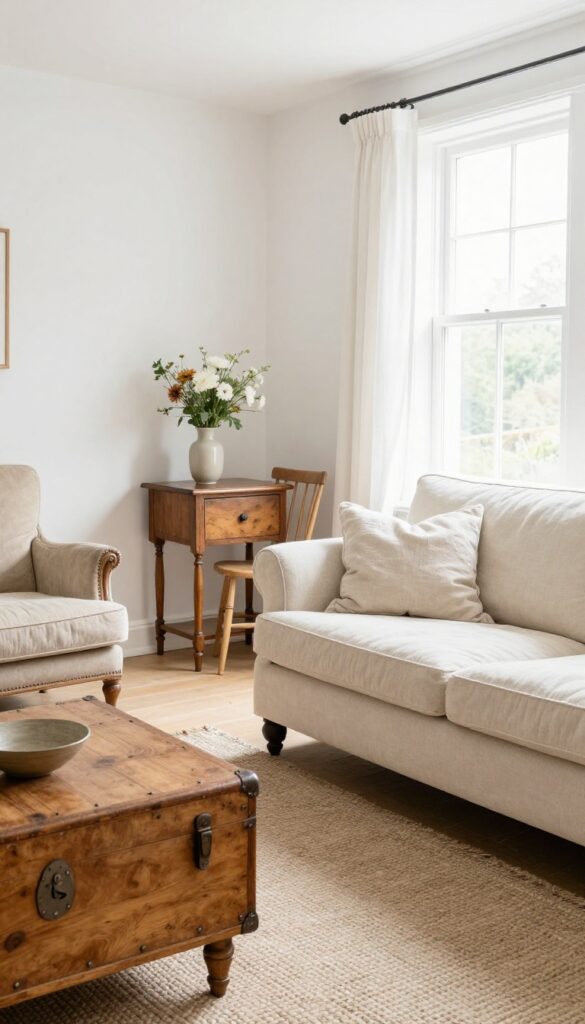
Cottage living rooms always feel charming because the furniture doesn’t look like it came from one showroom. Mixing pieces creates personality, and it makes your room feel like a real home instead of a staged listing photo. The trick is keeping the shapes cozy and the finishes soft, even if the pieces don’t match perfectly.
I’m a huge fan of pairing one “main” sofa with smaller accent chairs that look vintage or slightly worn. Even one thrifted side table can change the whole vibe. Cottage style loves pieces that look like they’ve been around for a while, even if you literally bought them last week.
Why This Works
Matching furniture sets can make a living room feel flat and boring. When you mix wood tones and different shapes, your eyes move around the room naturally. That movement makes the space feel layered, and layering is basically cottage style’s whole personality.
It also makes your room feel more relaxed. Nothing feels too formal, and you stop worrying about everything being perfect.
How to Do It
- Choose one main “anchor” piece like a sofa or loveseat
- Add one vintage-style accent chair or slipcovered chair
- Mix at least two wood finishes (light oak + antique walnut works well)
- Use one statement piece like an old trunk coffee table or spindle chair
- Keep furniture legs visible when possible for an airy cottage feel
This approach works because it creates contrast without chaos. The room feels curated instead of random.
Style & Design Tips
Stick to furniture shapes that feel soft and classic, like rolled arms, curved backs, or turned legs. Avoid super sharp modern lines because they can clash with cottage charm. Also, don’t overdo distressed furniture, because too much can make the room feel fake or overly themed.
A good rule is to mix old and new, but keep the colors consistent. If your couch is warm beige, don’t throw in a jet-black modern chair unless you really want a contrast moment.
Pro Tip or Budget Hack
Look for “ugly” vintage furniture with good bones, then repaint or re-stain it. A cheap side table becomes cottage gold with a soft cream paint and a new brass knob. People ignore these pieces because they look dated, but that’s literally the point.
4. Cozy Lighting With Warm Bulbs and Vintage Lamps
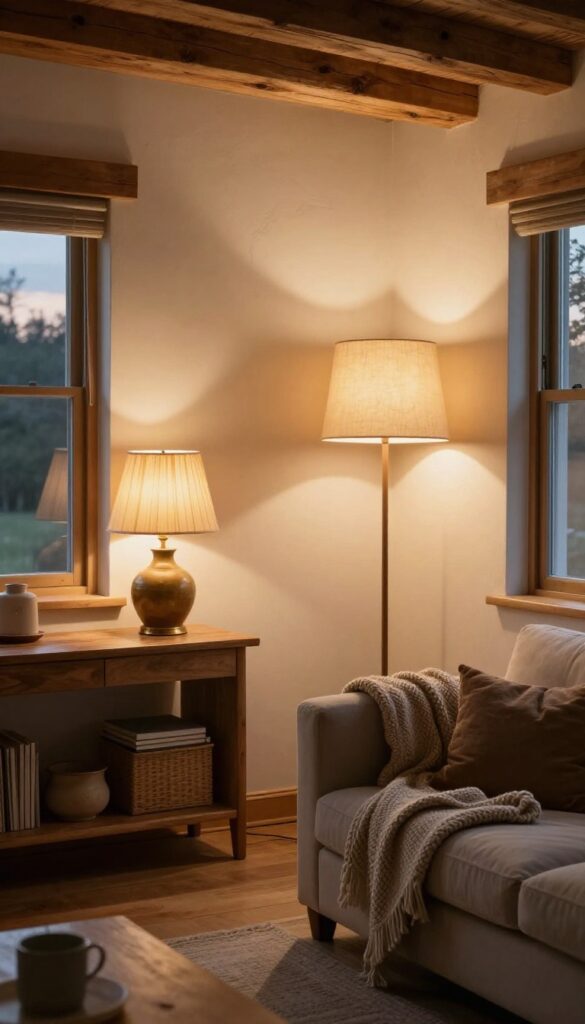
If your living room relies on one overhead light, you’re basically sabotaging the whole cozy cottage vibe. Cottage rooms feel warm because they use layered lighting, not one harsh ceiling fixture. You want the room to feel softly lit, like the kind of place you’d actually want to sit for hours.
I used to underestimate how much lighting affects the vibe until I switched my bulbs to warm tones. Suddenly the same room looked softer and more welcoming, and I didn’t even change the furniture. That’s the kind of “lazy upgrade” I respect.
Why This Works
Lighting changes how your colors and textures show up. Warm bulbs make wood tones look richer, fabrics look softer, and the whole space feel more intimate. Cottage style depends on warmth, and cold lighting ruins that instantly.
Multiple light sources also help balance the room. Instead of one bright spot, the light spreads out naturally, which feels calmer.
How to Do It
- Use warm white bulbs (2700K is usually perfect)
- Add at least two table lamps in different corners
- Use a floor lamp near a reading chair
- Place one small lamp on a console table or shelf
- Add dimmable bulbs if possible for flexibility
Each lamp should serve a purpose, whether it’s reading light or just making the room glow softly. Cottage lighting should feel gentle, not dramatic.
Style & Design Tips
Look for lamps with fabric shades, because they soften light better than metal or glass. Brass bases, ceramic bases, and vintage-style pleated shades work beautifully in cottage spaces. Avoid super modern LED fixtures unless they have a softer silhouette.
A common mistake is using bulbs that are too bright. Cozy lighting isn’t about lighting up every corner like a hospital hallway.
Pro Tip or Budget Hack
Thrift stores are basically lamp heaven if you know what to look for. Grab an old lamp base, spray paint it if needed, and replace the shade with something neutral. A $6 thrift lamp can easily look like a $60 boutique piece.
5. Open Shelving or Ledges for Displaying Charming Details
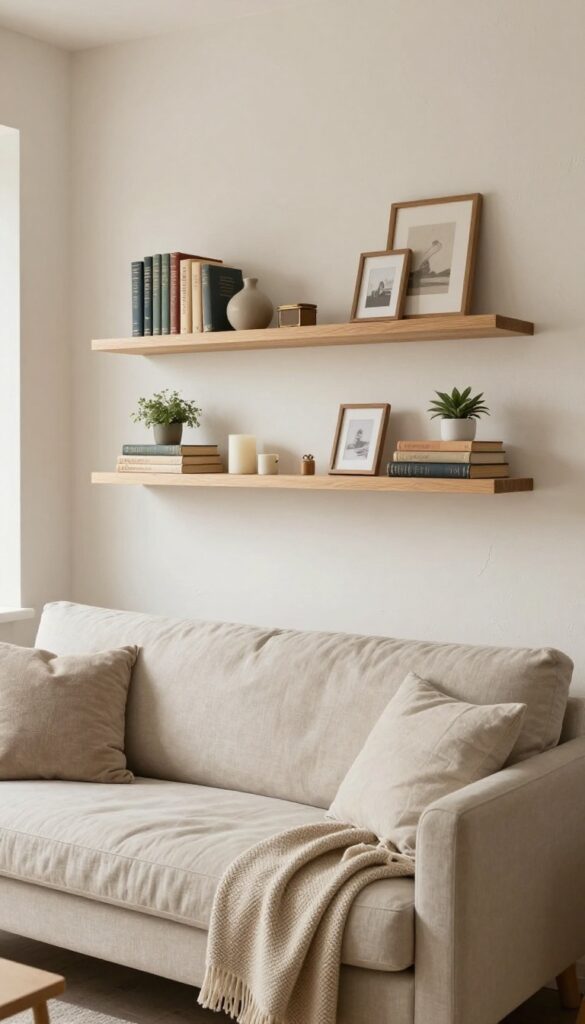
Cottage living rooms feel personal because you see little collected objects everywhere. That doesn’t mean clutter, it means thoughtful displays that make the room feel lived-in. Open shelves, picture ledges, or small wall-mounted display areas create that cozy “I’ve been here a while” vibe.
I’m not saying you should turn your living room into a museum of random stuff. But a few shelves with books, frames, candles, and little vintage finds can add charm in a way that wall art alone can’t. Plus, shelves are great if your walls feel empty but you don’t want giant artwork everywhere.
Why This Works
Shelves create vertical interest, and vertical interest makes a room feel fuller without adding bulky furniture. Cottage style needs layers, and shelves give you a way to layer décor naturally. They also make the room feel more personal because you can rotate items easily.
Shelves help your living room tell a story. Even if it’s a simple story like “this person likes cozy candles and old books,” it still feels warm.
How to Do It
- Choose a wall that feels empty, like above the sofa or beside a window
- Install 2–3 floating shelves or picture ledges
- Add a mix of books, frames, and small objects
- Keep some empty space so it doesn’t look crowded
- Swap items seasonally for a fresh look
The balance matters. If you pack the shelf too tightly, it stops looking charming and starts looking messy.
Style & Design Tips
Use a mix of heights and shapes, like a tall vase next to stacked books and a small candle. Stick to neutral frames or soft wood tones so the shelf doesn’t feel chaotic. Also, avoid putting everything in the exact center because symmetry can make it look too staged.
A big mistake is buying all new décor at once. Cottage shelves look best when they feel collected, not purchased in one shopping spree.
Pro Tip or Budget Hack
Print free vintage-style art online and frame it with thrifted frames. It looks expensive, and nobody needs to know your “antique art collection” came from a printer. Also, old hardback books from secondhand stores instantly make shelves look cozy.
6. Slipcovered Seating for That Soft Cottage Comfort
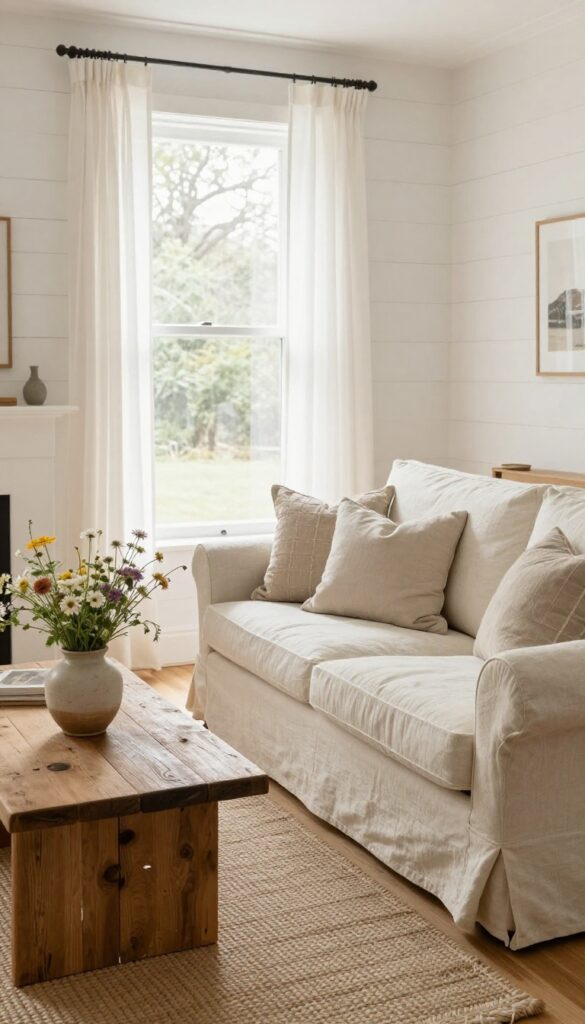
Slipcovered sofas and chairs scream cottage comfort because they look relaxed and effortless. They’re also ridiculously practical if you have pets, kids, or a habit of spilling coffee like it’s a personality trait. The best part is the slightly wrinkled look is not a problem, it’s actually part of the charm.
I used to think slipcovers looked messy, but then I realized they’re the secret weapon of cozy living rooms. They make furniture feel softer and more casual, and they instantly remove that stiff “new couch showroom” vibe.
Why This Works
Slipcovers soften the look of furniture and create a casual cottage feel. They also make your room feel brighter because they usually come in light neutral shades. Cottage style loves light fabrics because they make the space feel airy even when the room is small.
Slipcovers also make your furniture easier to maintain. You can wash them, replace them, or swap colors without buying new furniture.
How to Do It
- Choose slipcovers in linen-look or cotton blends
- Stick to warm neutrals like cream, oatmeal, or soft gray-beige
- Make sure the fit is slightly loose, not tight like upholstery
- Add throw pillows in textured fabrics for contrast
- Let the fabric drape naturally instead of tucking everything perfectly
That slightly relaxed fit is the whole point. Cottage furniture should look comfortable, not like it’s trying to impress anyone.
Style & Design Tips
Avoid shiny fabrics or slipcovers that look like polyester. Cottage style needs softness, so the fabric should look natural. Pair slipcovered furniture with wood accents like a rustic coffee table or a woven basket to keep the room grounded.
Also, don’t make everything slipcovered. One slipcovered sofa plus a leather or wood accent chair can look more balanced than an all-slipcover room.
Pro Tip or Budget Hack
If a full slipcovered sofa is out of budget, use a large neutral throw blanket as a “fake slipcover.” Drape it neatly over the sofa and tuck it slightly into the cushions. It’s not perfect, but it gives the same cozy effect for way less money.
7. Woven Baskets for Storage That Looks Decorative
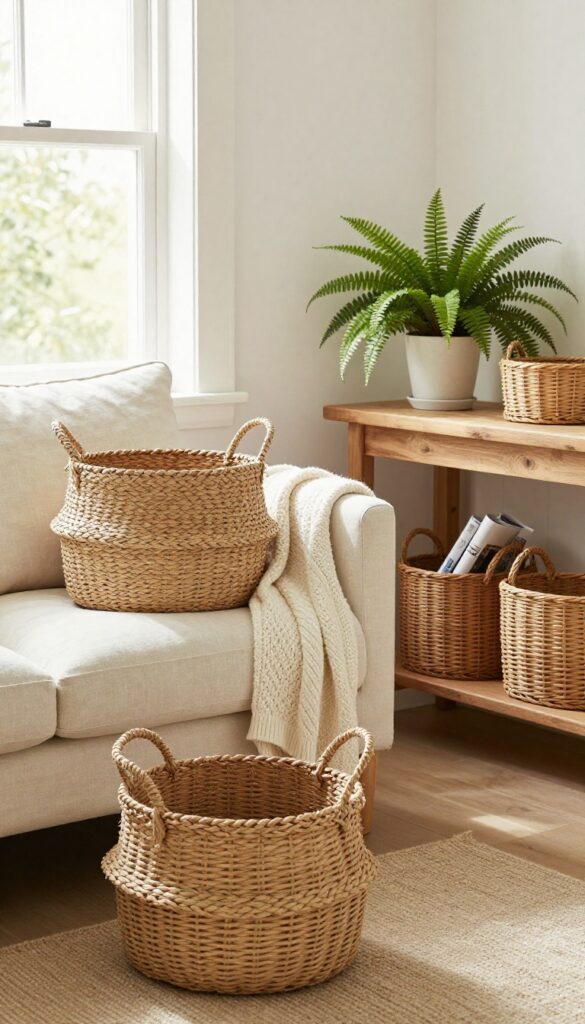
Cottage living rooms always feel tidy, but not in a sterile way. Baskets play a huge role in that because they hide clutter while adding texture. You can throw blankets, magazines, toys, or random cords inside, and suddenly your room looks organized without looking overly minimal.
Honestly, baskets are one of my favorite “cheat codes” for home décor. They make your room feel warm, and they solve problems without looking like storage bins. Plus, they’re way prettier than plastic containers that scream “I gave up.”
Why This Works
Baskets add texture, and texture is essential for cozy cottage charm. They also help your room stay functional because clutter disappears fast. When your living room looks cleaner, everything else looks more intentional too.
They also break up furniture visually. A basket next to a sofa or under a console table makes the room feel fuller in a natural way.
How to Do It
- Choose baskets made from wicker, seagrass, or rattan
- Use one large basket for blankets near the sofa
- Place medium baskets under console tables for hidden storage
- Use smaller baskets on shelves for remotes and small items
- Keep basket colors warm and natural for the best cottage vibe
Placement matters because baskets should feel like they belong. If they’re randomly placed everywhere, it starts to look like you’re running a storage warehouse.
Style & Design Tips
Stick to natural tones instead of painted baskets unless you want a specific color theme. Also, choose baskets with handles because they’re easier to move and they look more charming. Avoid cheap baskets that look too stiff or overly glossy.
A common mistake is buying baskets that are too small. Cottage baskets look best when they feel generous and useful, not like tiny decorative props.
Pro Tip or Budget Hack
Check thrift stores for baskets, especially large ones. You can clean them easily, and they’re usually cheaper than buying new. If you find an old basket that looks dull, rub it lightly with a bit of furniture oil to bring it back to life.
8. A Cozy Cottage Rug That Anchors the Whole Space
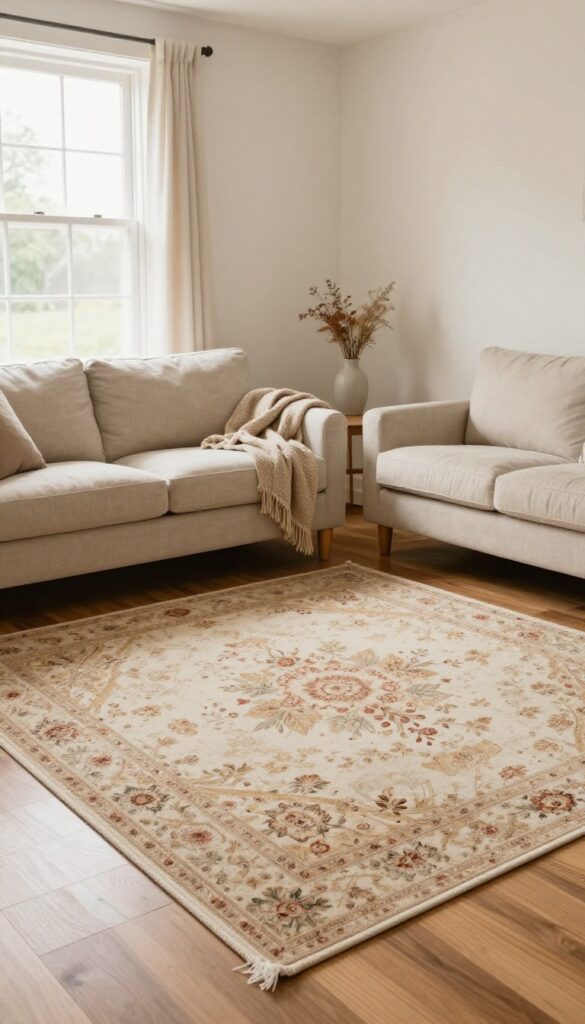
A rug can make or break a cottage living room. Without one, the room can feel unfinished, like the furniture is just floating around awkwardly. Cottage rugs usually look soft, slightly vintage, and welcoming, not sharp or overly modern.
I’ve seen people spend a lot on furniture but skip the rug, and the room always feels incomplete. A good rug ties the space together and makes it feel like a real living room instead of a waiting area. If you want cozy charm, you need something under your feet that feels warm and grounded.
Why This Works
Rugs visually anchor furniture and define the seating area. Cottage style relies on comfort, and rugs instantly add that softness. They also help your room feel warmer, especially if you have tile or hardwood floors.
A rug also adds pattern without overwhelming the space. Cottage patterns tend to be subtle, faded, or vintage-inspired, which makes the room feel collected instead of trendy.
How to Do It
- Choose a rug large enough for at least the front legs of your sofa and chairs
- Pick warm tones like cream, beige, muted rust, soft blue, or sage
- Look for vintage-style patterns like faded florals or classic medallions
- Use a rug pad underneath to keep it from sliding
- Keep the rug texture soft, not overly stiff
Sizing is critical. If your rug is too small, your room will look like it’s wearing shoes that don’t fit.
Style & Design Tips
Avoid super bold modern rugs because they can clash with cottage softness. A slightly distressed rug looks more natural in a cottage space than something crisp and new. If you want a neutral rug, make sure it still has some texture or subtle pattern so it doesn’t feel flat.
Also, don’t go too shaggy unless you love vacuuming. Cozy is good, but living in a rug is not.
Pro Tip or Budget Hack
If you can’t afford a huge rug, layer rugs. Put a large natural jute rug underneath and a smaller patterned rug on top. It looks stylish and gives you that cozy layered cottage feel without paying for one giant expensive rug.
9. Cottage Wall Art That Feels Personal and Collected
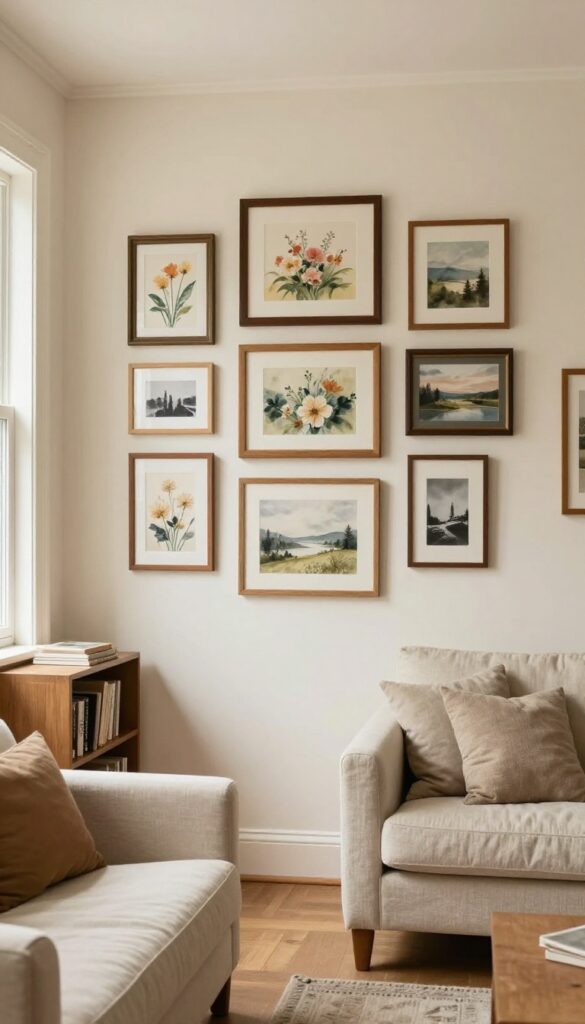
Blank walls are the fastest way to make a living room feel cold. Cottage living rooms feel charming because the walls usually have personality, whether it’s framed vintage prints, family photos, mirrors, or even small antique finds. The goal isn’t to fill every inch, but to make the room feel like someone actually lives there.
I always prefer wall décor that looks slightly imperfect, like mismatched frames or art that isn’t perfectly centered. That’s what makes cottage style feel relaxed instead of overly designed. If your wall art feels too symmetrical and polished, it can start leaning modern instead of cozy cottage.
Why This Works
Wall décor adds warmth because it makes the space feel personal. It also helps balance the room visually, especially if you have large furniture pieces like a sofa or bookshelf. Cottage style thrives on layers, and wall art adds another layer without taking up floor space.
Art also helps your living room feel finished. Even a small gallery wall can make the whole room look more intentional.
How to Do It
- Pick a theme like vintage florals, landscapes, or black-and-white photos
- Use frames in mixed wood tones or soft neutral colors
- Arrange art on the floor first before hanging it
- Include one larger anchor piece, then surround it with smaller frames
- Hang art at eye level, not too high
This works best when you treat the wall like a collection, not a single decoration. Cottage style is about charm, and charm usually comes from variety.
Style & Design Tips
Avoid super glossy modern prints unless they match your cottage vibe. Matte prints, watercolor art, and vintage-style illustrations work beautifully. If you want mirrors, choose ones with antique gold frames, carved wood, or arched shapes for that classic cottage softness.
A big mistake is buying “word art” signs that feel too trendy. Cottage style can be sweet, but it shouldn’t feel like your wall is yelling motivational quotes at you.
Pro Tip or Budget Hack
Use printable vintage art and put it in thrifted frames. You can also frame pages from old books, botanical illustrations, or even fabric scraps with pretty patterns. It’s cheap, unique, and honestly looks more charming than mass-produced wall décor.
Final Thoughts
Cottage living rooms aren’t about perfection, they’re about comfort that looks beautiful without trying too hard. If your space feels cold or unfinished, you don’t need a total remodel, you just need better layers, warmer tones, and a few intentional details.
Start small, like changing your lighting or adding baskets, and you’ll be surprised how quickly the room starts feeling different. Once you get that cozy charm right, you’ll probably never want to leave your living room again, and honestly, I get it.