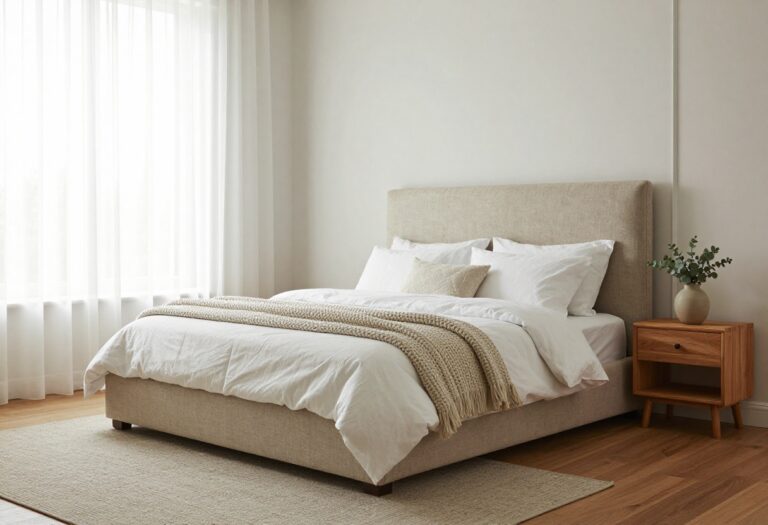
7 Warm White Kitchen Ideas for Bright Cozy Homes
Warm white kitchens are basically the cheat code of home décor. They make a space look cleaner, bigger, and more expensive without needing a full renovation or a dramatic “before and after” moment.
The problem is, warm white can also turn into “yellowish and tired” really fast if you don’t do it the right way.
A good warm white kitchen doesn’t feel sterile, but it also doesn’t look like someone smoked in it for ten years. The goal is bright, cozy, and intentional, not dull and beige. Let’s talk about the warm white ideas that actually work in real kitchens.
1. Warm White Cabinets With Soft Contrast Hardware
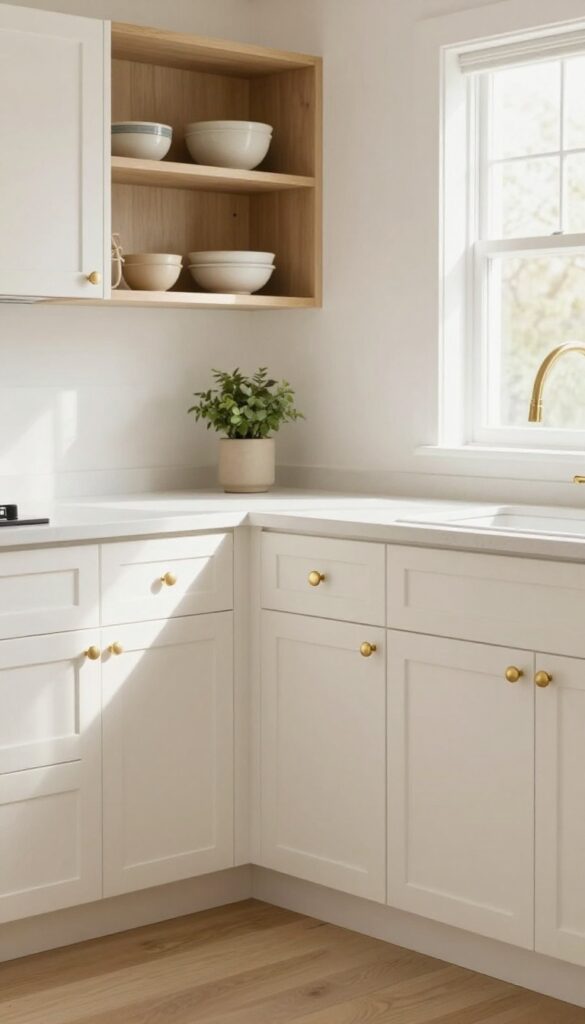
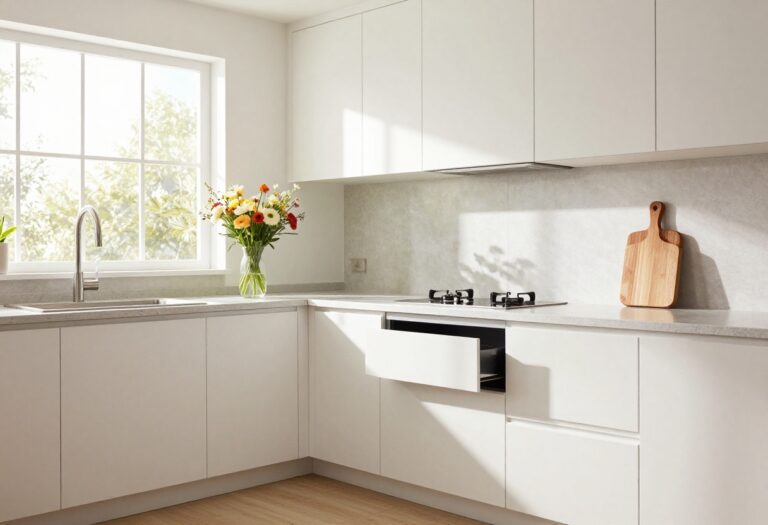
If your kitchen feels dark, heavy, or dated, cabinets are usually the reason. A lot of kitchens get stuck in that “brown wood everywhere” phase, and suddenly the room feels smaller than it really is.
Warm white cabinets fix that instantly because they reflect light, soften harsh corners, and make the whole kitchen feel calmer.
I’ve seen warm white cabinets completely transform kitchens that had nothing else changed. Same countertops, same floor, same layout, but the vibe shifts from “old rental kitchen” to “cozy modern home.”
The key is choosing a warm white that doesn’t look gray or too creamy, and pairing it with hardware that gives it personality.
Why This Works
Cabinets take up the most visual space in the kitchen, so the color you choose controls the whole mood. Warm white works because it brightens the room without looking stark or cold. It also blends beautifully with wood accents, brass fixtures, and natural textures.
The hardware creates contrast and keeps the cabinets from looking flat or “builder basic.” When you use the right metal finish, your kitchen suddenly looks designed instead of just assembled.
How to Do It
- Pick a warm white cabinet shade that leans slightly creamy but not yellow
- Test the color in your kitchen lighting before committing
- Choose hardware in brushed brass, matte black, or antique bronze
- Keep knobs and pulls consistent throughout for a cleaner look
- If you have upper and lower cabinets, paint both the same shade for a cohesive feel
- Add soft-close hinges if you’re upgrading anyway because it feels luxurious for cheap
Style & Design Tips
The biggest mistake people make is choosing a warm white that looks perfect in the store but turns weird under their kitchen lights. Some warm whites look like dirty dishwater under cool LED bulbs, and it’s heartbreaking. Always test the shade near your backsplash and countertop.
For hardware, don’t pick shiny chrome unless your kitchen is extremely modern. Warm white and chrome often feel mismatched, like they belong in different decades. Brushed brass is a safe winner because it makes warm white feel richer and more intentional.
Pro Tip or Budget Hack
If you can’t afford new cabinets, paint the existing ones and replace the hardware. That combo gives you the “new kitchen” look for a fraction of the cost. Even cheap cabinets look upgraded when the finish is smooth and the hardware is stylish.
2. Creamy White Subway Tile With Warm Grout
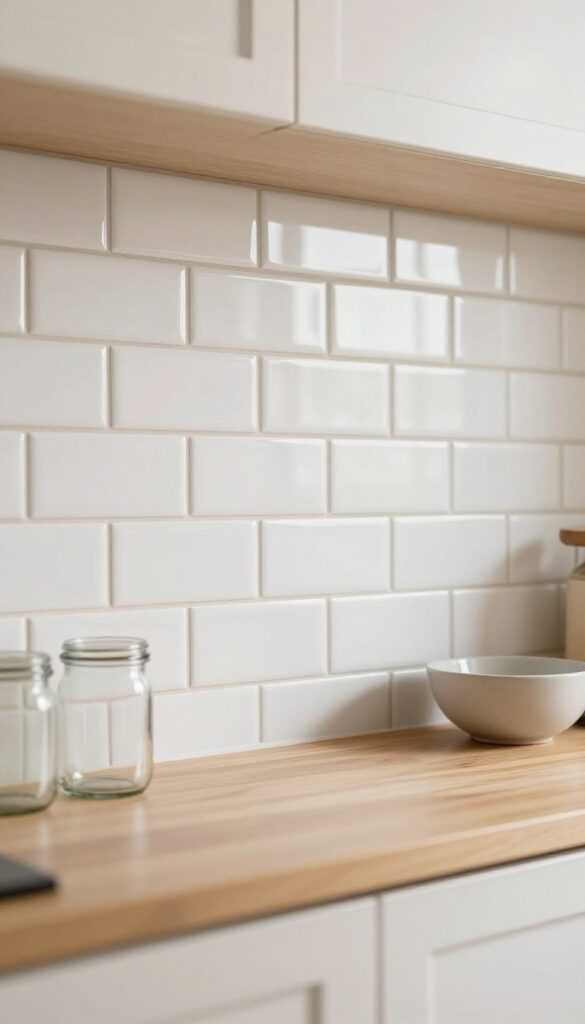
Most kitchens need a backsplash update long before they need a full remodel. Backsplashes age fast, especially if you have that old beige mosaic tile or anything with random decorative accents. Warm white subway tile is the classic fix, but the grout color is what makes it feel modern and cozy instead of sterile.
I’ve seen subway tile done badly, and when it’s bad, it looks like a public restroom. When it’s done right, it looks timeless and clean and makes your kitchen feel instantly brighter. Warm grout gives it softness and keeps it from feeling harsh.
Why This Works
Warm white subway tile reflects light and adds clean texture without being visually overwhelming. The grout acts like the “frame” around each tile, and warm grout keeps everything looking cohesive. It also hides stains better than pure white grout, which is honestly a blessing if you cook even a little.
This combination works with almost every kitchen style, from farmhouse to modern to cozy cottage.
How to Do It
- Choose subway tile in warm white, ivory, or slightly creamy tones
- Avoid bright white tiles if your cabinets and walls are warm-toned
- Pick grout in warm light beige, almond, or soft gray-beige
- Lay the tile in a classic brick pattern or vertical stack pattern
- Seal the grout properly after installation
- Keep the tile simple and let your other décor shine
Style & Design Tips
If you want a little more personality, choose handmade-style subway tile with slight texture or uneven edges. That tiny imperfection adds charm and makes the kitchen feel less “mass-produced.” Glossy tile works well for light reflection, but matte tile can look more modern and calm.
Avoid high-contrast dark grout unless you’re going for a bold industrial look. Dark grout lines can make the backsplash feel busy and distracting, especially in smaller kitchens.
Pro Tip or Budget Hack
If you already have decent tile but ugly grout, you can use grout refresh products to recolor it. It’s not glamorous work, but it’s cheap and surprisingly effective. A warm grout refresh can make old tile look like a deliberate design choice instead of something you inherited.
3. Warm White Walls That Match the Undertone of Your Cabinets
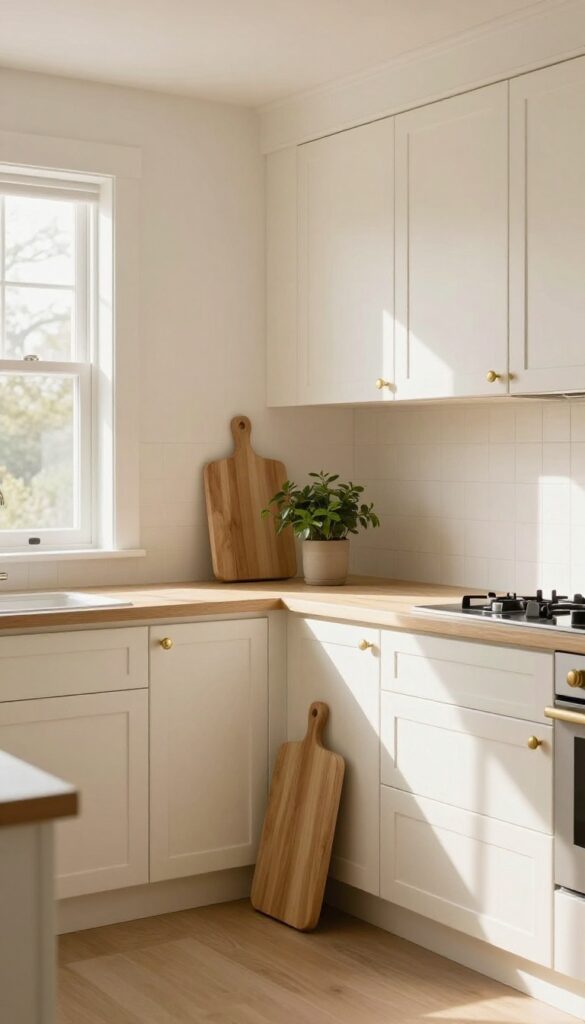
Walls matter more than people think, especially in kitchens where the lighting changes constantly. Morning light, evening light, overhead lights, and under-cabinet lights can all make the same paint color look totally different. If your walls are the wrong white, your cabinets can suddenly look yellow or gray even if they aren’t.
A warm white wall color creates the background that makes everything else look intentional. I’ve personally made the mistake of picking a white that looked “clean” and then realizing it made my warm cabinets look dingy. Lesson learned the annoying way.
Why This Works
White isn’t just white, which is rude, but true. Warm whites have beige, cream, or soft peach undertones that make a kitchen feel cozy instead of sterile. When the undertones match your cabinets, the whole kitchen feels unified.
It also helps your décor pop, especially wood cutting boards, greenery, and warm metals.
How to Do It
- Identify whether your cabinets lean warm, neutral, or cool
- Choose a warm white wall paint with similar undertones
- Test paint samples on multiple walls in the kitchen
- View samples during daylight and nighttime lighting
- Use eggshell or satin finish for durability
- Paint the ceiling a softer warm white too if the kitchen feels boxy
Style & Design Tips
If your kitchen has a lot of warm wood tones, avoid whites that have a gray undertone. That combo can feel slightly off, like the kitchen is confused about what it wants to be. Also, avoid overly creamy whites if your countertops are bright white quartz, because it can make the counters look icy.
A warm white that leans neutral is usually safest. Soft warm whites are basically the “little black dress” of paint colors.
Pro Tip or Budget Hack
If repainting the whole kitchen feels overwhelming, start with one wall, usually the one with the least cabinetry. Even one warm white wall can shift the entire vibe and make the space feel more open. Paint is one of the cheapest upgrades with the biggest payoff.
4. Warm White Open Shelving With Wood Accents
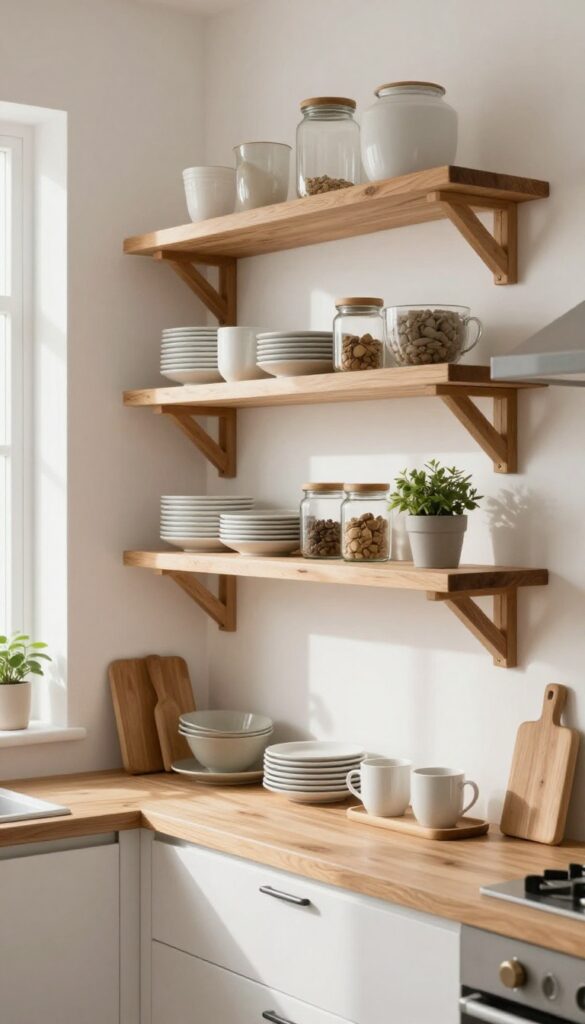
Sometimes cabinets make a kitchen feel heavy, especially if the room is small or the ceiling is low. Open shelving is one of those things people either love or hate, and honestly, I get both sides. If you’re messy, open shelves will expose you. If you’re organized, they make your kitchen feel airy and styled.
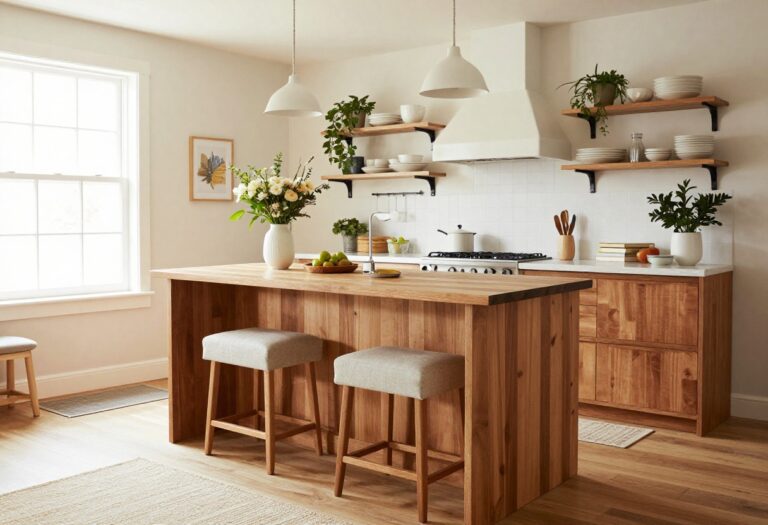
Warm white open shelves look clean and light, but the magic happens when you add wood brackets or a natural wood shelf tone. That wood detail keeps the shelves from feeling plain and adds warmth without clutter.
Why This Works
Open shelving breaks up visual weight and creates breathing room. Warm white shelves blend into the wall, which keeps them from looking bulky. Wood accents add contrast and texture, making the kitchen feel layered and cozy.
This setup also gives you a place to show off pretty everyday items like mugs, bowls, and glass jars.
How to Do It
- Choose one section of wall for shelving, not the entire kitchen
- Use thick wood shelves or white shelves with wood brackets
- Mount shelves into studs for stability
- Keep shelf spacing wide enough for tall items
- Style shelves with a mix of practical and decorative pieces
- Stick to a consistent color palette for dishes and containers
Style & Design Tips
The biggest open shelving mistake is stuffing them with random clutter. If you want the shelves to look intentional, keep them about 70% functional and 30% decorative. Add a small plant, a stack of plates, and a few glass jars, then stop.
Use warm-toned woods like oak, walnut, or pine. Cool-toned gray wood can clash with warm whites and make the kitchen feel slightly cold.
Pro Tip or Budget Hack
If you’re scared of open shelving, start with just two floating shelves above a coffee station. That’s the easiest place to keep things tidy because it’s already a “display area.” You can even reuse old wood boards and stain them for a custom look without spending much.
5. Warm White Countertop Styling That Looks Intentional
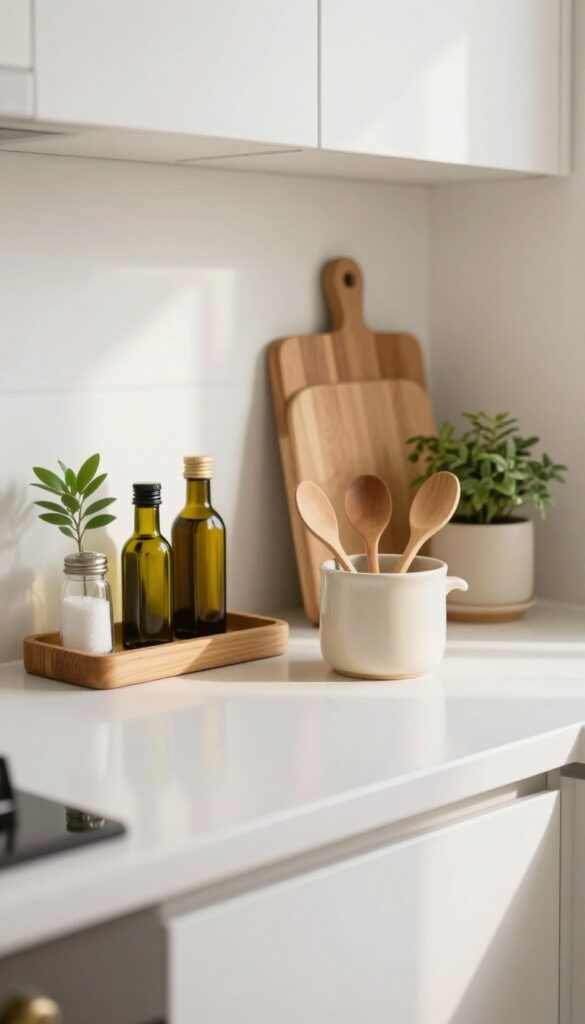
Countertops can make or break the warmth of a kitchen. Even if your cabinets and walls are warm white, your counters might still feel cold and empty if they’re cluttered or styled randomly. The goal isn’t to decorate every inch, but to create little zones that feel cozy and functional.
I’m a big believer in countertop styling that looks like it happened naturally, even though it definitely did not. It should feel lived-in, but not chaotic, which is honestly a fine line.
Why This Works
Warm white kitchens rely on balance. If everything is white, you need warm-toned objects to keep it from feeling flat. Countertop styling adds texture, warmth, and personality without needing any renovation.
It also makes the kitchen feel welcoming, like someone actually cooks there instead of just taking Pinterest photos.
How to Do It
- Clear off everything you don’t use daily
- Group items into small functional clusters
- Use wood cutting boards leaned against the backsplash
- Add a ceramic utensil crock in cream or beige
- Use a tray to organize oils, salt, and pepper
- Keep one decorative element like a small plant or vase
Style & Design Tips
Don’t overdo it. If your counter looks like a home décor store display, it will feel impractical fast. Keep the styling simple and choose pieces that match the kitchen’s undertone, like warm beige ceramics or amber glass bottles.
Avoid bright white accessories unless they match your cabinets exactly. Mismatched whites can look messy, even if everything is technically “white.”
Pro Tip or Budget Hack
Use thrifted cutting boards and wooden bowls. Old wood has a richer tone than new cheap wood, and it instantly adds that cozy “collected over time” vibe. Even if you never use the bowl for food, it looks amazing holding lemons or garlic.
6. Warm White Lighting That Doesn’t Ruin Everything
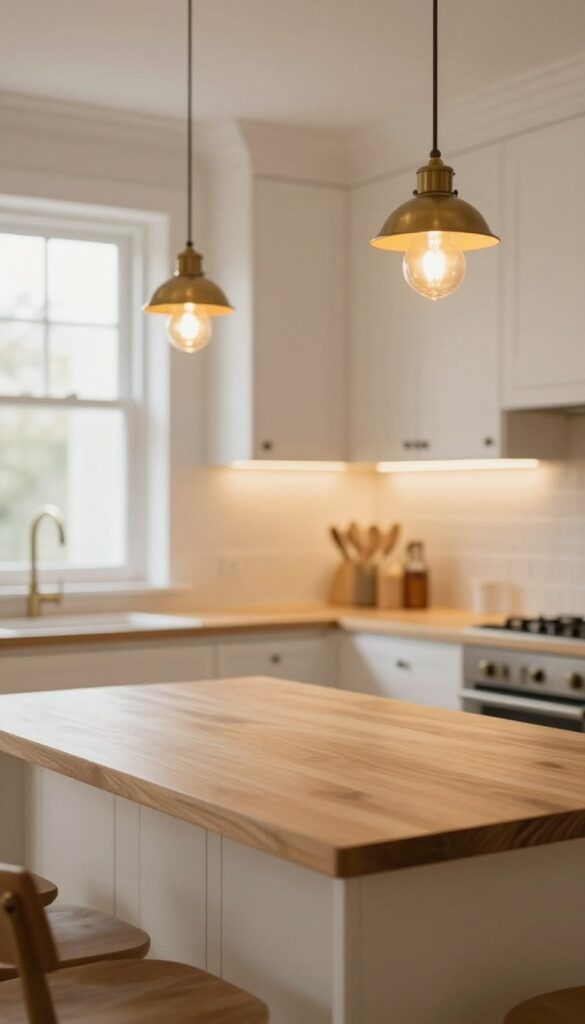
Lighting is where most warm white kitchens either succeed or completely fall apart. You can have the prettiest warm white cabinets and walls, but if your lights are harsh cool LED, your kitchen will look like a hospital break room. And nobody wants to cook dinner under interrogation lighting.
Warm white lighting creates that cozy glow without making the room feel dim. It’s about choosing the right temperature and layering the light sources so the space feels balanced.
Why This Works
Warm white light supports warm white décor. It makes cabinets look creamy and inviting instead of dull or yellow. Layered lighting also makes a kitchen more functional because you get brightness where you need it and softness where you want it.
The right lighting can literally make cheap materials look more expensive, which is honestly kind of hilarious.
How to Do It
- Replace bulbs with warm white LEDs (around 2700K–3000K)
- Add under-cabinet lighting for task lighting
- Install pendant lights over an island or dining area
- Use dimmers if possible for flexibility
- Choose warm-toned light fixtures like brass or bronze
- Avoid mixing multiple bulb temperatures in the same space
Style & Design Tips
If you want your kitchen to look cozy, stop using cool white bulbs. They make everything look gray and lifeless. Also, avoid overly modern chrome fixtures if the rest of your kitchen is warm and soft, because it can feel disconnected.
A warm white kitchen looks best with soft gold, matte black, or antique bronze fixtures. Those finishes look rich even when they’re affordable.
Pro Tip or Budget Hack
Battery-operated puck lights under cabinets are a cheap way to get that warm layered glow without wiring. They aren’t perfect, but they work well for renters or anyone not ready to deal with electrical work. Just make sure the light temperature matches your main bulbs.
7. Warm White Kitchen Textures That Add Cozy Depth
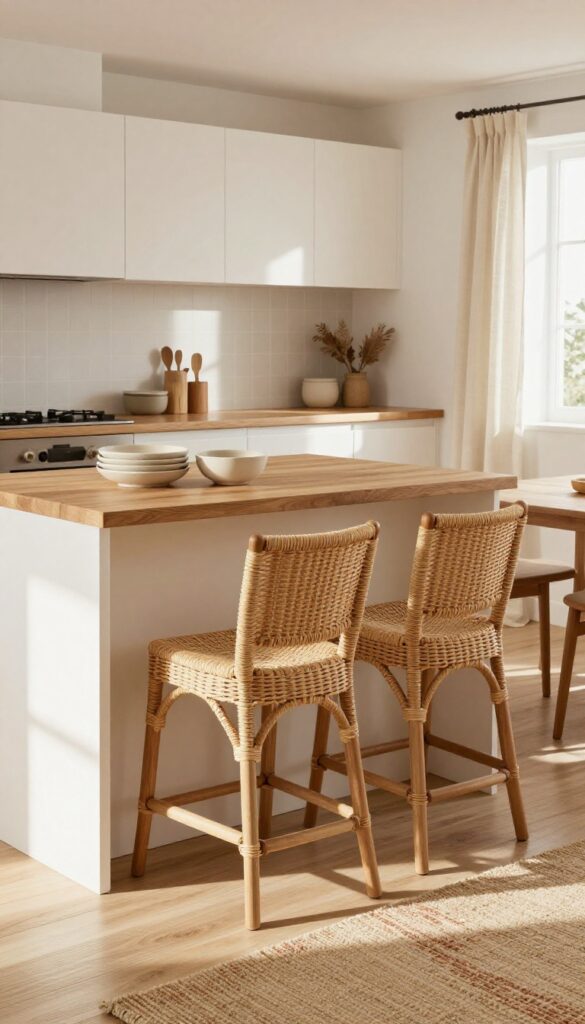
Warm white kitchens can look stunning, but if everything is smooth and flat, the room can feel bland. Texture is what makes warm white feel cozy instead of boring. Think of it like wearing an all-white outfit, it only looks good if you mix fabrics.
Adding texture is also the easiest way to make a kitchen feel expensive without spending much. I’ve seen simple warm white kitchens look high-end just because they had the right mix of natural materials.
Why This Works
Texture adds dimension and prevents the kitchen from looking like a blank box. Warm white surfaces reflect light, so textured items create shadows and contrast that make the room feel layered.
It also makes the space feel more welcoming. Smooth glossy kitchens can feel cold, while textured kitchens feel like home.
How to Do It
- Add woven bar stools or rattan seating if you have an island
- Use linen or cotton café curtains for softness
- Choose a textured runner rug in warm neutral tones
- Add a warm wood dining table or butcher block accent
- Use stoneware dishes in cream tones
- Include a few matte finishes to balance glossy surfaces
Style & Design Tips
Don’t add texture randomly. Stick to a small set of materials like wood, woven fibers, linen, and ceramic. Too many textures can make the kitchen feel messy instead of cozy.
Avoid overly gray rugs or cool-toned fabrics because they can clash with warm white and make it feel muddy. Warm beige, tan, soft brown, and muted terracotta tones work beautifully.
Pro Tip or Budget Hack
If you want a cozy kitchen instantly, add a washable runner rug and swap out your dish towels for neutral linen ones. It sounds simple, but it changes the whole vibe fast. Rugs and towels are basically the easiest “mini makeover” items that don’t require tools or paint.
Final Thoughts
Warm white kitchens work because they make everything feel cleaner, brighter, and more relaxed without screaming for attention. The trick is mixing warmth with contrast so the space doesn’t turn bland or yellowish. A few smart choices like warm lighting, wood accents, and the right paint undertone can make your kitchen feel completely different.
If you try even one of these ideas, start with lighting or paint first. Those two upgrades change everything, and honestly, they’re way more satisfying than they should be.