8 Brown Living Room Ideas That Feel Rich
Brown gets dismissed because people confuse it with boring, outdated, or heavy, even though it quietly does the hardest design work in a room.
It hides wear, grounds color choices, and makes mismatched pieces look intentional instead of accidental. When done right, brown doesn’t fade into the background, it carries the whole space.
Most living rooms already contain brown in some form, whether that’s furniture, floors, or trim that isn’t going anywhere.
The trick is learning how to work with it instead of fighting it. Once you stop trying to erase brown and start styling it, the room usually gets richer almost immediately.
1. Layer Different Shades of Brown Instead of One Flat Tone
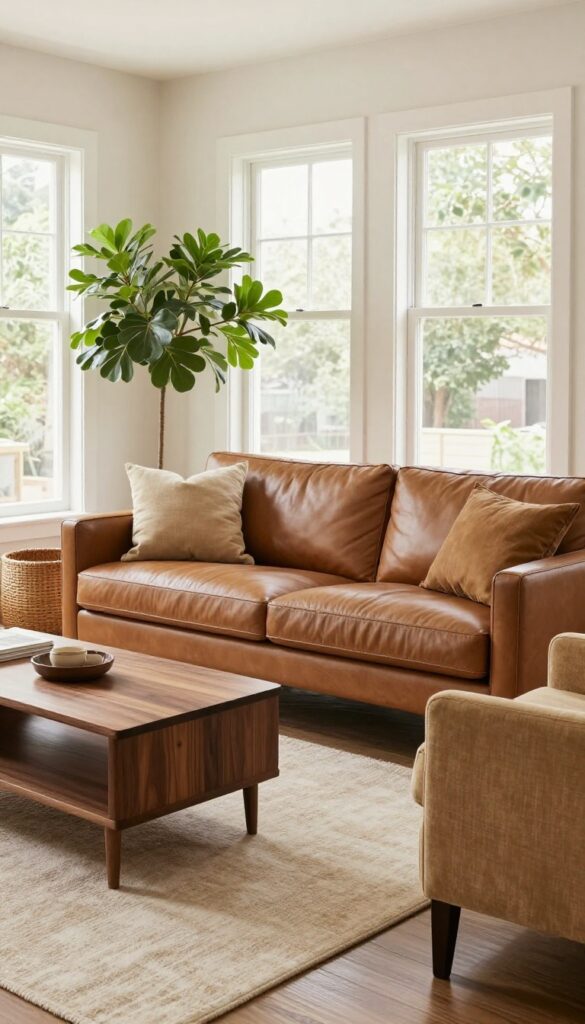
Most brown living rooms fail because everything sits in the same muddy middle shade, which makes the space feel dull fast.
Real rooms have contrast, even when they stick to one color family. Mixing espresso, walnut, camel, and soft tan creates depth without shouting for attention.
I learned this the hard way after buying a brown sofa, brown rug, and brown coffee table that all matched a little too well.
The room felt like one big blur until I swapped in lighter pillows and a darker side table. Suddenly everything looked intentional instead of accidental.
Why This Works
Layering shades creates visual separation between surfaces, which helps the eye move naturally around the room.
It also keeps brown from feeling heavy or flat, especially in smaller spaces. Depth is what makes a space feel rich, not the price tag.
When everything is the same shade, the room loses definition. Different tones give furniture and decor their own moment without clashing.
How to Do It
- Start with your largest brown item and treat it as the anchor for the palette.
- Add at least one darker and one lighter brown through furniture or textiles.
- Use mid-tone browns sparingly so they don’t overwhelm the room.
Each step matters because contrast only works when there’s clear separation between tones. If you stack similar shades together, the effect disappears.
Style & Design Tips
Avoid lining up all your dark browns on the floor and all your light browns above eye level. Spread tones across the room so nothing feels top-heavy. Leather, wood, and fabric all reflect brown differently, which adds even more depth.
A common mistake is trying to match browns perfectly. Slight variation always looks more expensive.
Pro Tip or Budget Hack
Thrift stores are gold mines for small wooden pieces in different brown tones. You don’t need matching sets to make this work. A single darker tray or stool can shift the whole room.
2. Use Brown Leather as a Statement, Not a Default
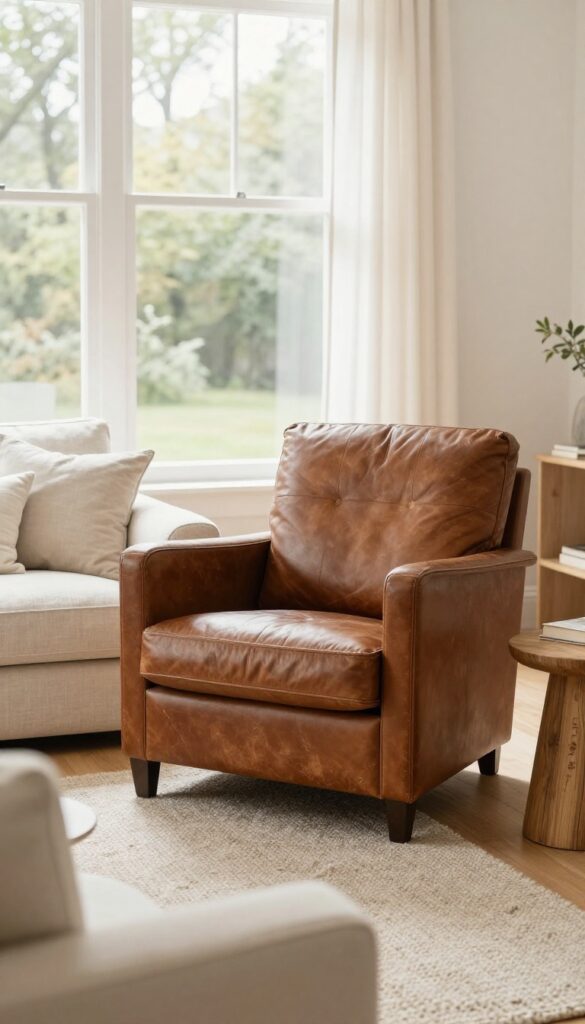
Brown leather has a reputation for feeling dated because people treat it like a neutral placeholder. When you make it the intentional focal point, it suddenly feels bold and elevated. A brown leather sofa or chair instantly adds weight to a room.
I used to avoid leather because I thought it felt too masculine. Then I lived with a brown leather armchair for a year and realized how much it anchored everything around it. Fabric furniture came and went, but that chair always looked better with age.
Why This Works
Leather reflects light differently than fabric, which adds natural texture without needing extra decor. Brown leather also hides wear beautifully, which makes it ideal for real life. The more lived-in it gets, the better it looks.
As a focal point, it balances softer materials like rugs and pillows. That contrast is what keeps the room from feeling flat.
How to Do It
- Choose one leather piece to carry the look, not multiple competing items.
- Keep surrounding furniture lighter or more textured.
- Let the leather breathe by avoiding clutter around it.
This works best when the leather has room to stand on its own. Crowding it makes the room feel heavy.
Style & Design Tips
Warm brown leather pairs well with linen, wool, and natural wood. Avoid pairing it with shiny metals that feel cold or industrial. If the leather feels too dark, lighten the space with throws or cushions.
Don’t over-style leather furniture. A little restraint keeps it feeling intentional.
Pro Tip or Budget Hack
Vintage or secondhand leather often looks better than brand-new pieces. Minor scuffs add character instead of detracting. Conditioning leather regularly keeps it rich without replacing it.
3. Anchor the Room With a Brown Area Rug
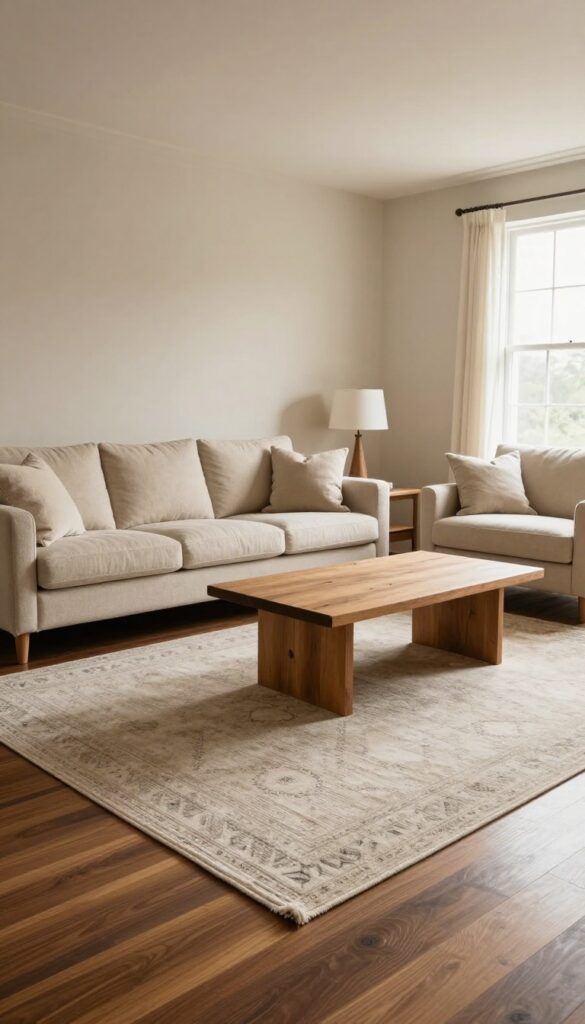
A brown rug grounds a living room in a way lighter rugs sometimes can’t. It hides stains, defines seating areas, and adds warmth instantly. The key is choosing a rug with variation, not a flat block of color.
I resisted brown rugs for years because I thought they’d feel dull. Then I tried one with subtle patterning and realized how much calmer the room felt. Everything finally had a place.
Why This Works
Rugs visually anchor furniture and prevent the room from feeling like pieces are floating. Brown tones naturally recede, which helps larger rugs feel less overpowering. This creates a cozy foundation without stealing focus.
Patterned brown rugs also disguise wear better than lighter options. That alone makes them practical.
How to Do It
- Choose a rug large enough for at least the front legs of furniture.
- Look for texture or pattern within the brown palette.
- Layer lighter accents on top to keep it balanced.
Sizing matters more than color here. Too small and the room feels disconnected.
Style & Design Tips
Avoid solid chocolate brown rugs unless the room is very light. Subtle pattern, faded motifs, or mixed fibers keep things interesting. Pair with lighter walls or furniture for contrast.
Common mistake is going too dark in already dim rooms. Balance matters.
Pro Tip or Budget Hack
Flatweave brown rugs are usually cheaper and easier to clean. You can layer a smaller textured rug on top for depth without buying a large statement piece.
4. Mix Brown Wood Finishes Instead of Matching Everything
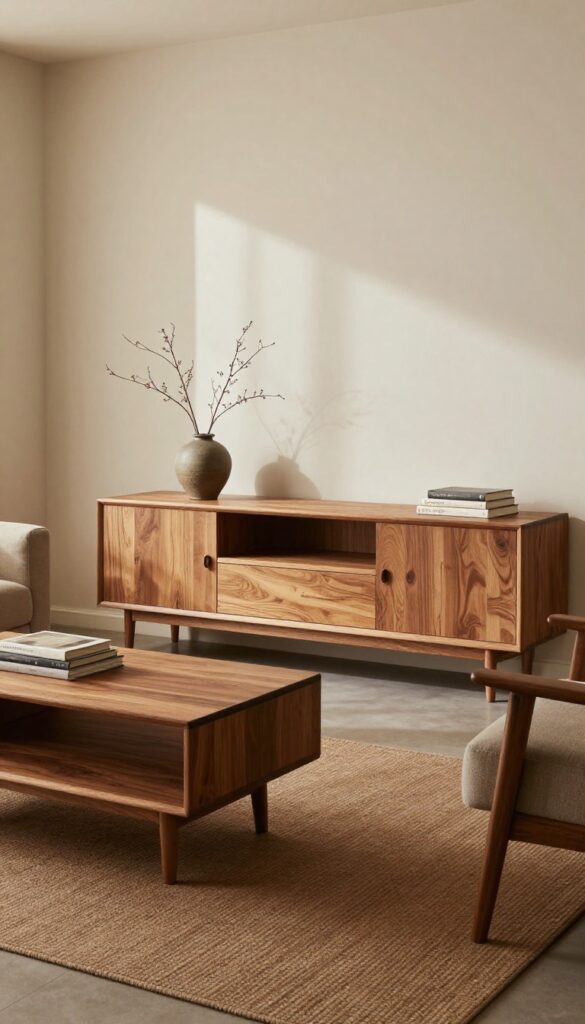
Perfectly matched wood furniture often feels stiff and showroom-like. Mixing wood tones creates a collected, layered look that feels far more expensive. Brown finishes don’t need to match, they need to relate.
I used to stress about whether my coffee table matched my TV stand. Once I stopped caring and focused on balance, the room finally felt relaxed. Nothing screamed for attention anymore.
Why This Works
Natural variation feels authentic because real spaces evolve over time. Mixing finishes adds character and prevents the room from feeling staged. It also gives you flexibility when adding new pieces.
Uniform wood tones often flatten the space. Variation brings life back in.
How to Do It
- Keep undertones consistent, either warm or neutral.
- Mix light, medium, and dark woods intentionally.
- Repeat at least one tone in multiple places.
This repetition keeps the mix cohesive instead of chaotic.
Style & Design Tips
Avoid mixing too many high-gloss finishes together. Matte and satin woods feel calmer and richer. Balance chunky pieces with slimmer profiles.
A common mistake is mixing woods randomly without considering undertones.
Pro Tip or Budget Hack
If a wood piece doesn’t quite fit, sanding and staining can fix it. Even a slight tone adjustment can make it work better with the rest of the room.
5. Pair Brown With Soft Neutrals for a Balanced Look
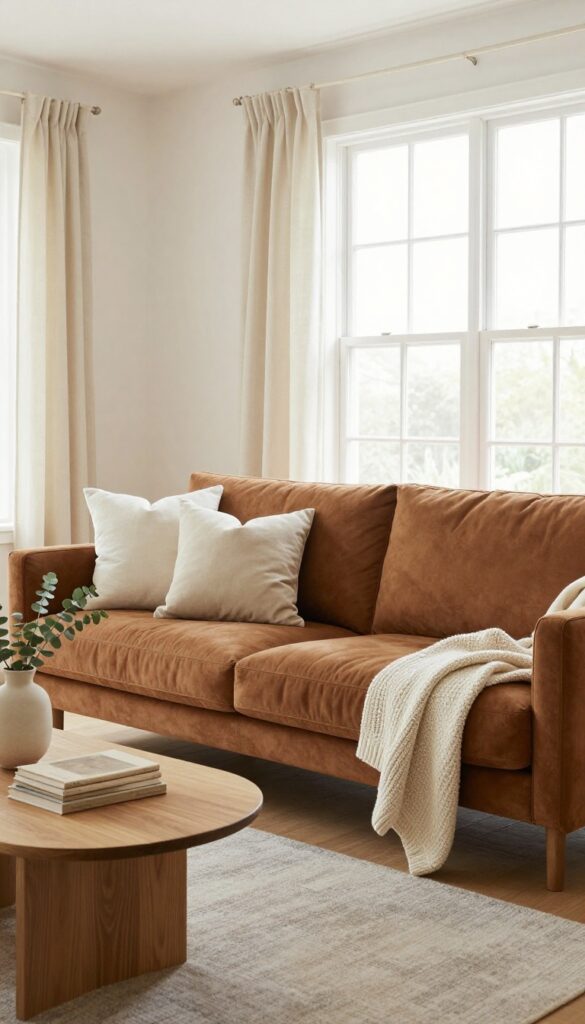
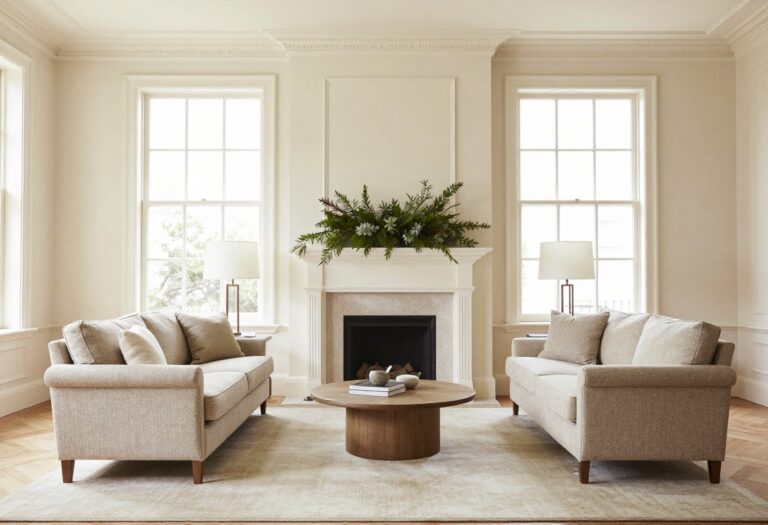
Brown shines when it has breathing room. Pairing it with creams, off-whites, or warm grays keeps the space from feeling heavy. The contrast highlights brown’s richness instead of muting it.
I once painted a room too dark trying to lean into brown. Adding lighter textiles completely changed the vibe without repainting a thing.
Why This Works
Soft neutrals reflect light and balance brown’s depth. They prevent the room from closing in visually. This combination feels calm, not dramatic.
Brown becomes the anchor while neutrals do the supporting work.
How to Do It
- Use lighter colors on walls or large textiles.
- Introduce brown through furniture and accents.
- Keep patterns subtle to avoid visual clutter.
This keeps the focus on texture and tone rather than noise.
Style & Design Tips
Creams work better than stark white with brown. Warm neutrals feel cohesive, while cool whites can clash. Avoid overloading the space with beige everything.
Balance is key here.
Pro Tip or Budget Hack
Slipcovers, pillow covers, and throws are cheap ways to lighten a room fast. You can rotate them seasonally without replacing furniture.
6. Add Texture to Keep Brown From Feeling Flat
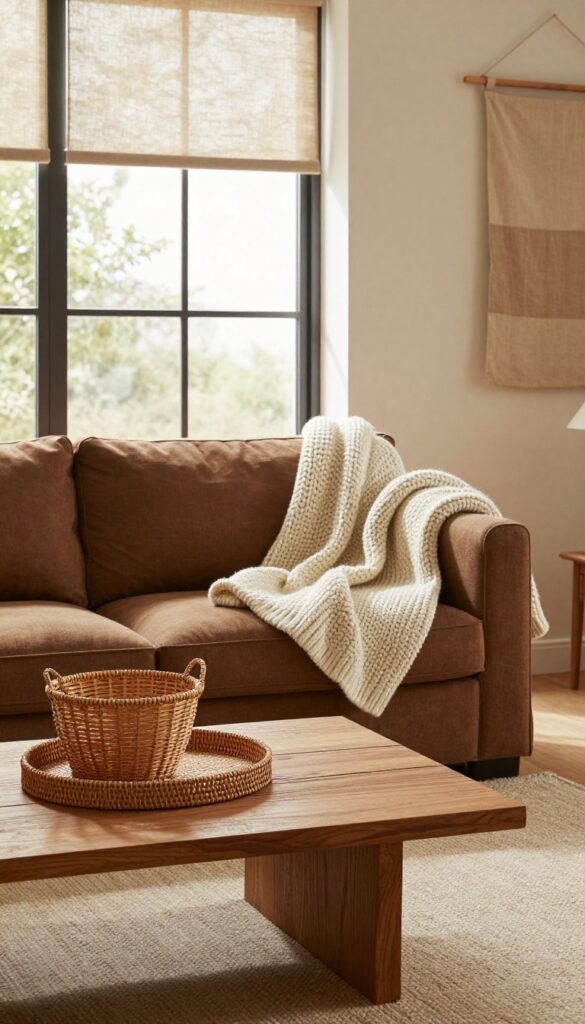
Texture is what separates rich brown spaces from dull ones. Smooth brown surfaces everywhere can feel lifeless. Mixing textures brings depth without adding color.
I noticed this after swapping a sleek brown table for a textured wood one. Same color, completely different impact.
Why This Works
Texture catches light differently and creates subtle contrast. It keeps brown from blending into itself. The room feels layered and intentional.
Flat surfaces alone can make brown feel heavy.
How to Do It
- Mix smooth and rough materials intentionally.
- Use textiles like knits, wool, or linen.
- Add natural elements like wood grain or woven pieces.
Each layer adds visual interest without overwhelming the palette.
Style & Design Tips
Avoid overusing shiny finishes. Matte textures feel warmer and more grounded. Balance hard and soft elements evenly.
A common mistake is relying only on color for interest.
Pro Tip or Budget Hack
DIY texture with baskets, woven trays, or fabric wall hangings. They add depth without major cost.
7. Use Brown in Architectural Details
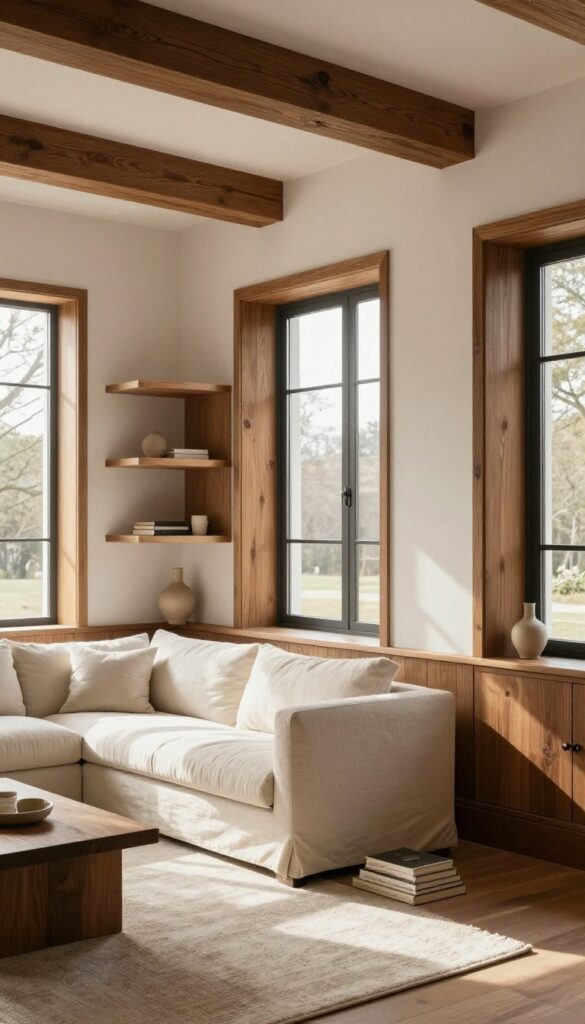
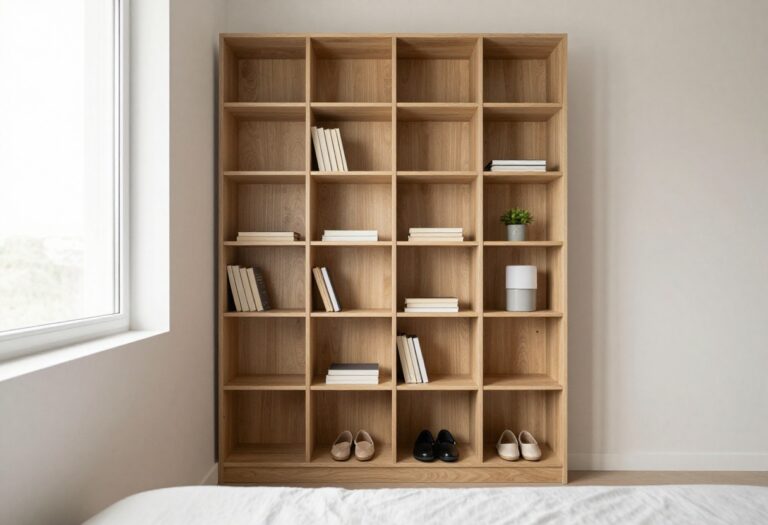
Brown doesn’t need to live only in furniture. Trim, beams, or shelving can quietly elevate the space. These details make brown feel intentional, not accidental.
I added simple wood shelves to a neutral room and the whole space felt more grounded instantly. It was subtle but powerful.
Why This Works
Architectural elements frame the room and guide the eye. Brown details create structure without overwhelming the space. They also age well over time.
Painted details can feel temporary, but wood feels permanent.
How to Do It
- Start small with shelving or trim.
- Keep finishes consistent with existing wood tones.
- Let the details breathe without overcrowding.
Less really does more here.
Style & Design Tips
Avoid overly ornate designs. Clean lines feel richer with brown. Balance details with simple decor.
Too much detailing can feel busy.
Pro Tip or Budget Hack
Stain existing trim instead of replacing it. Even a darker stain can transform builder-grade details.
8. Finish With Warm Lighting to Elevate Brown Tones
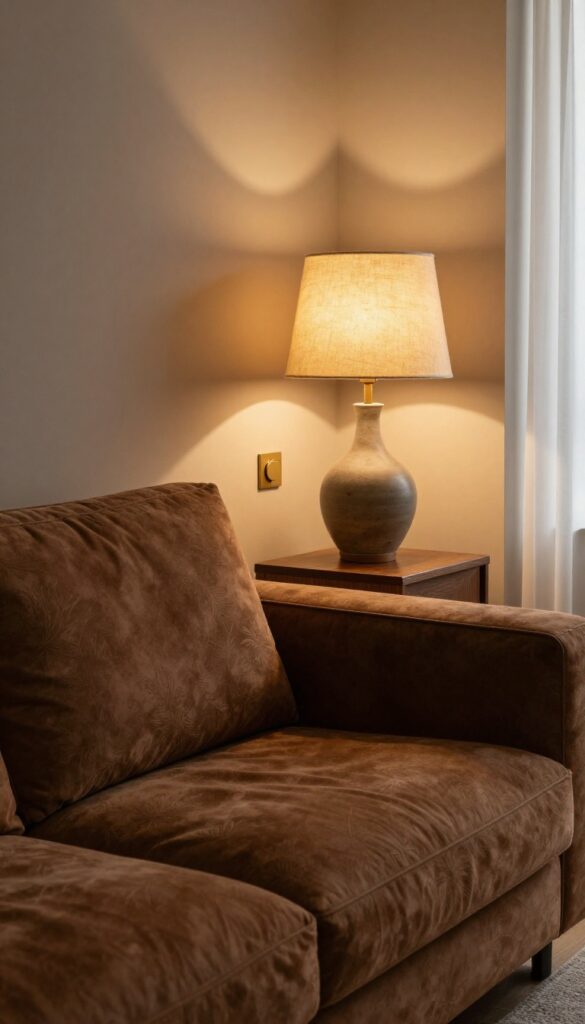
Lighting can make or break brown spaces. Cool lighting drains warmth and makes brown feel muddy. Warm lighting brings out depth and richness.
I swapped out cool bulbs once and couldn’t believe the difference. Same room, completely different feel.
Why This Works
Warm light enhances brown’s undertones. It softens shadows and makes the room feel inviting. Lighting ties everything together.
Harsh light exaggerates flaws instead of hiding them.
How to Do It
- Choose warm or soft white bulbs.
- Layer lighting instead of relying on one source.
- Use lamps to highlight brown textures.
This creates a cozy, balanced glow.
Style & Design Tips
Avoid overly bright overhead lighting. Table and floor lamps add warmth. Choose shades that diffuse light gently.
Lighting should complement, not dominate.
Pro Tip or Budget Hack
Dimmer switches are worth every penny. They let you control mood without changing fixtures.
Final Thoughts
Brown doesn’t need rescuing, it needs intention. When you layer tones, add texture, and balance light, brown becomes one of the most forgiving and luxurious colors to work with. It’s practical, timeless, and quietly confident.
If you already have brown in your living room, you’re halfway there. A few thoughtful tweaks can make the space feel richer without starting over. I’d take that over chasing trends any day.