9 Natural Wood Bedroom Ideas That Feel Calm
Natural wood changes how a bedroom functions more than most people expect. It softens sharp edges, reduces visual noise, and somehow makes a space feel finished even when the décor is simple.
That balance is hard to fake with synthetic materials or heavy design tricks.
I’ve tried a lot of bedroom styles over the years, and I keep circling back to wood for one simple reason—it works without trying too hard.
It doesn’t scream for attention, it ages well, and it makes a room feel like a place you actually want to unwind in instead of just sleep in.
1. Solid Wood Bed Frame as the Anchor
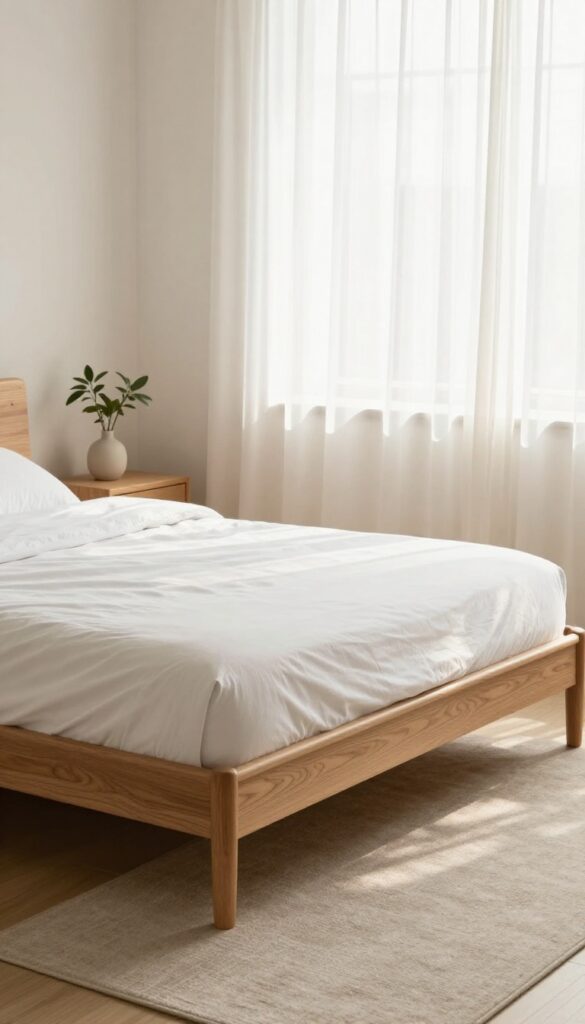
Most bedrooms feel off when the bed doesn’t visually “belong” in the room. A solid wood bed frame fixes that by grounding everything else and giving the space a clear focal point.
I’ve noticed rooms instantly feel calmer when the bed looks intentional instead of like a temporary setup.
Wood frames also age better than upholstered ones, especially if you’re someone who rearranges or redecorates often.
Scratches add character instead of looking like damage, which is a huge win if you hate babying furniture. I’ve had one oak frame for years, and it still looks better now than when it was new.
Why This Works
A wood bed frame gives visual weight without heaviness. It balances the room naturally and keeps the space from feeling too sterile or overly styled.
The texture of real wood adds warmth without needing extra décor, which makes the whole room feel more settled.
How to Do It
- Choose a solid wood frame with visible grain rather than painted finishes
- Stick to low or mid-height designs for a calm, grounded look
- Match the tone to your flooring or contrast it slightly for interest
Style & Design Tips
Lighter woods feel airy and modern, while darker woods lean cozy and classic. Avoid overly ornate headboards if you want a relaxed look. Simple lines always age better and give you more flexibility with bedding and wall decor.
Pro Tip or Budget Hack
If solid wood feels expensive, look for reclaimed wood frames or unfinished wood you can seal yourself. You’ll save money and end up with something that looks more custom than store-bought options.
2. Wood Slat Accent Wall Behind the Bed
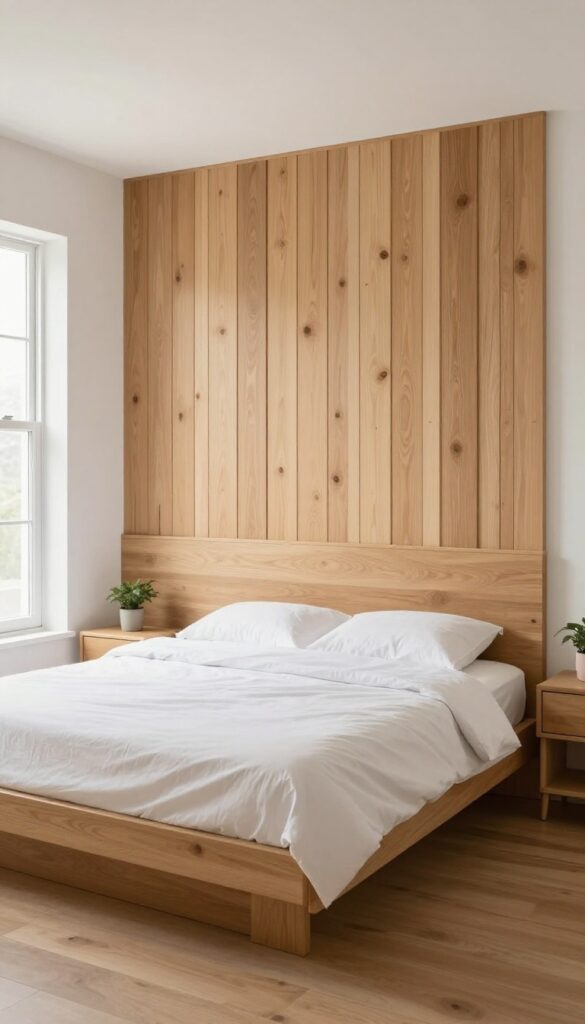
Flat walls can make a bedroom feel lifeless, even if everything else looks good. A wood slat accent wall adds depth without cluttering the space or making it feel busy. It’s one of those upgrades that looks expensive but doesn’t have to be.
I added slats behind a bed once just to test the look, and it instantly made the room feel more intentional. It also replaced the need for wall art, which simplified the whole layout.
Why This Works
Vertical lines draw the eye upward and make ceilings feel taller. Wood slats also soften sound, which subtly improves how calm the room feels.
The natural texture keeps the wall from looking flat while still staying neutral.
How to Do It
- Use evenly spaced wood slats for a clean look
- Stain or seal them in a warm neutral tone
- Install them only behind the bed to avoid visual overload
Style & Design Tips
Avoid dark stains in small rooms unless the rest of the space is very light. Natural or honey tones work best for keeping things relaxed and open.
Pro Tip or Budget Hack
Use MDF slats with a wood veneer instead of solid wood. They’re lighter, cheaper, and much easier to install while giving nearly the same look.
3. Floating Wooden Nightstands
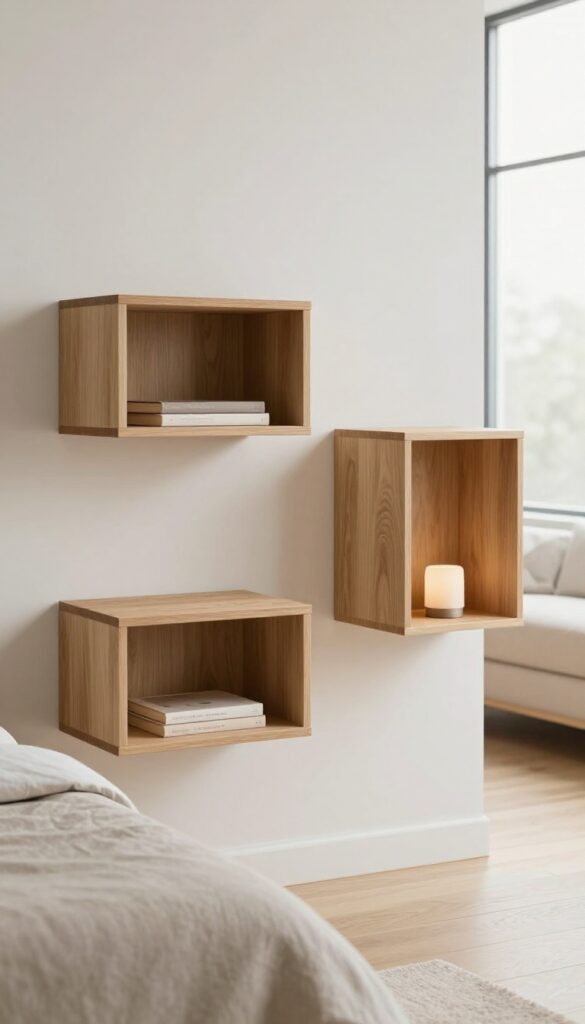
Bulky nightstands can make a bedroom feel cramped, especially in smaller spaces. Floating wooden nightstands solve that by keeping the floor visually open while still offering function. They’re one of those details that make a room feel modern without trying too hard.
I switched to floating nightstands in a small bedroom and immediately noticed how much cleaner everything felt. Less furniture touching the floor somehow makes the whole room breathe better.
Why This Works
Floating furniture reduces visual weight and makes the room feel larger. Wood keeps it warm so it doesn’t feel too minimal or cold.
They also force you to keep clutter in check, which is never a bad thing.
How to Do It
- Mount at a comfortable height next to the bed
- Choose a simple drawer or open shelf design
- Keep cords hidden for a cleaner look
Style & Design Tips
Match the wood tone to your bed frame or floor for cohesion. Avoid high-gloss finishes since they can look out of place in a calm bedroom.
Pro Tip or Budget Hack
Wall-mounted shelves with brackets can double as nightstands for a fraction of the price. Just make sure they’re properly anchored.
4. Natural Wood Dresser With Minimal Hardware
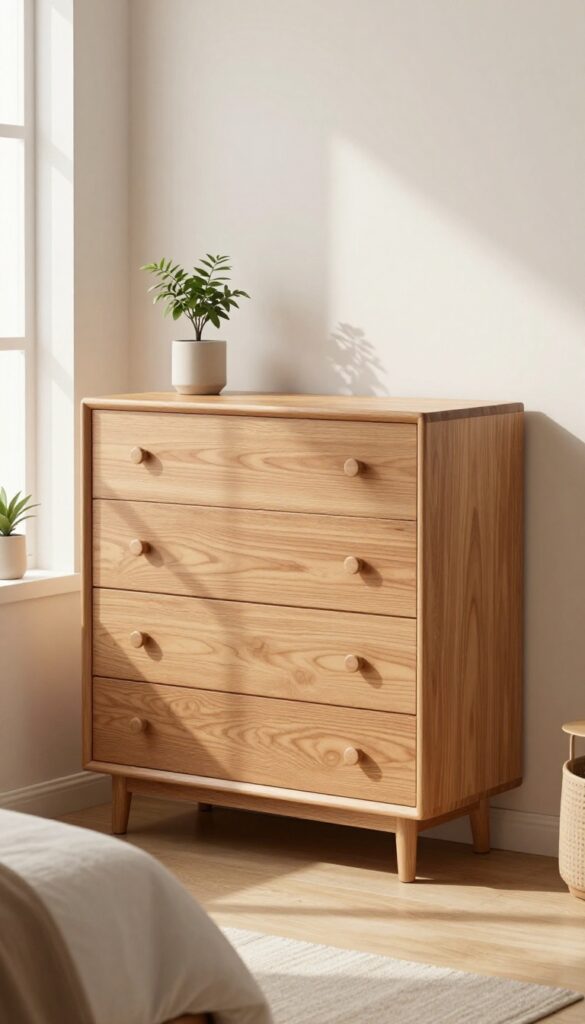
A dresser takes up visual space whether you want it to or not, so it might as well look good. Natural wood dressers bring warmth and texture without dominating the room. They also age better than trendy finishes that feel dated fast.
I’ve found that simple wood dressers make it easier to switch styles over time. You can change bedding, rugs, or wall color without replacing the furniture.
Why This Works
Wood grain adds interest without needing extra decoration. Minimal hardware keeps the look clean and prevents visual clutter.
The result feels calm, grounded, and practical.
How to Do It
- Choose a dresser with clean lines
- Stick to natural or lightly stained wood
- Keep the top surface mostly clear
Style & Design Tips
Avoid matching every wood piece exactly. Slight variation looks more natural and less showroom-like.
Pro Tip or Budget Hack
Swap out hardware on an old dresser and refinish it lightly. A simple sanding and oil finish can completely change the look.
5. Wooden Bench at the Foot of the Bed
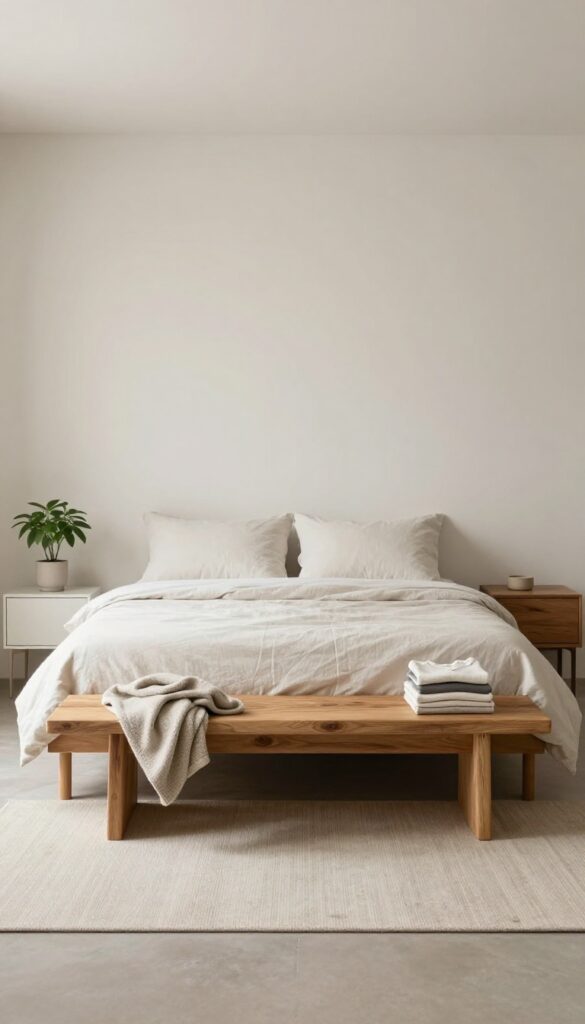
A wood bench adds function without crowding the room. It gives you a place to sit, toss a blanket, or lay out clothes without feeling bulky. I didn’t realize how useful one was until I added it.
It also helps visually anchor the bed, especially in larger rooms that feel a little empty.
Why This Works
The bench creates balance and makes the bed feel more intentional. Wood keeps it from looking heavy or formal.
It’s functional without screaming for attention.
How to Do It
- Choose a bench slightly narrower than the bed
- Keep the height low and proportions simple
- Avoid upholstery if you want a cleaner look
Style & Design Tips
Light wood works best for calm spaces. If the room feels flat, add a folded throw or cushion for texture.
Pro Tip or Budget Hack
A simple wooden bench from an entryway works just as well at the foot of the bed. No need to buy something labeled “bedroom furniture.”
6. Wood-Framed Mirrors for Soft Contrast
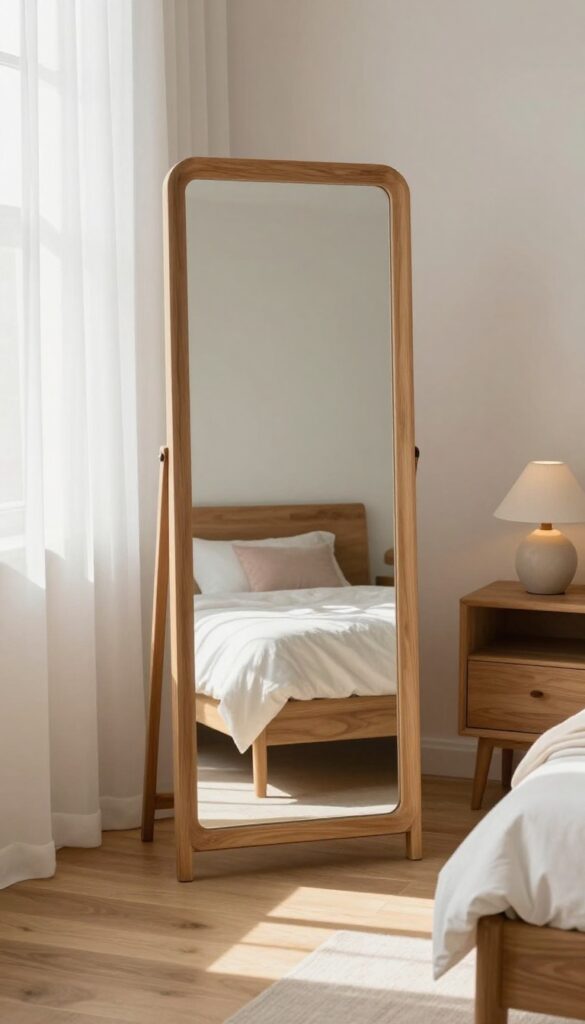
Mirrors framed in natural wood add warmth while still reflecting light. They feel less harsh than metal frames and blend easily with other wood elements in the room.
I’ve used wood-framed mirrors in bedrooms that felt cold, and they instantly softened the space without changing anything else.
Why This Works
Wood frames break up hard edges and add depth. They also tie different wooden elements together visually.
The reflection helps the room feel larger without adding clutter.
How to Do It
- Choose a simple frame with visible grain
- Lean it against a wall or hang it vertically
- Keep the scale proportional to the room
Style & Design Tips
Avoid overly ornate frames. Simple shapes feel calmer and age better.
Pro Tip or Budget Hack
Thrift stores often have solid wood mirrors that just need a light sanding or stain refresh.
7. Exposed Wood Ceiling Beams
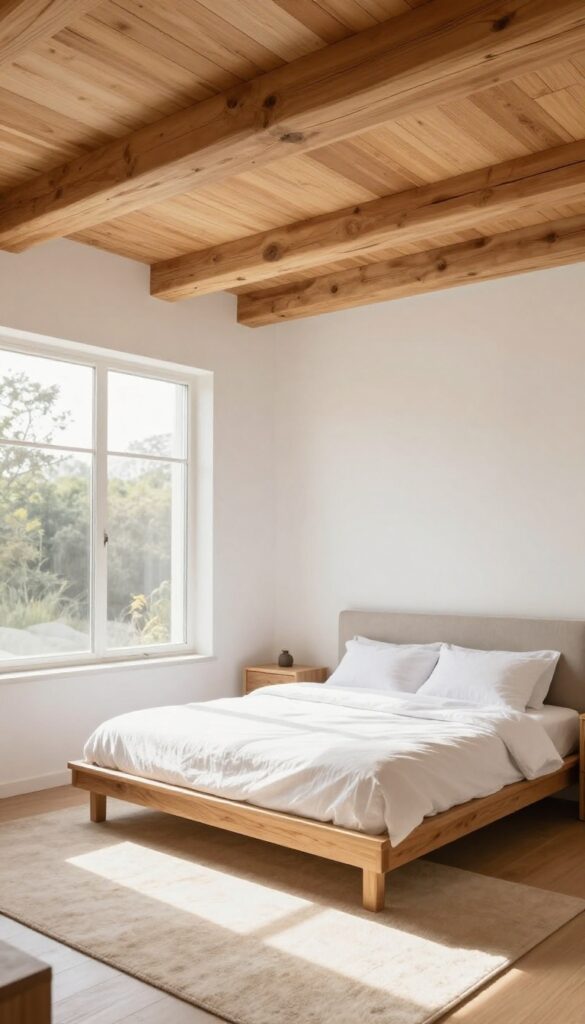
Wood beams instantly add character, even in modern spaces. They bring warmth and texture without needing extra décor. I’ve seen plain bedrooms completely transformed just by adding faux beams.
They also make ceilings feel higher and more interesting without being flashy.
Why This Works
The eye naturally follows horizontal lines, which creates a sense of structure. Wood keeps it from feeling industrial or cold.
It adds depth without cluttering walls or floors.
How to Do It
- Use lightweight faux beams if structural beams aren’t possible
- Stick to natural or slightly weathered finishes
- Space them evenly for balance
Style & Design Tips
Don’t overdo it. One or two beams can be enough to make an impact.
Pro Tip or Budget Hack
Foam beams look surprisingly real and are much easier to install than solid wood.
8. Wooden Floating Shelves for Subtle Storage
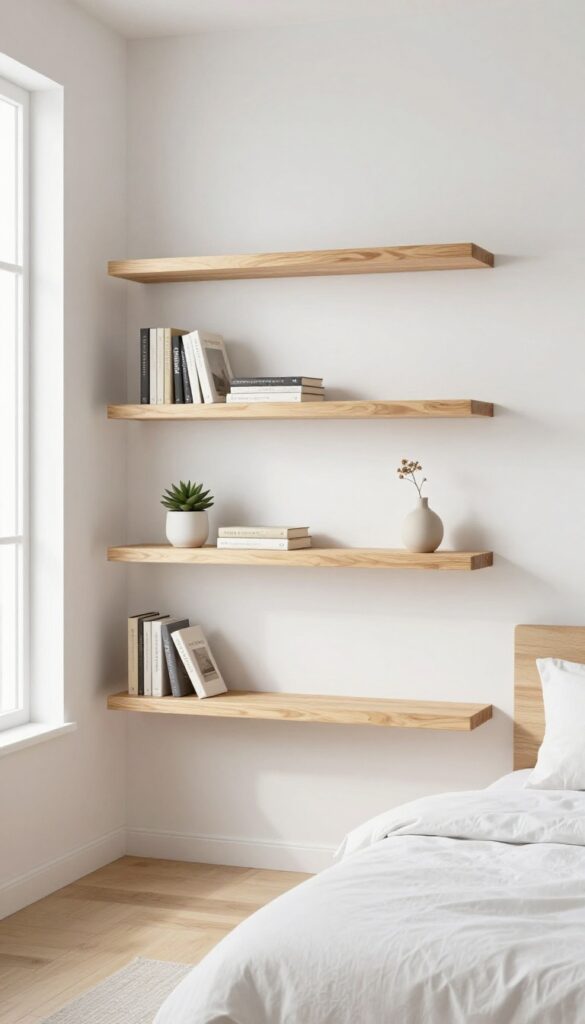
Floating shelves in natural wood add storage without overwhelming the room. They’re perfect for books, plants, or a few personal items without feeling cluttered.
I like using them instead of bulky bookcases, especially in smaller bedrooms.
Why This Works
They keep things off the floor while still adding warmth. The open design prevents the room from feeling boxed in.
They also give you flexibility to change things up easily.
How to Do It
- Install at eye level or slightly above
- Keep styling minimal and intentional
- Leave some empty space for balance
Style & Design Tips
Mix vertical and horizontal items for visual interest. Less is more when it comes to shelf styling.
Pro Tip or Budget Hack
Use leftover wood from other projects to create custom shelves that match your space perfectly.
9. Natural Wood Flooring or Wood-Look Finishes
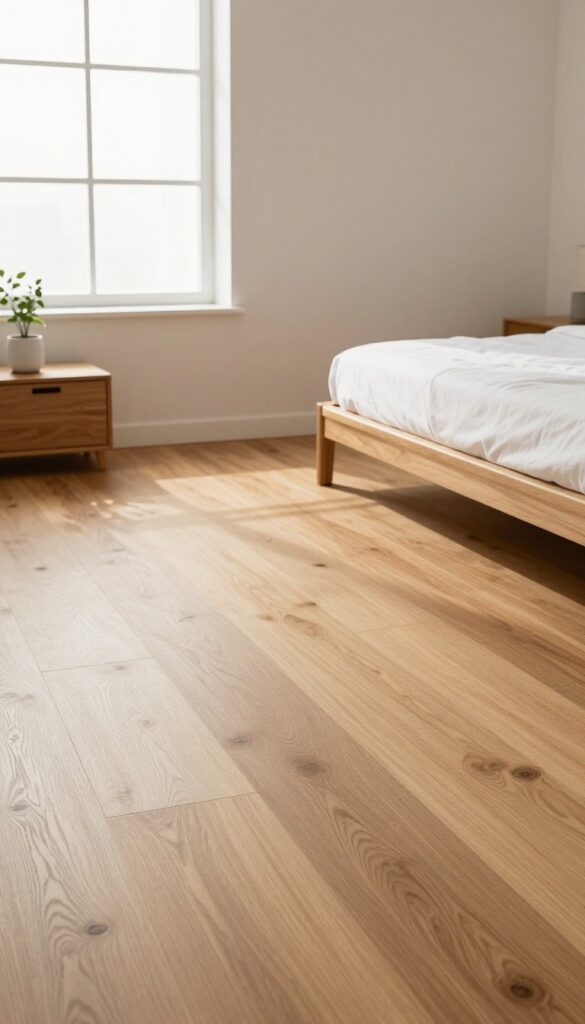
Flooring sets the tone for the entire room, and wood does it better than almost anything else. Whether it’s hardwood or high-quality laminate, it brings warmth that carpet can’t match.
I’ve lived with both, and wood always feels cleaner and calmer over time.
Why This Works
Wood grounds the space and connects all the elements visually. It also reflects light better, making rooms feel more open.
It’s durable, timeless, and easy to style around.
How to Do It
- Choose warm or neutral tones
- Avoid overly glossy finishes
- Use rugs to soften high-traffic areas
Style & Design Tips
Wide planks feel more modern and less busy. Stick with natural tones instead of trendy colors.
Pro Tip or Budget Hack
Luxury vinyl plank can look surprisingly real and costs far less than hardwood while being easier to maintain.
Final Thoughts
Natural wood has a way of making a bedroom feel settled without feeling styled to death. It adds warmth, texture, and balance in a way that works with almost any design direction. The best part is that you don’t need to redo everything at once to see a difference.
Start with one piece, see how it changes the feel of the room, and build from there. Over time, those small choices add up to a space that feels calm, personal, and easy to live in.