8 Bedroom Bookshelf Ideas That Save Space
A narrow strip of wall between the bed and the window quietly turns useless as the day goes on. Shoes end up there, then books, then whatever didn’t have a place the night before.
Bedrooms collect clutter faster than any other room, mostly because storage always comes last.
Space problems rarely come from owning too much, they come from not using what already exists. Vertical surfaces, awkward corners, and forgotten wall space can do a lot of heavy lifting when handled right.
A few smart bookshelf choices can change how a bedroom feels without changing its size.
Saving space doesn’t mean giving up personality or warmth. In fact, the best bedroom bookshelf ideas feel intentional, not crammed or desperate.
These ideas focus on keeping things functional while still making the room feel calm, cozy, and lived-in.
1. Floating Shelves Above the Bed
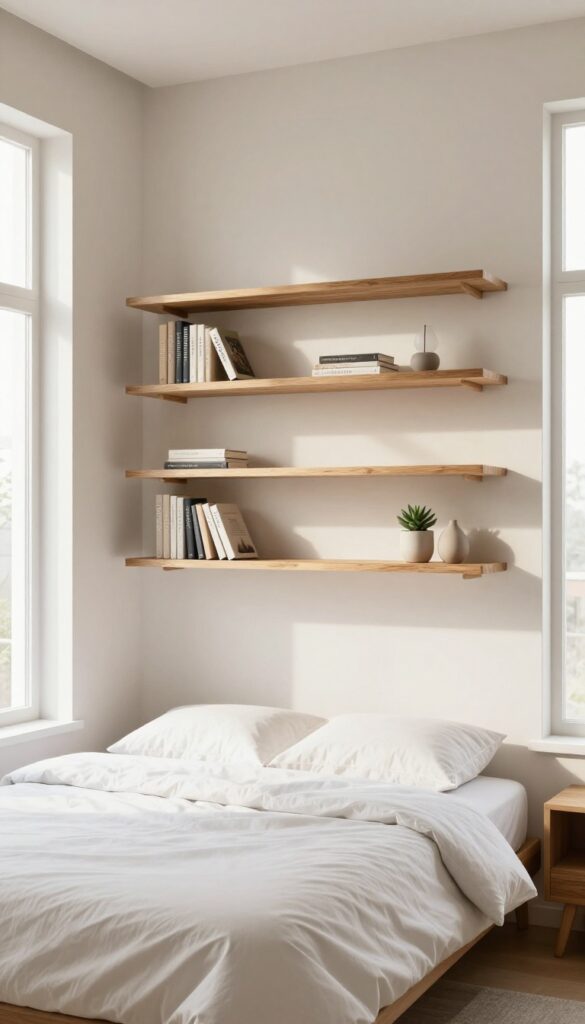
The area above the bed often sits empty, mostly because it feels risky or hard to style. That unused wall space can hold more than just art if it’s planned carefully.
Floating shelves here turn dead space into functional storage without eating into floor space.
I used to avoid this idea because it felt like something out of a showroom, not a real bedroom. After trying it in a small guest room, I changed my mind fast.
The shelves held books, a plant, and a small framed photo, and the room instantly felt finished.
Why This Works
Vertical storage keeps the floor clear, which makes a bedroom feel larger right away. Floating shelves stay visually light, especially when spaced properly and not overloaded. They also draw the eye upward, which helps low ceilings feel taller.
How to Do It
- Measure the width of the bed and center shelves accordingly
- Install shelves at least 12–18 inches above the headboard
- Use wall anchors rated for books, not just décor
- Keep heavier items toward the middle for balance
Style & Design Tips
Stick to shallow shelves to avoid a bulky look. Mix books with softer elements like plants or fabric boxes to break up hard lines. Avoid lining books edge-to-edge, which can feel heavy and overwhelming.
Pro Tip or Budget Hack
IKEA-style floating shelves work just as well as custom ones if installed properly. Paint them the same color as the wall to make them visually disappear and feel less cluttered.
2. Built-In Bookshelves Around the Bed
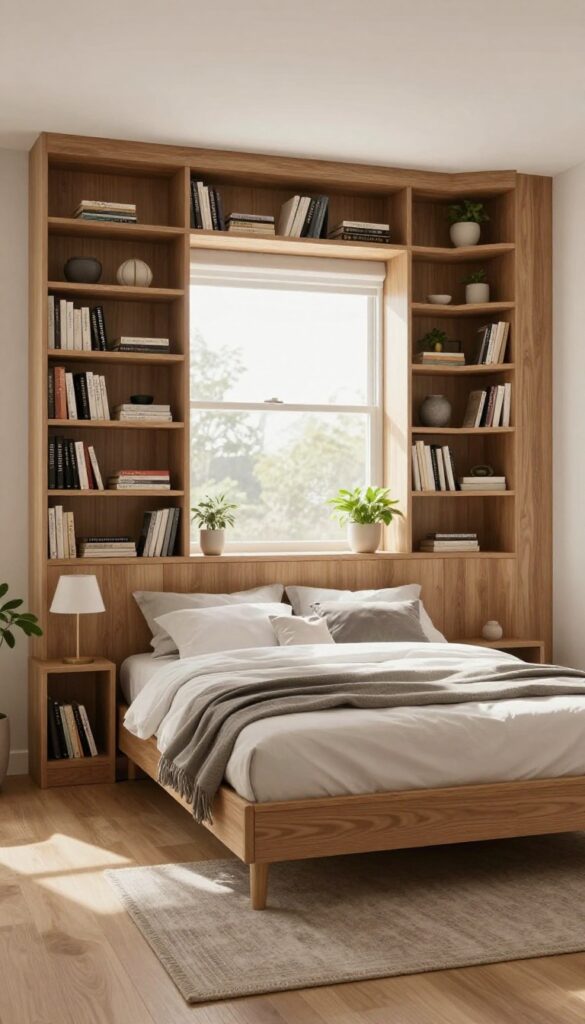
Beds take up the most space in a bedroom, so wrapping storage around them just makes sense. Built-in shelves around the bed frame turn the bed into a storage zone instead of a space hog. This setup feels custom and intentional even in small rooms.
I tried this look with freestanding units pushed together, and honestly, no one could tell they weren’t custom-built. It made the room feel cozy, like a reading nook, without shrinking it. The key was keeping everything symmetrical and clean.
Why This Works
This idea maximizes square footage by combining furniture functions. The bed stays central, while the shelves provide storage without extra floor furniture. It also creates a visual anchor that makes the room feel organized.
How to Do It
- Measure wall width before choosing shelving units
- Use identical shelves on both sides for balance
- Secure tall units to the wall for safety
- Leave breathing room above the mattress
Style & Design Tips
Use closed storage on lower shelves and open shelves higher up. This keeps visual clutter at eye level to a minimum. Neutral tones work best here, especially if the room is small.
Pro Tip or Budget Hack
Modular shelving systems can mimic built-ins without the price tag. Add simple trim pieces to the edges to fake a custom look.
3. Corner Bookshelves That Use Forgotten Space
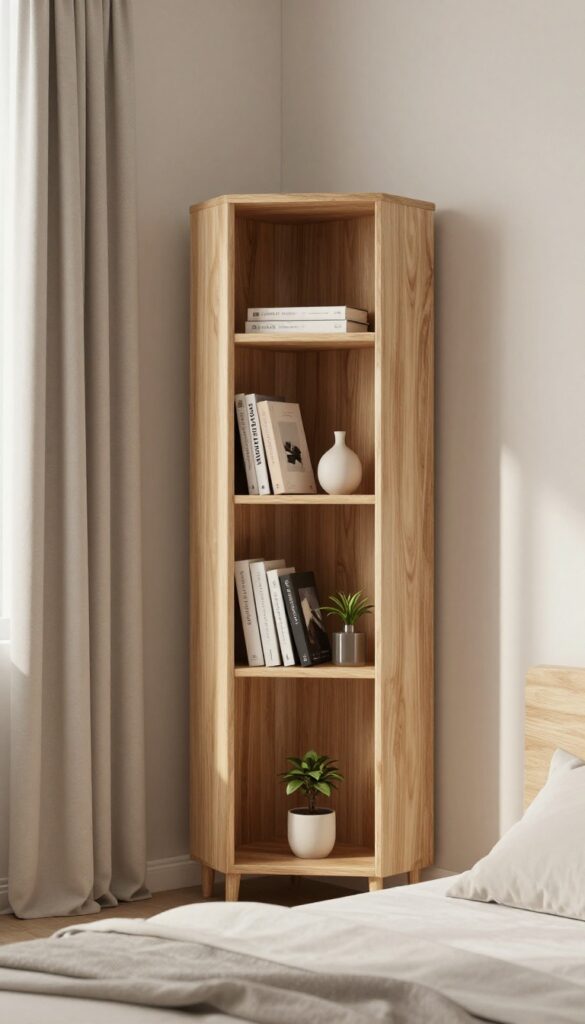
Corners usually become dumping grounds or stay completely unused. A corner bookshelf turns that wasted space into something useful without interrupting the room layout. It’s one of the easiest space-saving upgrades you can make.
I added a slim corner shelf in a tight bedroom that couldn’t fit a dresser. It ended up holding books, candles, and a small lamp, replacing a nightstand entirely. The room felt more open immediately.
Why This Works
Corners don’t interfere with walking paths or furniture placement. Using vertical corner shelves adds storage without adding visual bulk. It also softens sharp angles, which makes a room feel more relaxed.
How to Do It
- Choose tall, narrow shelving units
- Anchor shelves securely to the wall
- Keep heavier books on lower shelves
- Leave the top shelf lighter for décor
Style & Design Tips
Avoid deep shelves that stick out too far. Slim profiles keep the corner from feeling crowded. Matching the shelf color to the wall helps it blend in instead of shouting for attention.
Pro Tip or Budget Hack
Floating corner shelves cost less than full units and are easier to install. Stagger them vertically to create interest without clutter.
4. Bookshelves Integrated Into a Headboard
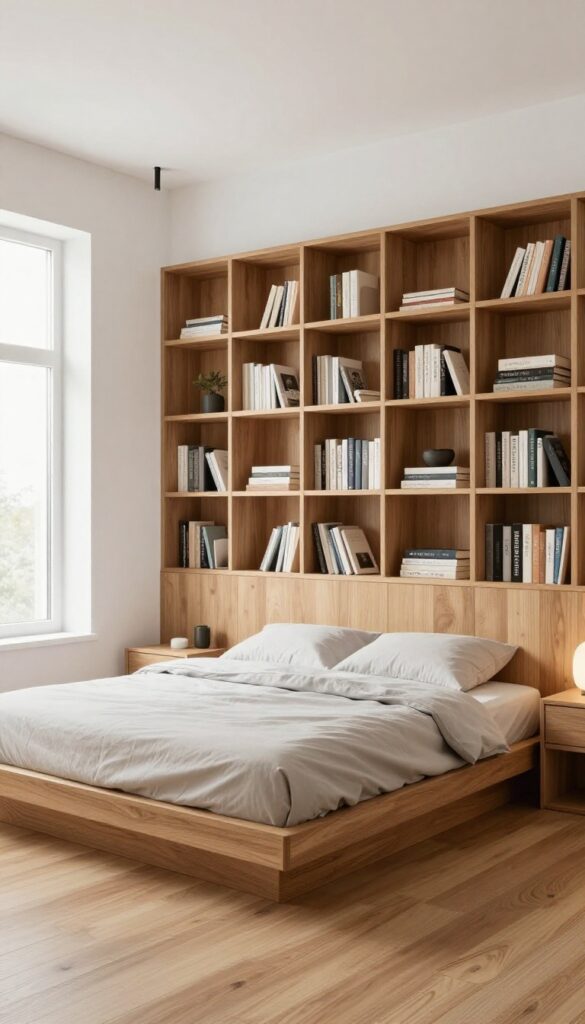
Headboards don’t have to be just decorative. A bookshelf headboard combines storage and function in one compact footprint. It’s especially helpful in small bedrooms where nightstands feel like too much.
I resisted this idea for years because I thought it would look dorm-like. Once I saw a minimalist version with clean lines and neutral tones, I was sold. It felt practical without looking cheap or temporary.
Why This Works
This design uses space that already exists behind the bed. It replaces the need for nightstands and extra shelving. Everything stays within arm’s reach, which is perfect for bedtime readers.
How to Do It
- Choose a headboard with shallow shelves
- Keep frequently used items at arm level
- Use baskets or boxes for small clutter
- Secure the unit firmly to the wall
Style & Design Tips
Limit the number of items on display. Negative space matters here more than in other bookshelf setups. Too many objects make the bed area feel busy.
Pro Tip or Budget Hack
DIY a simple bookshelf headboard using plywood and basic brackets. Paint it the same color as the wall for a seamless look.
5. Floor-to-Ceiling Slim Bookshelves
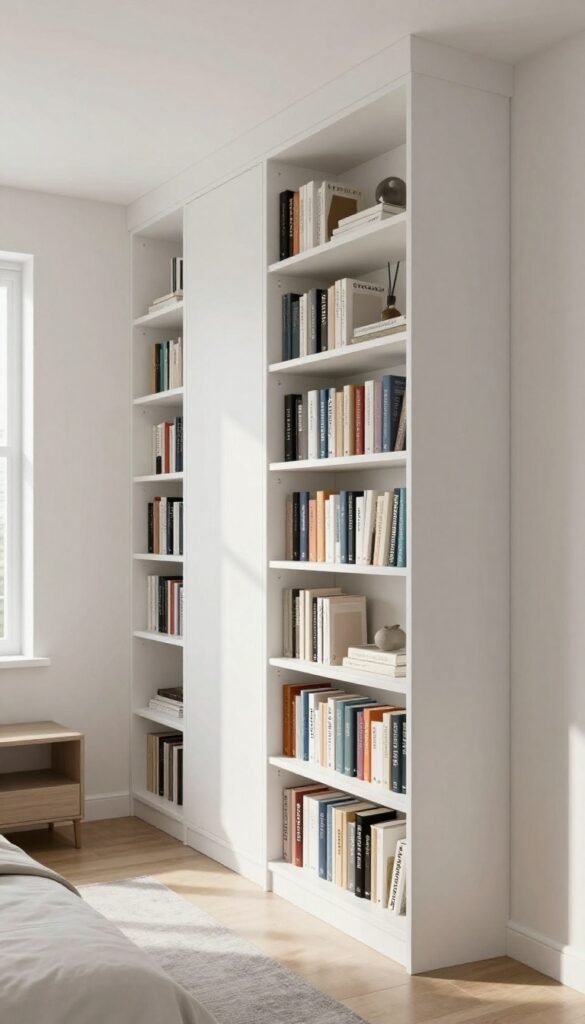
Tall, narrow bookshelves make a room feel taller without taking much floor space. Floor-to-ceiling designs maximize storage while keeping the footprint small. They work especially well along narrow walls or beside wardrobes.
I added one next to a closet door that felt awkward and unfinished. Suddenly, that wall had a purpose, and the room felt more complete. It held more books than expected without dominating the space.
Why This Works
Vertical storage draws the eye upward, which visually enlarges the room. Slim shelves avoid the bulky look of traditional bookcases. They also keep storage consolidated in one place.
How to Do It
- Measure ceiling height carefully
- Anchor shelves at multiple points
- Keep heavier items toward the bottom
- Use upper shelves for display pieces
Style & Design Tips
Stick to uniform spacing between shelves for a cleaner look. Mixing too many shelf heights can feel chaotic in small rooms. A consistent color palette keeps things calm.
Pro Tip or Budget Hack
Buy two matching narrow shelves and place them side by side. It looks intentional and costs less than custom cabinetry.
6. Under-the-Window Bookshelves
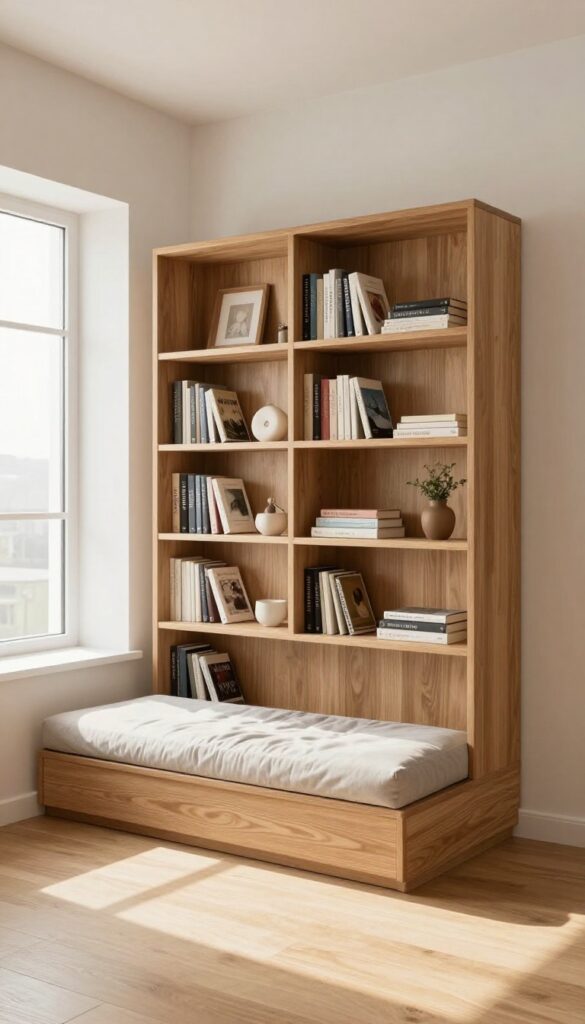
Windows often limit furniture placement, but the space beneath them usually goes unused. A low bookshelf under a window adds storage without blocking light. It can even double as a window seat if planned well.
I used this idea in a bedroom with awkward wall breaks. The shelf fit perfectly and became a favorite reading spot with a cushion on top. It felt cozy, not cramped.
Why This Works
Low shelving keeps sightlines open and preserves natural light. It uses a horizontal zone that often gets ignored. The setup also balances taller furniture elsewhere in the room.
How to Do It
- Measure window height before choosing shelves
- Keep shelf height below the sill
- Secure shelves to prevent tipping
- Add cushions if using as seating
Style & Design Tips
Use closed storage on the bottom if clutter is an issue. Open shelves look best when styled simply. Avoid tall décor that blocks light.
Pro Tip or Budget Hack
A basic cube shelf works perfectly here. Add a custom cushion cover instead of buying a pricey window bench.
7. Nightstand Replacement Bookshelves
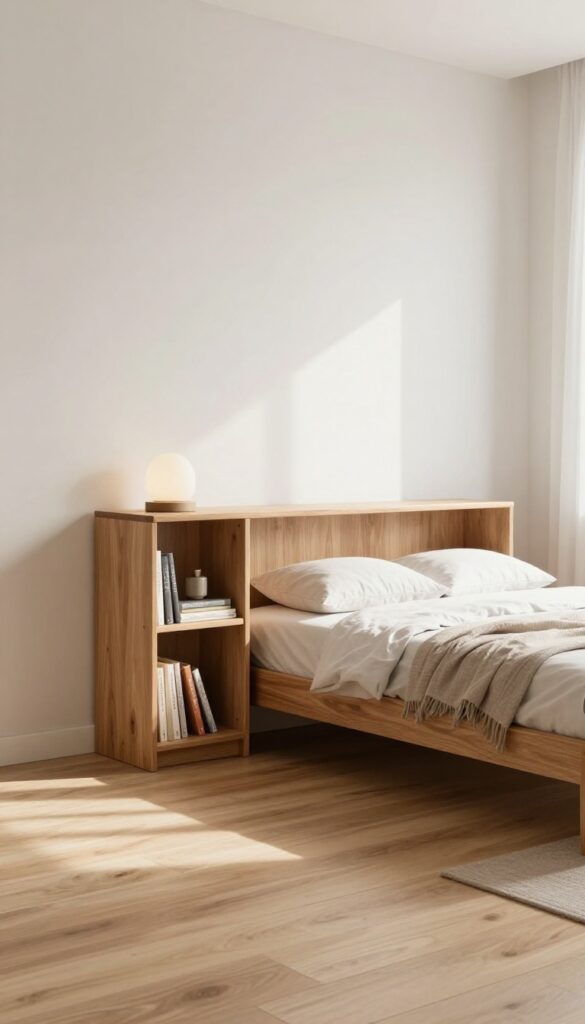
Traditional nightstands eat up floor space fast. Swapping them for narrow bookshelf units frees up room while adding more storage. It’s a small change that makes a big difference.
I replaced a bulky nightstand with a slim shelf and immediately noticed how much easier it was to move around the bed. The room felt lighter and less crowded. I never missed the drawer space.
Why This Works
Narrow shelves reduce visual weight near the bed. They still hold essentials like books, lamps, and chargers. This setup keeps the floor more open.
How to Do It
- Choose shelves no wider than the mattress edge
- Keep top surface clear for essentials
- Use lower shelves for books only
- Anchor units to prevent tipping
Style & Design Tips
Keep bedside clutter minimal to maintain a calm vibe. Matching both sides helps the room feel balanced. Avoid deep shelves that crowd the bed.
Pro Tip or Budget Hack
Wall-mounted shelves can replace nightstands entirely. Install them slightly higher to avoid bumping knees.
8. Closet-Adjacent Bookshelves
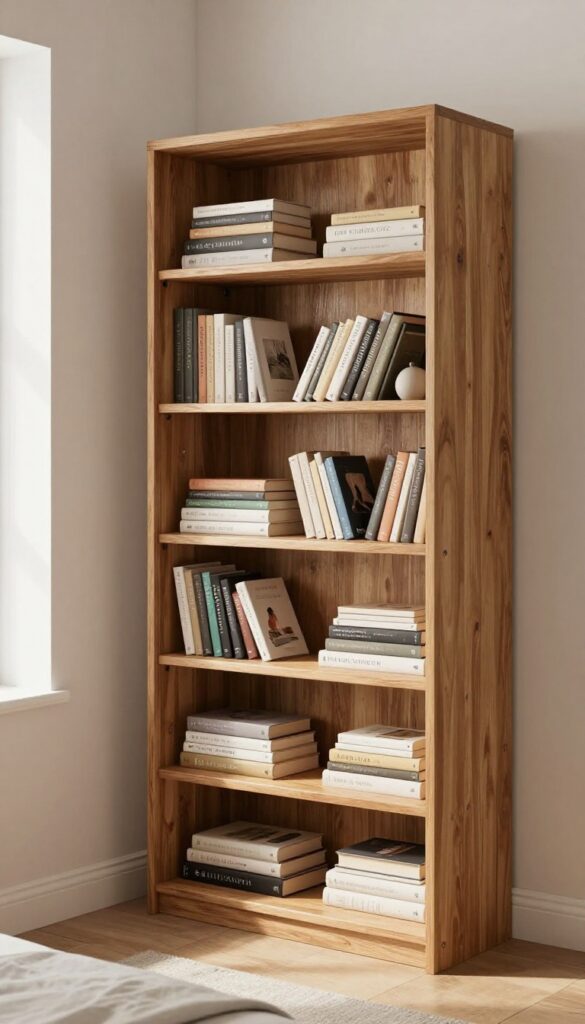
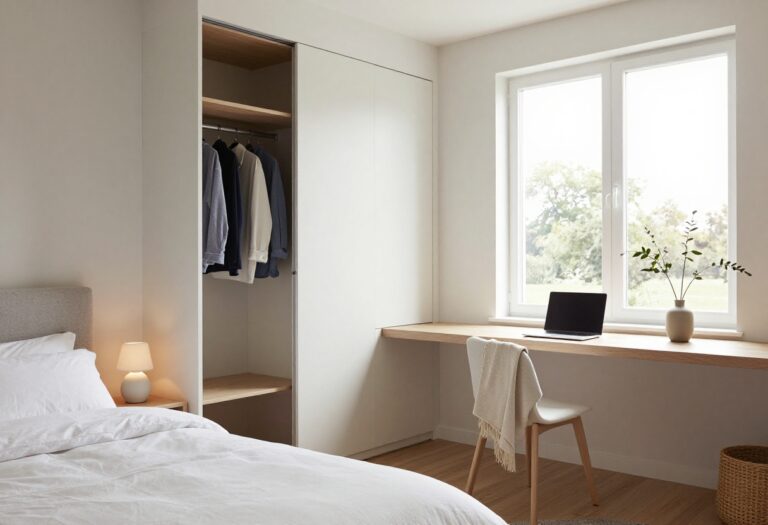
The space next to closets often feels awkward and underused. Adding a bookshelf here turns an in-between area into something useful. It’s perfect for books you don’t need daily but still want nearby.
I added a tall shelf next to a sliding closet door and worried it would feel cramped. It didn’t. It actually framed the closet nicely and made the wall feel intentional.
Why This Works
This area usually doesn’t interfere with movement. Using it for vertical storage keeps the rest of the room open. It also visually anchors the closet area.
How to Do It
- Measure door clearance carefully
- Use slim shelves to avoid blocking access
- Anchor shelves securely
- Keep heavier items on lower shelves
Style & Design Tips
Choose a finish that matches the closet trim for cohesion. Avoid overloading shelves near doors. Simplicity works best here.
Pro Tip or Budget Hack
Repurpose a narrow bookcase meant for offices. They’re often cheaper and fit tight spaces better than standard units.
Final Thoughts
Bedrooms don’t need more space, they need smarter use of the space already there. A single well-placed bookshelf can replace multiple bulky pieces of furniture. That alone can change how a room feels day to day.
Trying every idea at once usually backfires, so starting with just one makes more sense. Pick the spot that annoys you the most and fix that first. Small wins add up faster than big overhauls ever do.