9 Girls Bunk Bed Bedroom Ideas They’ll Love
Morning light hits the top bunk first, catching dust in the air and the faint glitter of yesterday’s craft project.
A stuffed animal leans halfway off the ladder, clearly abandoned in a rush to get dressed. The room feels busy, lived-in, and somehow still cozy, even with two kids sharing every inch of space.
Bunk bed rooms always feel like controlled chaos in the best way. They carry stories, small messes, big personalities, and constant evolution as kids grow.
Getting the design right means balancing function with fun, without turning the room into something that feels stiff or overly themed.
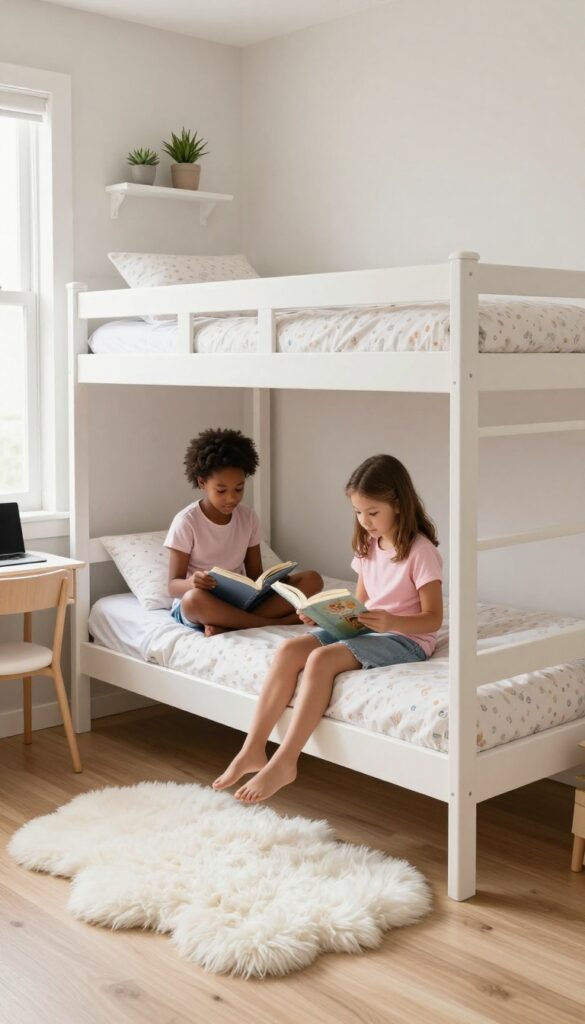
1. Classic White Bunk Beds With Personalized Touches
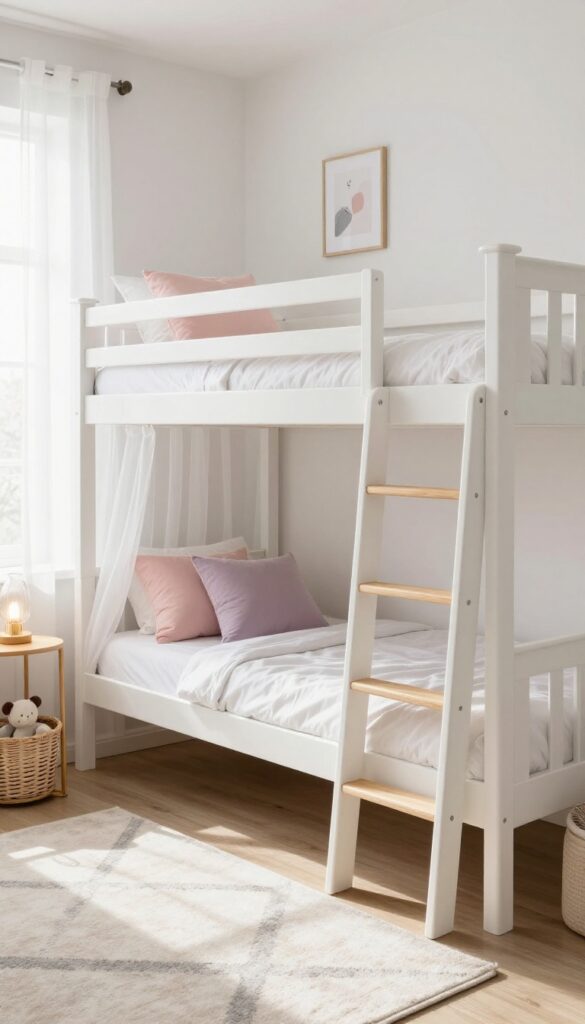
Sharing a room usually starts with complaints about fairness, especially when it comes to space and style. A classic white bunk bed instantly levels the playing field because it feels neutral, calm, and flexible.
It creates a clean backdrop that lets each girl’s personality shine without the room feeling split down the middle.
I’ve always liked white bunks because they age well, even as tastes change every year. One kid might love rainbows today and roll her eyes at them next year, and white doesn’t fight that transition.
The room feels brighter, bigger, and less cluttered right from the start.
Why This Works
White reflects light and visually opens up the room, which matters a lot in shared bedrooms. It keeps the bunk bed from dominating the space, even when the frame is chunky or tall.
Most importantly, it acts like a blank canvas instead of a design commitment you’ll regret later.
How to Do It
- Choose a sturdy white bunk bed with simple lines and minimal detailing
- Assign each bunk a “zone” using bedding, pillows, or wall accents
- Add name signs, initial decals, or small clip-on lights for personalization
- Keep shared storage neutral so the room still feels cohesive
Style & Design Tips
Mix textures instead of colors to avoid visual overload. Layer soft quilts, knit throws, and textured pillows to add warmth without chaos. Avoid matching everything perfectly, because that can make the room feel staged instead of lived-in.
Pro Tip or Budget Hack
If a new bunk bed isn’t in the budget, repainting an existing one in a soft white or cream works wonders. A satin or semi-gloss finish cleans easily and hides scuffs better than flat paint.
2. Built-In Bunk Beds With Storage Drawers
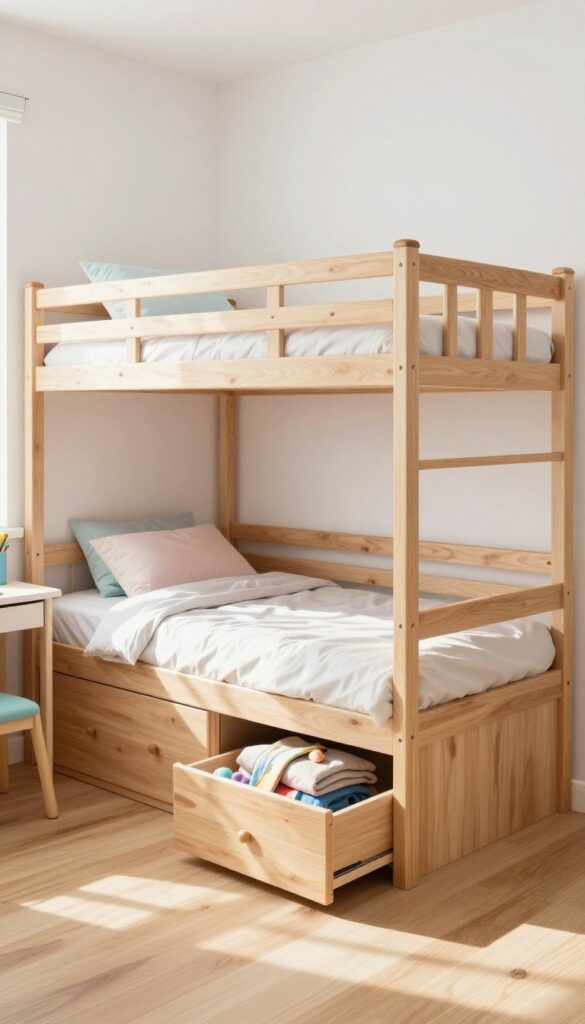
Floor space disappears fast in a shared kids’ room, especially once toys, clothes, and school supplies move in.
Built-in bunk beds solve this by combining sleeping and storage into one smart structure. Everything feels intentional instead of crammed in as an afterthought.
I’ve seen built-ins completely change how a room functions. Kids actually use the drawers when they’re right under the bed, and that alone feels like a small miracle. The room looks calmer because clutter finally has a home.
Why This Works
Built-ins maximize vertical space without adding extra furniture. Storage drawers under the bunks reduce the need for bulky dressers, freeing up room to play. The custom look also makes the bedroom feel special and permanent, not temporary.
How to Do It
- Measure the room carefully before planning the layout
- Include deep drawers for clothes and shallow ones for toys or books
- Add a small shelf or cubby near each bunk for nighttime essentials
- Use soft-close hardware to keep things quiet and kid-friendly
Style & Design Tips
Paint the built-in unit the same color as the walls for a seamless look. Avoid high-contrast colors that make the structure feel heavy. Simple hardware keeps the design timeless instead of trendy.
Pro Tip or Budget Hack
If full built-ins aren’t possible, add rolling storage drawers under a standard bunk bed. They offer similar benefits without custom carpentry costs.
3. L-Shaped Bunk Beds for Shared Rooms
Some rooms just don’t work with straight-on bunks, especially when doors or windows get in the way. L-shaped bunk beds solve awkward layouts by tucking one bed into a corner. The result feels more open and less stacked.
I love this setup because it gives each girl a little sense of privacy. Even though they share the same room, the layout naturally creates separation without walls. It feels thoughtful instead of cramped.
Why This Works
An L-shape uses corners efficiently while opening up the center of the room. It allows more natural light to reach both beds. The layout also creates space for a desk, reading nook, or play area underneath.
How to Do It
- Place the lower bunk along one wall and the upper bunk along the adjacent wall
- Anchor the beds securely to avoid shifting
- Use the open area beneath for storage or seating
- Keep walkways clear to avoid crowding
Style & Design Tips
Use consistent bedding colors to tie both bunks together visually. Avoid overly busy patterns that compete with the unique layout. Wall-mounted lights save space and reduce clutter.
Pro Tip or Budget Hack
Some standard bunk beds can convert into an L-shape with minor adjustments. Check the manufacturer’s instructions before buying a new set.
4. Bunk Beds With Curtains for Privacy
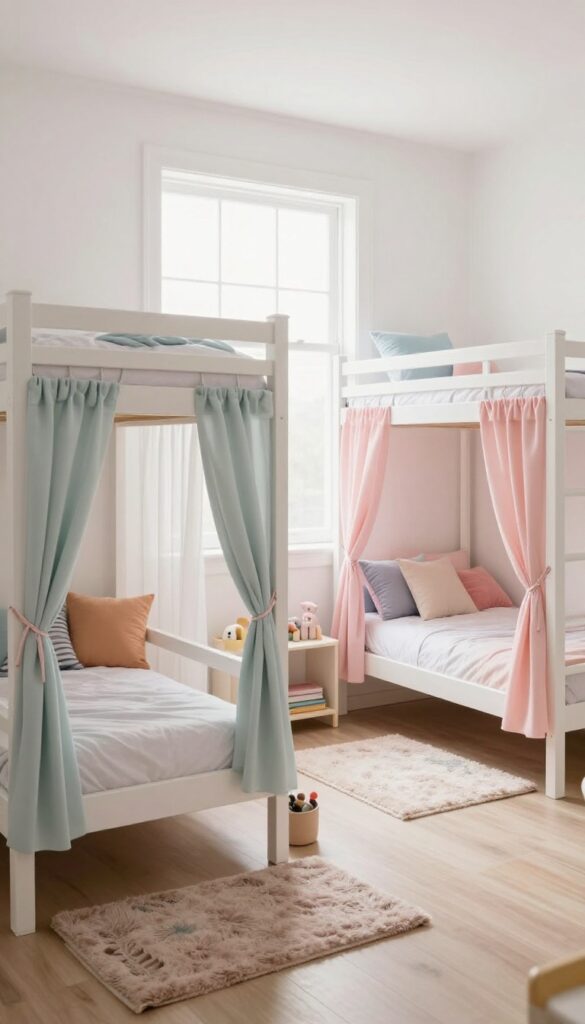
Sharing a bedroom means sharing almost everything, including quiet time. Bunk beds with curtains give each girl a little personal retreat. That sense of ownership matters more than most people expect.
Curtains instantly soften the room and make bedtime feel cozy. I’ve noticed kids calm down faster when they can close off their space, even just visually. It turns a shared room into two tiny sanctuaries.
Why This Works
Curtains create visual separation without permanent walls. They help reduce light and distractions, especially during different sleep schedules. The room still feels connected, just more balanced.
How to Do It
- Install curtain rods or tension wires along each bunk
- Choose lightweight fabric for easy opening and closing
- Secure the edges to prevent tangling
- Washable materials make maintenance easier
Style & Design Tips
Stick to soft neutrals or subtle patterns to avoid overwhelming the room. Sheer or cotton fabrics work better than heavy drapes. Avoid overly themed prints that age quickly.
Pro Tip or Budget Hack
Shower curtains cut to size work surprisingly well and come in endless designs. They’re affordable and easy to replace as tastes change.
5. Playful Color-Coordinated Bunk Bed Rooms
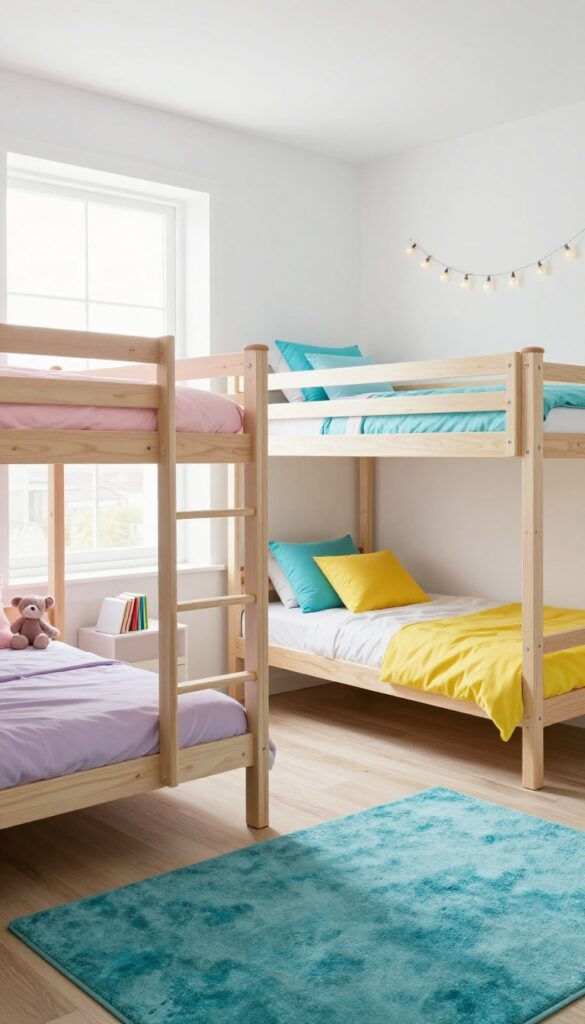
Some kids love color, and fighting that usually ends badly. Color-coordinated bunk rooms let each girl have her own palette while still keeping the room harmonious. The trick lies in balance, not matching everything perfectly.
I’ve seen rooms where color makes kids genuinely happier in their space. It gives them identity without creating visual chaos. Done right, it feels intentional and joyful.
Why This Works
Color helps define personal space in a shared room. It creates visual interest while keeping organization simple. When each girl knows “her color,” decision-making becomes easier.
How to Do It
- Assign each girl one main color and one accent
- Use color in bedding, art, and accessories
- Keep walls neutral to ground the design
- Limit patterns to avoid visual overload
Style & Design Tips
Use muted or dusty tones instead of neon shades for longevity. Mix solids with subtle prints for depth. Avoid letting color spill into shared storage areas.
Pro Tip or Budget Hack
Removable decals and pillow covers allow color updates without repainting. This keeps the room flexible and budget-friendly.
6. Bunk Beds With Study and Desk Areas
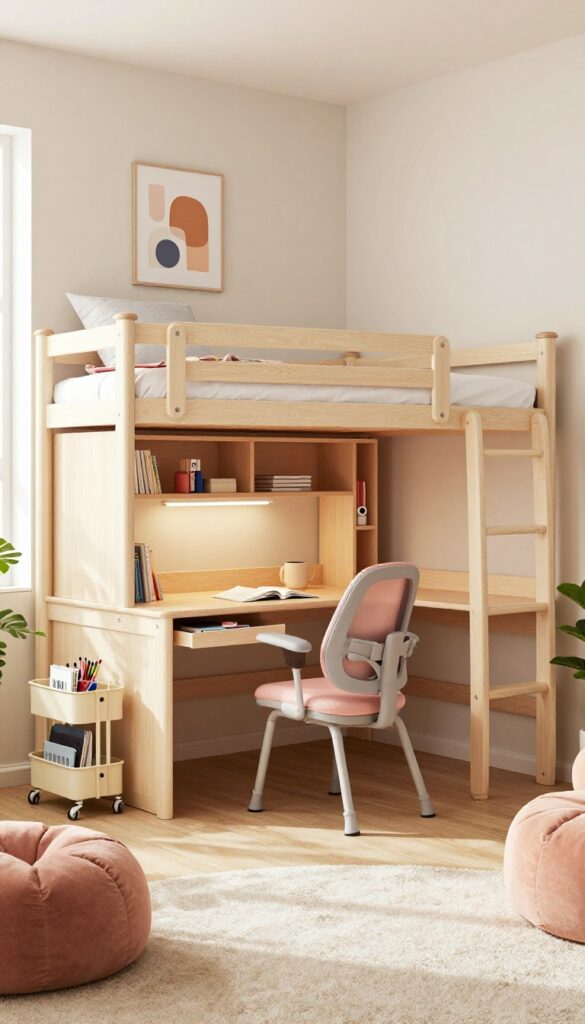
Homework battles often start because there’s nowhere comfortable to work. Bunk beds with built-in desks turn wasted space into functional zones. Each girl gets a dedicated spot to focus.
I like this idea because it teaches organization naturally. Kids learn to keep school supplies contained instead of scattered across the house. It also keeps bedrooms multifunctional without feeling crowded.
Why This Works
Desks integrated into bunk beds save floor space. They encourage routine and responsibility. The layout keeps work and sleep areas connected but defined.
How to Do It
- Choose a bunk bed with a built-in desk or add one underneath
- Install proper lighting for reading and writing
- Add small organizers for supplies
- Keep cords tidy with clips or trays
Style & Design Tips
Choose simple desk designs that won’t feel dated. Neutral finishes blend better as kids grow. Avoid oversized chairs that block walkways.
Pro Tip or Budget Hack
Floating desks under the bunk offer flexibility and cost less than custom furniture. They’re easy to remove later if needs change.
7. Themed Bunk Bed Bedrooms Without Going Overboard
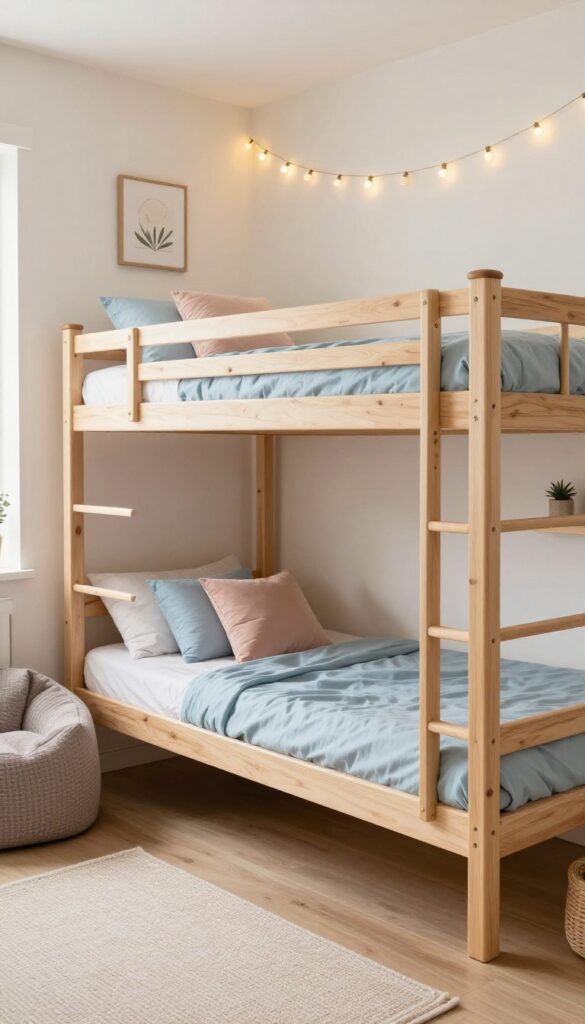
Themes can go wrong fast if they’re too literal. A subtle theme, however, adds charm without locking you into a look. Think vibes, not characters.
I’ve always preferred themes that feel flexible. Kids outgrow specific interests quickly, but broader ideas stick around longer. The room feels fun without becoming a museum of one phase.
Why This Works
Subtle themes provide inspiration without visual overload. They allow easy updates as interests evolve. The room stays stylish instead of novelty-driven.
How to Do It
- Pick a theme based on mood or activity
- Use artwork and accessories to hint at the theme
- Keep furniture neutral
- Limit themed items to easily replaceable pieces
Style & Design Tips
Avoid character bedding as the main focus. Textures, colors, and shapes communicate themes more subtly. Let imagination fill the gaps.
Pro Tip or Budget Hack
DIY wall art tied to the theme saves money and adds personal meaning. Swap it out as tastes change.
8. Low Bunk Beds for Younger Girls
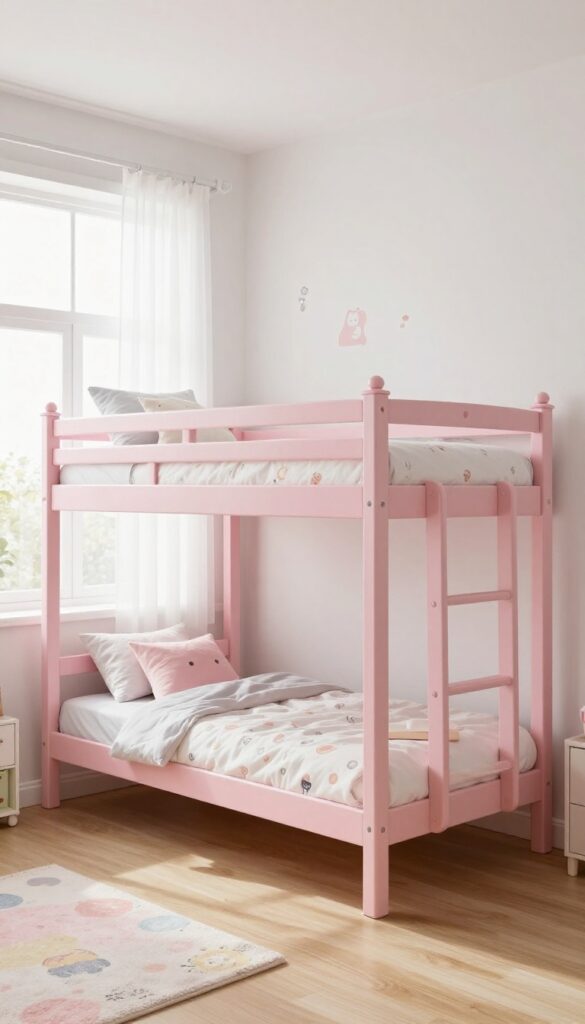
Not every bunk bed needs to touch the ceiling. Low bunks work beautifully for younger kids and smaller rooms. They feel safer and more approachable.
I recommend these for parents who worry about nighttime tumbles. Kids climb in and out confidently, which reduces stress for everyone involved. The room feels grounded and calm.
Why This Works
Low bunks reduce fall risk and feel less imposing. They make ceiling height less of an issue. The design keeps the room open and airy.
How to Do It
- Choose a bunk bed with a low upper bunk
- Add guardrails for extra safety
- Use the space above for art or lighting
- Keep ladders wide and sturdy
Style & Design Tips
Use soft bedding and rounded accessories to match the gentle scale. Avoid tall wardrobes that overwhelm the room. Keep decor playful but simple.
Pro Tip or Budget Hack
Short bunk beds often cost less than standard ones. They’re also easier to move and reconfigure later.
9. Bunk Beds With a Cozy Reading Nook
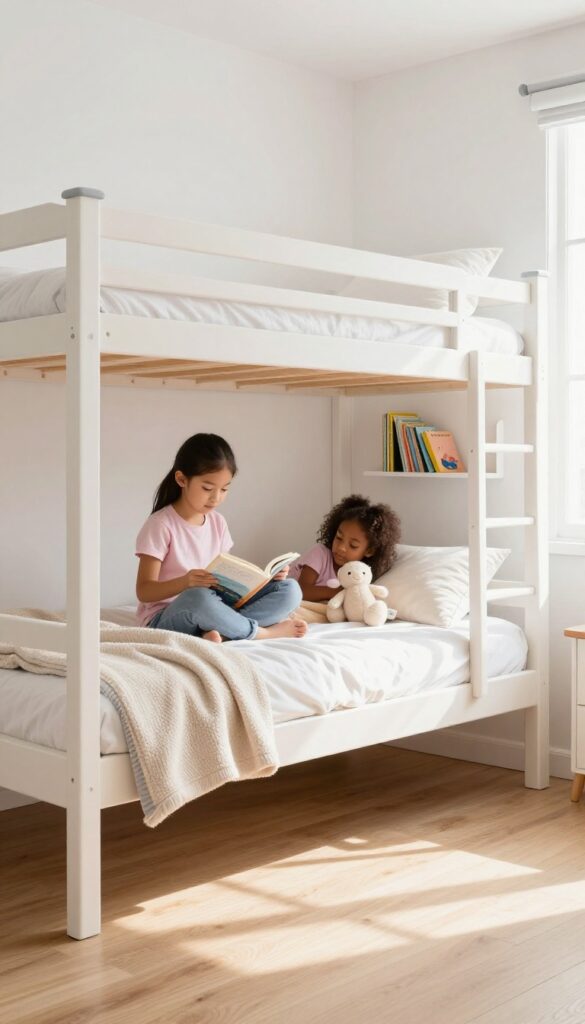
Every kid needs a quiet corner, even in shared rooms. Bunk beds with built-in reading nooks create that escape. It turns the bedroom into more than just a place to sleep.
I love how this idea encourages downtime without screens. Kids naturally gravitate toward cozy spaces. It becomes a favorite spot without extra furniture.
Why This Works
Reading nooks add function without taking floor space. They promote calm activities and independence. The room feels layered and intentional.
How to Do It
- Add cushions or a bench under the lower bunk
- Install wall-mounted lights for reading
- Include shelves for favorite books
- Keep the area uncluttered
Style & Design Tips
Stick to soft lighting and neutral fabrics for relaxation. Avoid bright colors that disrupt the cozy vibe. Textures matter more than patterns here.
Pro Tip or Budget Hack
Floor pillows and clip lights create a nook without construction. It’s easy, affordable, and surprisingly effective.
Final Thoughts
Bunk bed bedrooms don’t need to feel chaotic or overly planned to work well. The best ones evolve slowly, shaped by habits, growth, and small adjustments over time. Trying one thoughtful change often improves the whole room more than a full redesign.
Pick the idea that solves your biggest daily frustration and start there. A shared room works best when it supports real life, not perfection.